Durian Pizza: It’s Ba-aack!!

(Click on any image to view it in high resolution.)
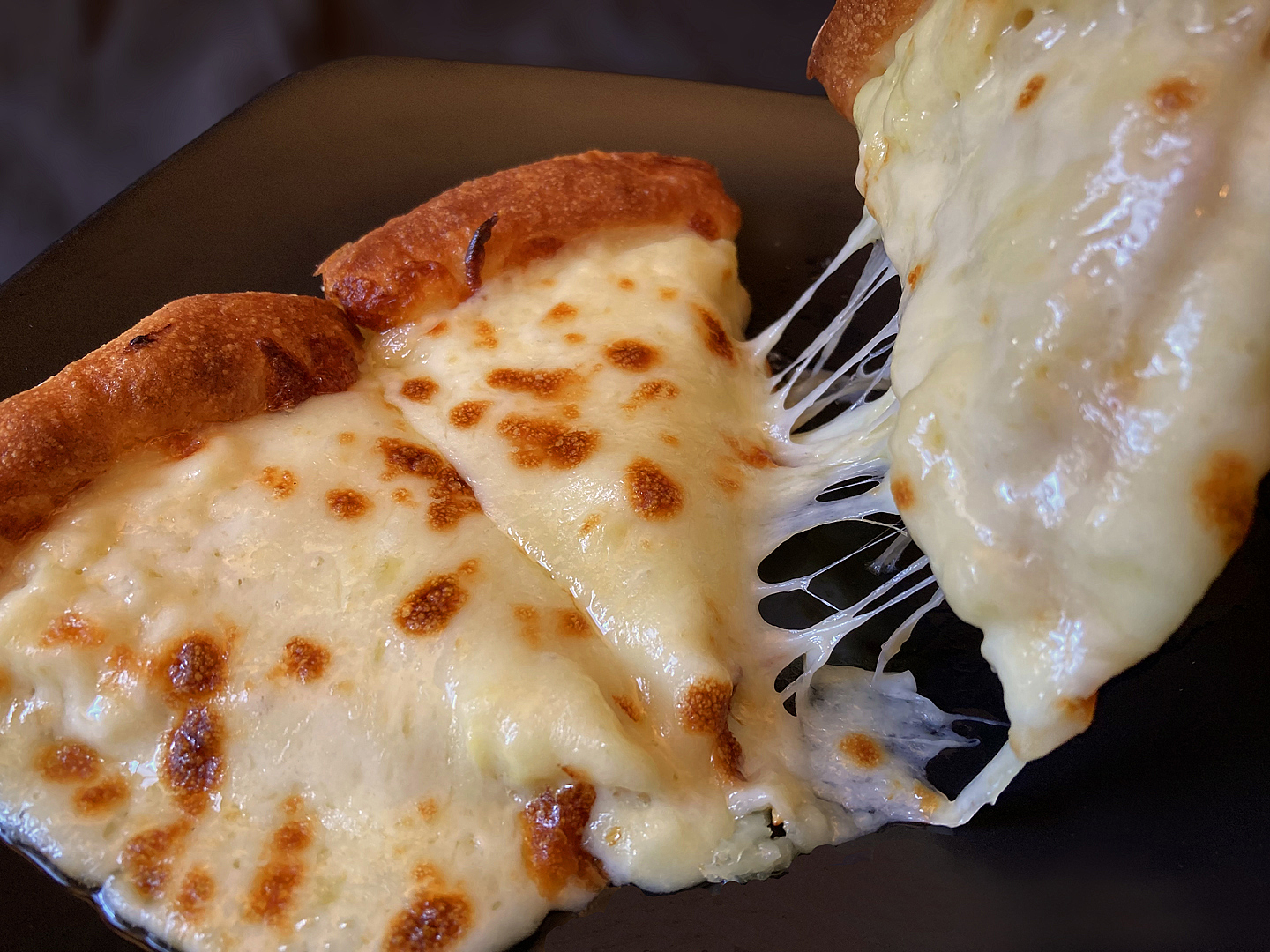
A few years ago, I wrote an article for Edible Queens Magazine about durian pizza at Flushing’s C Fruit Life on Roosevelt Ave; you can read it here.

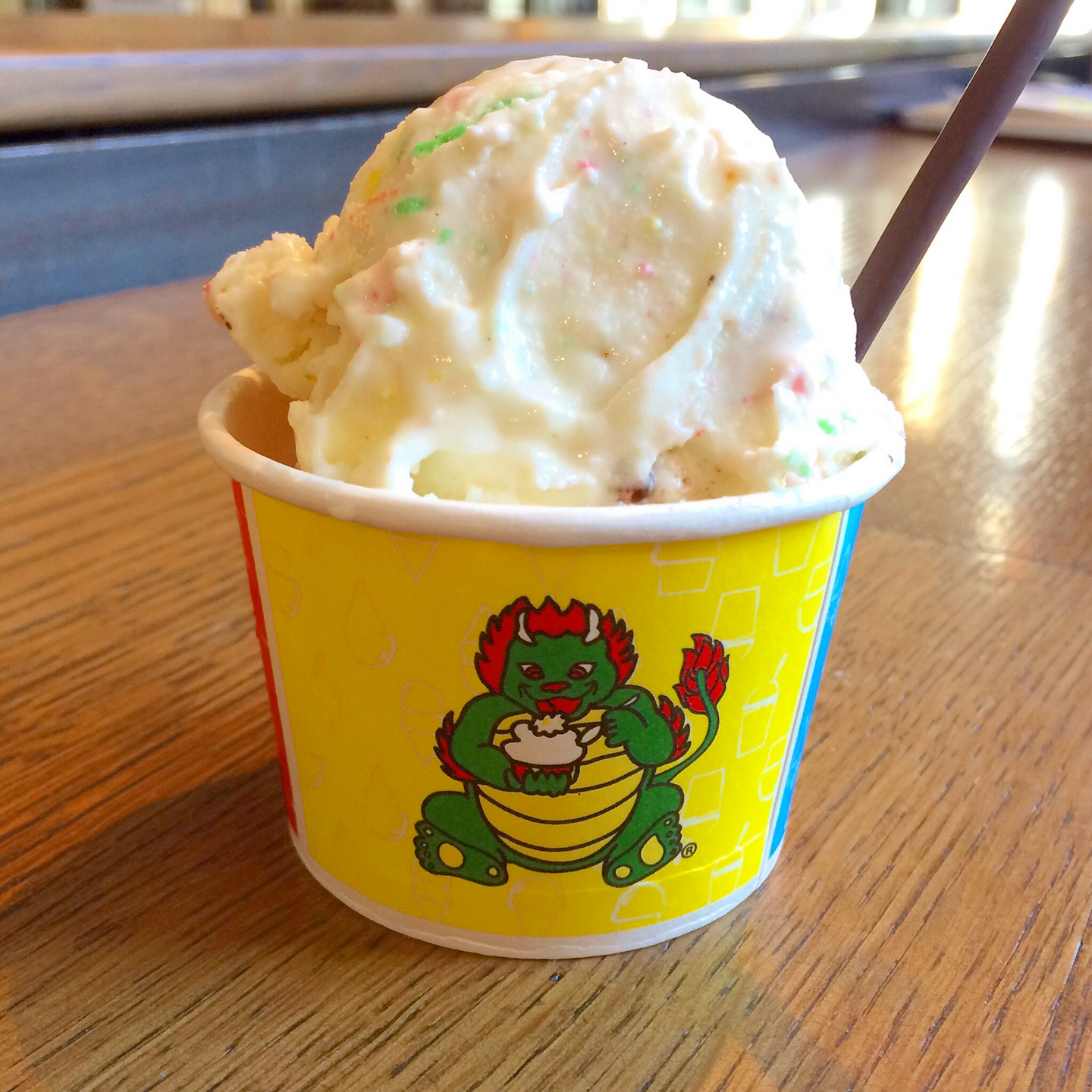
Sadly, like all good things, it came to an end, leaving us fusion-dessert aficionados out in the cold with only Chinese-American durian ice cream to assuage our dispirited souls.

Happily, on a recent exploration of some new stalls in Flushing’s New York Food Court, I rediscovered durian pizza at D.T Restaurant.
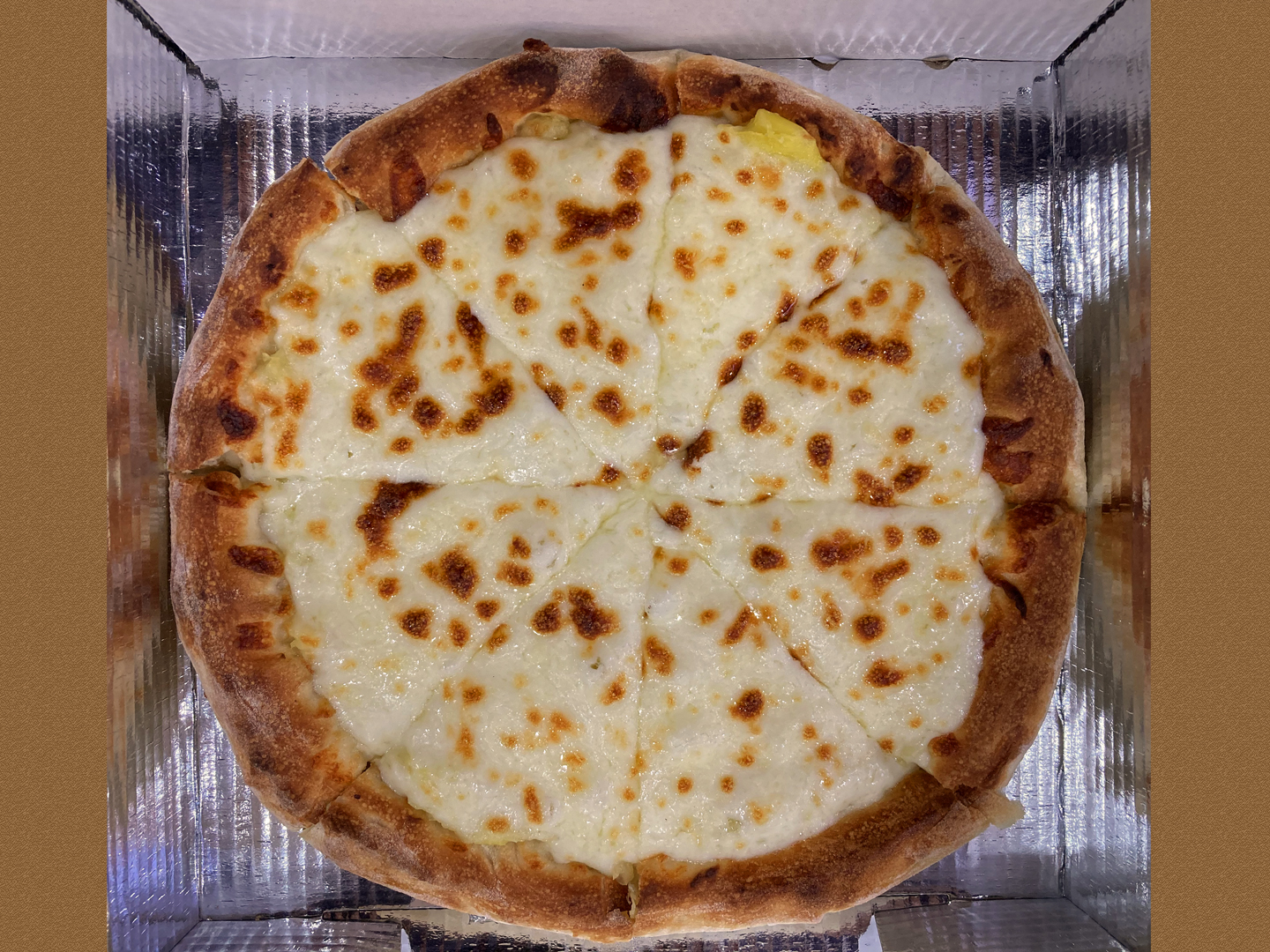
Durian’s flavor is complex and delicious, not overly sweet, but definitely tropical, the texture so rich and creamy that I call durian the fruit that makes its own custard. Pizza in its many guises is a crossover phenomenon itself – neither entirely Italian nor American – so introducing a Southeast Asian element is fair play. If one can top pizza with pineapple, why not durian?

Do durian and pizza play well with each other? Most assuredly. I detected no daunting smell – as a matter of fact, the aroma is rather appealing – I experience only the inimitable ambrosial flavor. After all, it’s warm bread, delectable fruit and beautifully blistered melted cheese. What’s not to like?

Now, I understand that you might be hesitant about buying a whole one just so you can try a slice. No worries. I have a solution for you. Simply join me on my “Snacking in Flushing – The Best of the Best” ethnojunket and you can have as much or as little as you’d like along with a host of other delectable tasty treats.

Hope to see you soon!


Don’t Know Jack About This Fruit?

Then allow me to introduce you to jackfruit!

(Click on any image to view it in high resolution.)

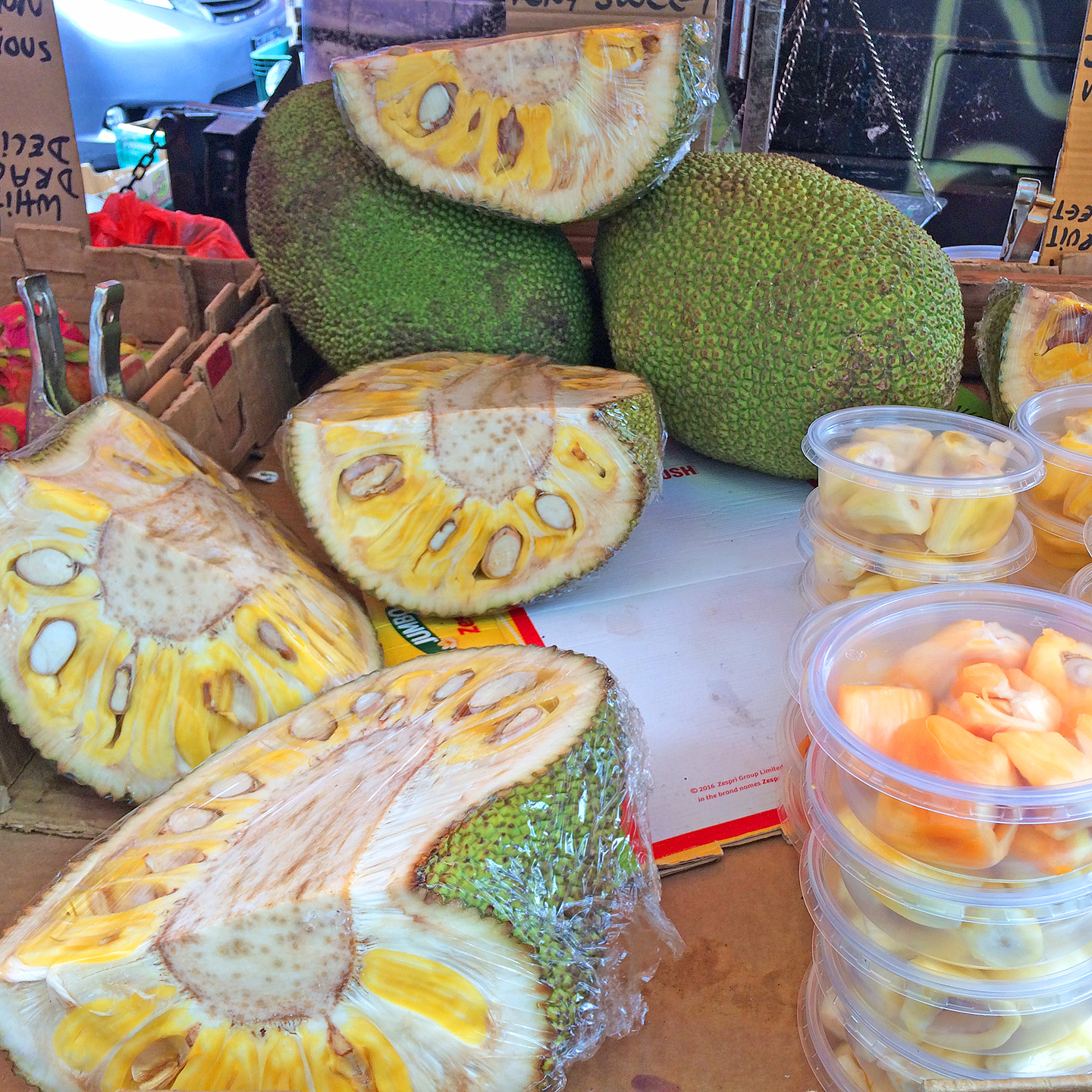
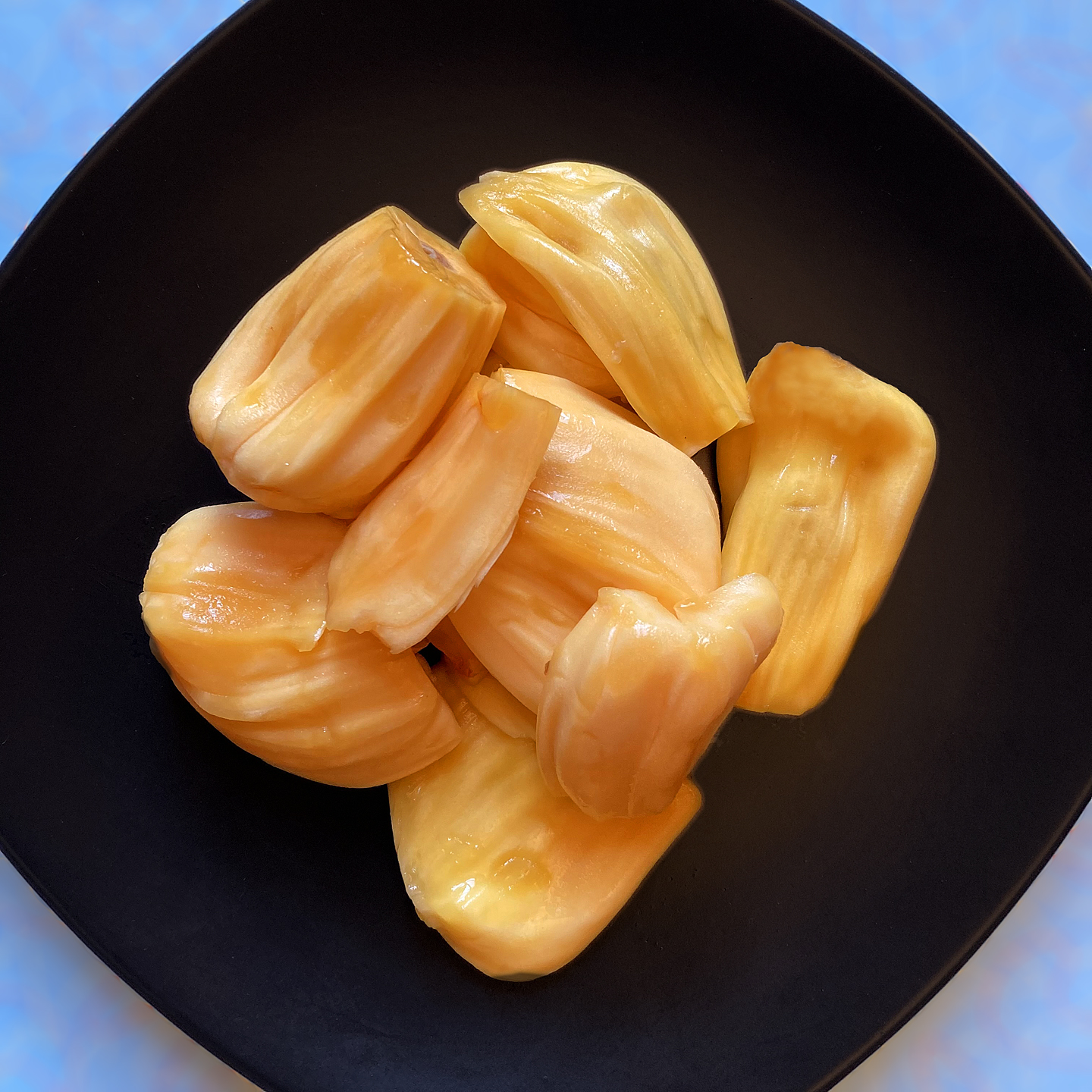
Possibly my favorite fruit, it’s quite easy to find fresh this time of year. Jackfruit is the largest tree fruit and can be roughly two feel long or more; it sports a greenish brown bumpy shell, a white core, and contains dozens of fragrant, yellow pods. Each pod encases a single large seed and even the seeds can be consumed boiled, baked or roasted; their taste is not unlike chestnuts – in fact, I’ve developed a few recipes for them.

You’ll see this tropical fruit at sidewalk stands and markets, whole, halved, or quartered; you’ll also find the sweet pods picked out and packed into plastic containers for munching convenience as you wander the streets of Chinatown.

I’ve been known to buy a half or a quarter and break it down myself, but the procedure involves removing the pods leaving behind a white latex-like substance – and trust me, it’s a tacky mess. If you insist on going DIY, wear plastic gloves because no amount of soap and water or alcohol will rid the sticky stuff from your hands easily. (Those in the know oil their hands first which seems even messier but less gooey.) Personally, I think it’s worth the trouble because the price per pod plummets and I have plenty of time on my hands. (Although maybe that’s the gummy stuff and not time.)

Green unripe jackfruit can be found canned in Asian markets; it’s used for its meaty texture in numerous dishes like Indonesian rendang and other vegetarian specialties.

The fresh pods range in hue from pale canary yellow to bright Crayola yellow-orange; the deeper the color, the sweeter and riper the fruit. The first photo shows the ideal shade of gold (the last chance moment before they become overripe), but even a lighter version will be rewarding.

Jackfruit is at peak ripeness now, so please go out and support your local Chinatown – and reward yourself with a delicious treat in the process!


Stalking the Wild Lychee

(Click on any image to view it in high resolution.)

About two weeks ago, I was discussing the ins and outs of selecting fresh lychees with one of my delightful ethnojunket guests.


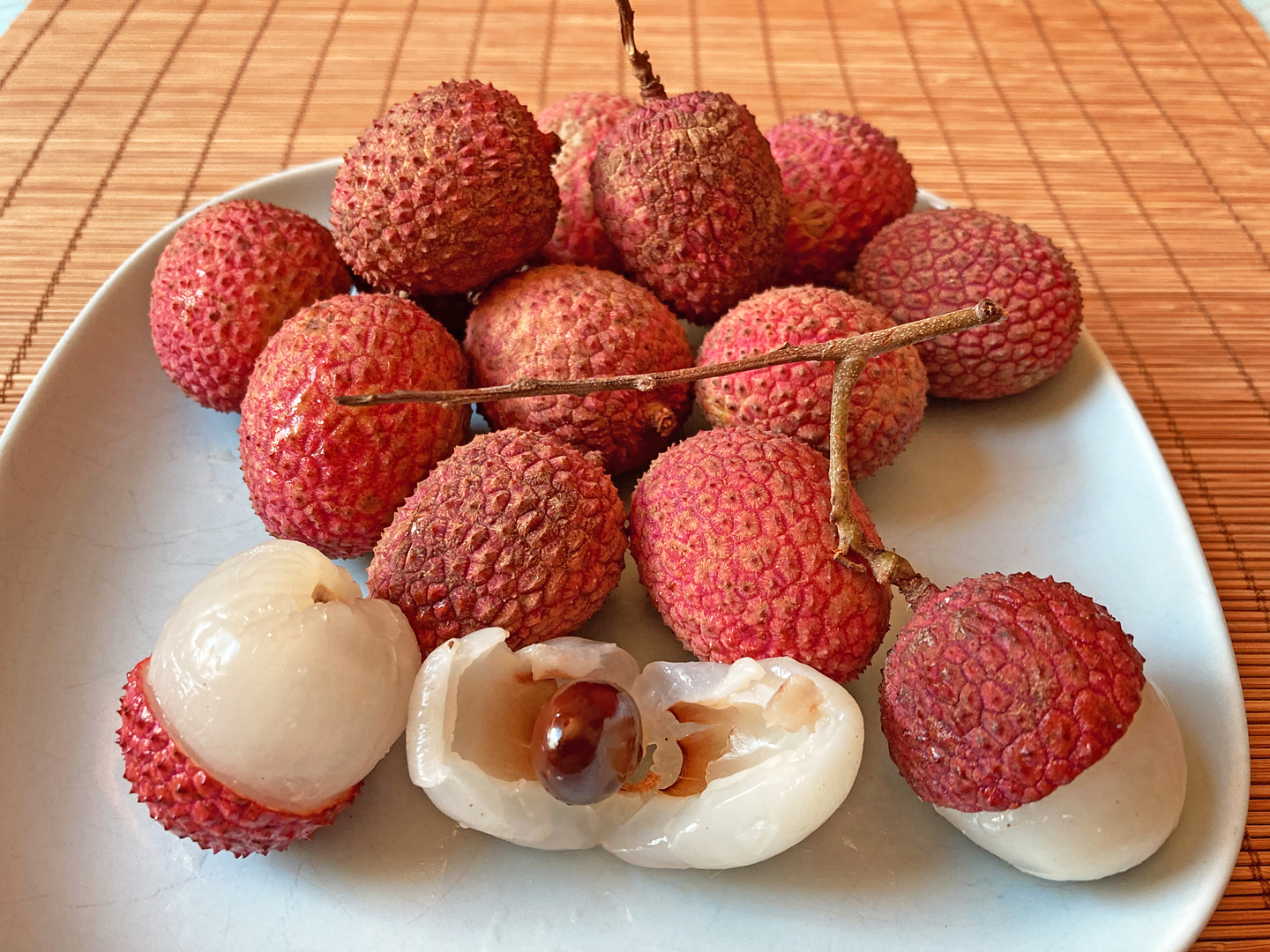
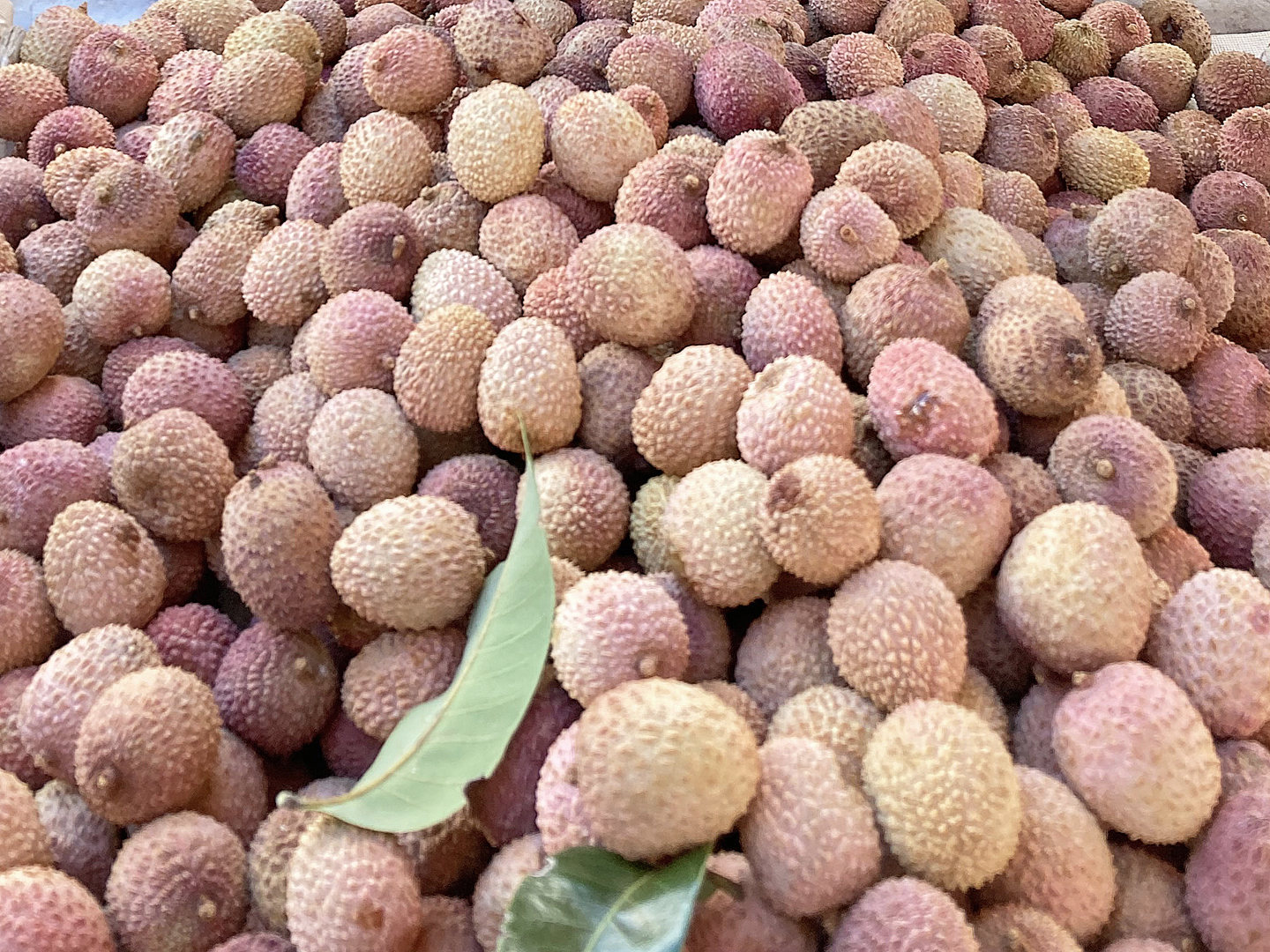
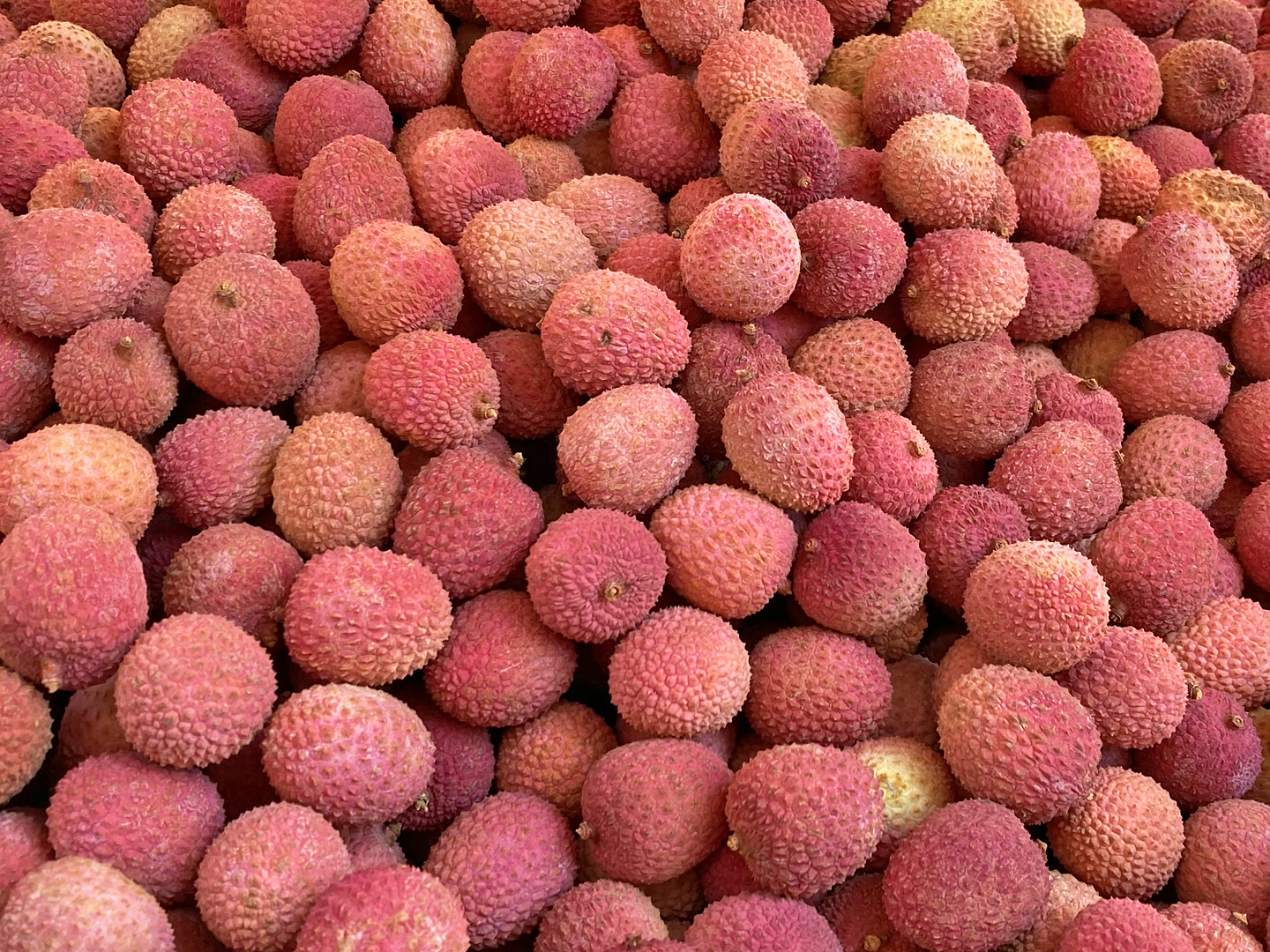
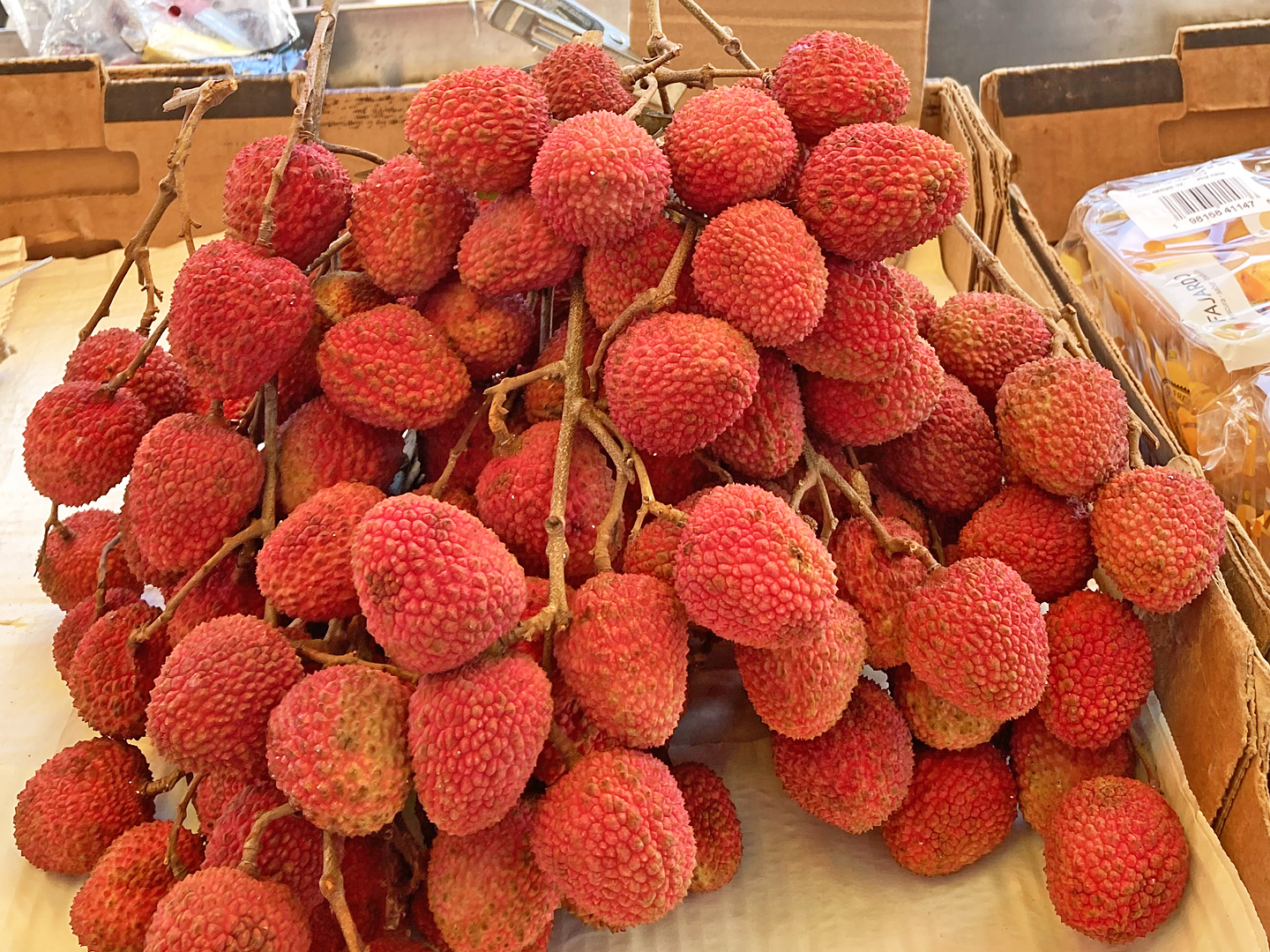
We were in a market that had a pile of lychees on display that looked faded, for lack of a better word, and I suggested that, although it’s not foolproof, deep red lychees would probably be a better choice. We weren’t in Chinatown, however, so that was the only offering.


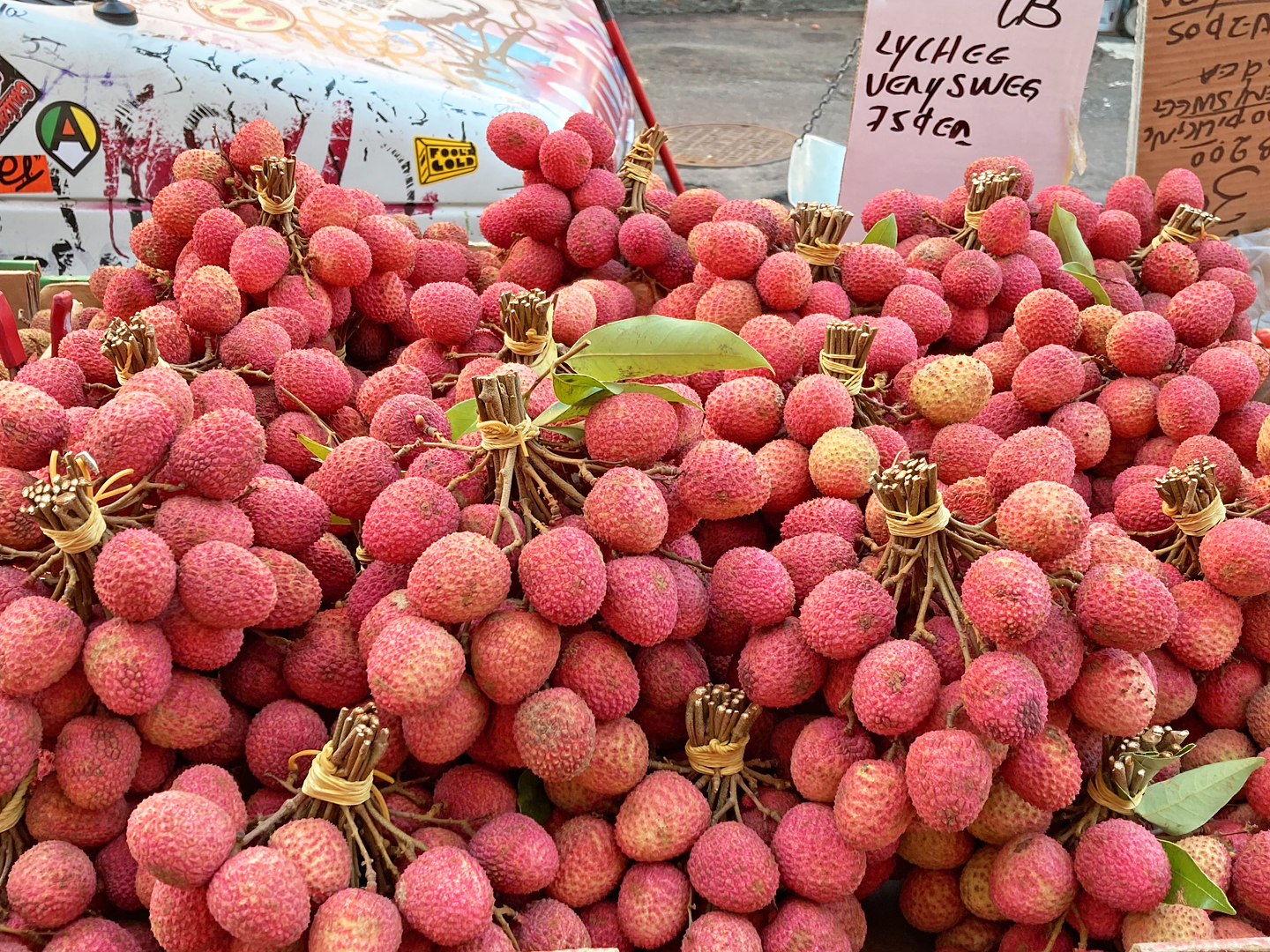
But this time of year in Chinatown, every street vendor will present multiple options and it’s a safe bet that at any given stand, price will be an indicator of quality. Pallid, less expensive lychees just can’t compete against those selling at three pounds for $10 (or $4/lb) – and that’s certainly a reasonable price for a sack of summertime sweetness.


Now let’s dig a little deeper: lychees that are still clinging to their stem will be fresher and juicier than loosies that have gone rogue.


And then you might spot some bright red beauties for $10/lb and their ostensibly identical bright red neighbors at $20/lb both attached to their stems. The difference, although not always clearly noted on the sign, is the size of the seed – and size matters! Smaller seeds (known as “chicken tongue”) yield more fruit inside the thin, textured shell so what appears to be a steeper price evens out when you take into consideration the amount of actual fruit per lychee – not to mention that this variety excels in sweetness.

My vendor of choice is Muoi Truong who has held court at the southeast corner of Canal and Mulberry for over 25 years (as long as I’ve been going there). Top notch produce at competitive prices – and she never fails to greet me when I arrive!

It’s said that New York City boasts at least nine Chinatowns (and perhaps a few more depending upon your definition of what constitutes a Chinatown) and since most specialty fruits are coming into season, this is the perfect time to visit one of them.

More to come….


Crunch Berries

In a manner of speaking.

(Click on any image to view it in high resolution.)

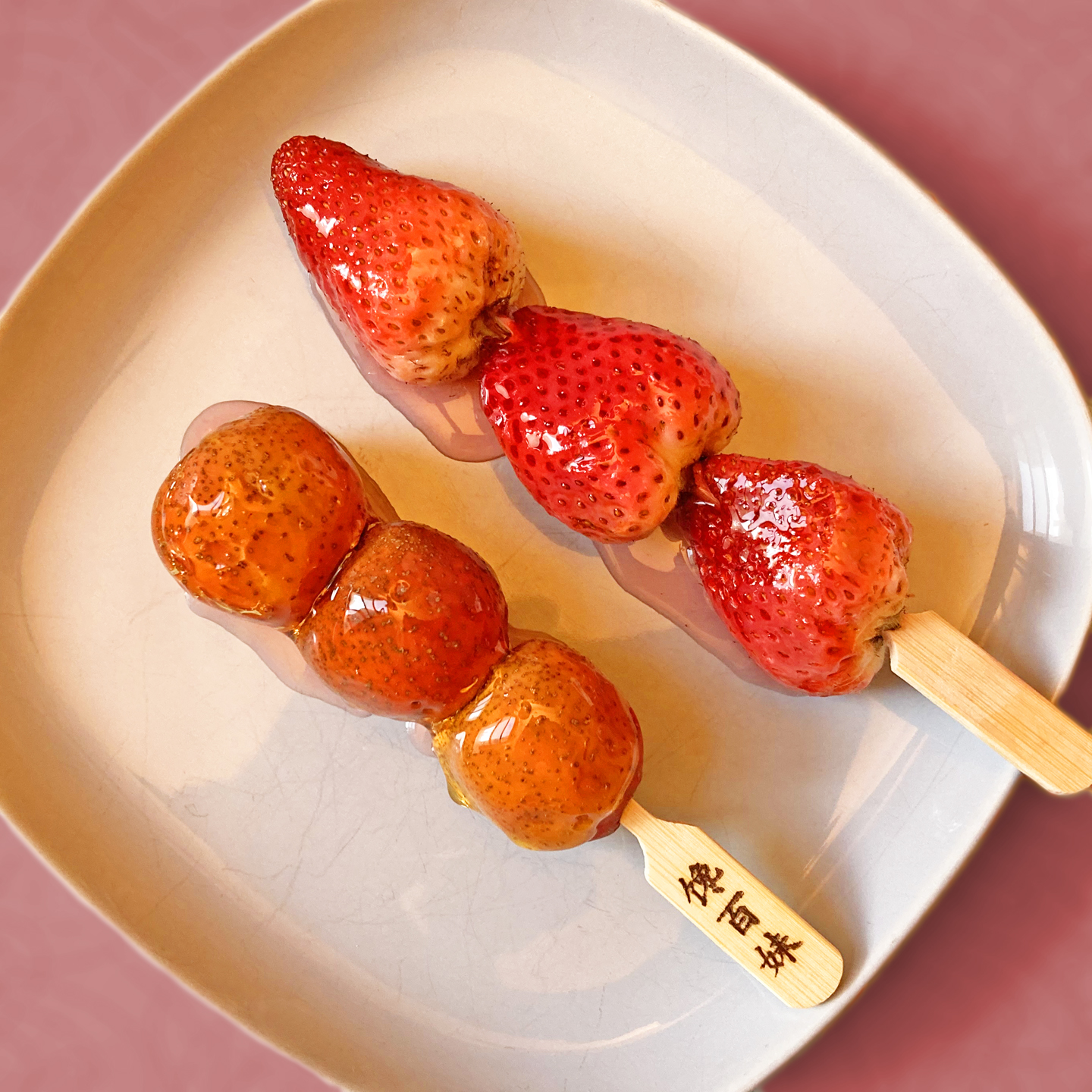
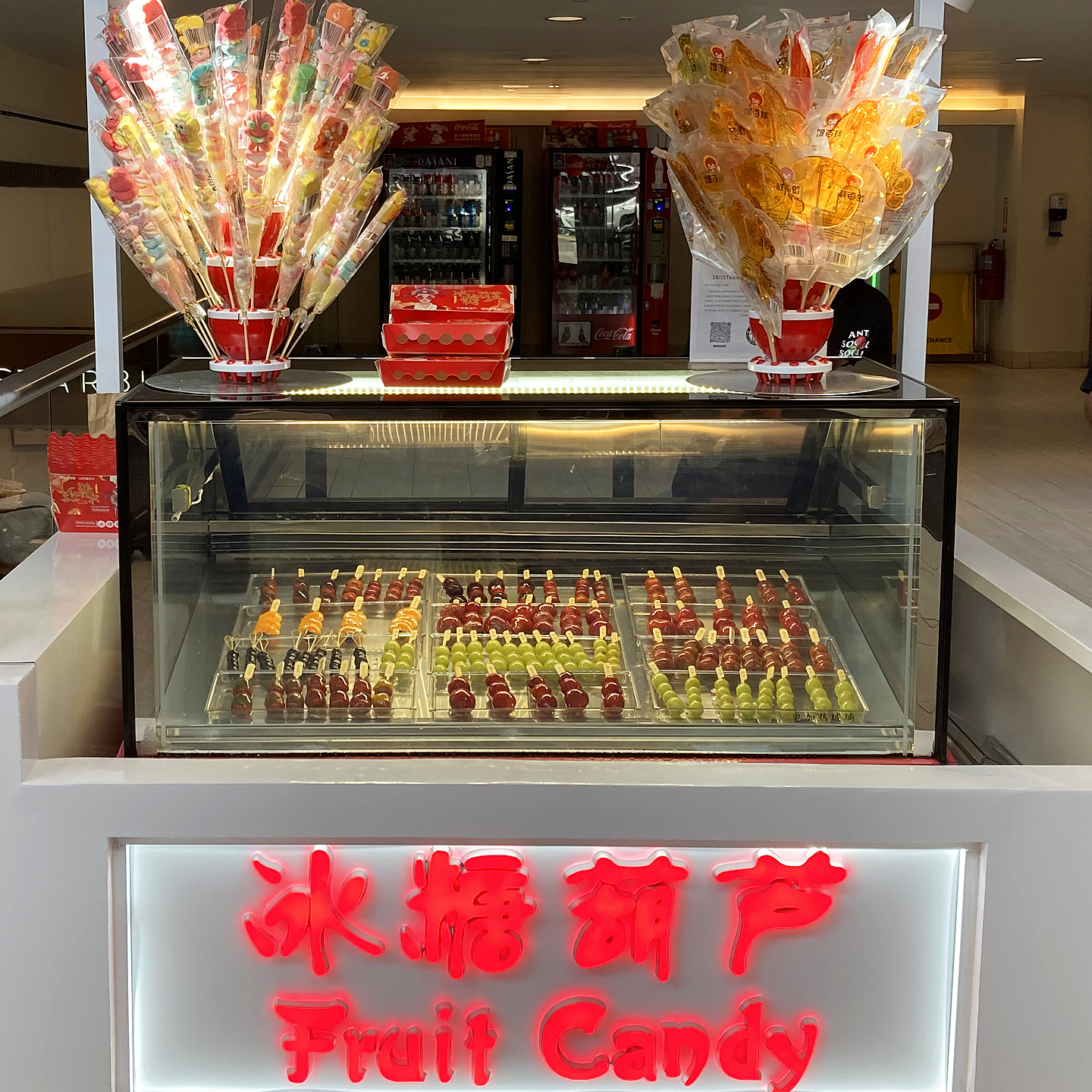
These are Bingtang Hulu (aka Tanghulu): fruits, in this case strawberries and Chinese hawthorn (haw), coated with a crisp sugar shell and impaled on a bamboo skewer. The literal meaning is “sugar calabash” because its shape resembles that of a calabash, the curvy bottle gourd. Think of it as China’s answer to the candy apple.

Haw, traditionally used for these treats, is sweet, tart, tangy and crunchy-apple-firm; nowadays the options are more diverse. [Personal note: As a kid, haw flakes, dried thin discs that come in a diminutive cylindrical pack, were the second Chinese candy I tried; the first was White Rabbit, of course!]


There are a few stands in Flushing that sell these confections and, needless to say, they’re a stop on my Snacking in Flushing – The Best of the Best ethnojunket. Check it out here and sign up to join in the fun!

[And maybe we’ll even pick up some haw flake candy!]


Spooky Season

(Click on any image to view it in high resolution.)

This post is dedicated to someone who loves Spooky Season as much as I love Christmas. Her devotion to all things pumpkin-spice rivals my passion for eggnog. I get it: these ephemeral seasons only come around once a year, and we are obliged to indulge enthusiastically before they evanesce.

But because my focus is all about international treats and since Spooky Szn is as American as apple – er, pumpkin – pie, I’ve never been able to write about it here and still stay within my rubric.

Until now.

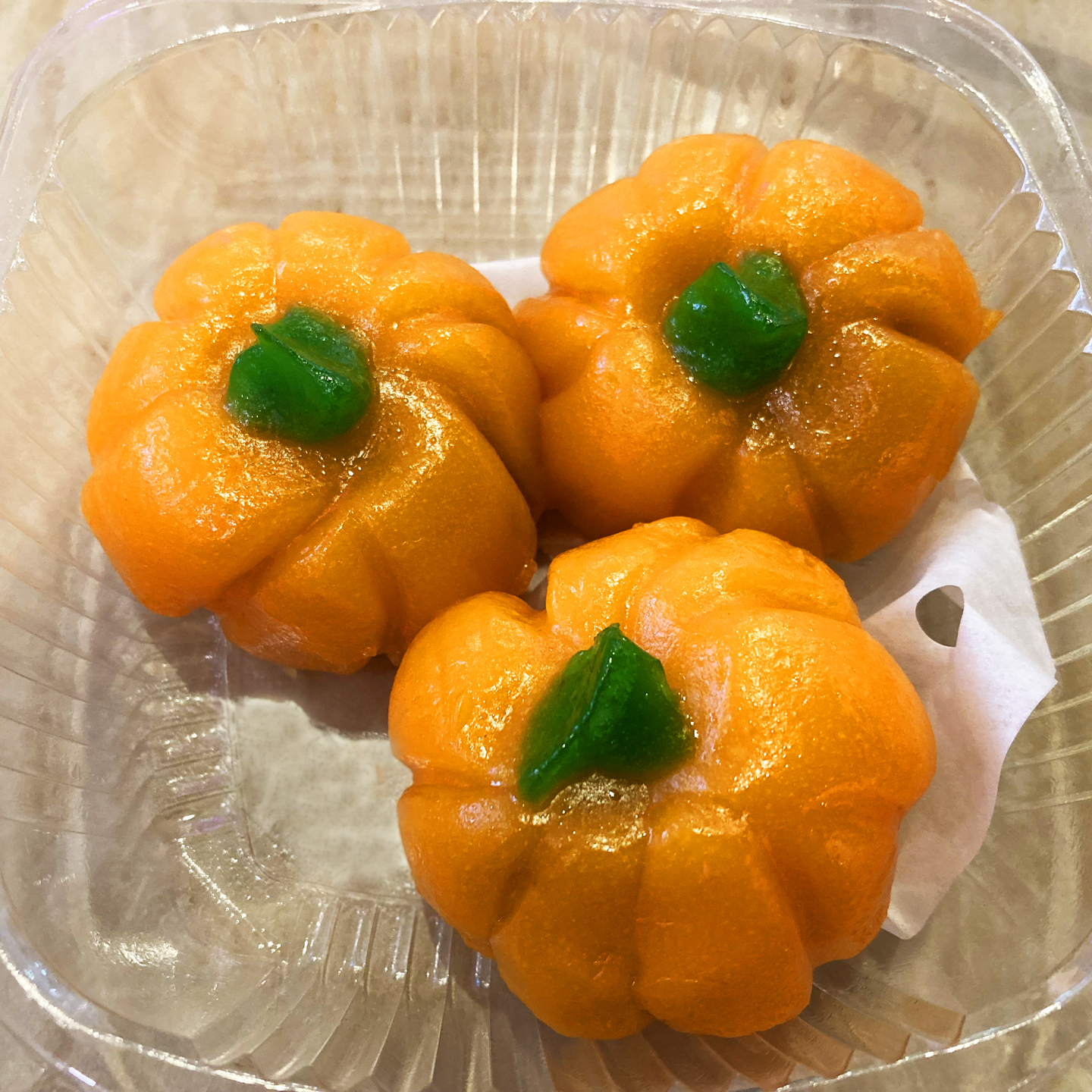
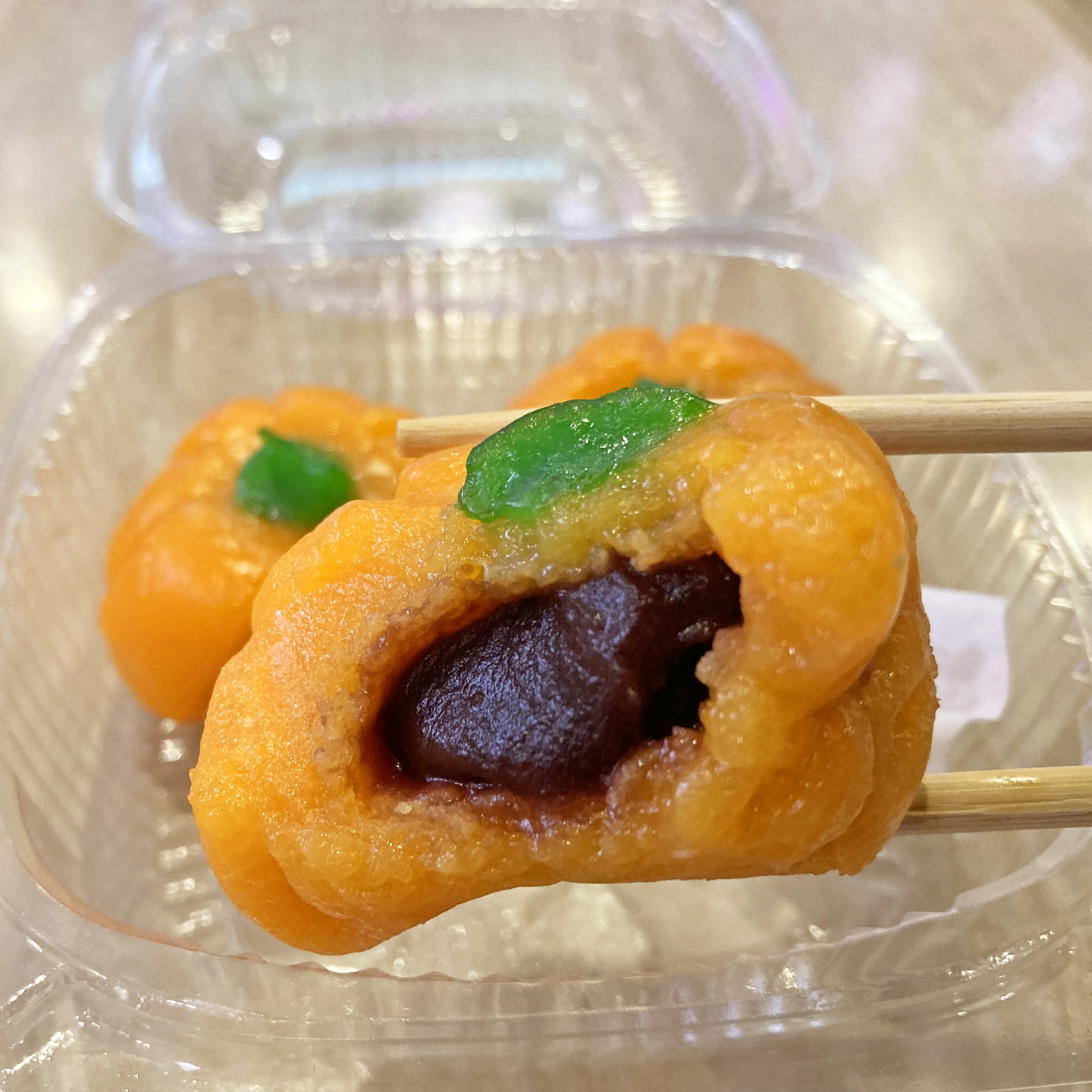
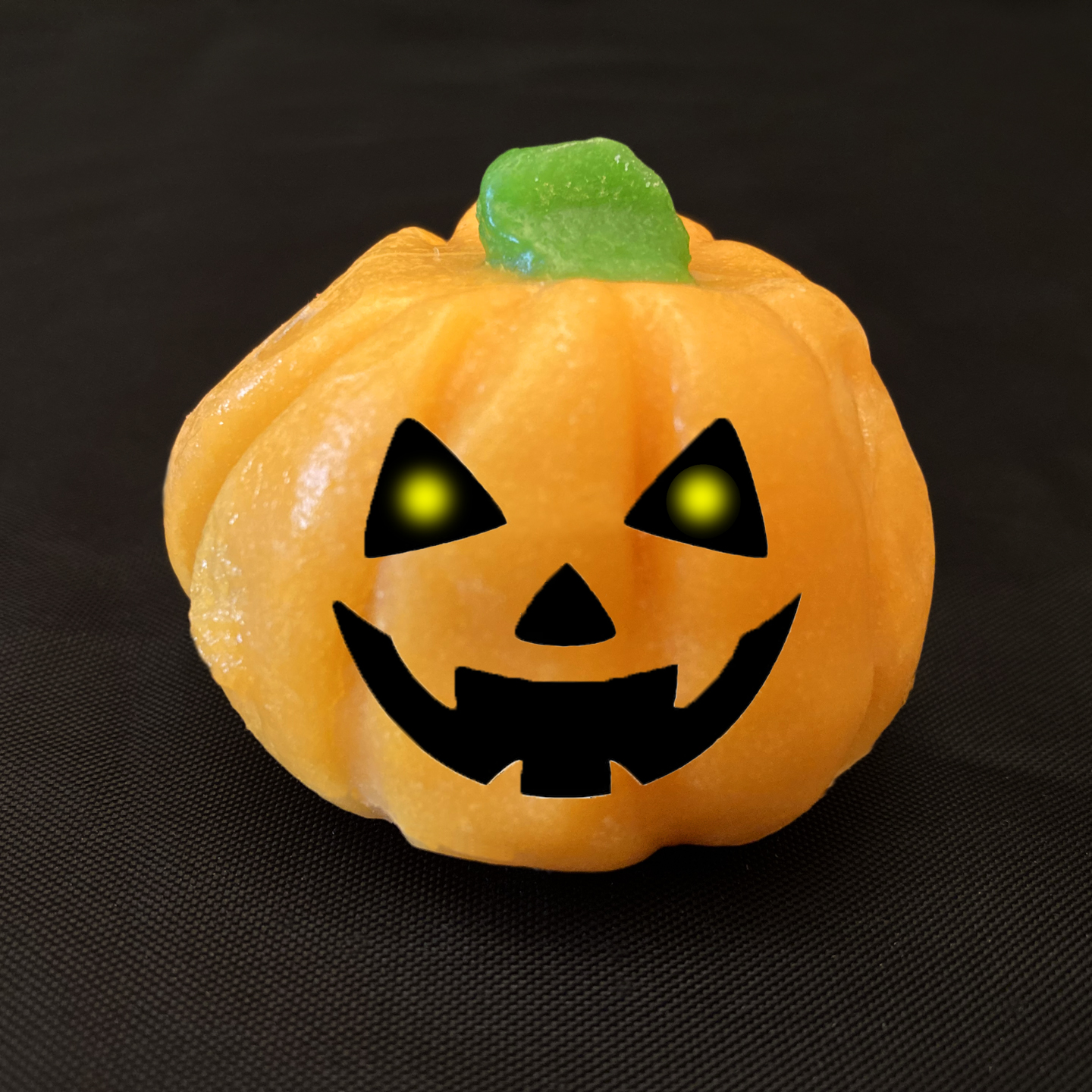
I spotted these dim sum at the Main Street level grab-n-go outpost of Royal Queen Restaurant in Flushing. They’re not pumpkin flavored of course and they’re not filled with candy, but they are filled with sweet bean paste so as far as I’m concerned we have an acceptable crossover here.


Couldn’t resist taking a minute to PShop it a bit! 🎃


Chinese Mid-Autumn Festival – 2023

(Click on any image to view it in high resolution.)

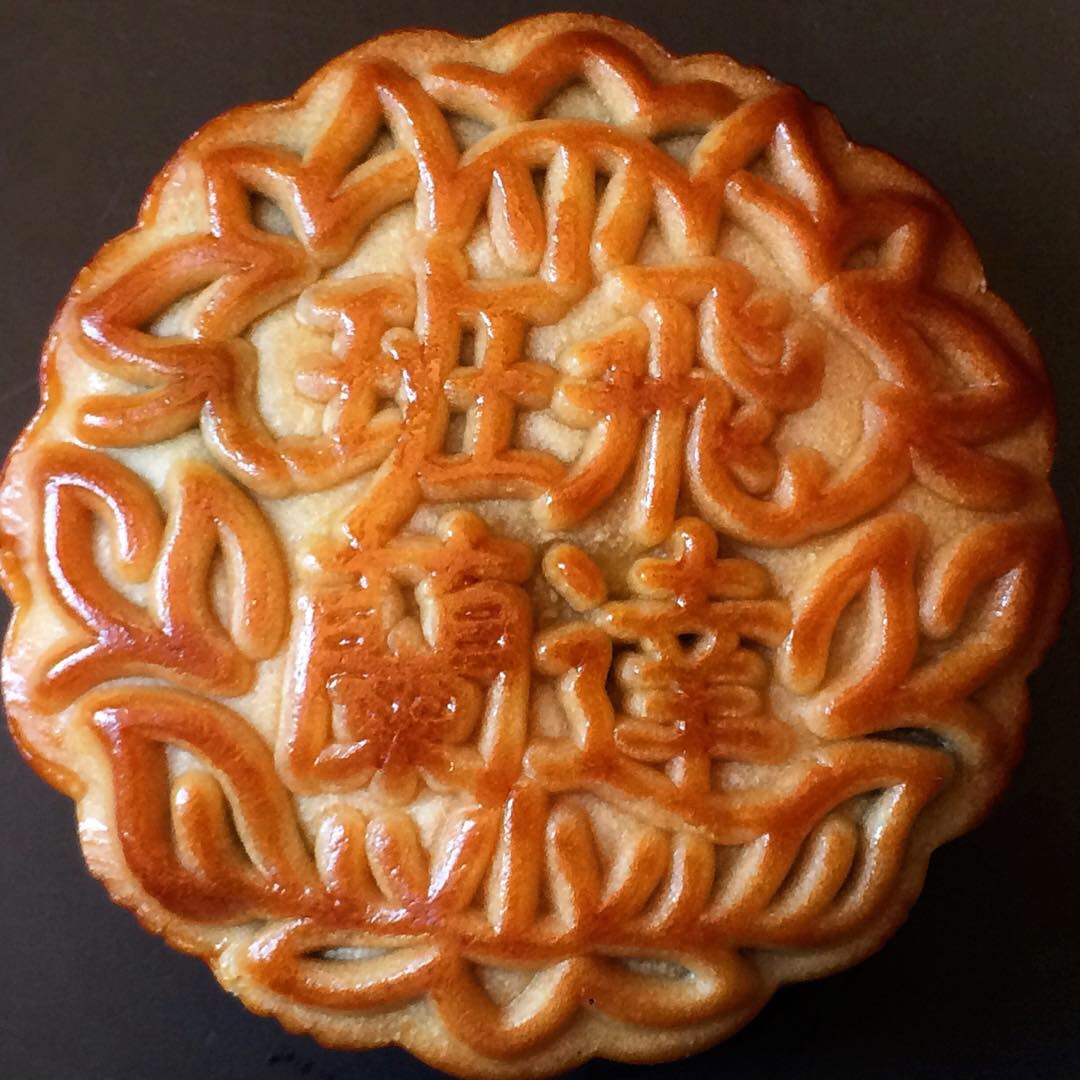
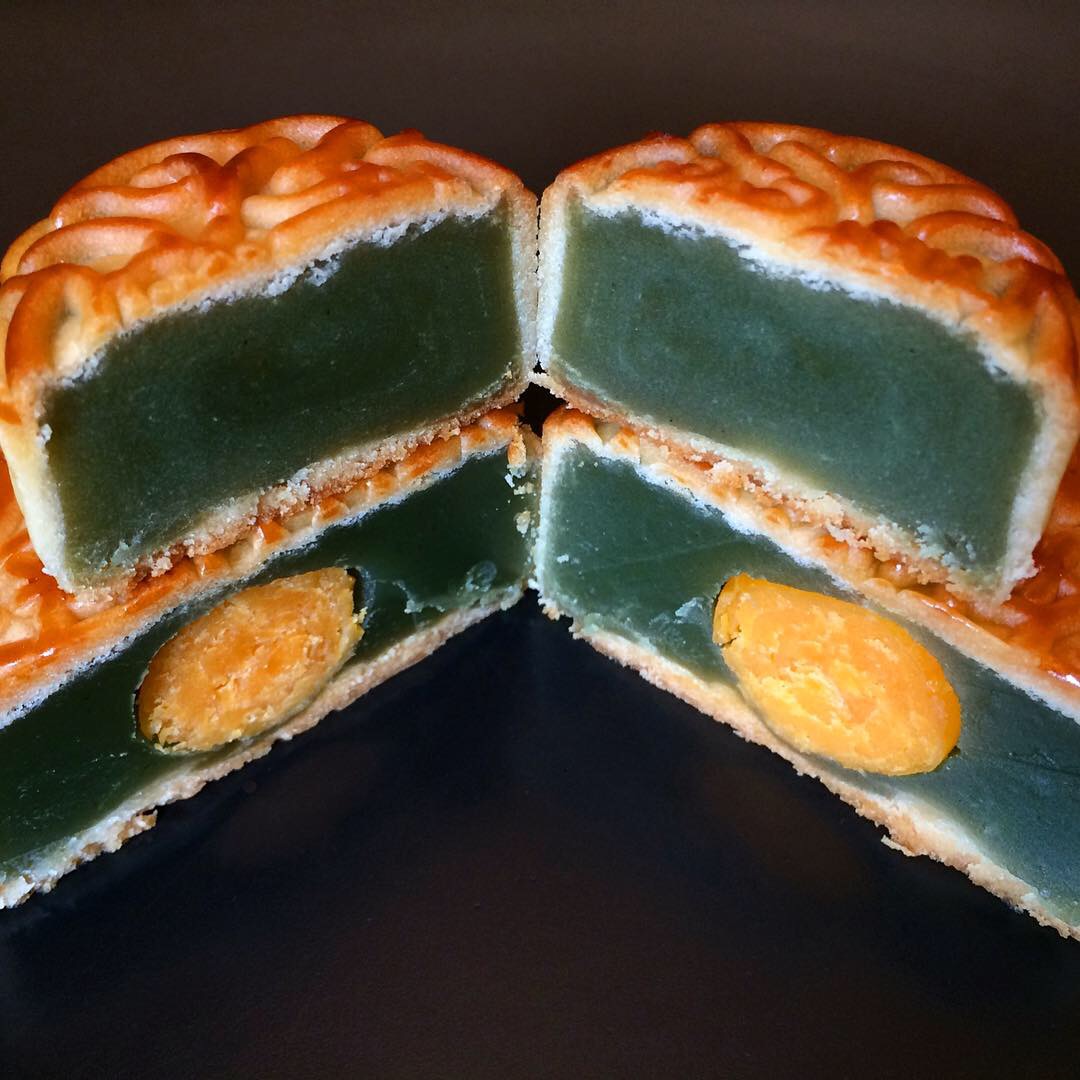
A visit to any Chinatown bakery this time of year will reveal a spectacular assemblage of mooncakes (月餅, yue bing) in a seemingly infinite variety of shapes, sizes, ornamentation, and fillings, all begging to be enjoyed in observance of the Mid-Autumn Festival, celebrated this year on September 29. Here are two pandan mooncakes, one with preserved egg yolk and a mini version without, from Chinatown’s Fay Da Bakery.


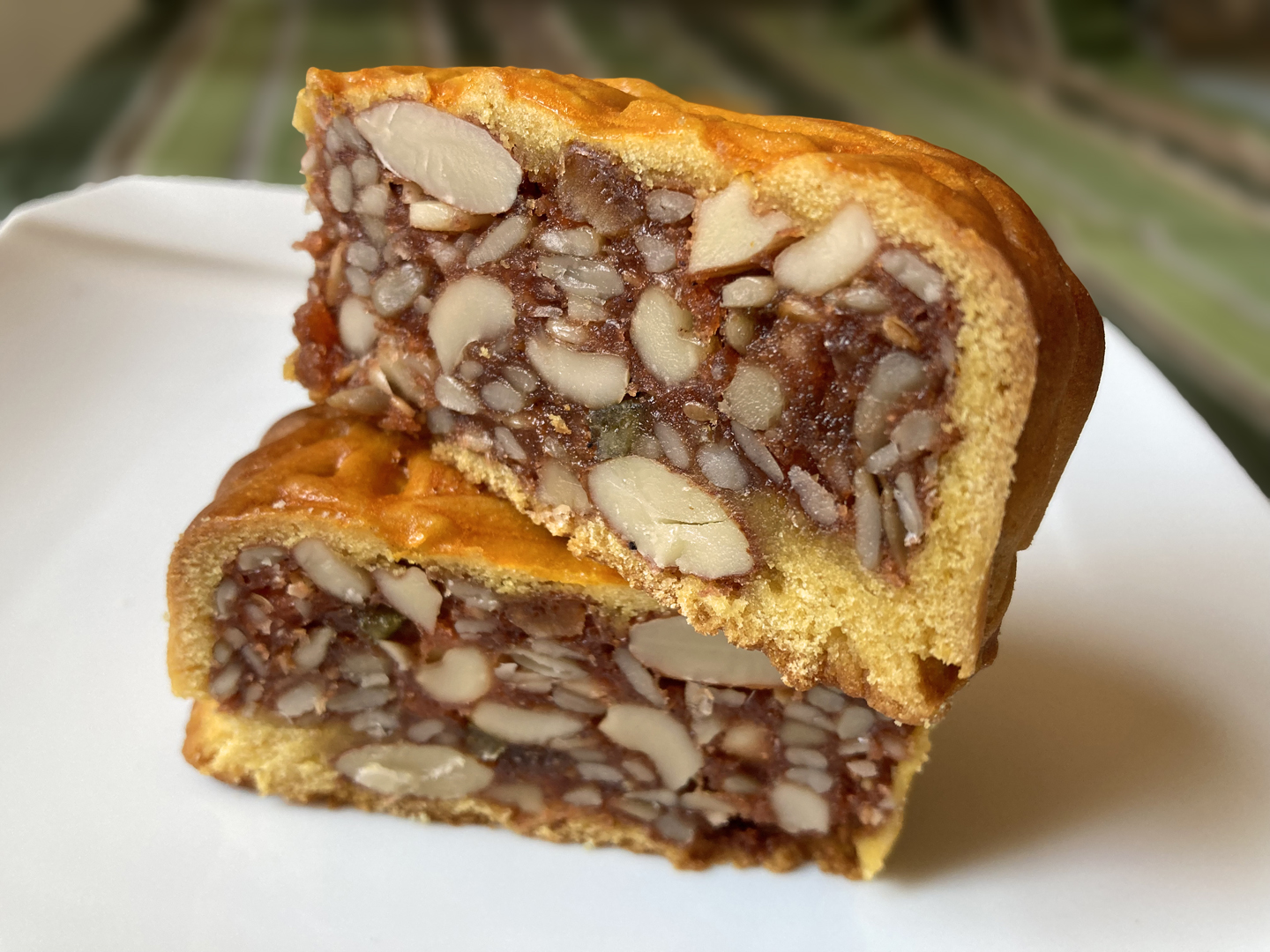
And here’s one of my favorites, Five Mix Nut Moon Cake, from Golden Fung Wong Bakery at 41 Mott St – one of the stops on my Manhattan Chinatown ethnojunket, of course!

Since 2023 is the Year of the Rabbit, known for his elegance among many other characteristics depending upon where you do your research, I decided to purchase an assortment of these elegant delicacies in order to share them, virtually, with you.

For a deep dive into the holiday and these delicious treats, you can get the skinny – er, poor choice of words there – in my Chinese Mooncakes Demystified page detailing their similarities and differences in an attempt to shed some light (moonlight, of course) on their intricacies.

中秋节快乐!


Shakalaka Bakery

(Click on any image to view it in high resolution.)

The cliché applies to each of New York City’s nine Chinatowns: So many bakeries, so little time. And Flushing is no exception rocking its major chains, smaller collectives, and the occasional singleton.

Each is known for its specialties, and each has its loyal followers who passionately champion their choice of who has the best Don Tat (egg tarts), the best Char Siu Bao (BBQ pork buns), the best Jian Dui (sesame balls) – you get the idea. The larger chains have a reliable contingent of the most popular goodies (like the aforementioned) but it seems to me that the smaller the establishment, the more likely you are to find something unique.

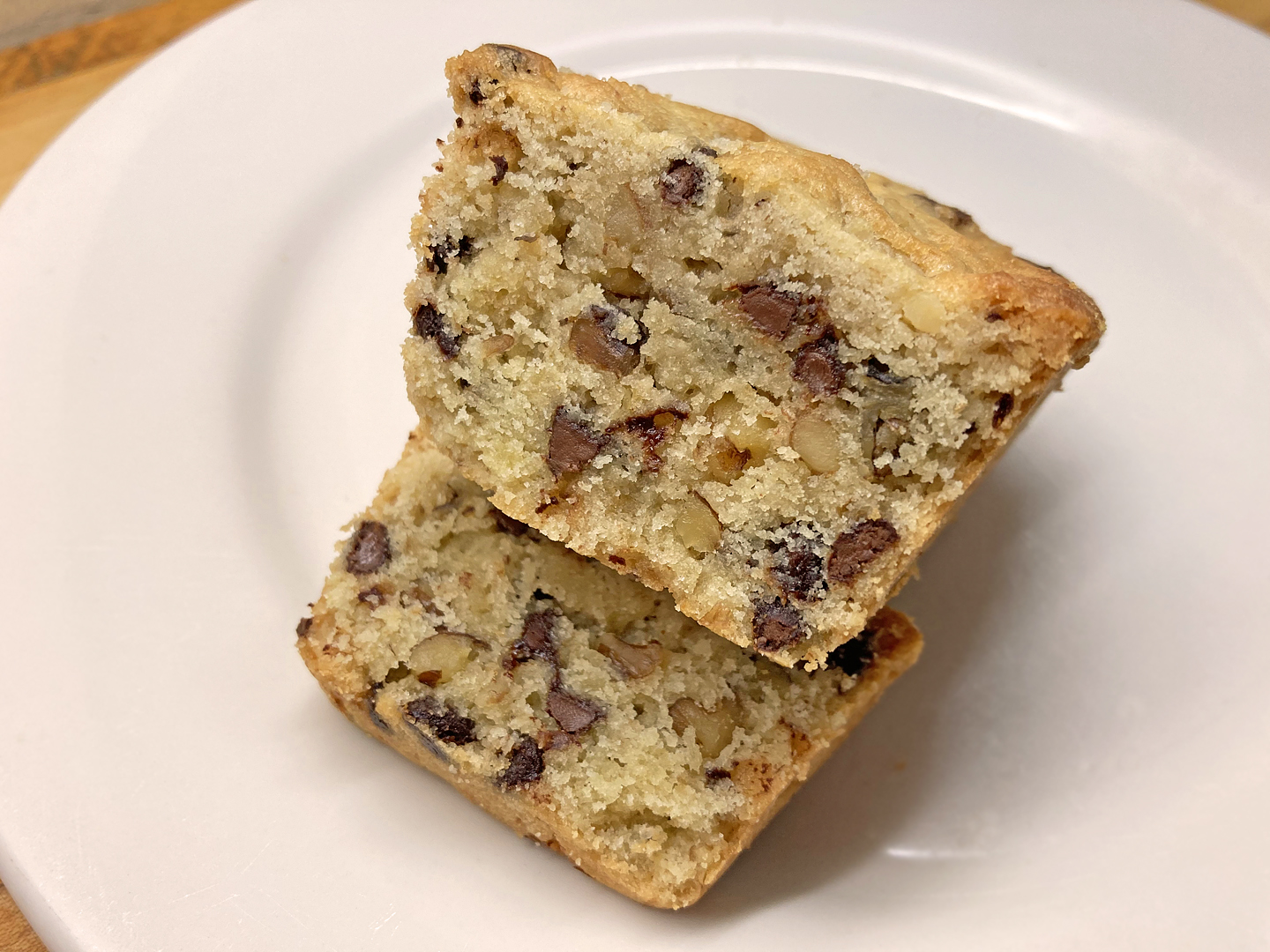
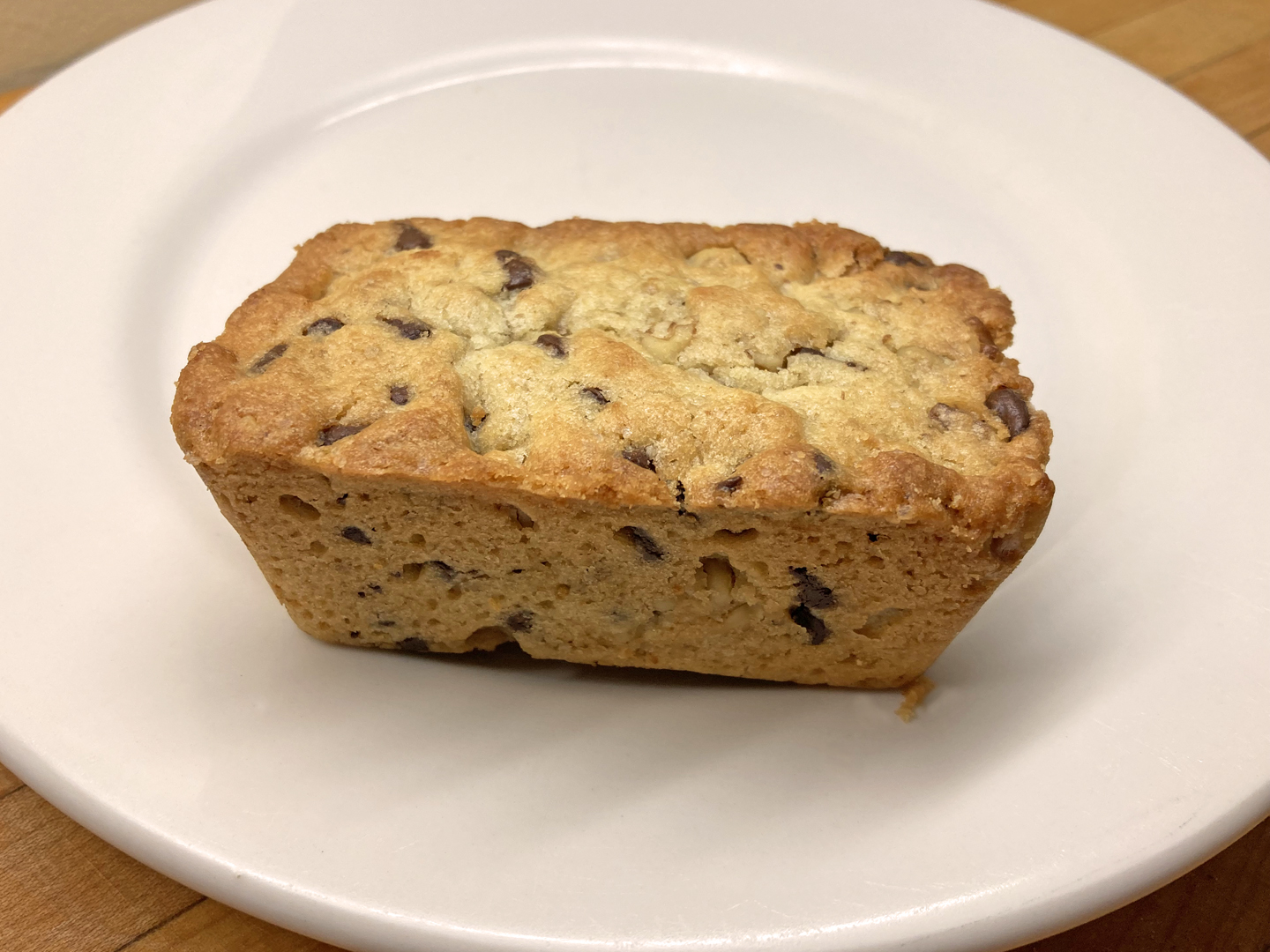
Shakalaka Bakery at 136-76 Roosevelt Ave in Flushing is one such enterprise. I entered in search of crispy, crumbly, almond thins but was stopped in my tracks by a sign that read “Gooey Chocolate Cookies” perched over a tray of baked goods that looked more like mini loaves than cookies. Obviously, since gooey, chocolate, and cookie comprise a hat-trick, I had to indulge. I’m hard pressed to describe it as a cookie, but I can vouch for the fact that it was a righteous snack on the subway ride back. (What – you thought I’d wait until I got home?)

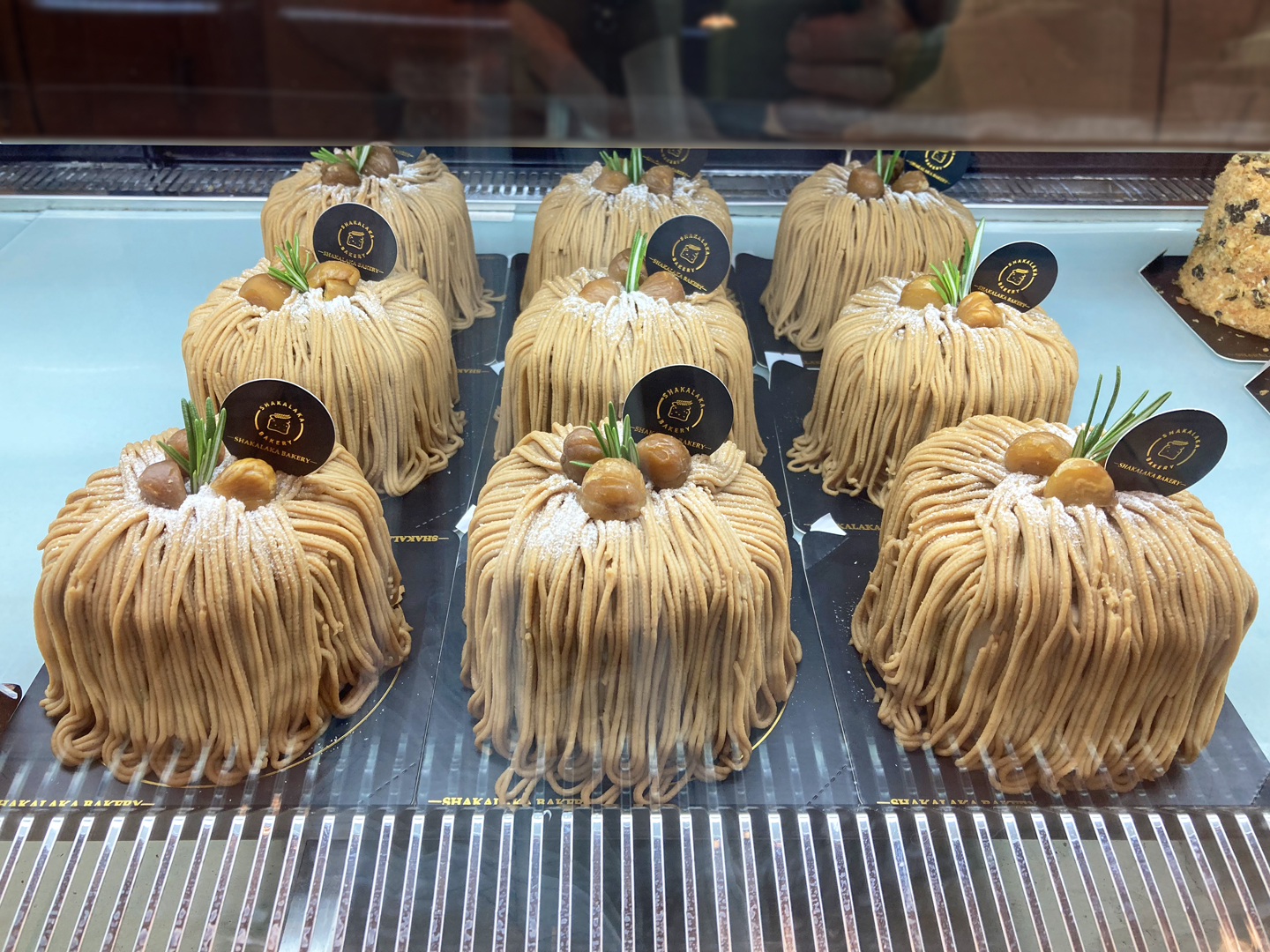
And in other news, although I didn’t purchase it, the label on these diminutive carbobombs was “Chestnut Cake”.

I think “Cousin Itt Cake” would have nailed it, but that’s just me.


Guoyu Spicy Fruit

(Click on any image to view it in high resolution.)

In case you were thinking that Mexico had cornered the market in sweet fresh fruit garnished with a spicy topping (Tajín, for example), please allow me to disabuse you of that notion.

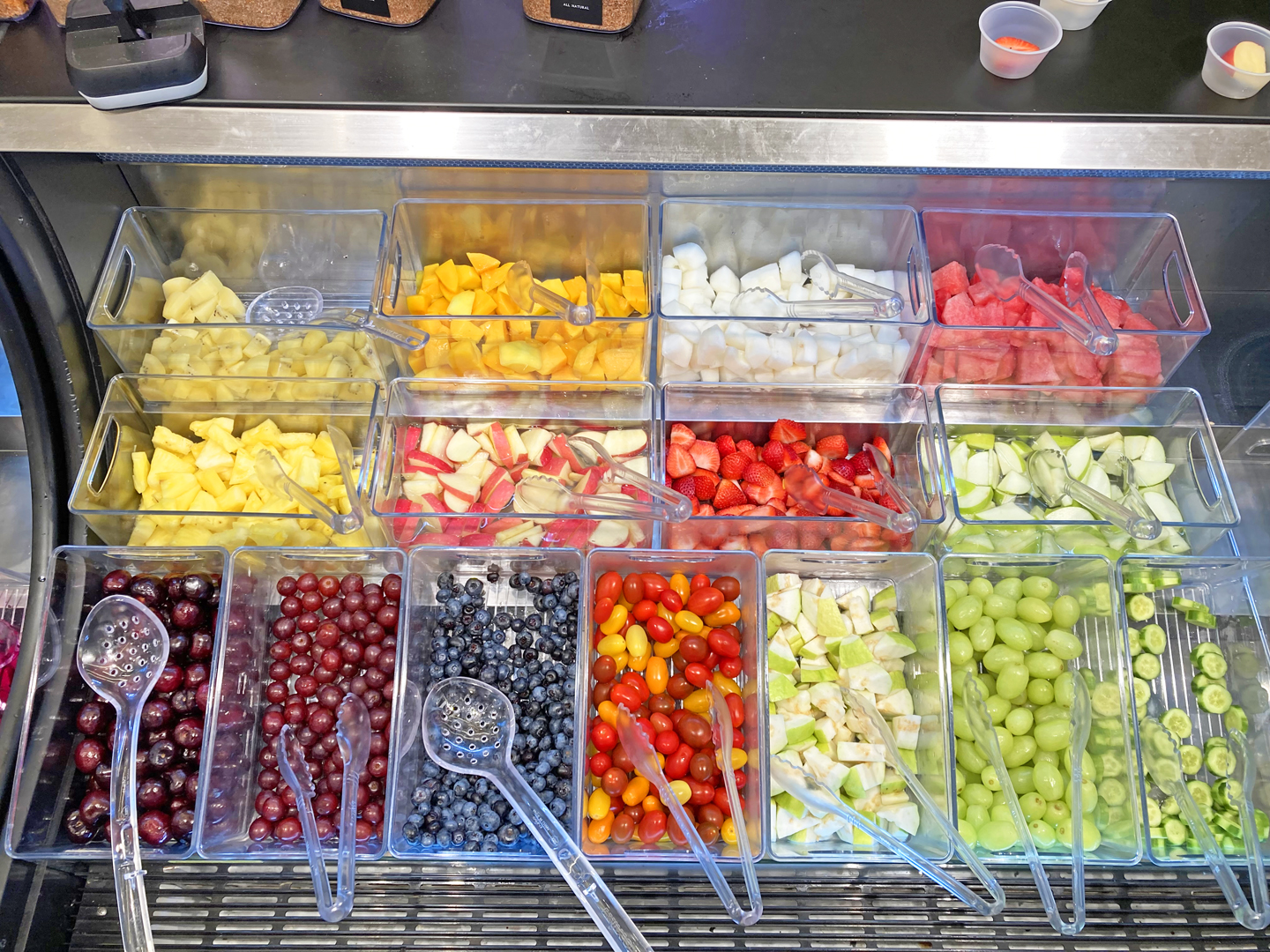
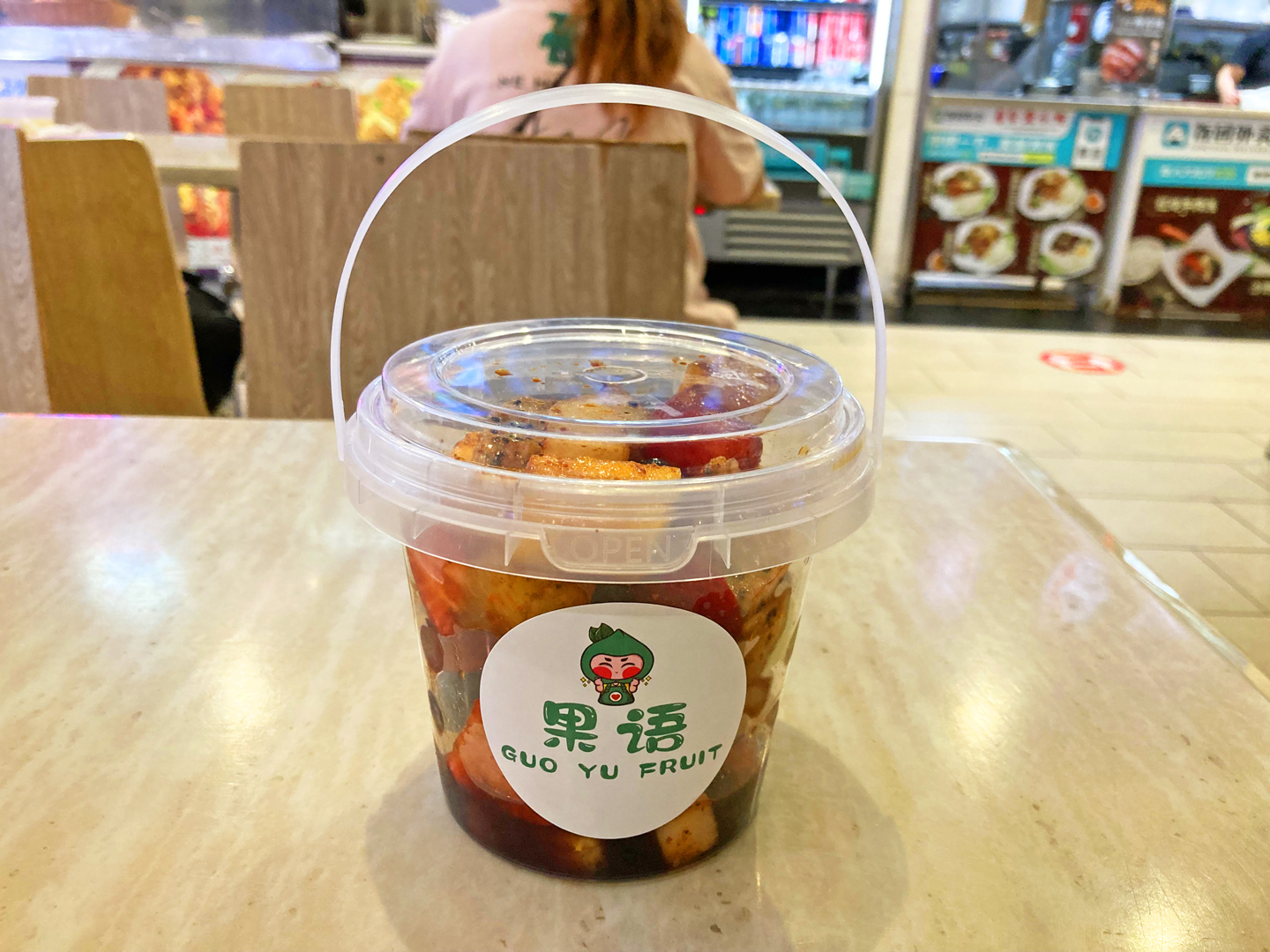
I was in Flushing scoping out new and unusual goodies for my “Snacking in Flushing – The Best of the Best” ethnojunket and I discovered Guoyu Spicy Fruit in the revived Golden Mall at 41-28 Main St. They’ve been there about a month offering 16 varieties of cut fruits with a choice of either spicy chili or sweet yogurt mix-ins.

You’ll see samples for each of the two options. Taste the spicy sample and then channel Goldilocks requesting spicier than this, less spicy, or just right. Personally, I think the idea is brilliant – so much more meaningful than an arbitrary numbering system that’s relative to nothing.

The sweet yogurt option comes with an assortment of toppings such as popping boba, coconut, sprinkles, crumbled chocolate cookies, nuts & raisins, and the like so you can customize your treat per the sample cups as well.

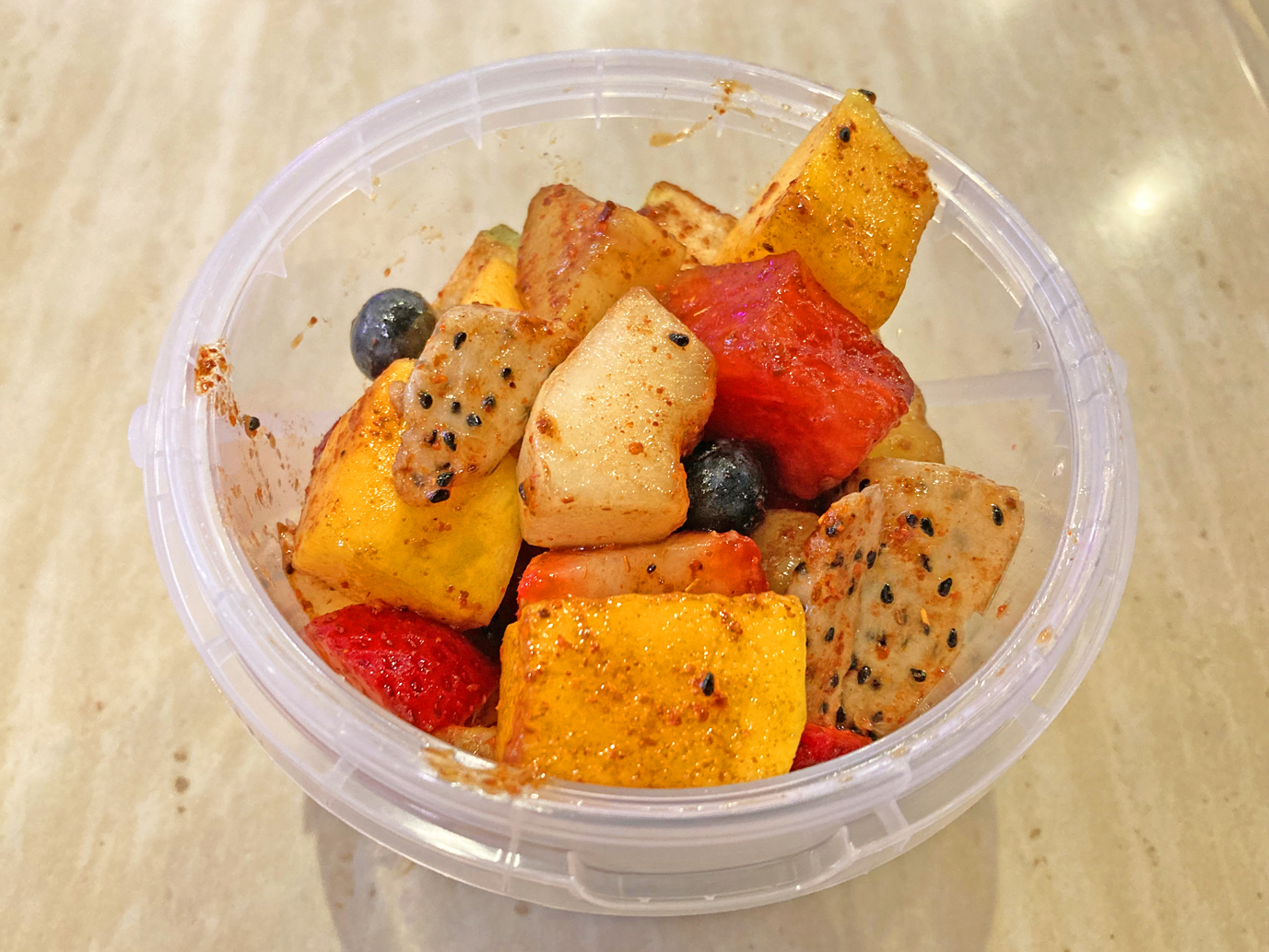
Naturally, I was all in on the spicy option. You fill up either size (¾ or 1 liter) container yourself with as many or as few kinds of fruit as your heart desires and specify the topping to be mixed into it. I’m pleased to report that it was truly delicious – how could it not be?

But even the smaller size was more than I could finish in a single sitting, so I brought the remainder home with me – and that’s when I went rogue: I tried it over vanilla ice cream and it was positively synergistic. Turned out it was also a perfect foil for mixing into tapioca pudding. The day after that, I anointed my breakfast French Toast with some of the remaining sweet, spicy juice: who needs cloying maple syrup? I will even admit that I poured a bit into a glass of ice cold Coca Cola by way of experimentation – and it actually worked!

I am more than happy with this – not to mention that it’s good for you! Fresh fruit and spice – no fat, no sugar added. Plus check out the adorable multi-purpose bucket that it comes in!

I’m curious to see what you think, either if you’ve been there or are planning to go; let me know in the comments below!


July is National Ice Cream Month! Celebrate Globally!

The story began here:

Every August, as a routinely flushed, overheated child, I would join in chorus with my perspiring cohorts, boisterously importuning, “I scream, you scream, we all scream for ice cream!” Little did I realize that rather than conjuring dessert, I was conjugating it and probably laying the groundwork for a lifetime of fascination with foreign languages and world food.

We lived in close proximity to one of the best dairies in town; it was known for its wide assortment of locally produced natural flavors, certainly sufficient in number and variety to satisfy any palate. Perhaps my obsession with offbeat ice cream flavors is rooted in my frustration with my father’s return home from work, invariably bearing the same kind of ice cream as the last time, Neapolitan. Neapolitan, again. My pleas to try a different flavor – just once? please? – consistently fell on deaf ears. “Neapolitan is chocolate, strawberry and vanilla. That’s three flavors right there. If you don’t want it, don’t eat it.” Some kids’ idea of rebellion involved smoking behind the garage; mine was to tuck into a bowl of Rum Raisin….

There’s lots more to the story, of course. Click here to get the full scoop! 🍨


Dragon Boat Festival – Zongzi Day

(Click on any image to view it in high resolution.)

Dragon Boat Festival, the time-honored Chinese holiday that occurs on the fifth day of the fifth month of the Chinese calendar, commemorates the death of the beloved poet and scholar Qu Yuan in 278 BCE. The holiday interconnects the poignant tale of his demise, dragon boats, and zongzi, the traditional sticky rice dumplings associated with the event; in 2023, the date corresponds to June 22.


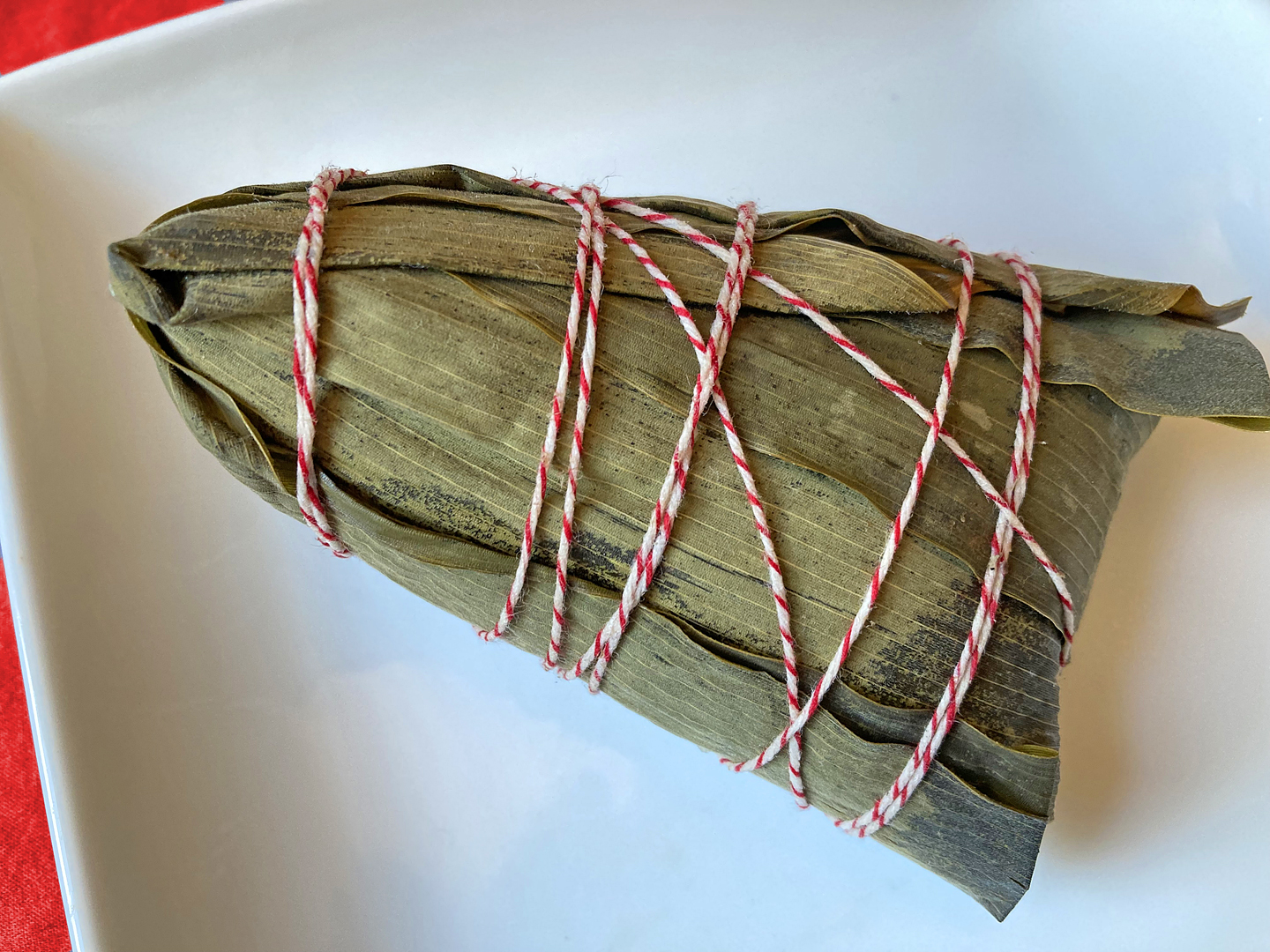
Zongzi (aka joong in Cantonese) are fashioned from sticky rice wrapped in bamboo leaves and shaped into triangular semi-pyramids tied with twine. At your local dim sum parlor, you might see sticky rice wrapped in lotus leaves but those are Lo Mai Gai, usually rectangular or pillow shaped and featuring chicken – different but also delicious.


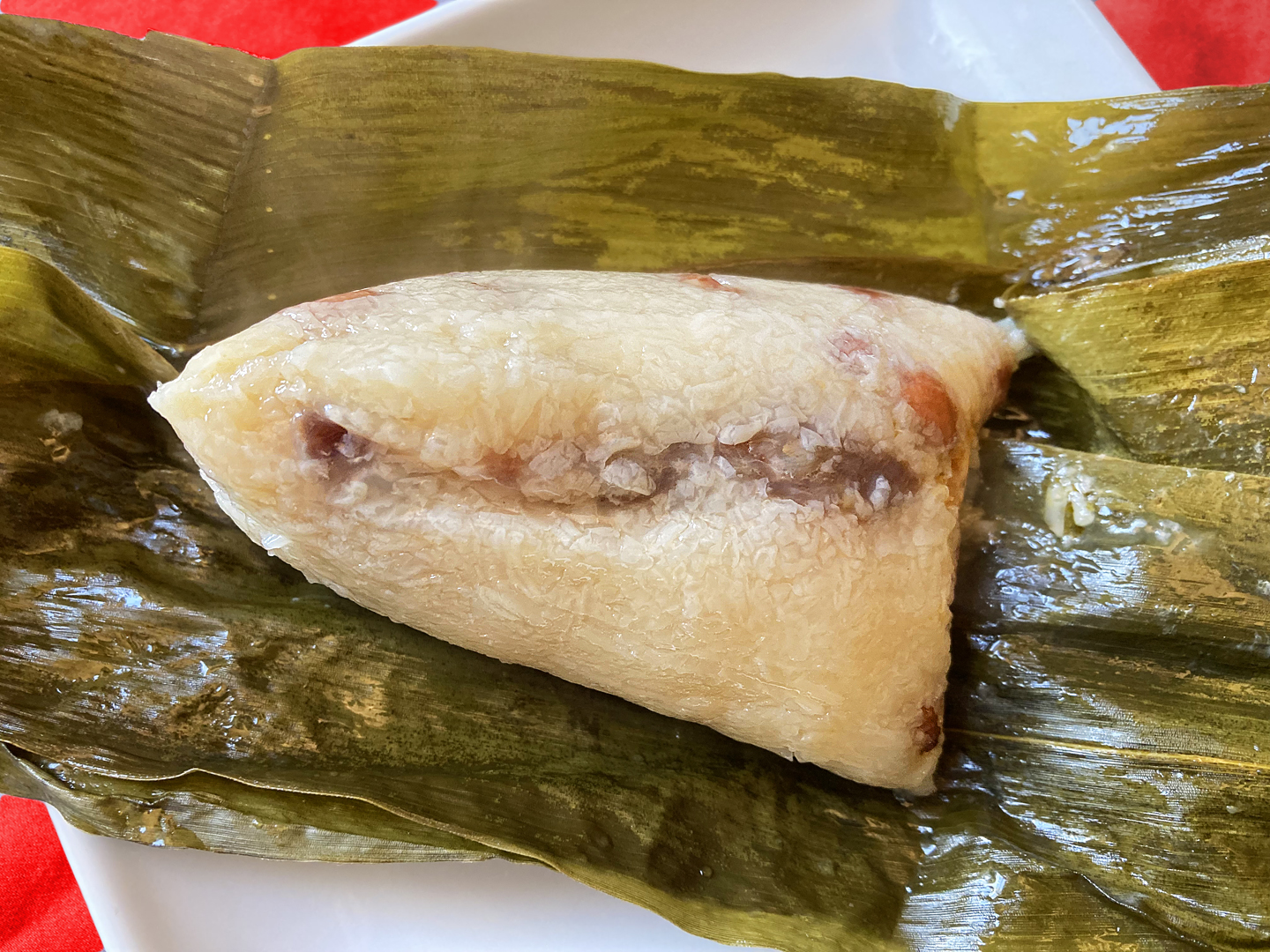
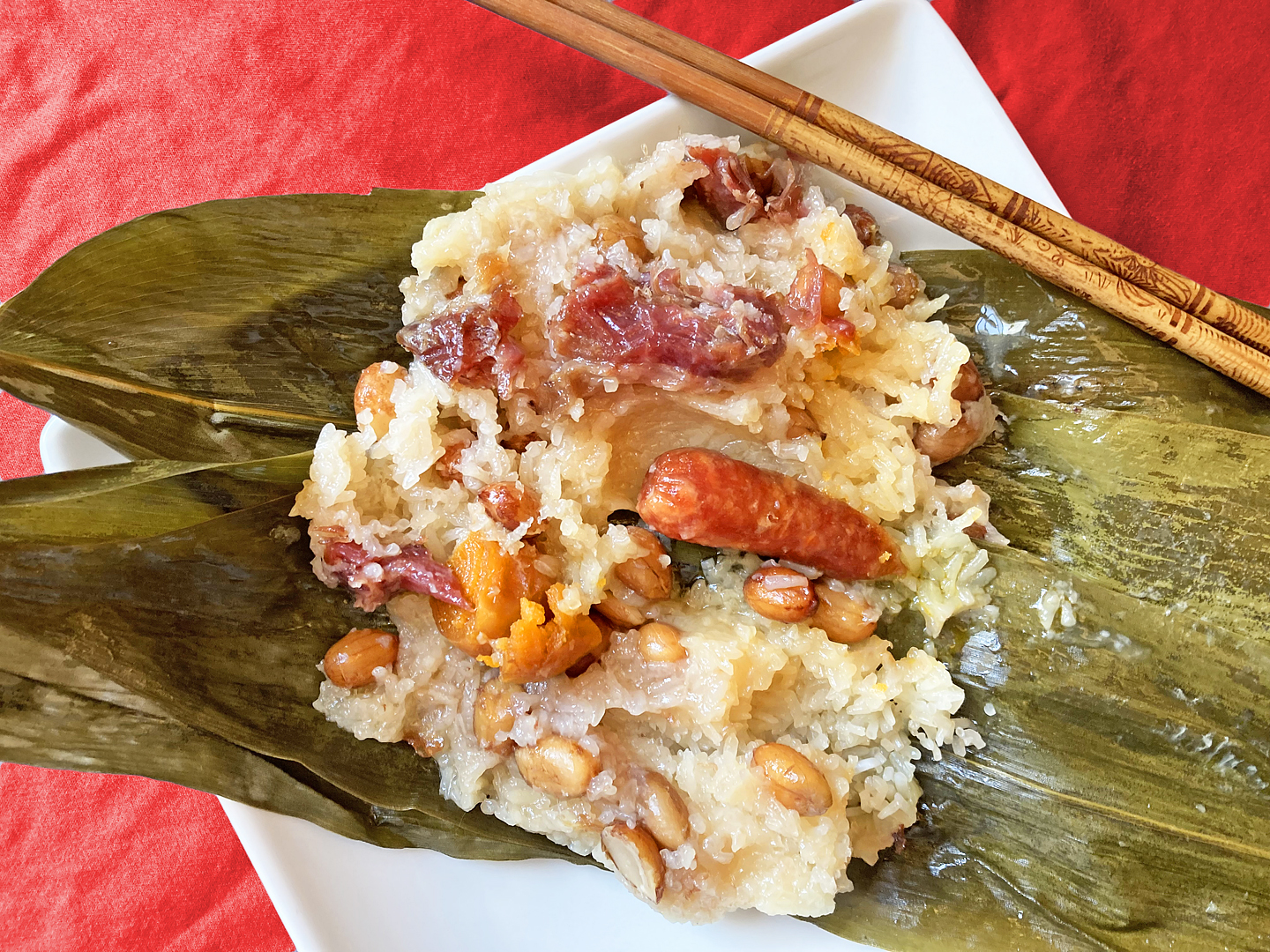
They’re made with an array of fillings, some sweet, some savory, and the particular flavor distinctions vary throughout regions of China and elsewhere in Asia. Here in New York City, it’s easy to find savory versions packed with peanuts, pork belly, lap cheong (Chinese sausage), ham, salted duck egg, dried shrimp, mushrooms and more in various permutations and combinations; they’re available year round in any of our nine Chinatowns. (Yes, nine. We are blessed.) Sweet types include red dates and sweet bean paste.

For best results, steam them first, then snip off the twine, unfold the leaves, and dig in.

This one has all of the savory ingredients I mentioned (you can play Where’s Waldo with it if you like); it came from M&W Bakery, 85A Bayard St in Manhattan’s Chinatown, where they offer at least five varieties.

And yes, of course that’s one of the stops on my Manhattan Chinatown ethnojunket.