La Colomba di Pasqua

(Click on any image to view it in high resolution.)
Two notable celebrations of the season, Easter and Passover, are thisclose to being concurrent this year. It’s no coincidence that the Italian word for Easter (pasqua) and the Hebrew word for Passover (pesach) are closely related, although culinarily the holidays couldn’t be more disparate. During this time of year, Jewish families are expunging their homes of even the most minuscule crumb of anything leavened, and Italians are baking Easter breads like they’re going out of style.

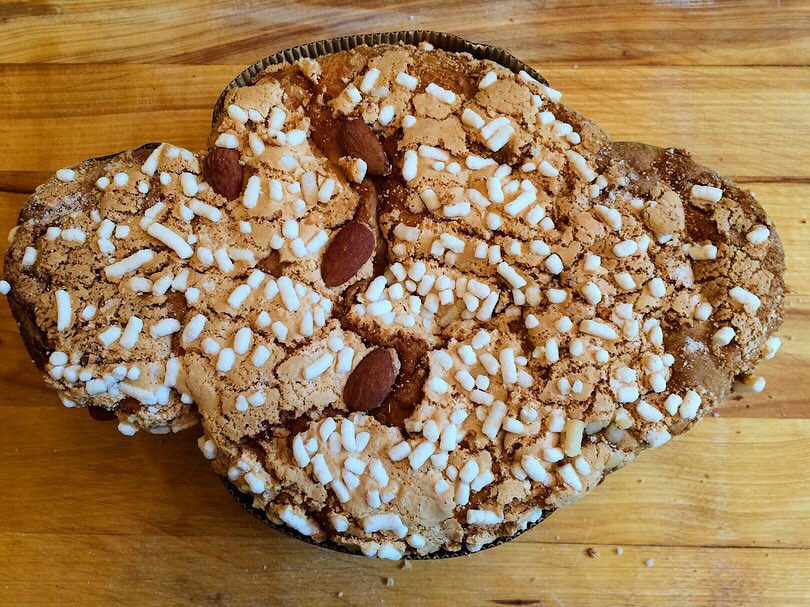
Italy’s traditional seasonal bread is La Colomba di Pasqua (“The Easter Dove”), and it is essentially Lombardy’s Eastertime answer to Milan’s Christmastime panettone. These deliciously sweet, cakey breads, in some ways Italy’s gift to coffeecake but so much better, are fundamentally the same except for two significant distinctions: the colomba is baked in the shape of the iconic dove that symbolizes both the resurrection and peace, and the recipes diverge with the colomba’s dense topping of almonds and crunchy pearl sugar glaze. Traditionally, a colomba lacks raisins, favoring only candied orange or citron peel, but as with panettone, fanciful flavors (including some with raisins) proliferate.

The first photo shows a colomba in all its avian splendor. Frankly, I think it’s a leap of faith to discern a dove in there, but if you can detect one, you may have just performed your own miracle.
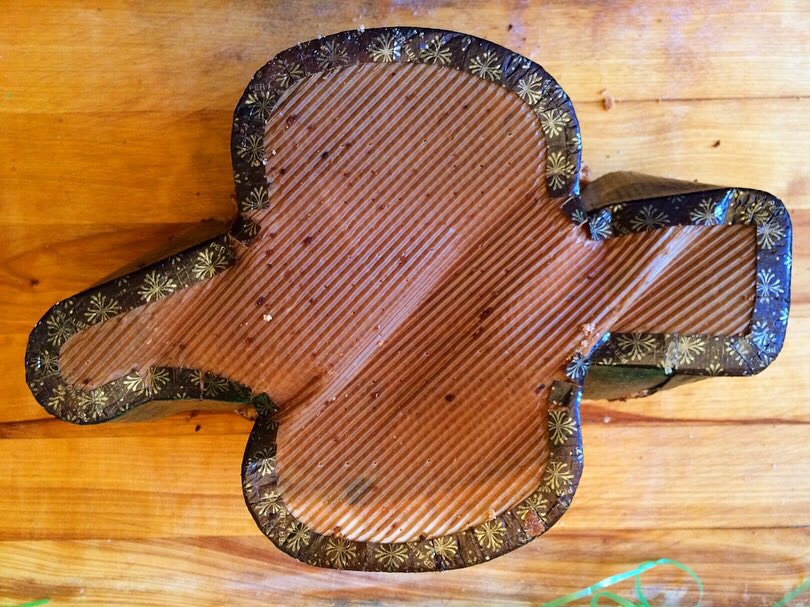

Hard pressed to see the dove? Fret not, for this photo has the cake turned upside down so the columbine form is somewhat more evident.
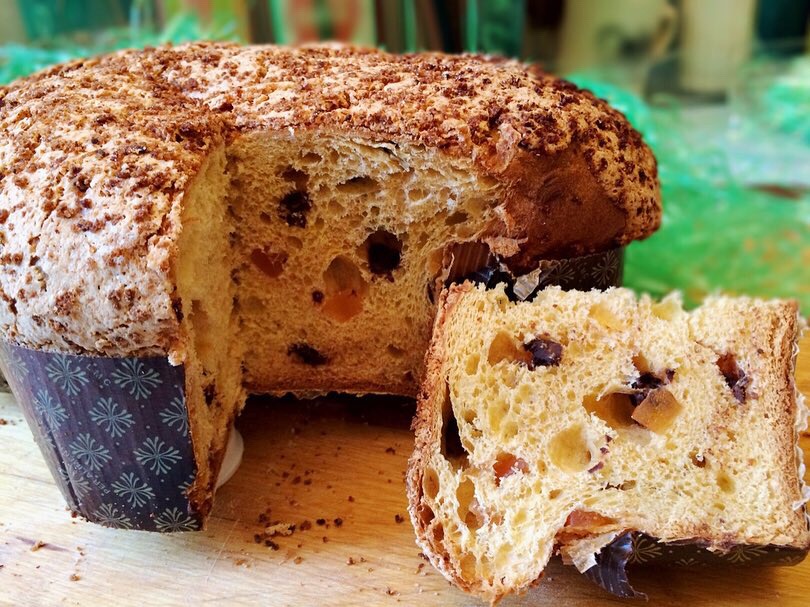

The third photo depicts a version that features bits of chocolate and dried peaches within and crunchy crushed amaretto cookies atop.

Just wondering: There’s no debate that American kids bite the ears off their chocolate Easter bunnies first. Do you suppose that Italian children start with the head, tail, or wings of the colomba?


A Passover Dare

(Originally posted in April, 2019.)

(Click on any image to view it in high resolution.)

Previously on ethnojunkie.com, I did a springtime post that included a story about someone who dared me to come up with an ethnic fusion Passover menu. I wrote:

Well, far be it from me to dodge a culinary challenge! So although obviously inauthentic, but certainly fun and yummy, here’s to a Sazón Pesach!

Picante Gefilte Pescado
Masa Ball Posole
Brisket Mole
Poblano Potato Kugel
Maple Chipotle Carrot Tzimmes
Guacamole spiked with Horseradish
Charoset with Pepitas and Tamarindo

And, of course, the ever popular Manischewitz Sangria!

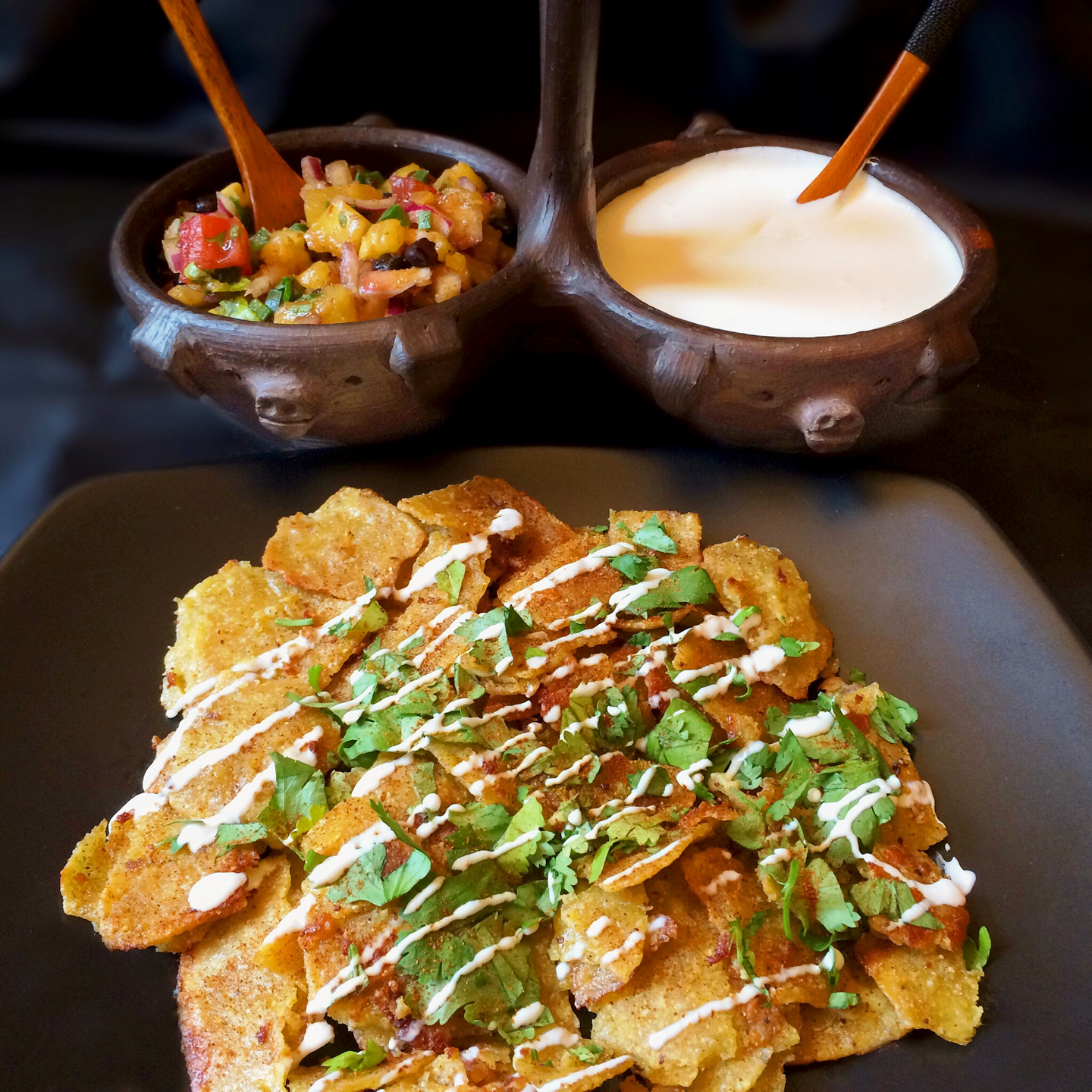
It was all in good fun, of course, but it got me thinking about actually creating a Jewish-Mexican fusion recipe. It isn’t strictly Kosher for Passover, but I thought the concept was worth a try. So here is my latest crack at cross cultural cooking: Masa Brei!

Now you might know that Matzo Brei (literally “fried matzo”) is a truly tasty dish consisting of matzos broken into pieces that are soaked briefly in warm milk (some folks use water), drained, soaked in beaten eggs until soft, then fried in copious quantities of butter. Typically served with sour cream and applesauce, it’s heimische cooking, Jewish soul food, at its finest and it’s easy to do.

So I thought it might be worth a try to swap out the matzos for tostadas, the milk for horchata, the sour cream for crema, and the applesauce for homemade pineapple-jalapeño salsa. A sprinkle of tajín, a scatter of chopped cilantro – and it actually worked!

Happy Passover!
!חג פסח שמח


Ramadan 2022 – Nishallo

(Click on any image to view it in high resolution.)

Ramadan is the ninth month of the Islamic calendar, the holy month in which the Qur’an was revealed to the prophet Muhammad; this year, Ramadan begins at sundown on Saturday, April 2. During that period, about 1.6 billion Muslims around the world fast from dawn until dusk. The meal that marks the end of each day’s fast is called iftar and often commences with three sweet dates that help restore blood sugar levels, after which the menu will vary by country and regional specialties.

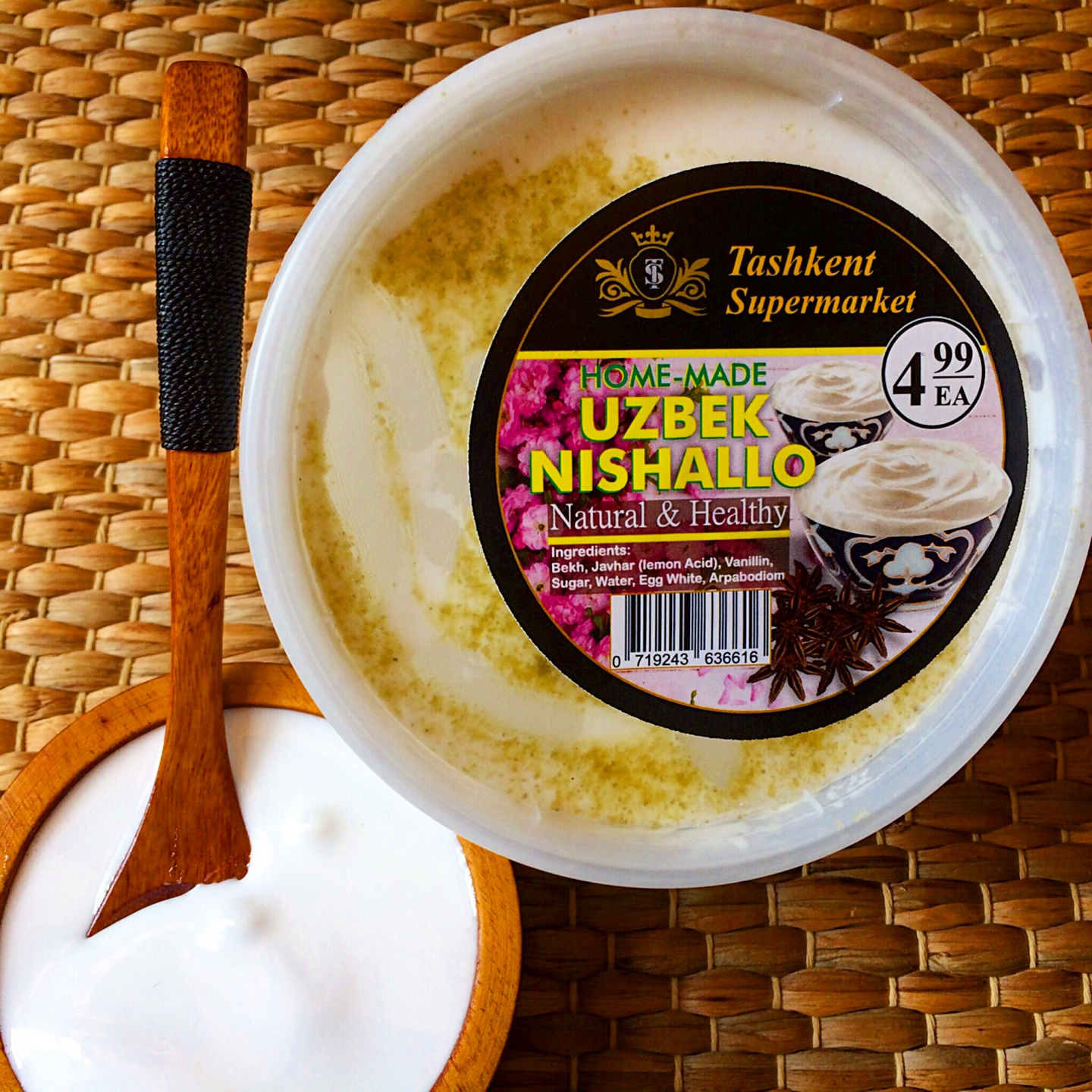
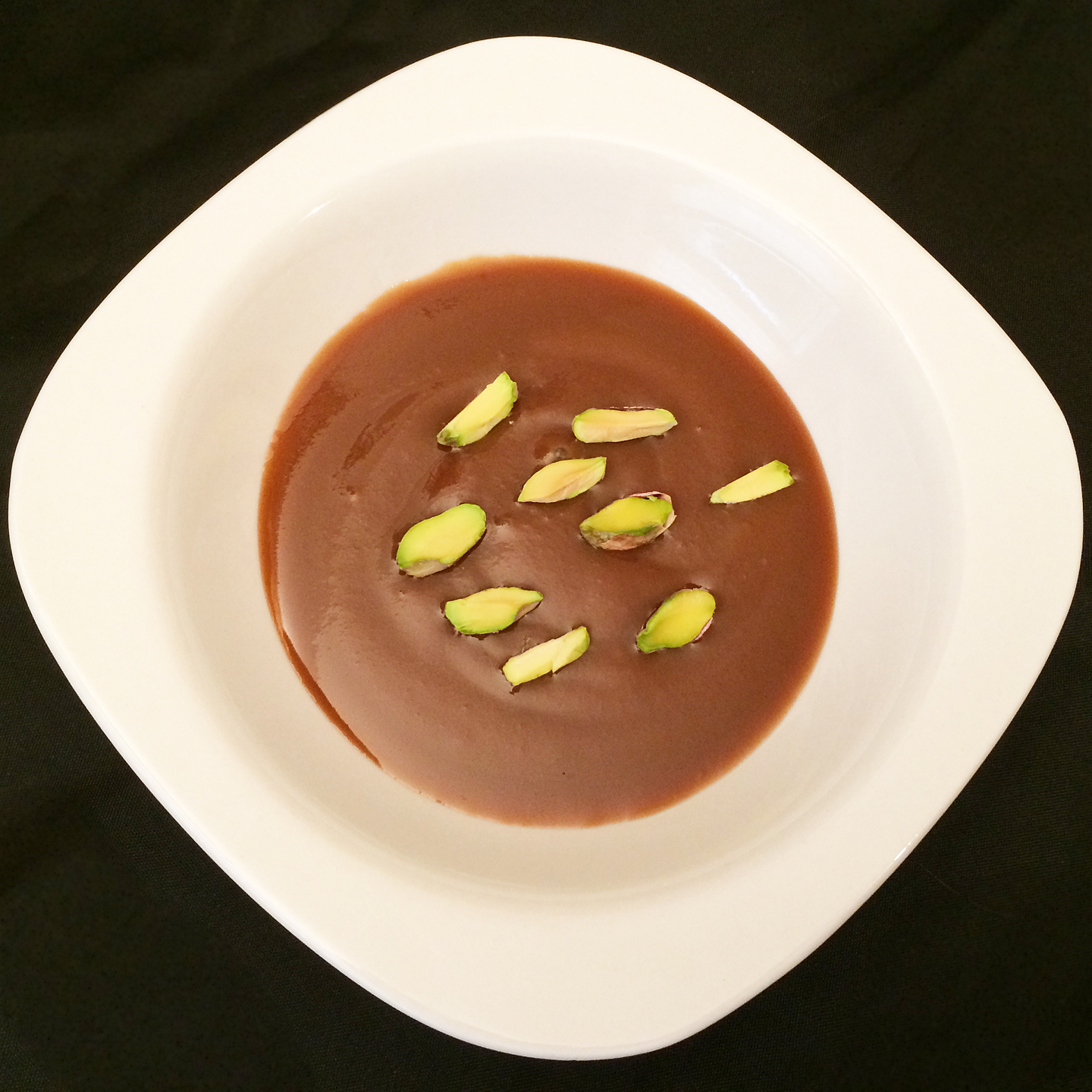
This is nishallo (aka nisholda), an exceedingly sweet dessert that’s native to Uzbekistan and Tajikistan and prepared exclusively during Ramadan; it makes its appearance as part of iftar. Made primarily from sugar, whipped egg whites, and water, it’s a dead ringer for Marshmallow Fluff (as you’d expect from the ingredients) if perhaps a bit classier because of a touch of star anise and/or licorice root. I understand that for some natives of Uzbekistan, it rekindles heartwarming childhood memories, not unlike Fluff for some nostalgic Americans. It’s often used as a dip for warm flatbread and is particularly appropriate after 17 hours of abstention from eating because its high sugar content is said to jumpstart the metabolism.

I found it, along with other Ramadan specialties, at Tashkent Market, 713 Brighton Beach Ave in Brooklyn, one of the highlights on my Little Odessa ethnojunket. If you like the idea of tasting something new and delicious from another part of the world, please visit my Ethnojunkets page to learn more about my neighborhood food tours and join in the fun!

More about Ramadan foods during the month.

Ramadan Mubarak!


Navruz

Yesterday, I published a post about Nowruz, the Persian New Year, and fesenjan. But the vernal equinox is heralded as the first day of the new year by more than 300 million people worldwide, particularly in countries along the Silk Routes including Iraq, India, Pakistan, Turkey, Central Asia, and others. As a matter of fact, in 2010, the United Nations officially proclaimed March 21 to be the International Day of Nowruz. And of course, every culture has its own unique dishes to celebrate the occasion.

In Uzbekistan, it’s known as Navruz, and it may well be their most popular holiday. I consider myself fortunate to live not far from Brooklyn’s Tashkent Market, a sprawling center of appetizing prepared food indigenous to Central Asia and Eastern Europe, because it affords the opportunity to sample some authentic treats considered to be essential delicacies for Navruz.

(Click on any image to view it in high resolution.)

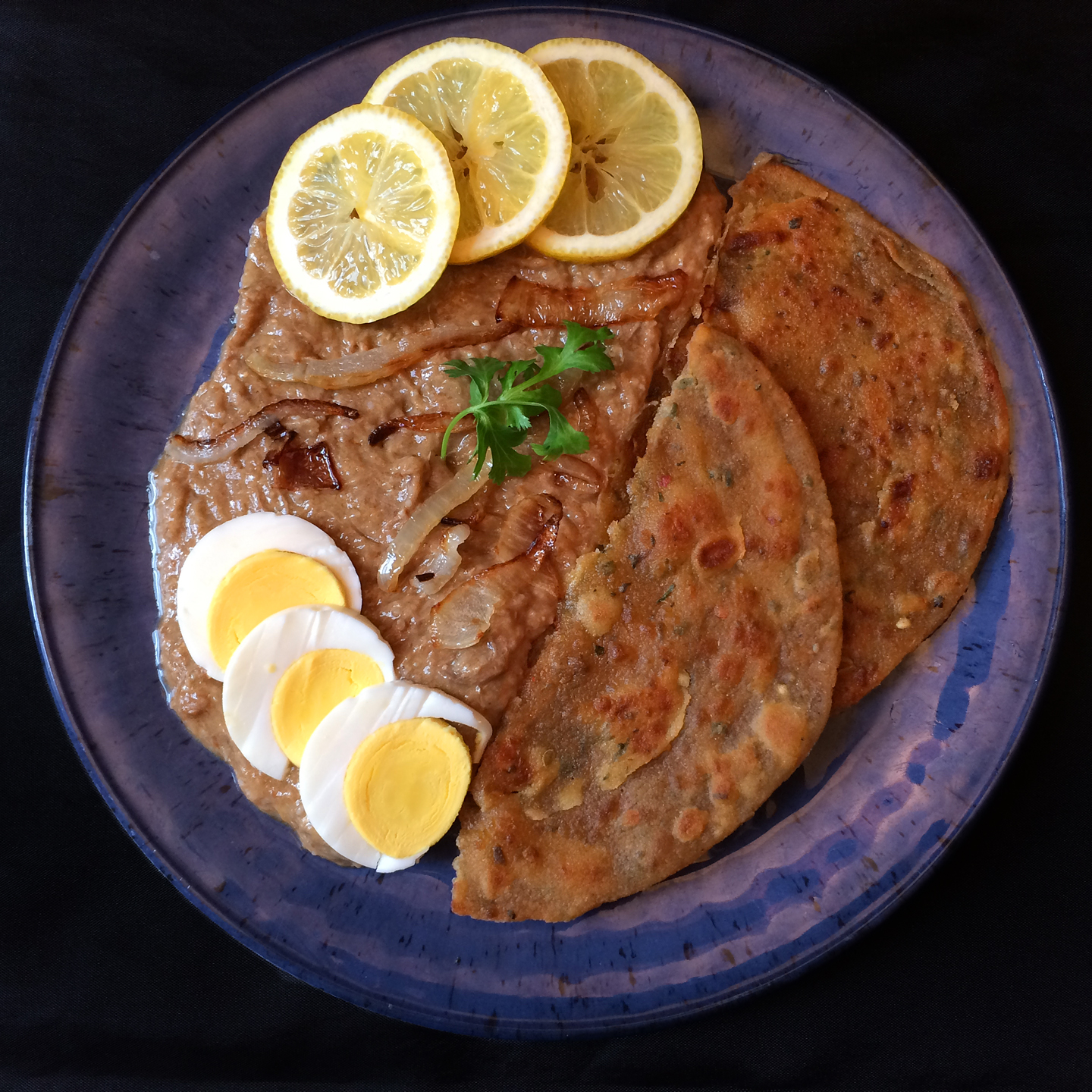
One such dish is a succulent meat paste (for lack of a better word – paté isn’t quite right) known as halim or haleem in Tashkent and halissa elsewhere concocted from pulverized meat, sprouted wheat, and flour; it takes about 12 hours to cook it down to delicious perfection. I’ve plated it here with griddled flatbread, sliced hard boiled eggs, and caramelized onion.


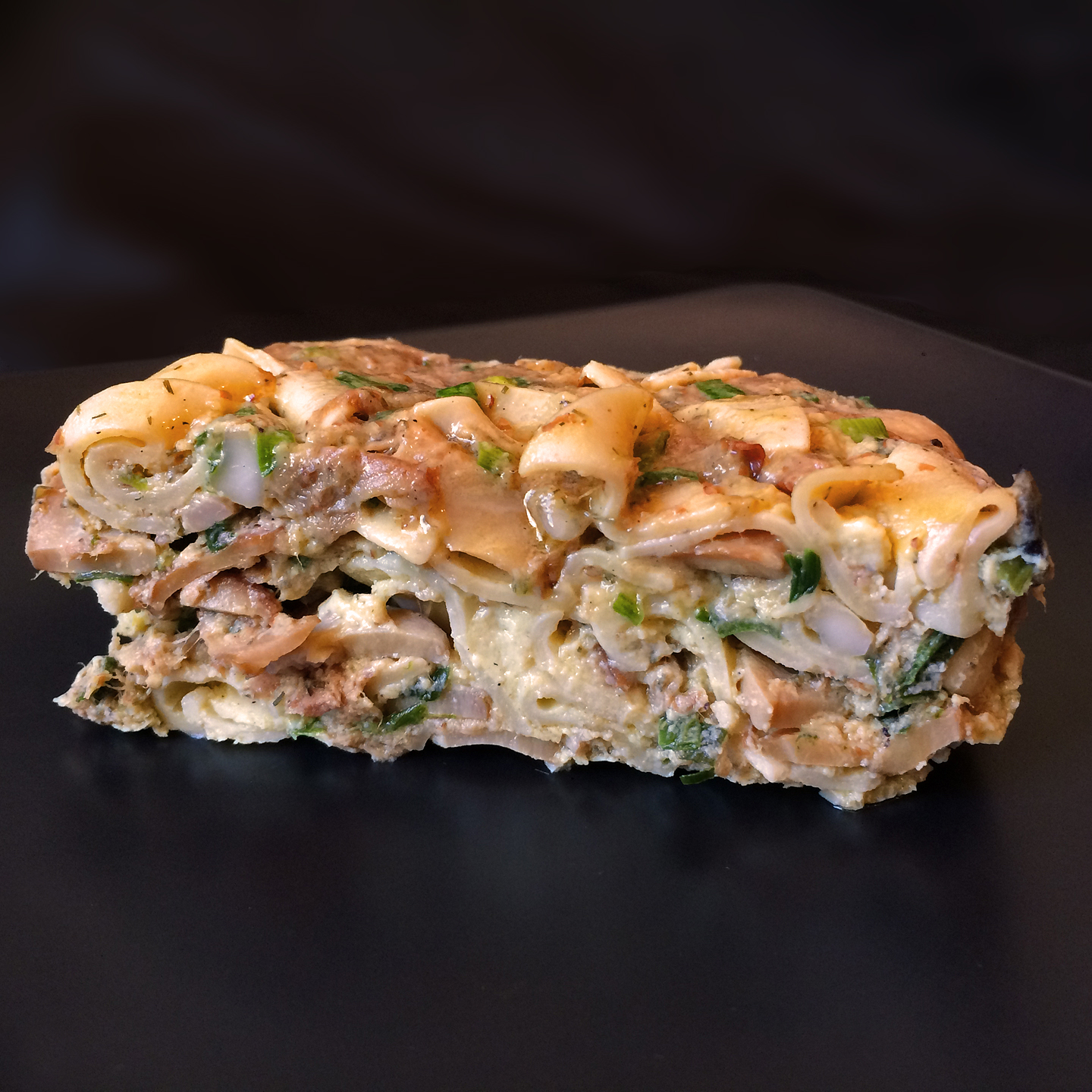
One time I decided to see how I might incorporate it into a dish rather than consuming it straight up, so I cobbled together a noodle kugel (Yiddish for pudding) with sliced fresh mushrooms, sautéed leeks and other good stuff (hey, I was improvising) that I thought would do the halim justice and serve to make it a little less monotonous. Really yummy, if I do say so myself.


Another quintessential dish served for Navruz in Uzbekistan is sumalak, a traditional sweet pudding whose sole ingredient is sprouted wheat. The age-old process of preparing it is a ritual that fosters brotherhood, cooperation, and unity: Each family brings a handful of sprouted wheat to be cooked together overnight in a kazan, an enormous common cauldron; it must be stirred constantly lest it burn with a shovel-like implement traditionally wielded by women. (I hear that men make the halim.) As the sumalak thickens, it becomes more difficult to stir so the women work in shifts mixing the dense pudding. When it’s ready, it’s shared by neighbors, relatives, and friends; there’s even a role for the children in the heartwarming legend.

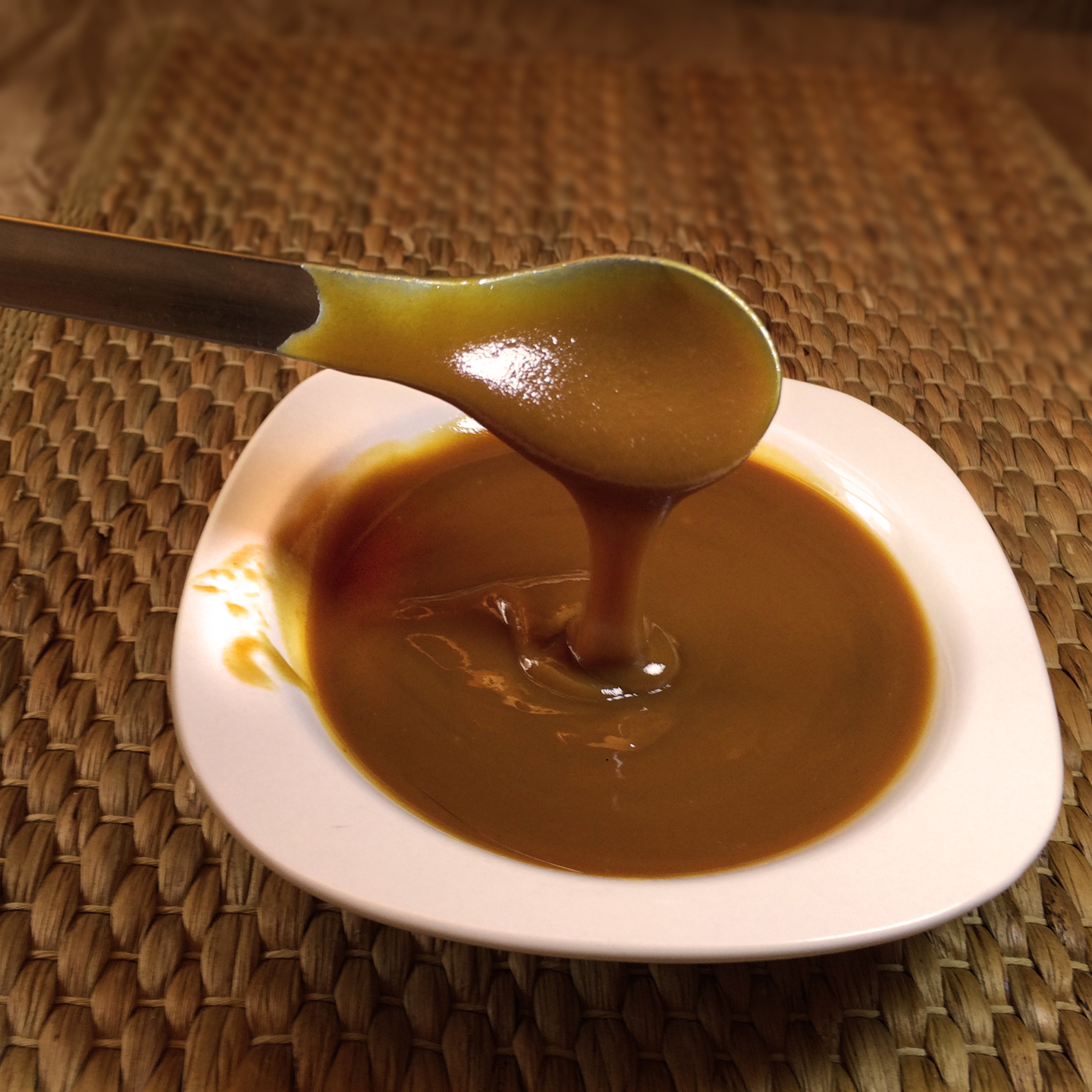
How this dish turns into something sweet is a miracle in itself as far as I’m concerned.


To give you an idea of the viscosity.

And yes, both of these goodies along with many more are available at Tashkent Market, one of the highlights on my Little Odessa ethnojunket. It’s coming soon, so watch this space!


Nowruz

(Click on any image to view it in high resolution.)

Don’t get me wrong. I’m not complaining about observing New Year’s Day in January or February or September, but you have to admit that it does seem eminently logical to herald the inauguration of a new year on the first day of spring, doesn’t it?

And that’s exactly what Nowruz is about: literally “new day” in Farsi, it’s celebrated in Iran and the Persian diaspora on the vernal equinox, around March 20. There is a multitude of holiday conventions practiced for Nowruz, some of which harmonize with universal rites of spring including “shaking the house”, a preparatory spring cleaning, and painting eggs in festive colors (sound familiar?) and of course a cavalcade of traditional foods.

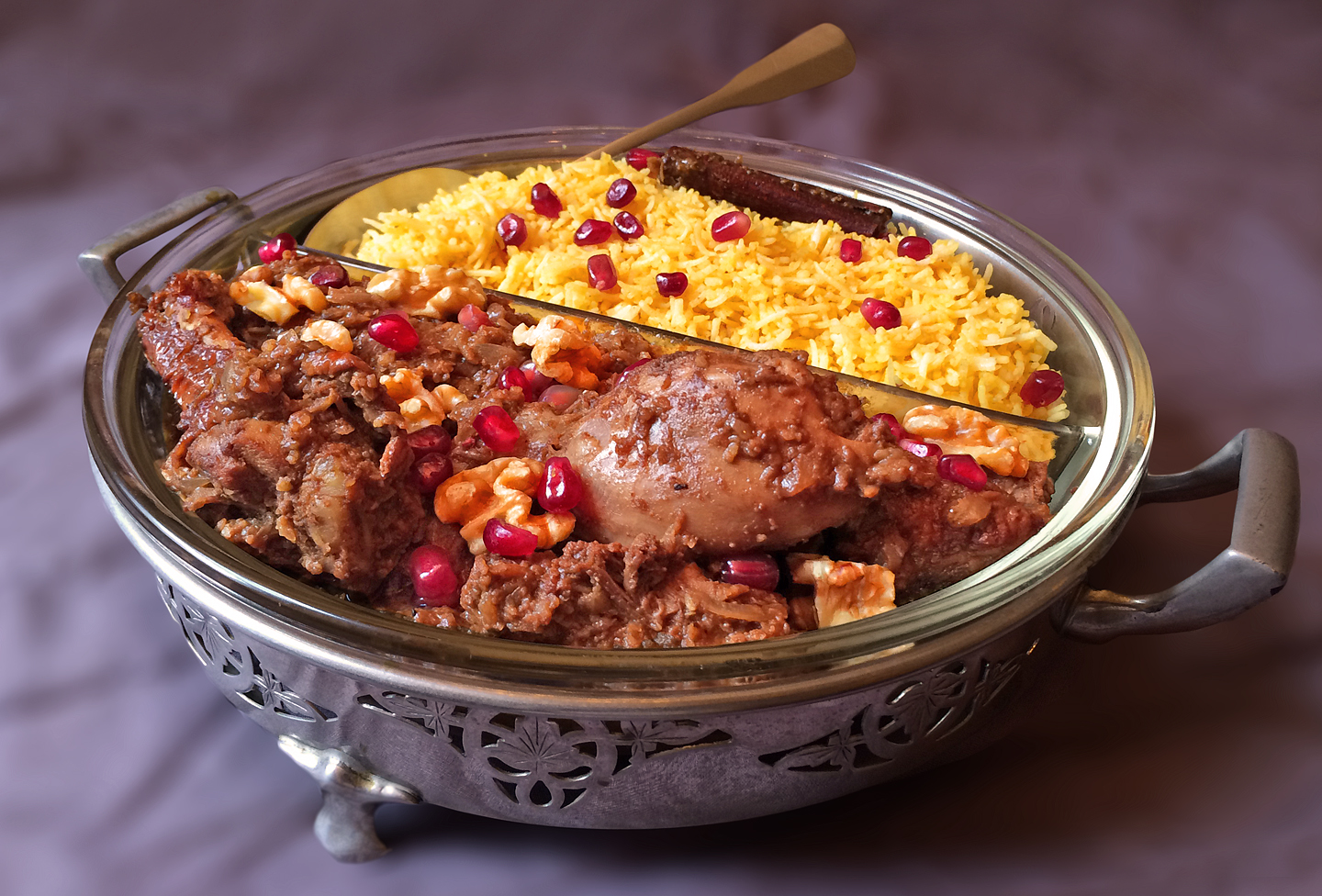
Pictured here is my homemade fesenjan, a splendid dish often earmarked for special occasions. Fesenjan is a koresh, a thick stew, sometimes made with chicken, sometimes with duck like this one; the other two essential ingredients are walnuts and pomegranates in some form – my version uses pomegranate molasses although I’ve seen pomegranate juice pressed into service as well. It’s served here with saffron rice in a supporting but essential role. (And that’s my grandmother’s serving dish if you’re curious.)

But fesenjan is distinctly Persian and other cultures commemorate the holiday with very different foods. Stay tuned for more….


Sfingi for St. Joseph’s Day

It seems like every world cuisine has its own version of fried dough – Zeppole are Italy’s contender. You’ve probably seen them at street festivals or perhaps you were fortunate enough to have grown up watching your nonna make them as she confidentially disclosed her signature special ingredient, amore, which of course elevated hers above all others. They’re usually dusted with a sprinkle of powdered sugar but on occasion are dressed with a shot of pastry cream.

(Click on any image to view it in high resolution.)

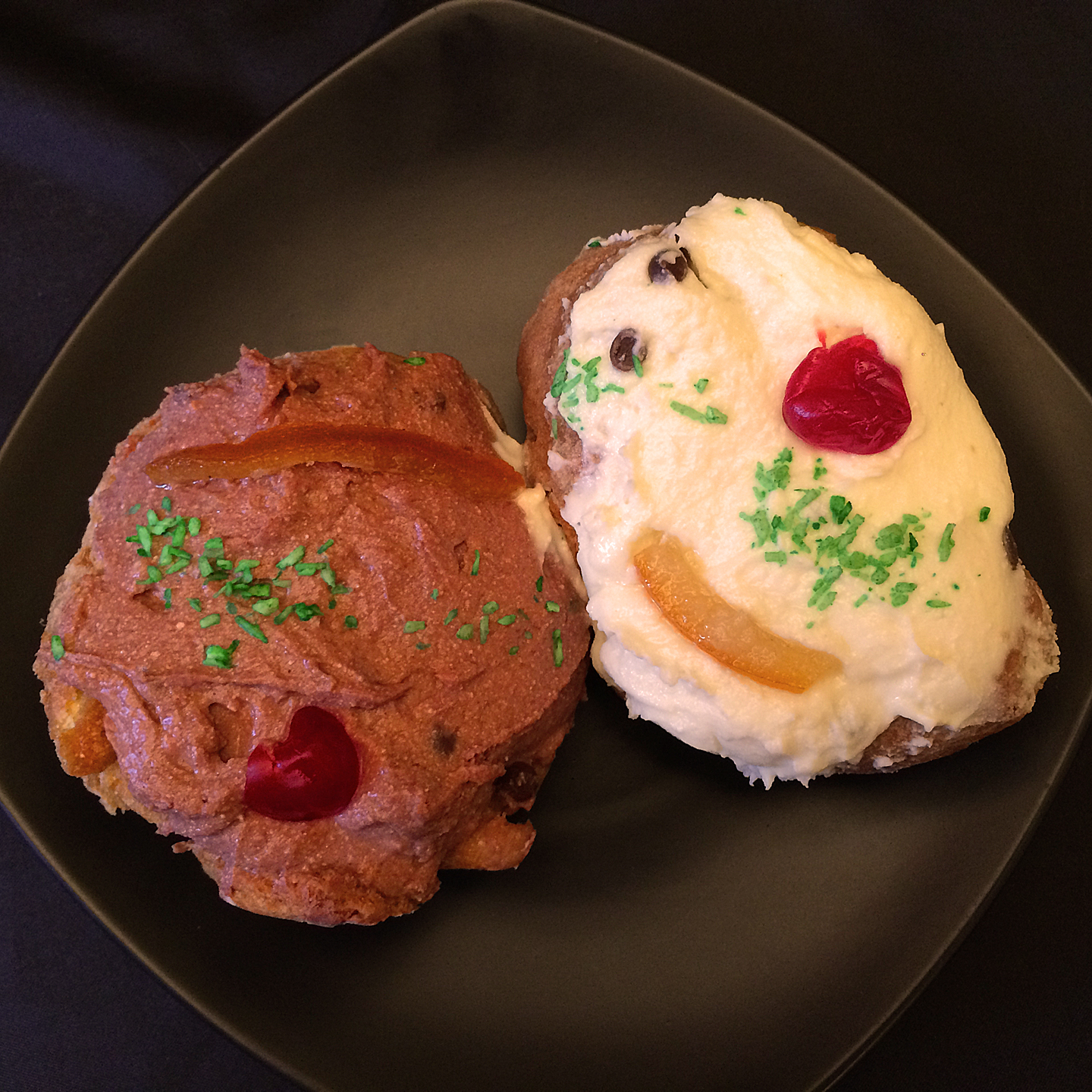
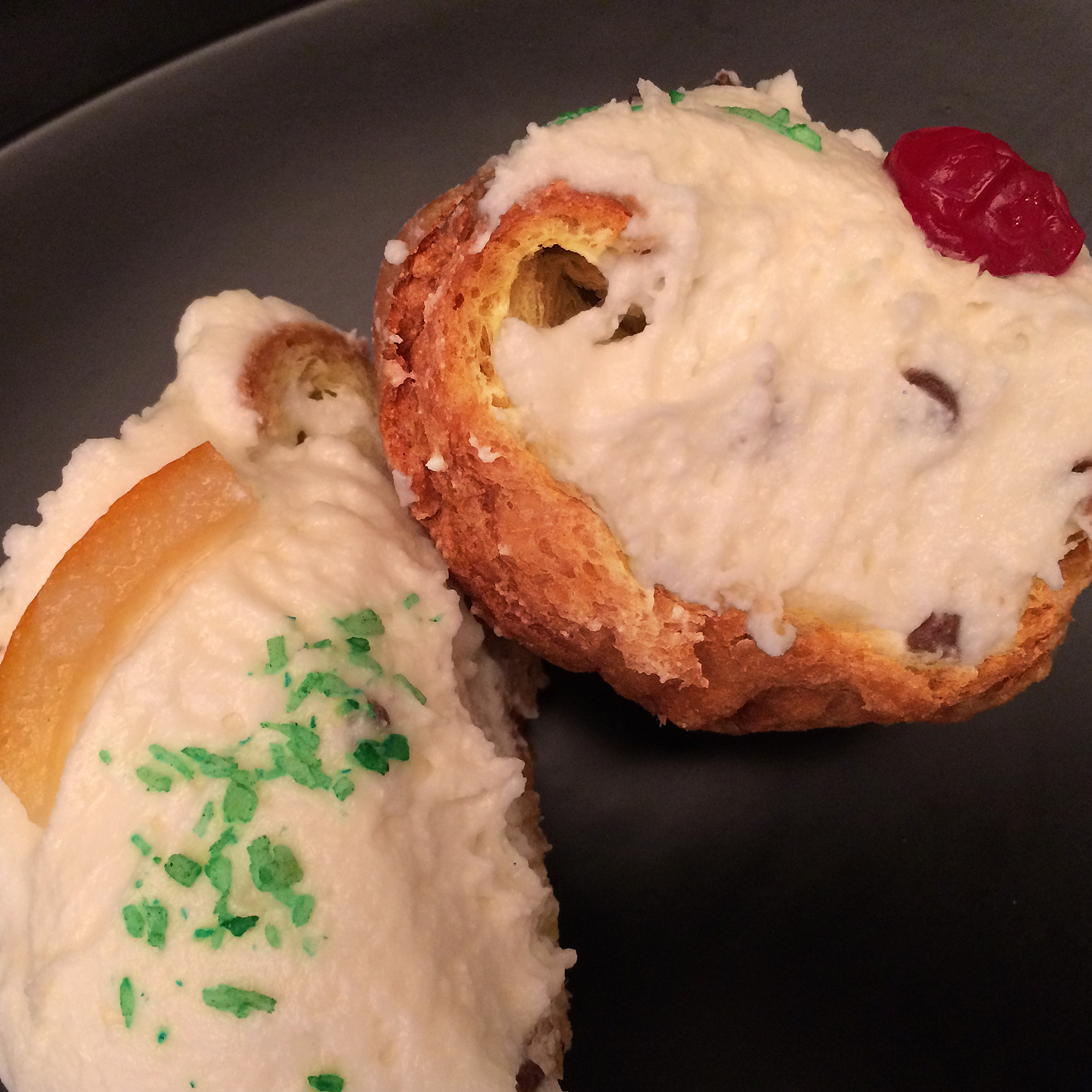
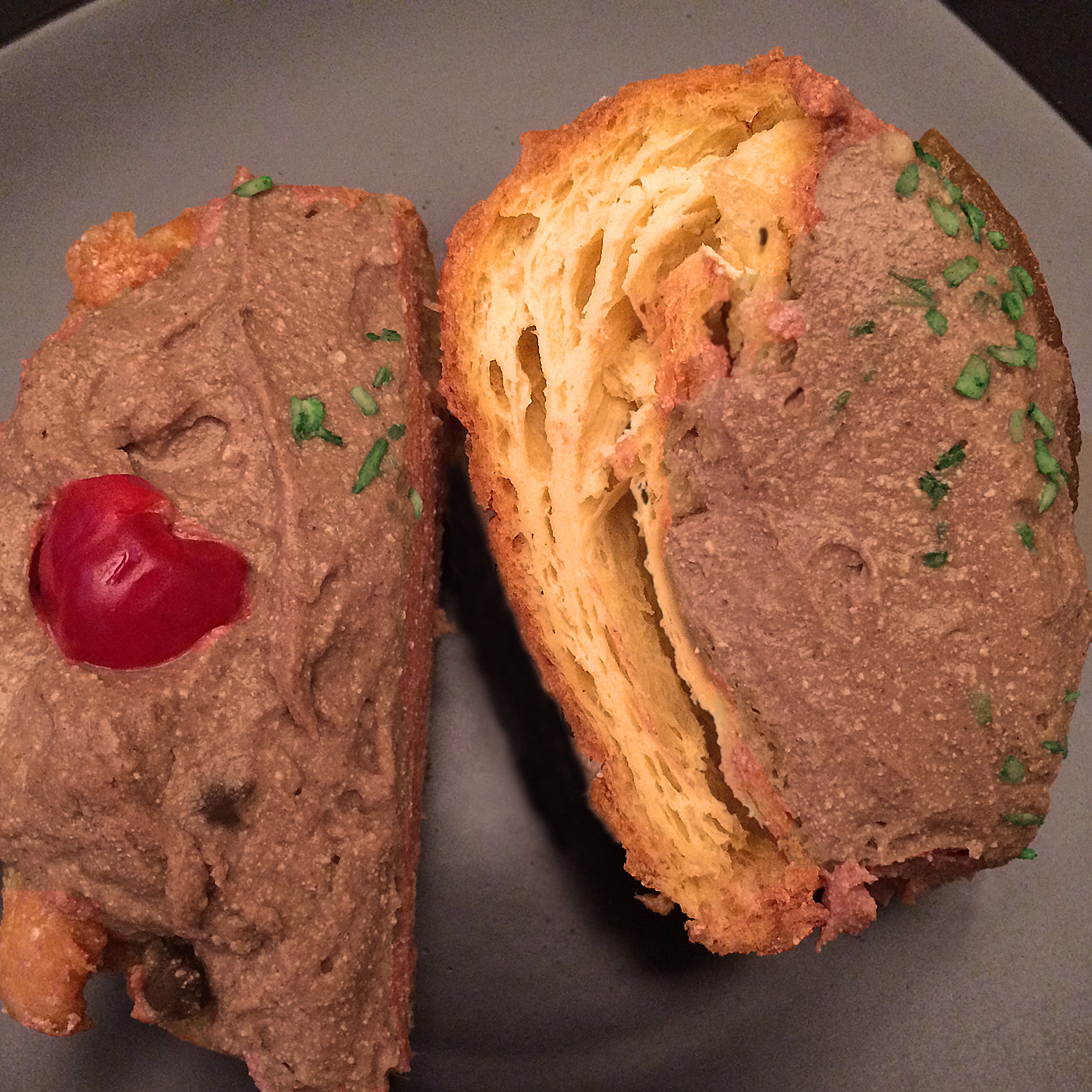
These first cousins are sfingi (pronounced SFEEN-jee), Sicily’s answer to Neapolitan zeppole, although the two are not mutually exclusive. Sfingi are fried cream puffs filled with cannoli cream and can be found in Italian-American bakeries in celebration of Saint Joseph’s Day, March 19, honoring the husband of the Virgin Mary. (BTW, I’ve seen recipes that call for baking them, but….No.) This pair, chocolate on the left, bursting with ricotta-based, cinnamon-inflected, sweet cannoli cream shot through with mini chocolate bits, came from Court Pastry Shop, 298 Court St in Brooklyn.

The inside scoop:

Crunchy crispitude.


Puffy and floofy.


Holi Mubarak!

(Originally published on Holi in 2019.)

The Equal Opportunity Celebrant strikes again, eating my way through Holi today, the Hindu festival of spring and colors celebrated predominantly in India and Nepal. Prowling around the Indian neighborhood in Jackson Heights yesterday in search of traditional Holi treats, I enjoyed watching children choosing packets of powder in every color of the rainbow to sparge at anything in their path, thus producing a glorious festive mess. The holiday recounts the heartwarming legend of Krishna coloring his face for Radha, his love, and heralds the arrival of spring.

(Click on any image to view it in high resolution.)

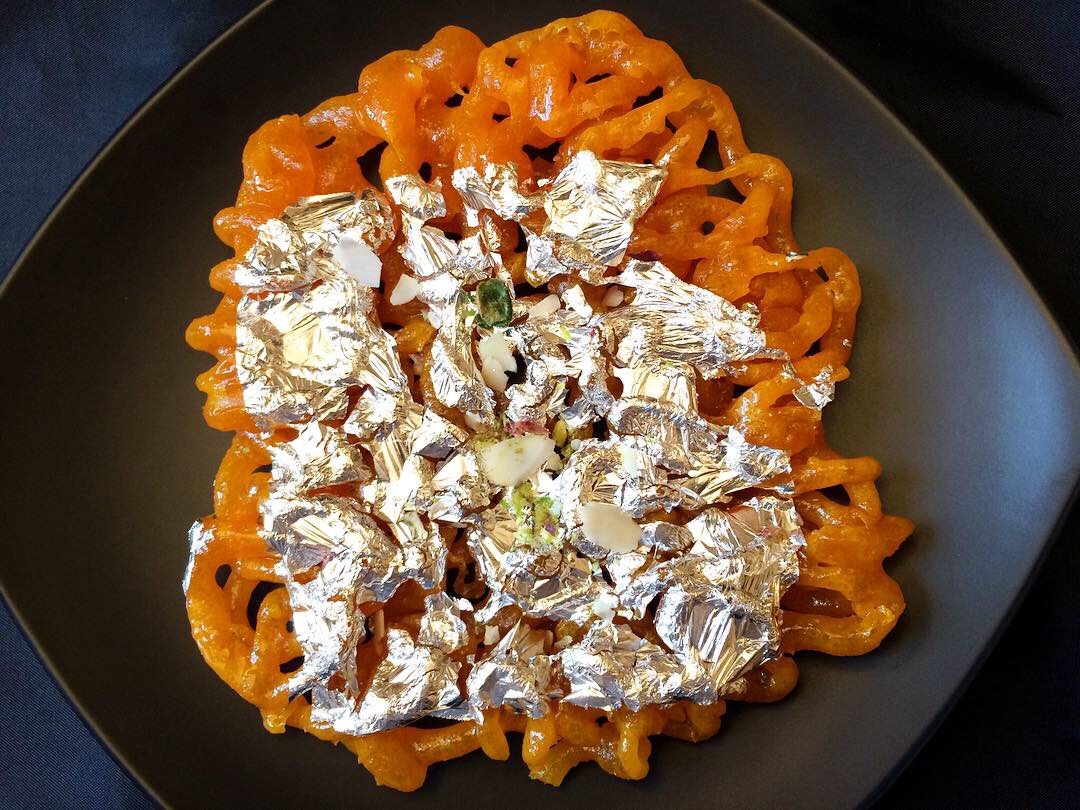
Jalebi are one of the most widely available Indian mithai (you can read about my addiction to them here); they’re made from chickpea or wheat flour batter, usually orange but occasionally yellow (no difference in flavor, just a color preference) which is drizzled into hot oil in coil shapes. The resulting deep fried confections look like pretzels; they’re crispy when they come out of the oil, then they’re soaked in super sweet syrup so you get the best of both worlds. For Holi, however, jalebi get the royal treatment; this one is about 7 inches in diameter and generously adorned with edible silver foil, sliced almonds and pistachios. Because this sticky jumbo jalebi (jalumbi? jalembo?) is larger and thicker than the standard issue version, it provides more crunch and holds more syrup in each bite so it’s even more over the top, if such a thing is possible.


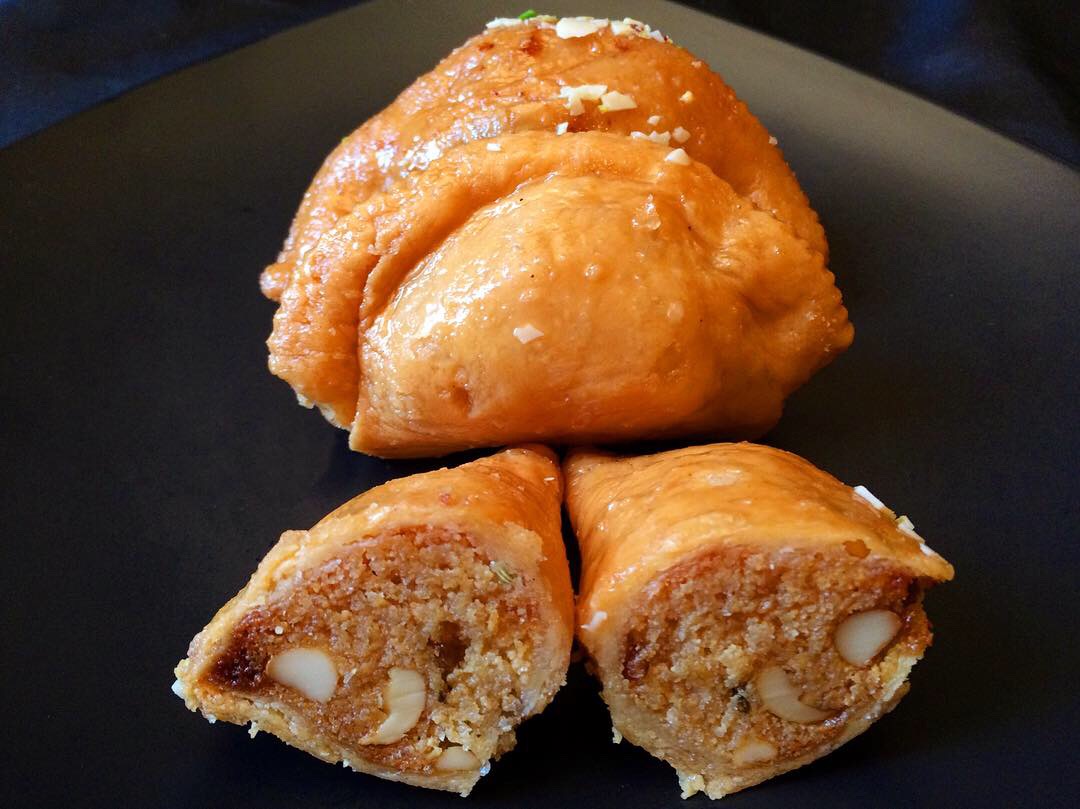
This is gujiya (you might see gujia), a classic Holi sweet, half-moon shaped and similar to a deep-fried samosa. Crunchy outside and soft within, it’s filled with sweetened khoa (milk solids), ground nuts, grated coconut, whole fruits and nuts (raisins and cashews in this one), cumin seeds, and a bit of suji (semolina) for texture.

These Holi day treats came from Maharaja Sweets, 73-10 37th Ave, Jackson Heights, Queens.

Holi Mubarak! Have a blessed Holi!


St. Patrick’s Day

I checked into Wikipedia before I started writing this to see what gaps in my knowledge of Irish cuisine might exist: the extensive article boasted almost 9,000 words and explored the cuisine beginning with its roots in the prehistoric Mesolithic Period (8000–4000 BC)! So for the sake of our mutual sanity, we’re going to stick with Irish food that I actually know and love.

(Click on any image to view it in high resolution.)

Some dishes are quintessentially Irish like colcannon (potatoes and cabbage), bacon and cabbage (which begat corned beef and cabbage), Irish stew (traditionally mutton and potatoes), boxty (a potato pancake), coddle (sausage, bacon, and potatoes), black pudding and white pudding (sausages), shepherd’s pie, and more.

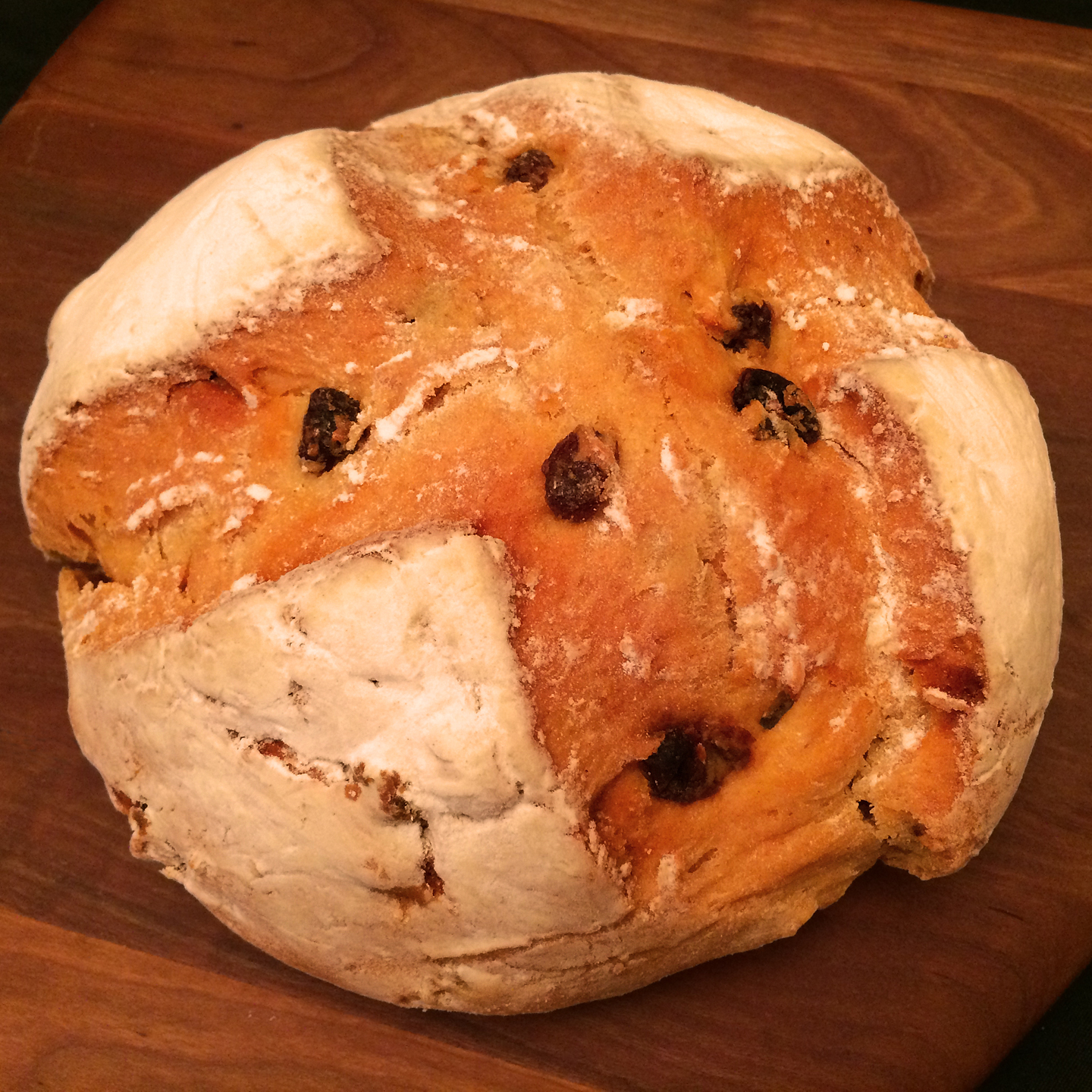
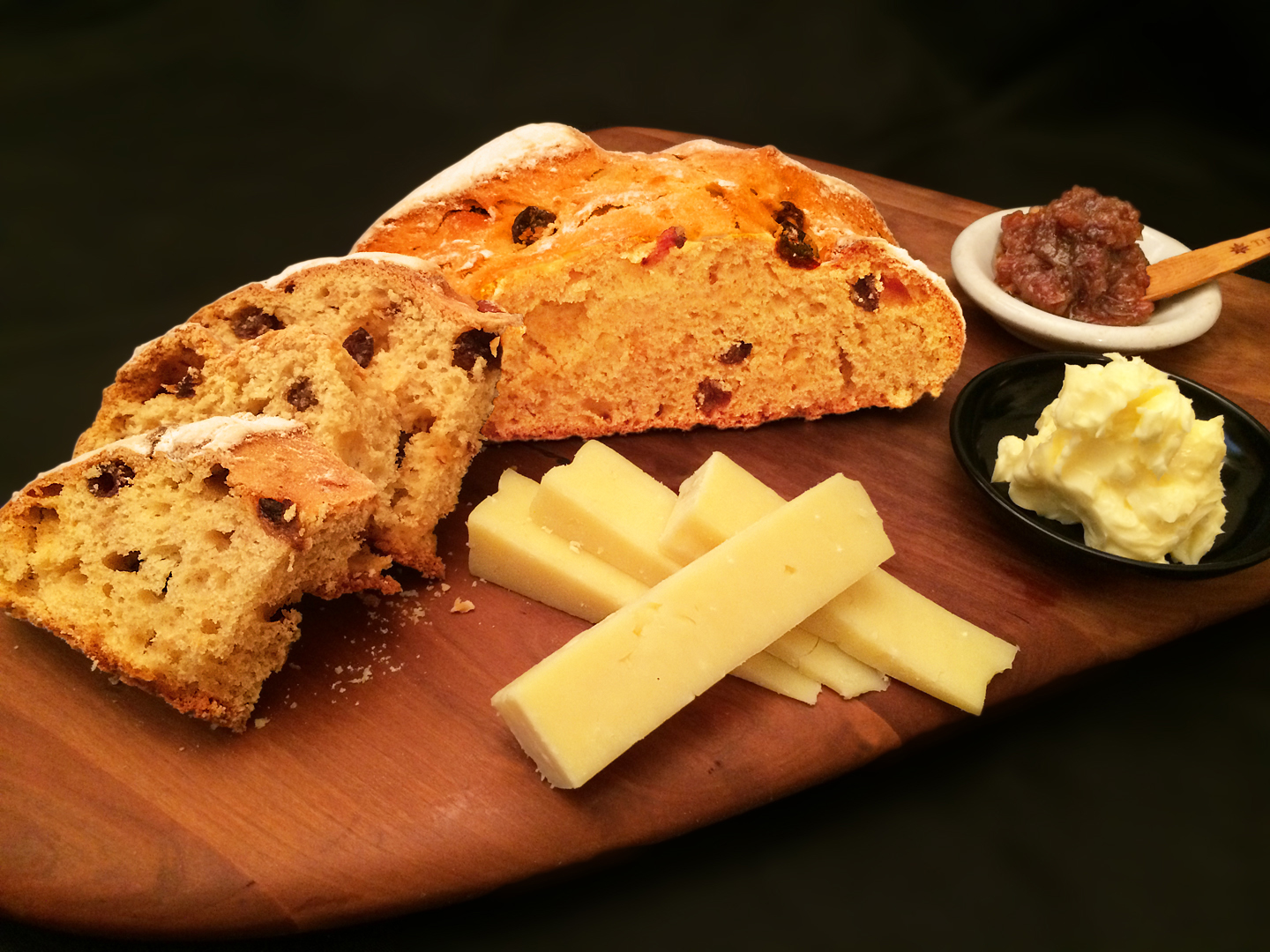
But in honor of St. Patrick’s Day on March 17, here is a favorite that does not include meat, potatoes or cabbage: Irish soda bread. Baking soda activated by buttermilk takes the place of yeast as a leavening agent in this delicacy; that accounts for its delicate, crumbly texture and puts it somewhere along the bread <-> cake continuum.


I purchased this sweet raisin-studded beauty from Court Pastry Shop, 298 Court St in Brooklyn, and it was truly outstanding. It’s served here with Irish cheddar cheese, radicchio marmalade (a change up from the traditional coarse cut orange) and whipped butter.

Excellent, as always.


Purim 2022

The Jewish holiday Purim begins this year (it’s 5782 according to the Jewish calendar) on Wednesday evening, March 16, and ends on the following Thursday evening. Although the photos in this post were originally published a year ago, some things never change. Tradition!

The story of Purim memorializes the time in ancient Jewish history when Haman, royal vizier to King Ahasuerus of Persia, had been plotting to exterminate all the Jews in the empire. His plan was thwarted by Mordecai and Queen Esther, his adopted daughter, and the deliverance is one of joyful celebration, steeped in traditional ceremonies and festivities. Among the many icons of the holiday, one of the most renowned is the hamantasch, literally “Haman’s pocket”.

(Click on any image to view it in high resolution.)

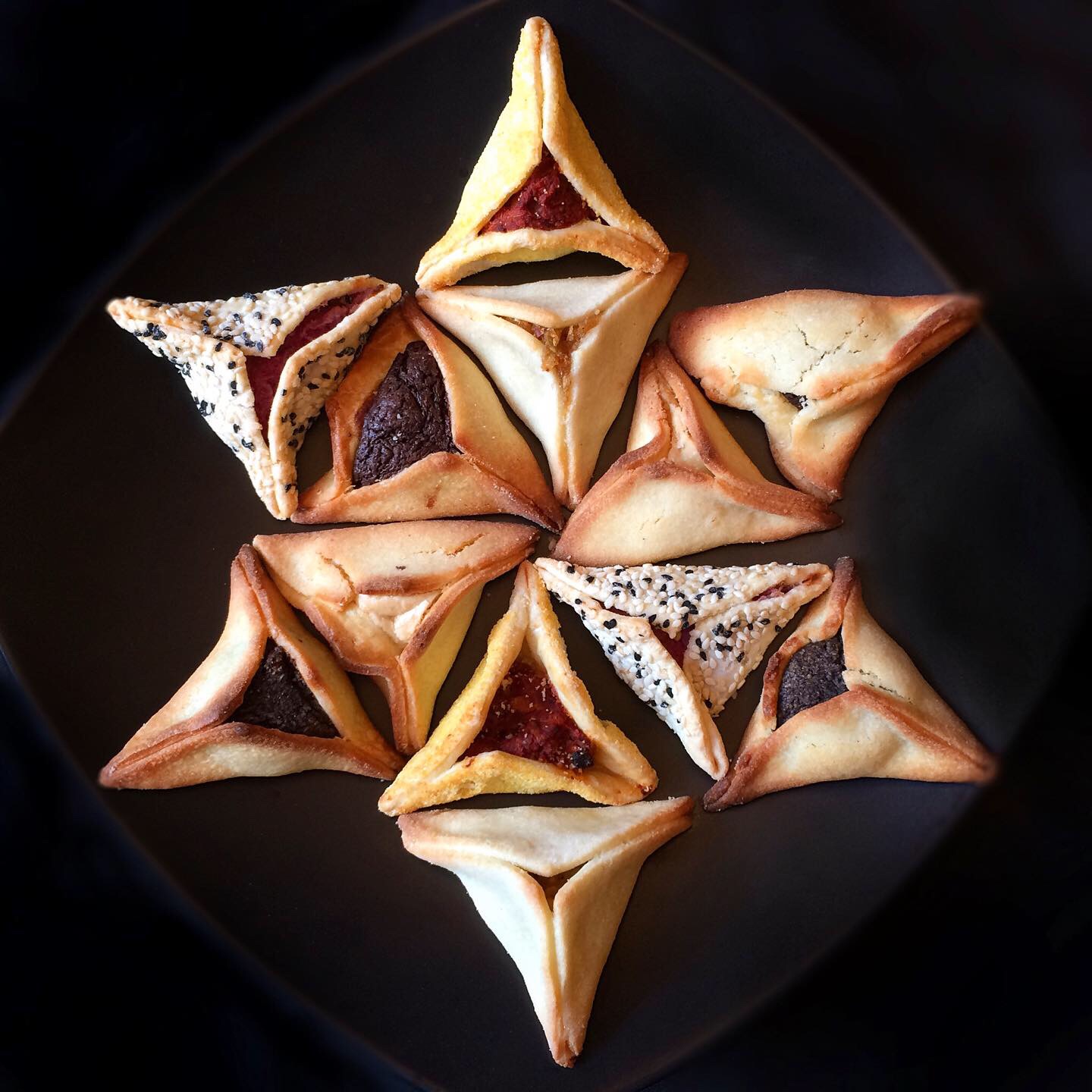
Hamantaschen are delicious triangular baked pastries conventionally filled with thick prune jam (lekvar) or ground poppy seeds (muhn), but these days creative cookery presents some serious competition. Happily, the always mind-blowing Breads Bakery with four locations in Manhattan, covers the entire spectrum. On this plate, there’s sweet poppy seed, halva, chocolate, and apple along with a pair of savory challengers, purple haze and pizza. The former, covered in sesame and nigella seeds, holds sauerkraut – a little sweetish and worth a bite even if you don’t care for sauerkraut. The latter is filled with a blend of tomato paste, mozzarella and parmesan cheeses, basil, garlic, and olive oil and tastes exactly like what you’d expect with that set of ingredients; try warming this one up. Fusion food for sure. This year’s specialties are apple, apricot, poppy, chocolate, and pizza with walnut pesto.


Sometimes a change of focus helps to make a point – or six.