Identity Crisis Cookies

Instagram Post 12/8/2017

(Click on any image to view it in high resolution.)

Homemade Christmas Cookies – Day 1
🍪
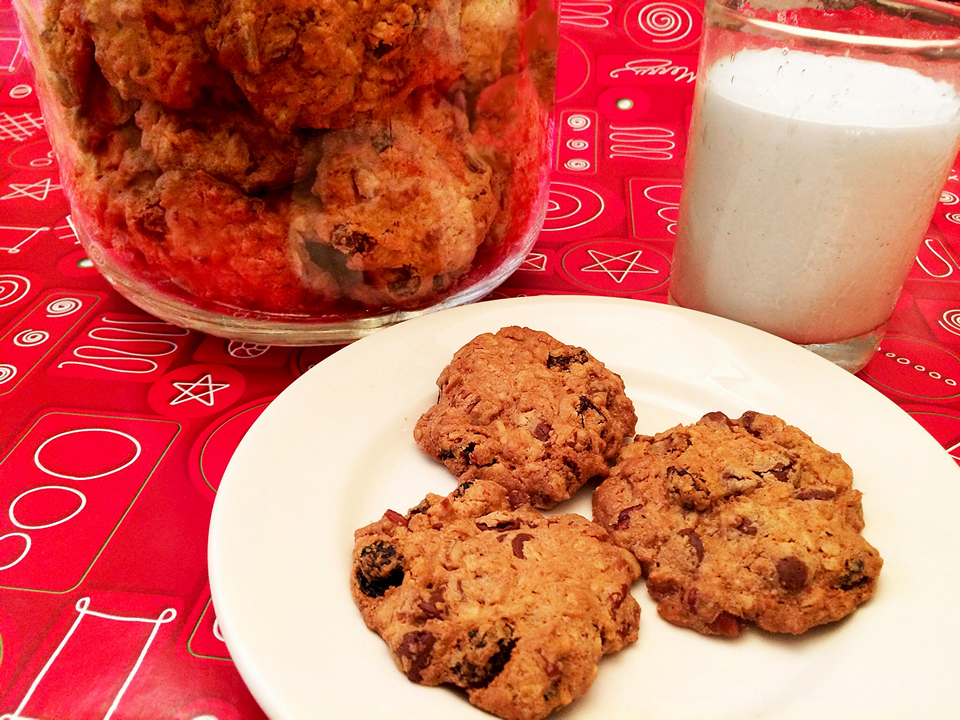
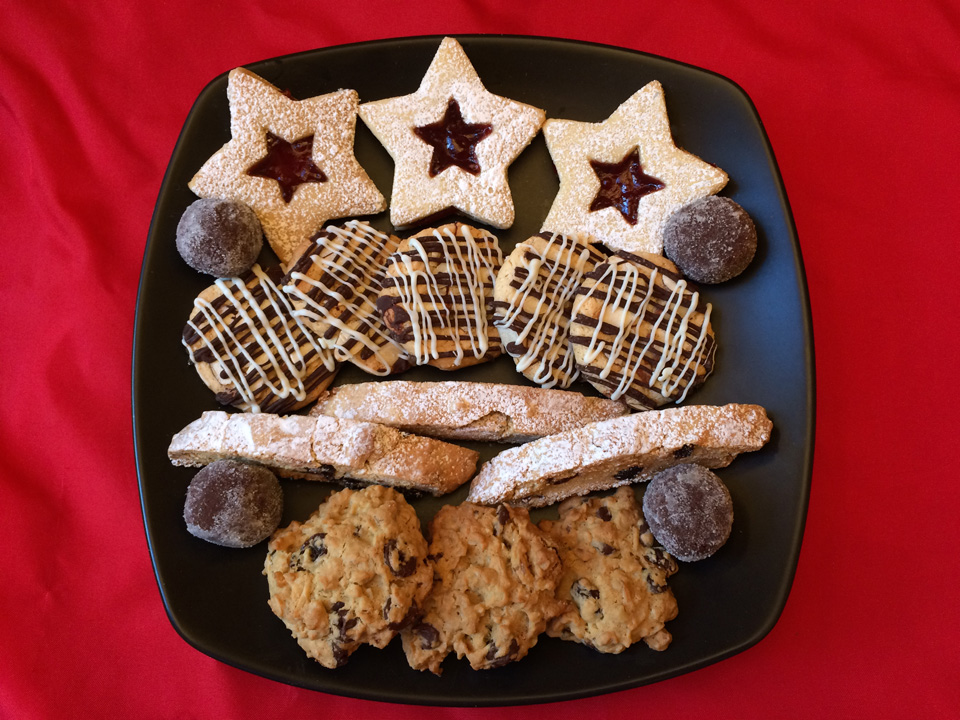
Identity Crisis Cookies – so named because I couldn’t decide whether to make chocolate chip or oatmeal raisin or toasted coconut pecan and since I had all of those on hand…well, you get the picture.
🎅🎄☃️❄️


Indian Sweets 101: Meeting Mithai

Or, The Equal Opportunity Celebrant – Part 3
 

A long time ago in a land far, far away, before I had identified my obsession with world food, when I was merely a youthful gourmand content to consume tasty fare but still light years away from my current soaring orbit of ethnojunkie mania, an acquaintance from what I now know as Little India visited me.

She proffered a small white cardboard box.

Opening my souvenir, I was ambushed by a tempting, heady aroma that I’ll never forget – my first contact with mithai, Indian sweets. Peering within, I discerned a dozen or so colorful tidbits – yellow, orange, pink, green, cream, white, brown, some glistening with what appeared to be thin foil made of silver (and which I later learned actually was thin foil made of silver) and all in distinctive shapes from spheres, disks and cylinders to cubes and diamonds and even a pretzel configuration.

Selecting one, I took a bite. “Not bad,” I allowed, as I made my way from the living room into the kitchen to refrigerate the rest.

Curiously, about twenty minutes later, I found myself woolgathering about these new delicacies so I headed back to dispatch the one I had started earlier. “These are actually pretty good,” I thought as I polished off a second and began nibbling at a third. “Better save some for later,” I reasoned as I stowed the box back inside the fridge.

This time, only about ten minutes passed before I returned to my treasure; in retrospect I suppose I had been reflecting all the while about which one I’d sample next. Standing before the fridge, I devoured a fourth. “Pretty good? No, these are amazing!” I realized in the throes of a sugar-induced epiphany. Replacing the box with my right hand and holding a fifth goody with my left, I elbowed the door closed and attempted to leave the kitchen, but before I could escape, I was compelled to make a U-turn as if by some unseen, powerful force. Yanking the refrigerator door open, I grabbed the container and scurried to the living room. Anxiously, I attempted to rationalize my monomaniacal behavior: I hastily began scribbling detailed notes describing the flavors and textures I was experiencing with each sweet mithai – nuts like almonds, cashews, and pistachios, spices like saffron and cardamom, fruits like raisins and coconut, even carrot; some were redolent of rich dairy, some were thick and fudgy, some soft and syrupy sweet, some creamy, some crispy, some crumbly. But to me, every one was a tiny, delicious miracle unlike anything I had tasted before.

And the monkey on my back emphatically concurred.

That was it. I knew I had to get to Little India – and soon! – so that I could score another parcel and share these delights with my friends. Feverishly, I began making plans: it was imperative that I turn everybody I knew on to mithai. (And obviously, while I was at it, I could land more for myself!)

Perhaps it was this very incident that put the junkie in ethnojunkie.

And now, freely admitting that I am powerless over their sway, I must share my experience with you. This is a particularly good time to do it, since Diwali, the Hindu Festival of Lights, is upon us. From Wikipedia: “One of the most popular festivals of Hinduism, it spiritually signifies the victory of light over darkness, good over evil, knowledge over ignorance, and hope over despair. Its celebration includes millions of lights shining on housetops, outside doors and windows, around temples and other buildings in the communities and countries where it is observed.” In addition to lighting diyas, diminutive and often ornate oil lamps, one of the many rituals is the sharing of mithai, and although I can’t bring each of you to my favorite sweets dealers, I can tell you about some of the diverse types you’re likely to find and what to expect when you taste them.
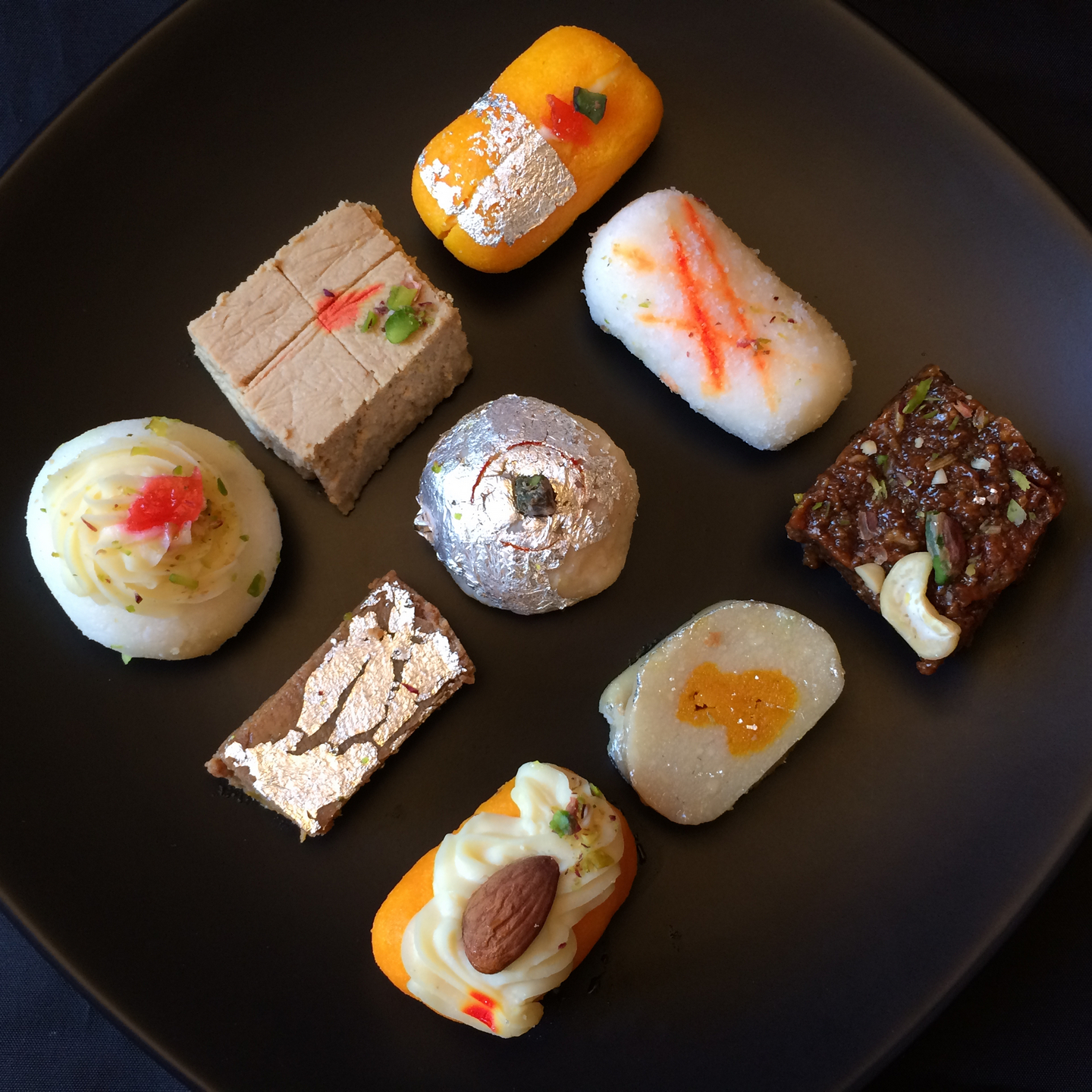
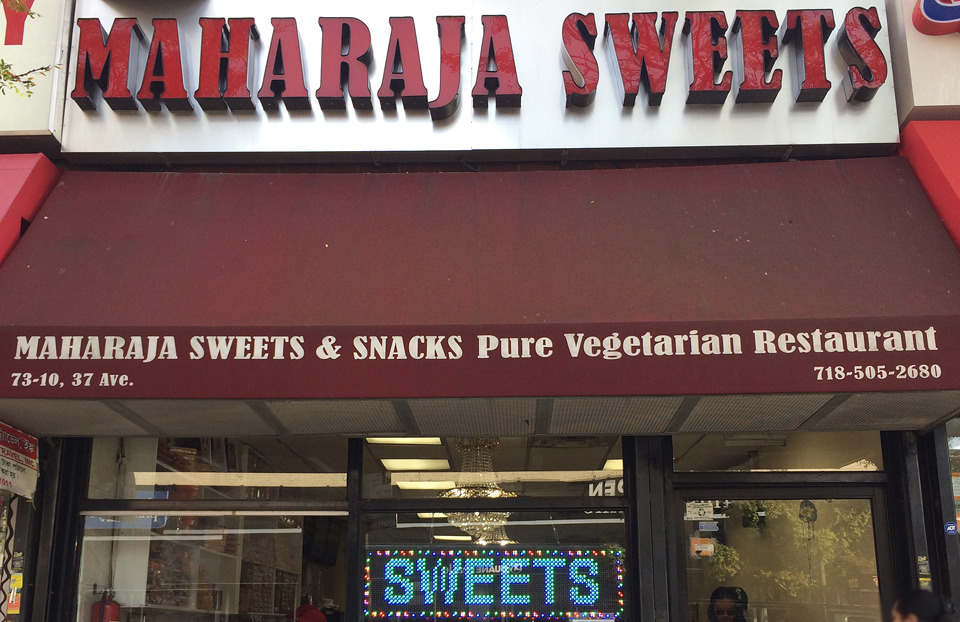
Varieties of mithai (मिठाई) are regional, from the north, east, south, and west of India, not to mention Bangladesh, Pakistan, and Sri Lanka. Many are pan-South Asian as well, but in New York, you’re not likely to see any distinctions other than Indian (most of the shops around Lexington Avenue near East 28th Street in Manhattan and those along 74th Street and 37th Avenue in Jackson Heights, Queens) plus a smattering of Bangladeshi spots (along 73rd Avenue in Jackson Heights). New Jersey also boasts a number of venues in Newark, Edison, and Paterson. My personal favorite as of this writing (and note that things can change in this regard) is Maharaja Sweets at 73-10 37th Avenue in Jackson Heights.
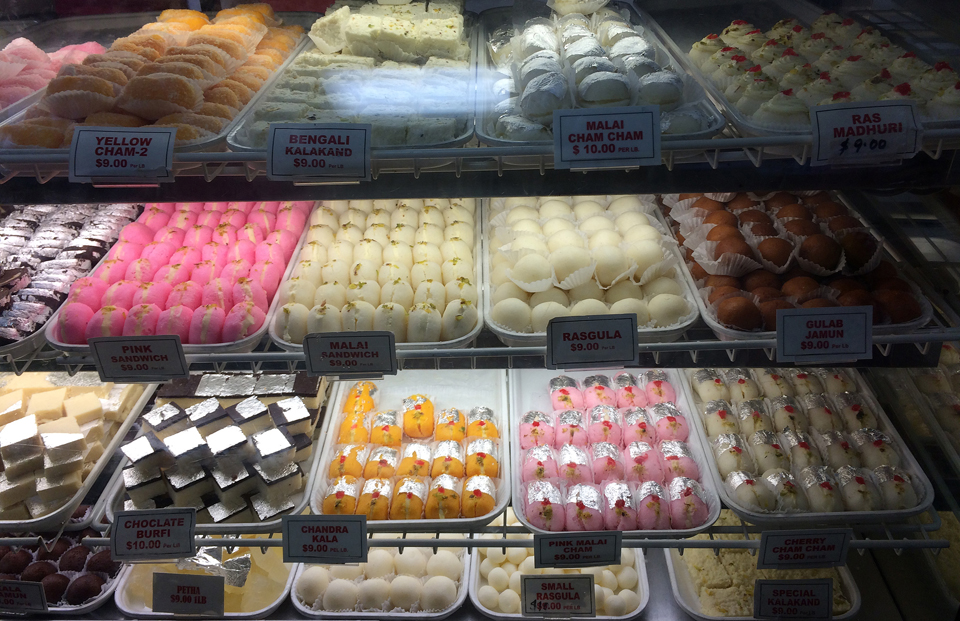
So in general, what do they taste like? You had to ask. I recall reading a story many years ago about how sweetmakers, obsessively dedicated to their craft, are revered in India and how they guard their secrets more closely than they would the Hope Diamond if given the chance, so for any particular type of mithai, recipes will vary widely from one purveyor to the next. The less involved ones might taste like nut-suffused, aromatic dairy fudge or like cheesecake taken to the next level or perhaps like a syrupy, fragrant cake – all with an overarching Indian luster. But there are so many versions of even these, not to mention the more elaborate multi-ingredient confections, that they defy verbal description. To paraphrase Supreme Court Justice Potter Stewart, you’ll know it when you taste it.

If you took note of the ingredients, textures, and shapes enumerated above and if you’re a math jock, you’ll see that the permutations and combinations within even that short list seem endless. What mithai have in common is that they range from very sweet to outrageously sweet and are all the size of a couple of bites. In this post, I’ll introduce you primarily to hand-held treats and reserve other sweets such as frozen desserts (like kulfi, Indian ice cream), puddings (like kheer, firni, mishti doi, and shrikhand), and drinks (like lassi) for another post.

First, a little vocabulary of ingredients that I promise will come in handy and is sure to obviate numerous pairs of parentheses; English spellings will vary slightly:

badam – almond
kaju – cashew
pista – pistachio
malai – cream
kesar – saffron
gajjar – carrot
besan – chickpea flour, also known as gram flour, often roasted

Types of dairy products used in making mithai:

Ghee – clarified butter.
 
Chhena – A fresh (unaged) cheese like paneer (you’ve probably had paneer in Indian restaurants) but softer because some whey remains in the finished product.
 
Khoa, also known as khoya, mawa, and mava. Khoa is amazing: start with a cowful of milk and cook it down until you’re left with a few ounces of milk solids. If you don’t have a cow (and I suggest you don’t), you can buy it prepackaged at Indian markets if you’re considering making your own mithai, which, by the way, is not impossible.


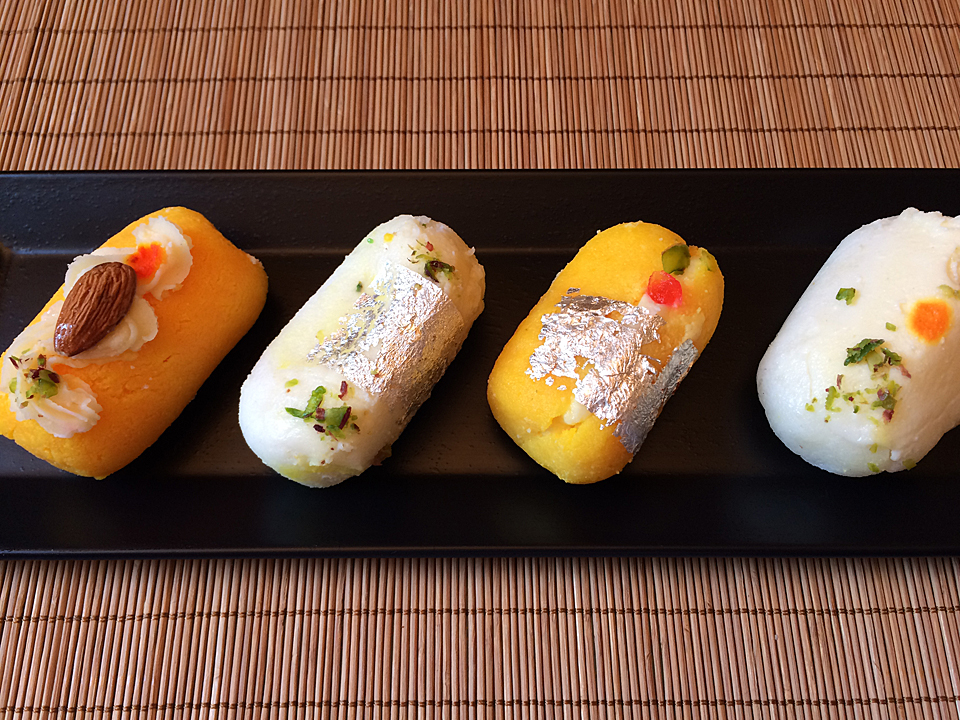
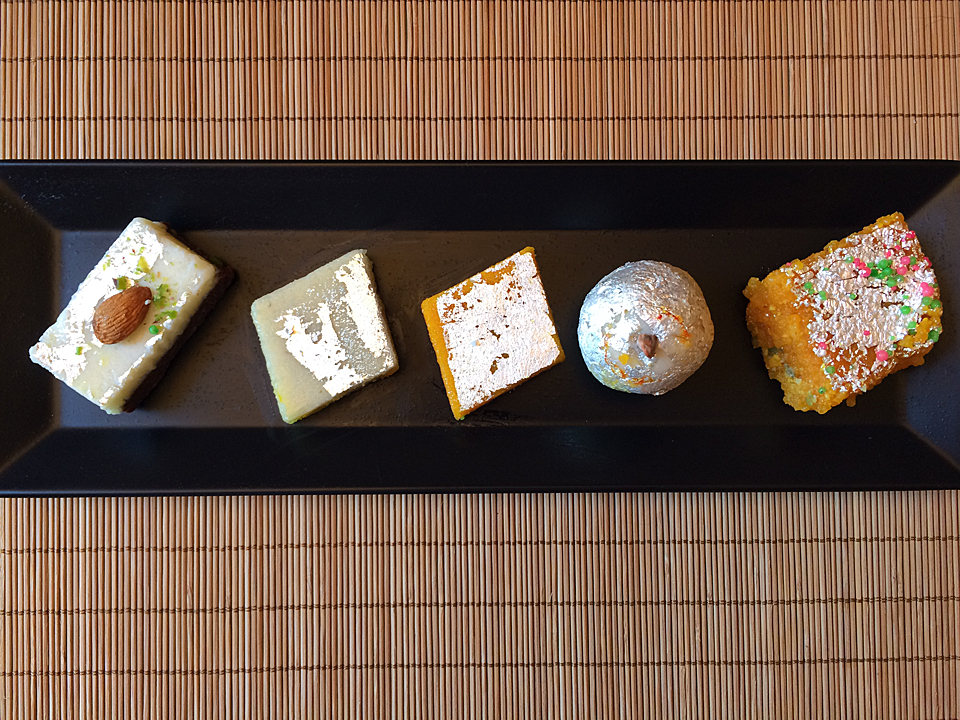
Here are some of the most common types of mithai that you’ll typically encounter, but an exhaustive list would be, well, exhausting. (Click any photo to view in glorious high resolution.)
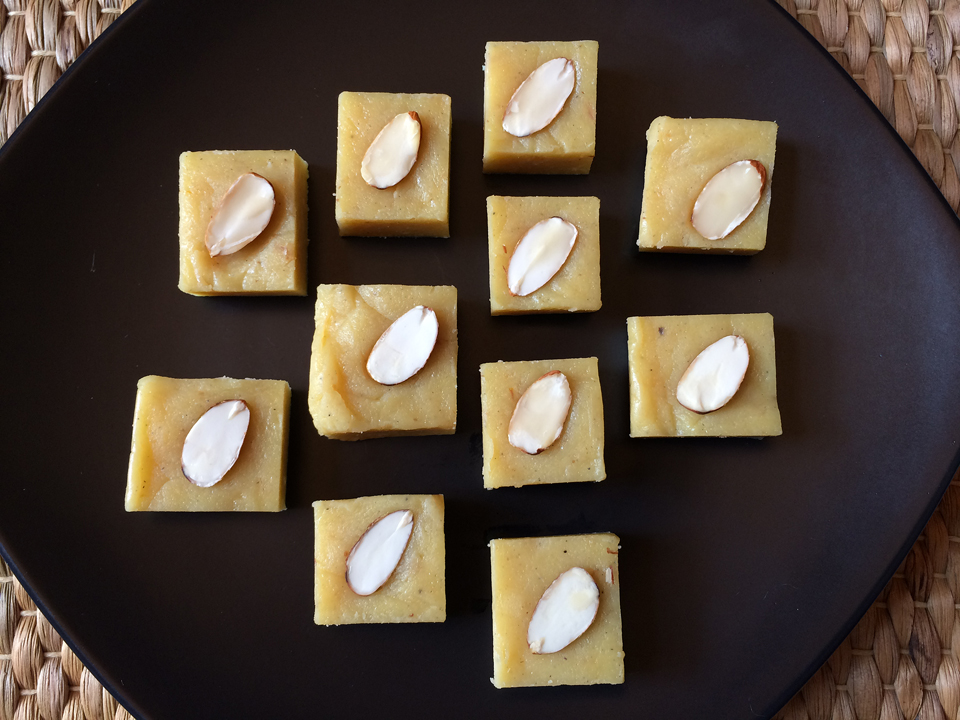
 

Shown here, kesar badam burfi (these are homemade by the way, so you see it is possible!), peda, and sandesh.

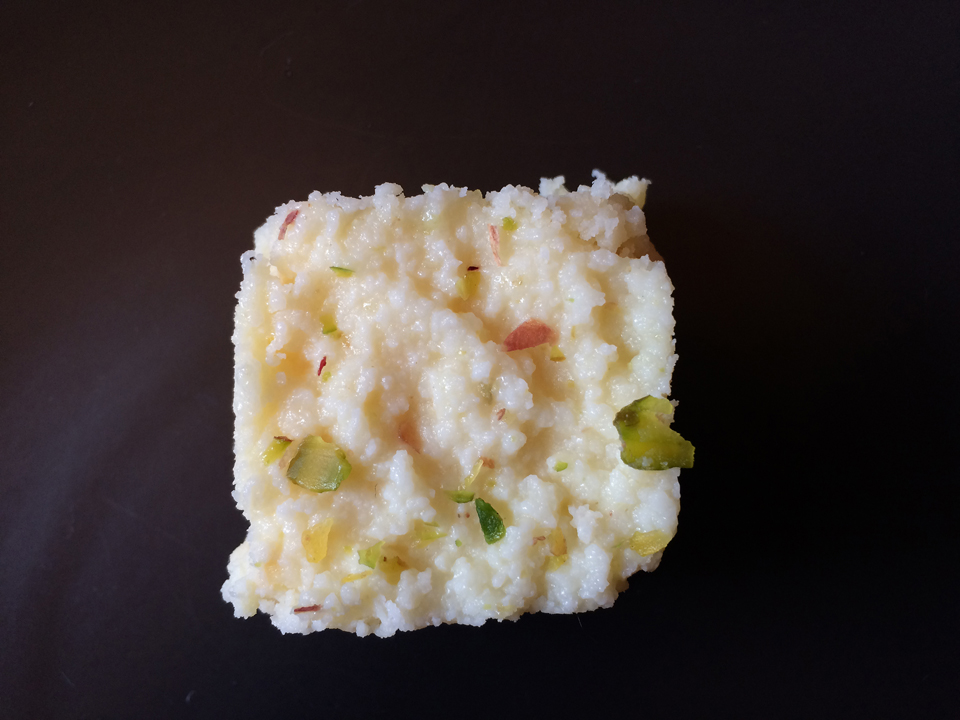
  • Burfi (you also might see it as barfi, burfee, etc.) – condensed milk-based with a fudge-like consistency; usually cut into rectangular blocks. Easy to find in many varieties like badam burfi (usually almond colored), kaju burfi (usually a little darker, caramel colored), pista burfi (usually green), malai (usually white), besan, etc. Most feature cardamom, some highlight saffron. The name comes for the word for snow.
  • Katli – like burfi but thin, flat, and often cut into diamond shapes. A little denser than burfi. Katli means slice.
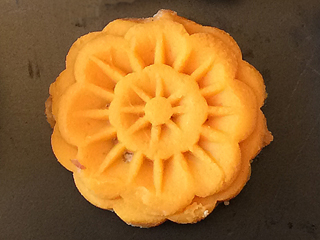
  • Peda (you also might see it as pera, pedha and penda, the Gujarati spelling) – similar to burfi but enhanced with khoa. Usually found in a disk shape with a pattern imprinted atop.
  • Sandesh – similar to burfi but chhena-based and moist with a more open, tender texture.
  • Kalakand – deliciously cheesy and chhena-based; more dense than sandesh.
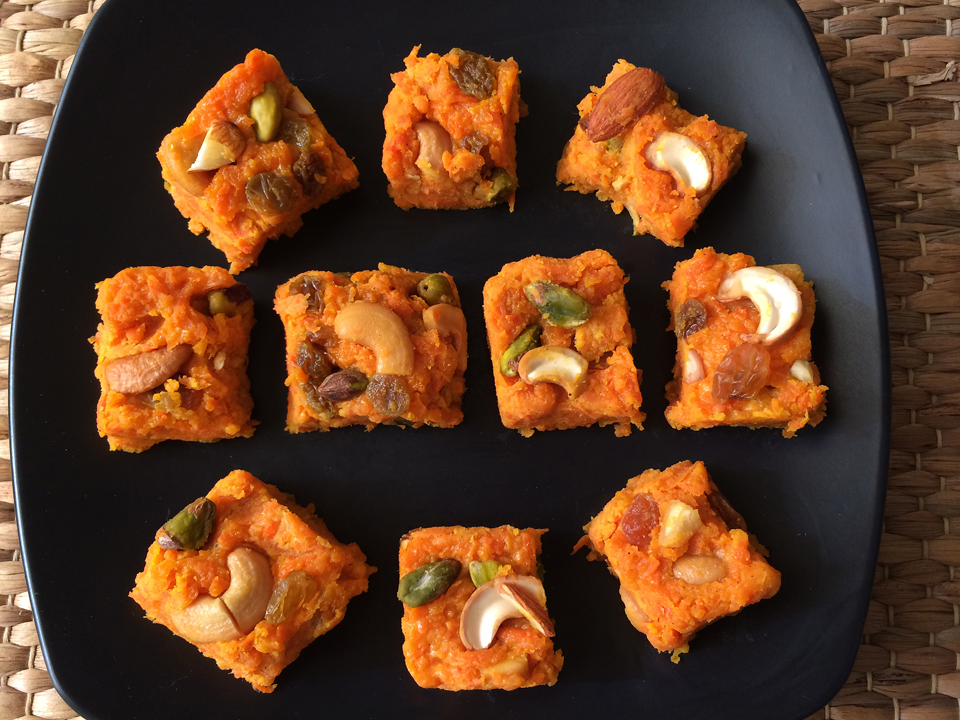

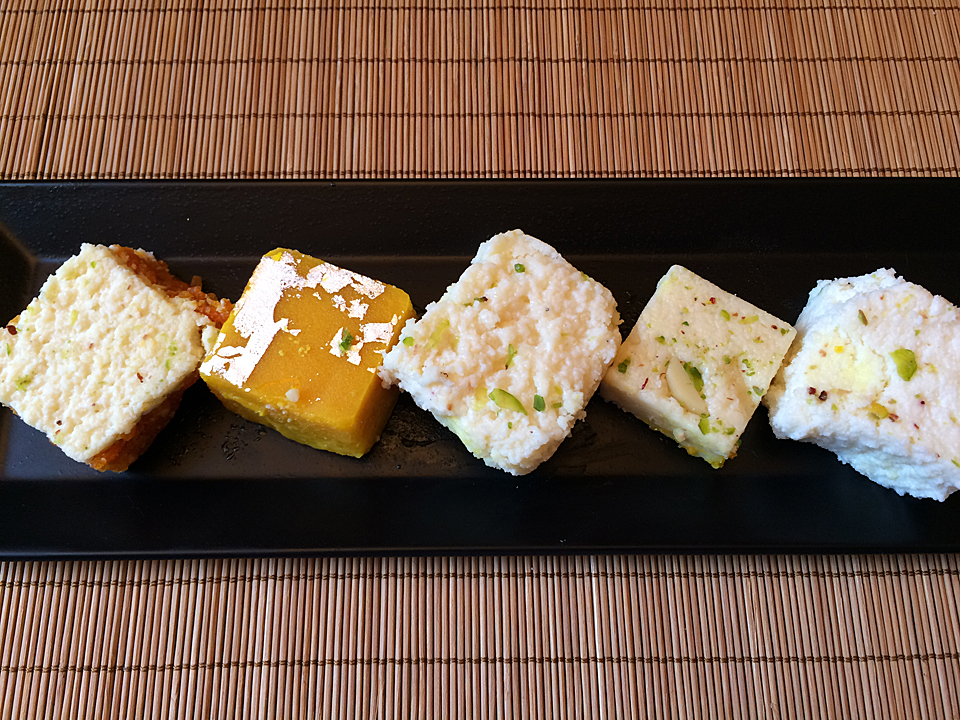
Halwa takes many forms depending upon the region of India from which it hails. From left to right:

  • Gajjar (you also might see it as gajar) halwa can be found cut into squares like burfi and also scooped loose from a large container. (Those shown above are also homemade if you’re keeping score.)
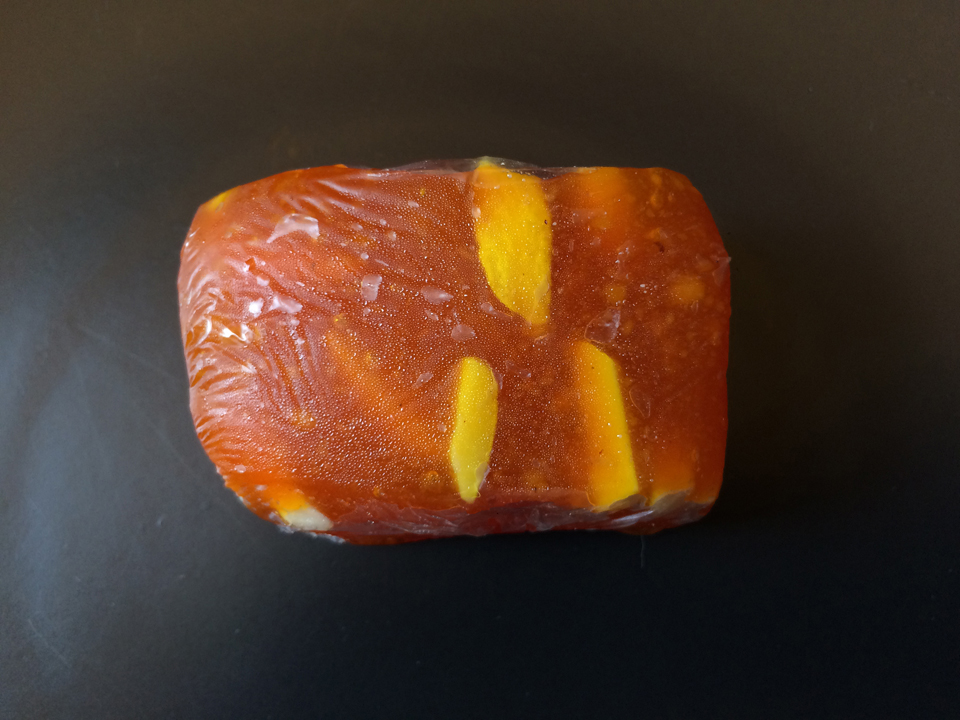
  • Karachi halwa are translucent and not unlike a very thick, super chewy gumdrop; they’re made from semolina or cornstarch. Often wrapped in plastic to thwart their stickiness.
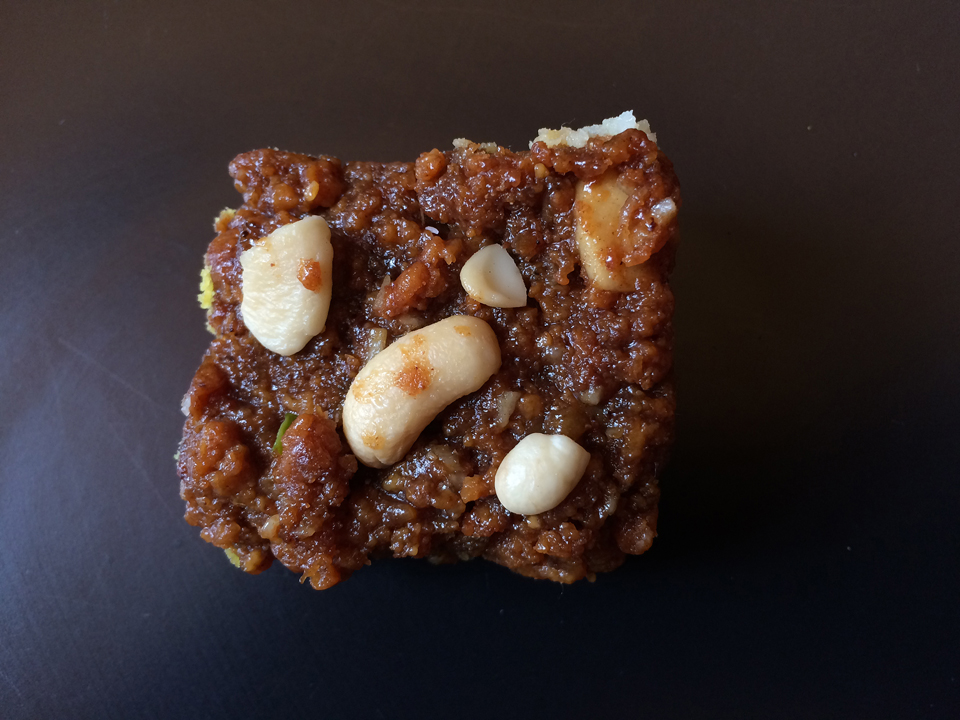
  • Habshi halwa (I’ve also seen something that appears to be the same item called dhoda burfi) are dark brown squares made from besan, nuts, nutmeg and mace. It’s a dead ringer for a chocolate brownie but do not confuse it with its doppelganger: Never think “Oh, yum, chocolate brownie!” when you’re about to tuck into one or your brain and tastebuds will get stupifyingly disoriented. It is absolutely delicious and one of my favorites along with burfi and peda.

Other halwas are made from wheat flour or mung bean flour. The flavors and textures really depend on the versions you come across, so I won’t attempt to provide a universal description, but they generally lie somewhere along the cake/fudge/pudding continuum.

Incidentally, many Indian sweetmakers are using chocolate these days with mixed results in my opinion: in most cases, it just doesn’t work (a terroir thing perhaps?) but every once in a while I’ve hit upon an excellent one and I’ve had to revise my thinking for the moment.
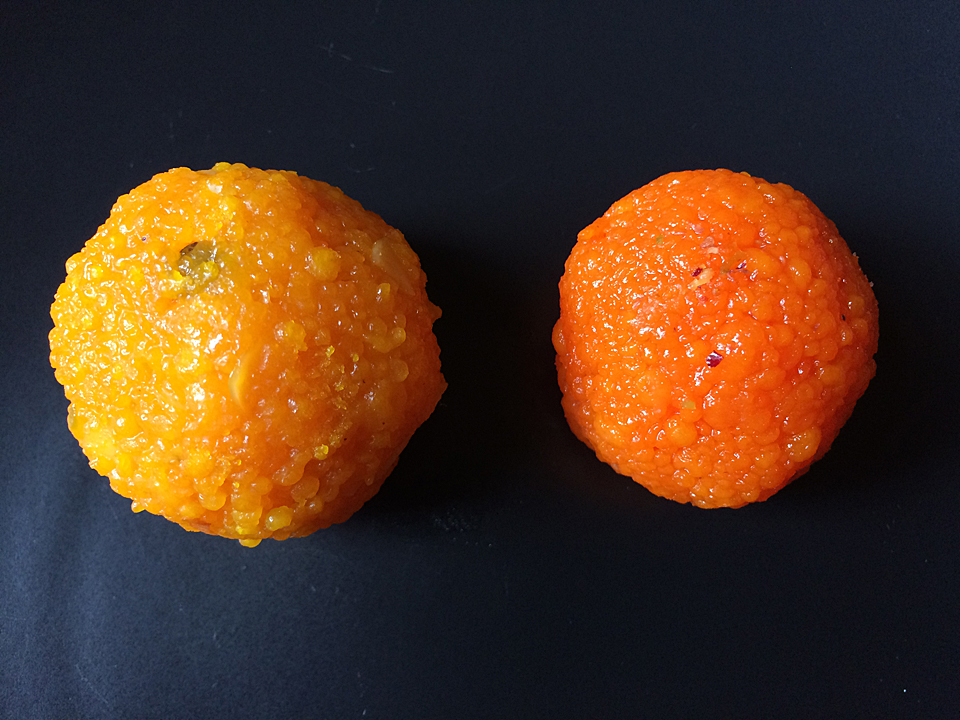
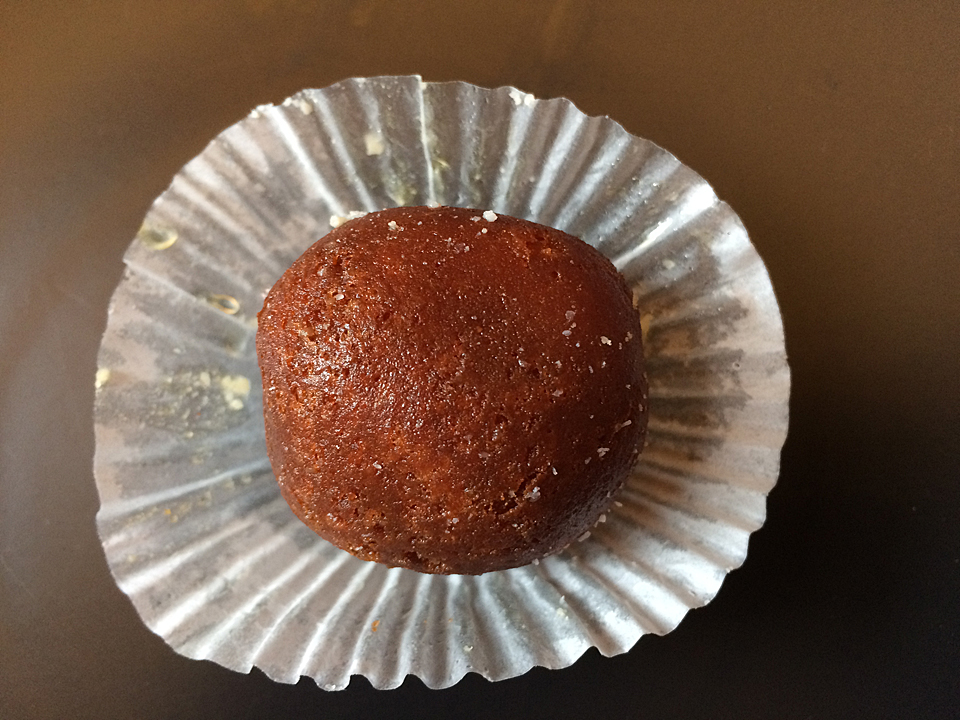
Laddoo and kala jamun. The yellow is shahi (royal) laddoo, the orange is kesar laddoo.
  • Laddoo – the word means ball and really only refers to the shape since there are many kinds with many textures and flavors. Flour based and cooked with syrup (some are deep fried as well), a common type is made up of tiny pearl sized balls (boondi) rolled together into a larger sphere. All of them are sugary sweet. These are traditionally offered to the elephant-headed god Ganesha, the remover of obstacles. I have it on good authority that Ganesha loves food!
  •  
    I think of these next three as related:

  • Gulab jamun – medium brown in color and universally found not only in sweet shops but also for dessert in Indian restaurants. Deep fried batter (made with khoa but you might not notice it), sphere shaped, and a little spongy so they soak up the sweet rose water syrup they’re swimming in. (Gulab means rosewater, jamun refers to the java plum, a fruit of similar size to gulab jamun.) Kala jamun are similar to gulab jamun, slightly darker in color and sometimes shaped more like cham cham.
  • Rasgulla – also found for dessert in Indian restaurants. These white, cheesy confections are made from chhena and semolina, cooked and often served in a sugar syrup, first cousin to gulab jamun.
  • Ras malai – spongy and also chhena based, these swim in a creamy sauce; first cousin to rasgulla. Ras means juice.


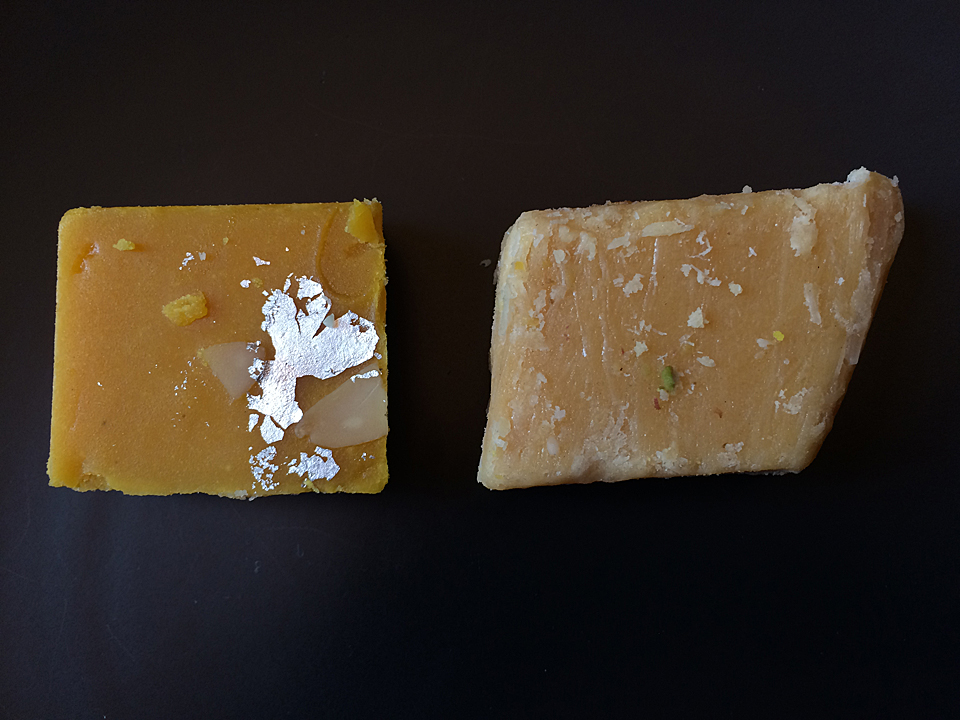
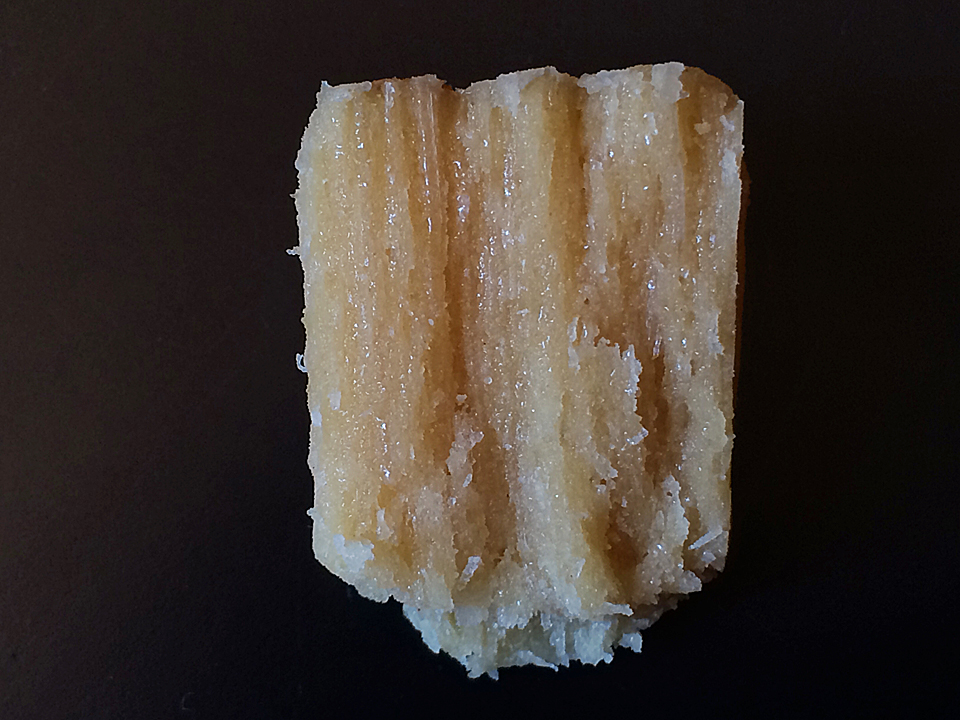
Besan in its many forms figures into so many mithai that I can’t keep track. On the left, smooth and creamy besan burfi and crispy patisa halwa. The photo on the right is a close-up of the layers of almost crystalline flaky striations that create patisa’s delightful crunch.

  • Patisa halwa – a chickpea based sweet. Sometimes shaped like little haystacks, sometimes in a block, they are crispy and delicious.
  • Mysore pak – made from chickpea flour and ghee, cut into rectangular shapes – if you like chickpeas, you’ll like these. They appear to be spongy, but they’re crumbly and a little crisp.
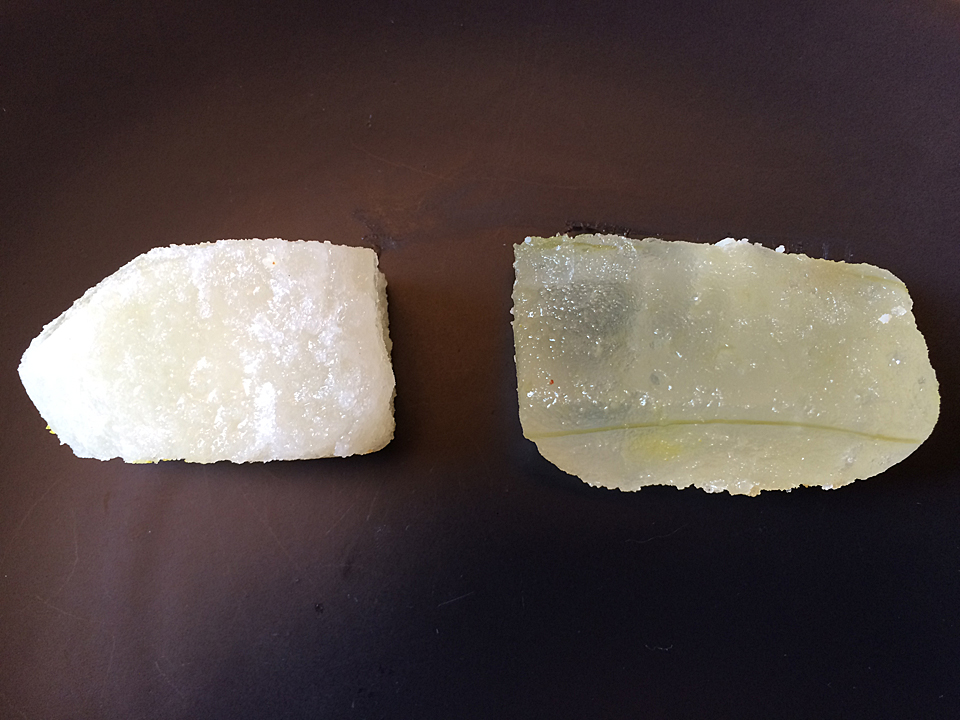
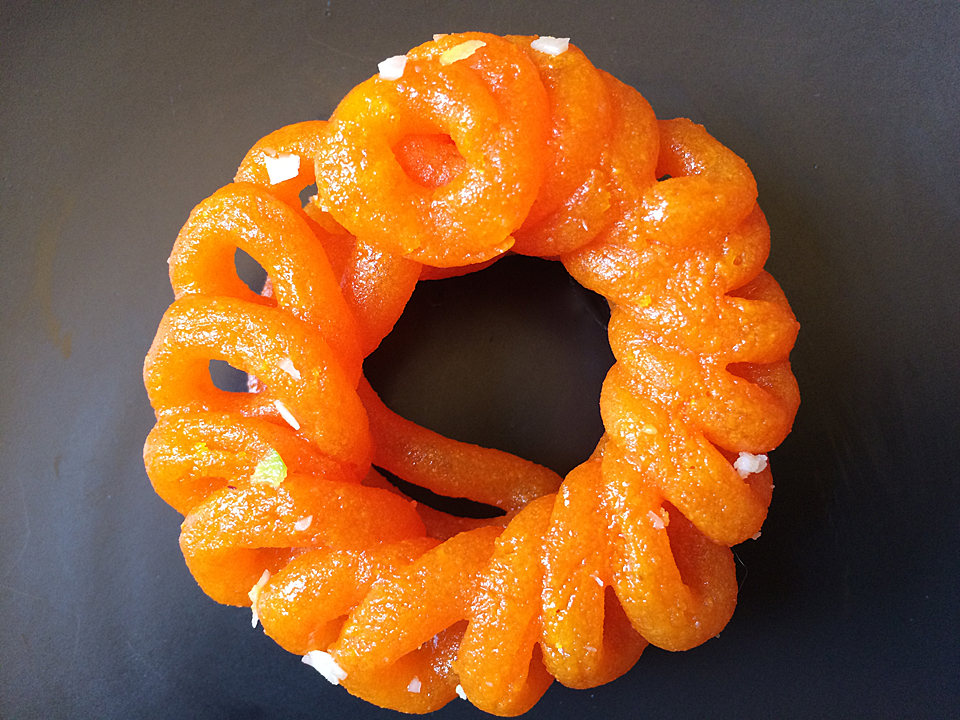
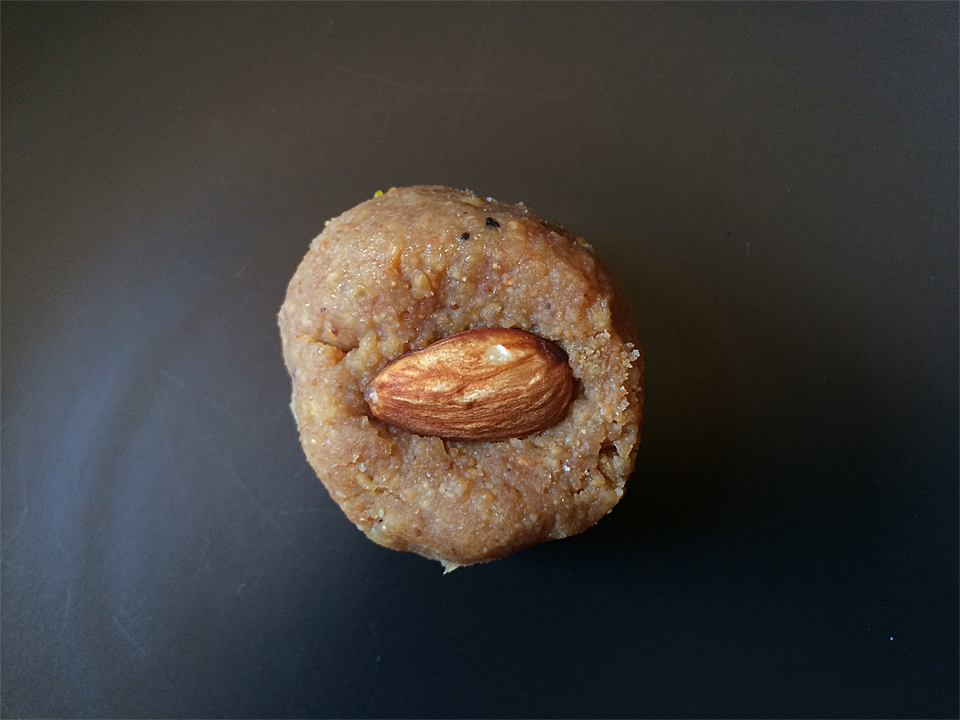
Dry petha and regular petha, amriti, and pinni.

  • Petha – not to be confused with peda or pera, these are a translucent candy made from winter melon/white pumpkin, tasting like perfumed, juicy, sweet candied fruit. You also might see the dry version that is less syrupy, crisper, crunchier, and more candy-like.
  • Jalebi – chickpea or wheat flour batter, usually orange but occasionally yellow, is drizzled into hot oil in coil shapes. The resulting deep fried confections look like pretzels; they’re crispy when they come out of the oil, then soaked in syrup so you get the best of both worlds.
  • Amriti (you also might see it as imarti) are similar to jalebi, always orange but shaped like a squiggly flower; thicker than jalebi, less crisp, and less sweet.
  • Pinni (you also might see it as pinny) – made from wheat flour, koya, jaggery (unprocessed brown sugar), dry fruits and nuts. Less sweet than most, and a welcome change of pace in that regard.
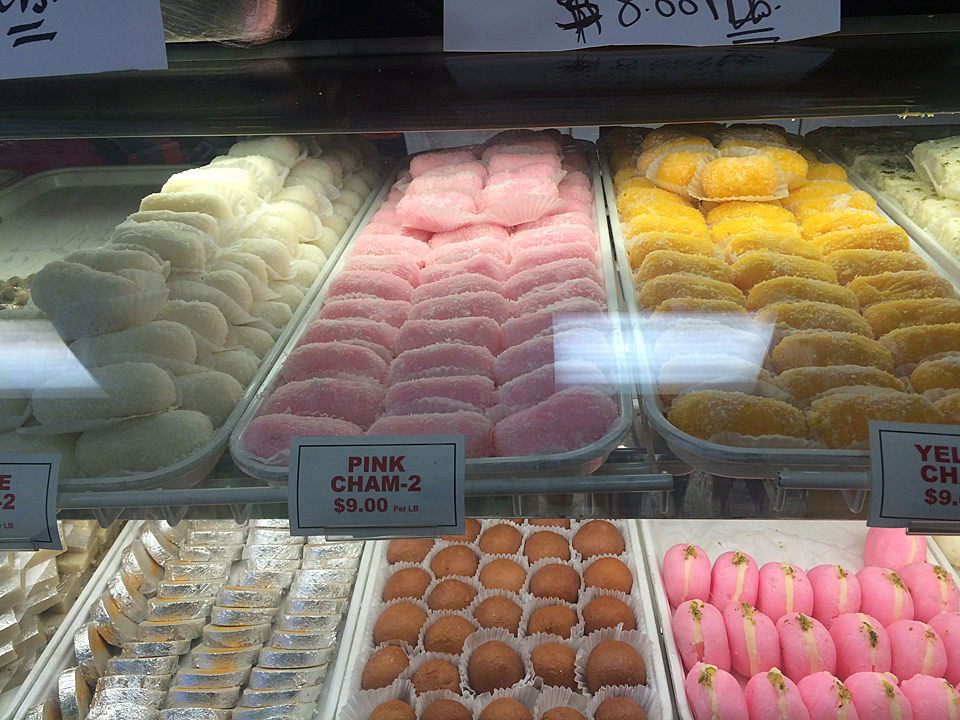
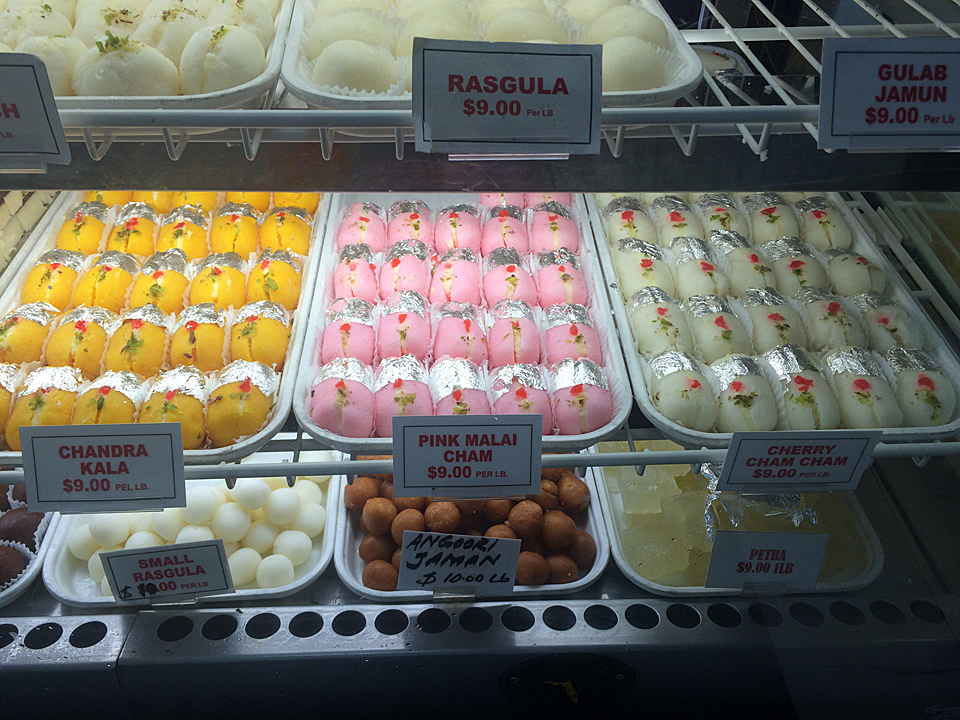
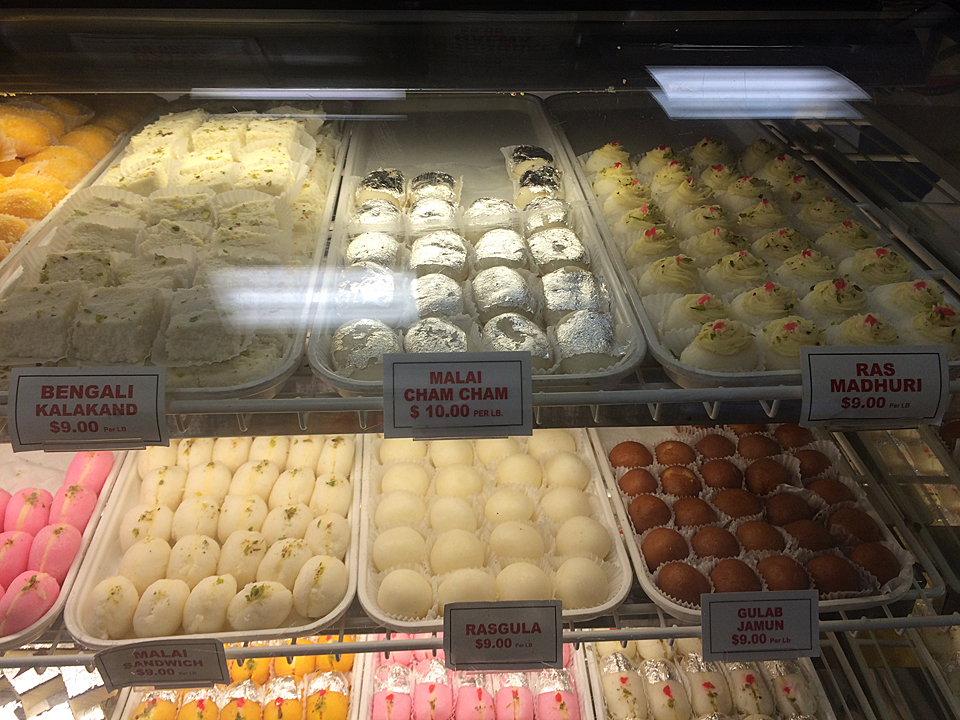
Cham cham in their native habitat (alongside other goodies).

  • Cham cham (you also might see it as chum chum or even cham-2) – a little larger than thumb-sized and oblong, often coated in coconut. Typically you’ll see it in white, yellow, and pink although I don’t think the colors are any indication of flavor. Not overwhelmingly dairy, but they are made from milk solids. Although not swimming in syrup (see gulab jamun), these have a slightly spongy texture and hold a little sweet syrup: think juicy but not saturated.
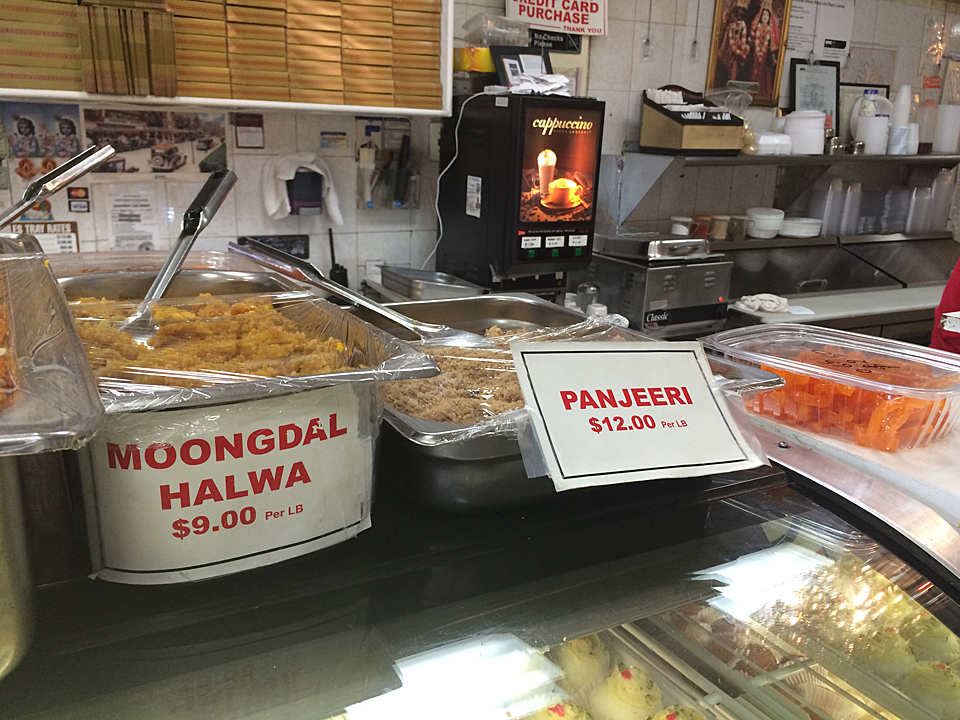
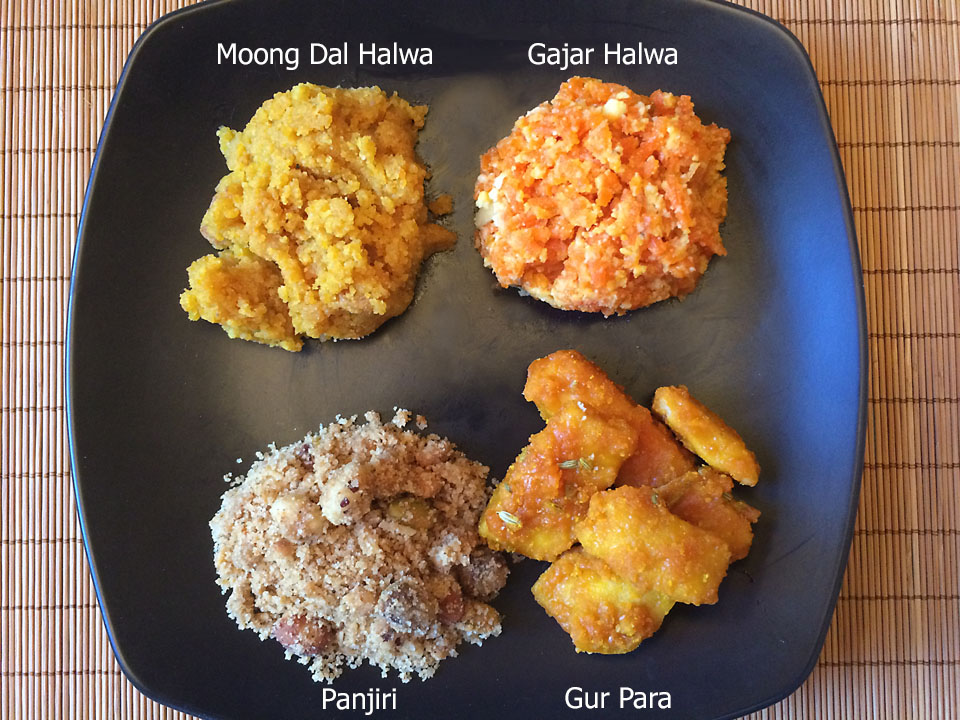
Some mithai like these are scooped out in bulk from bins rather than sold in compact individual pieces; some take the shape of small tidbits.


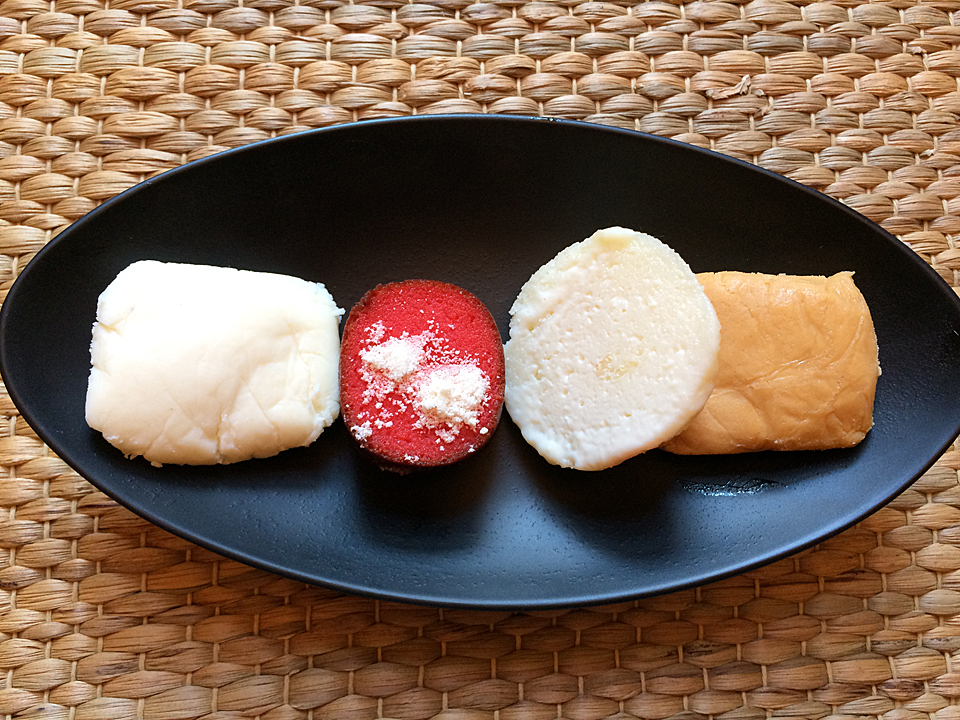
Mithai from Bangladesh and Pakistan share some similarities with their Indian counterparts but are crafted from a slightly different set of ingredients and, to my taste, are a little less sweet. I recommend becoming familiar with Indian mithai before essaying these. The photo on the left shows a few treats from Premium Sweets, the Bangladeshi restaurant on 73rd Street in Jackson Heights. On the right is a sampling of the panoply of Pakistani confections I discovered on a recent New Jersey expedition to celebrate Pakistani Independence Day (h/t Dave Cook and his illustrious blog, Eating In Translation) that came from Chowpatty on Oak Tree Road in Iselin; most were pretty good but perhaps a little less accessible than their Indian analogues.
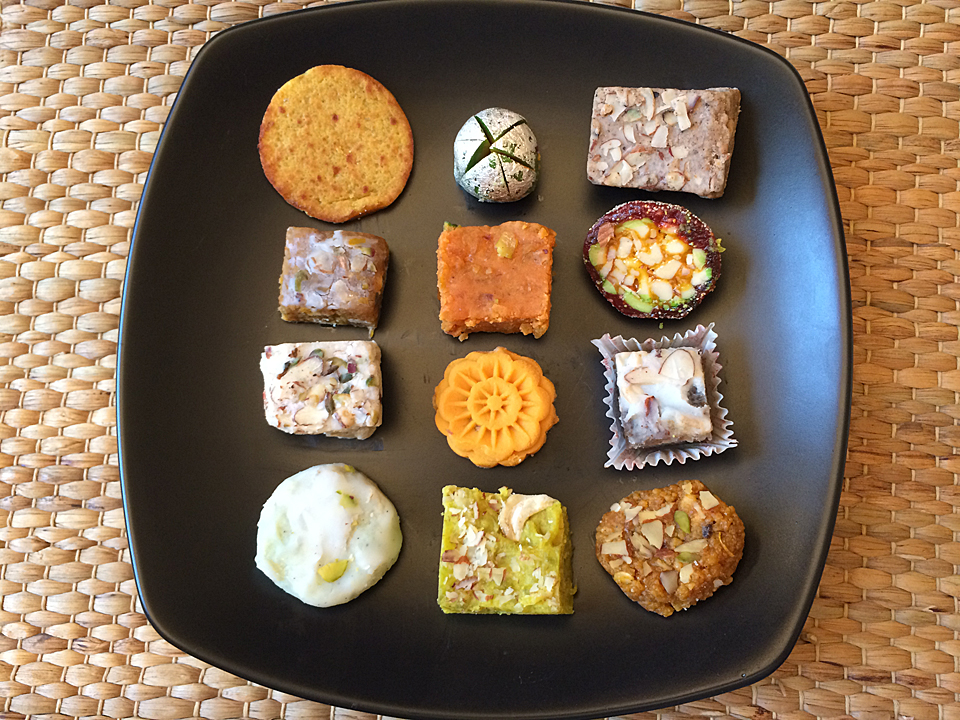
On the Pakistani plate:
Row 1
(1) Badam Puri – flour, rice flour, ground almonds, milk, sugar, cardamom; fried in oil, a delicious wafer.
(2) Watermelon/Anarkali – not watermelon flavored that I could discern but similar in appearance; edible silver foil, green on the outside, red on the inside.
(3) Halwasan Pak – cracked wheat, edible gum (looks like little pebbles), ground “porridge”, milk, almonds, cashews, brown sugar, nutmeg, cardamom; very crunchy, almost sandy.

Row 2
(1) Gundar – dry fruit, gum arabic crystals, powdered ginger; strongly flavored, an acquired taste.
(2) Gajar Halwa – see above.
(3) Kaju Mohini – figs and nuts, tastes like it looks.

Row 3
(1) Adadiya Pak – urad dal (lentils), gram flour, nuts, ginger, fenugreek and other spices, roasted in ghee; texture like crunching on sandy pebbles, an acquired taste.
(2) Stuffed Peda – see above.
(3) Gundar Pak – syrupy gundar.

Row 4
(1) Ghari – the white “icing” had very little flavor, almost tasted like wax or oil; green pista inside.
(2) Dryfruit Halwa – made with raisins, truly delicious.
(3) Halwasan – made from cracked or broken wheat and soured milk; chewy, fruity.


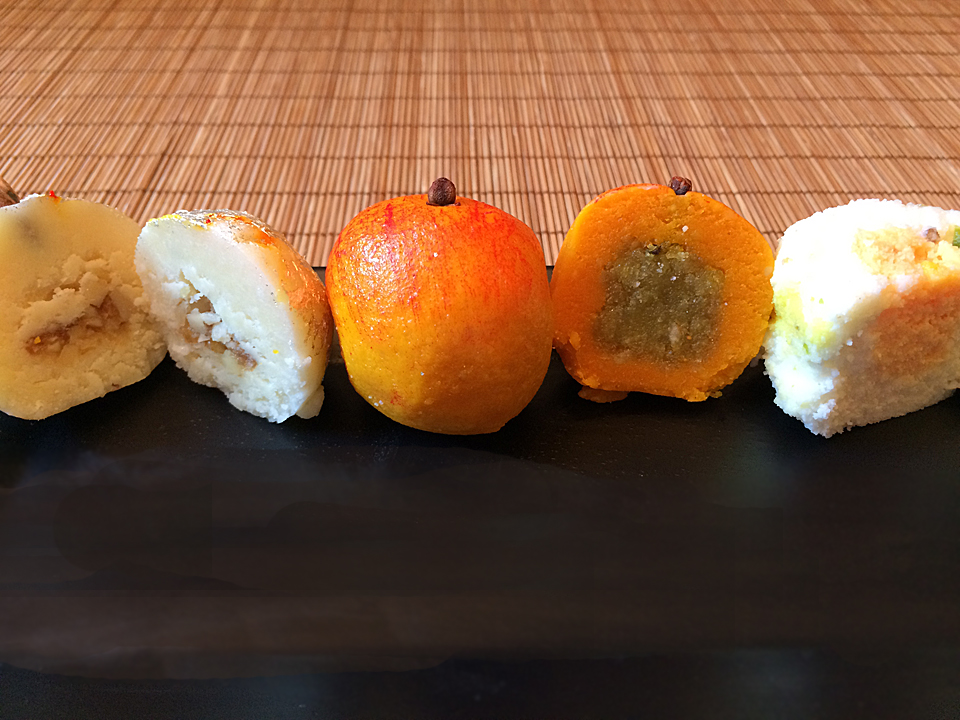
And finally, more photos to get you hooked. As you might expect, special mithai are created for Diwali. One that is particularly delicious, unique and one of my all-time favorites is apple mithai (the two peach-colored pieces in the first photo), complete with a clove for a stem; this seasonal sweet tastes a lot like marzipan and has a very limited run through Diwali only; it’s a specialty of Rajbhog Sweets, 72-27 37th Avenue in Jackson Heights. The rest are always available.
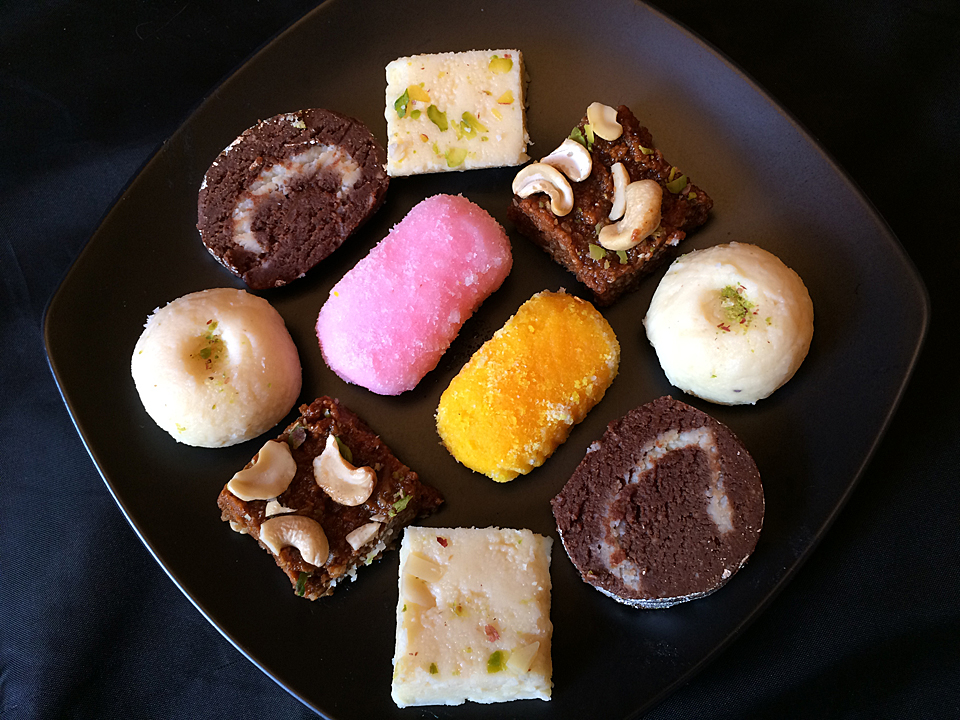
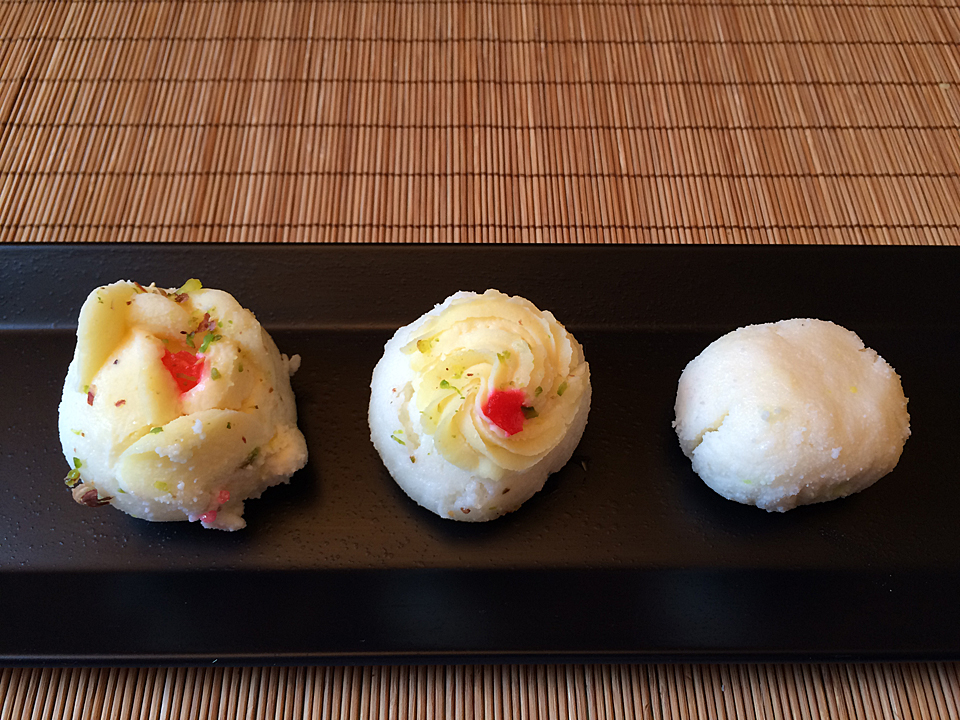
So that’s my addicted-to-mithai story and I’m sticking to it (and possibly to the Karachi halwa as well). I urge you to go out there and track down these confections, especially for the holiday although most are available year-round. If they don’t light your diya, I don’t know what will. And if, after you’ve sampled them, an insatiable craving for mithai sneaks up on you when you least expect it…well, you know how you got hooked!

दिवाली मुबारक
Happy Diwali!


In 2019, Diwali begins on Sunday, October 27.



Moon Man

Instagram Post 10/26/2017

(Click on any image to view it in high resolution.)

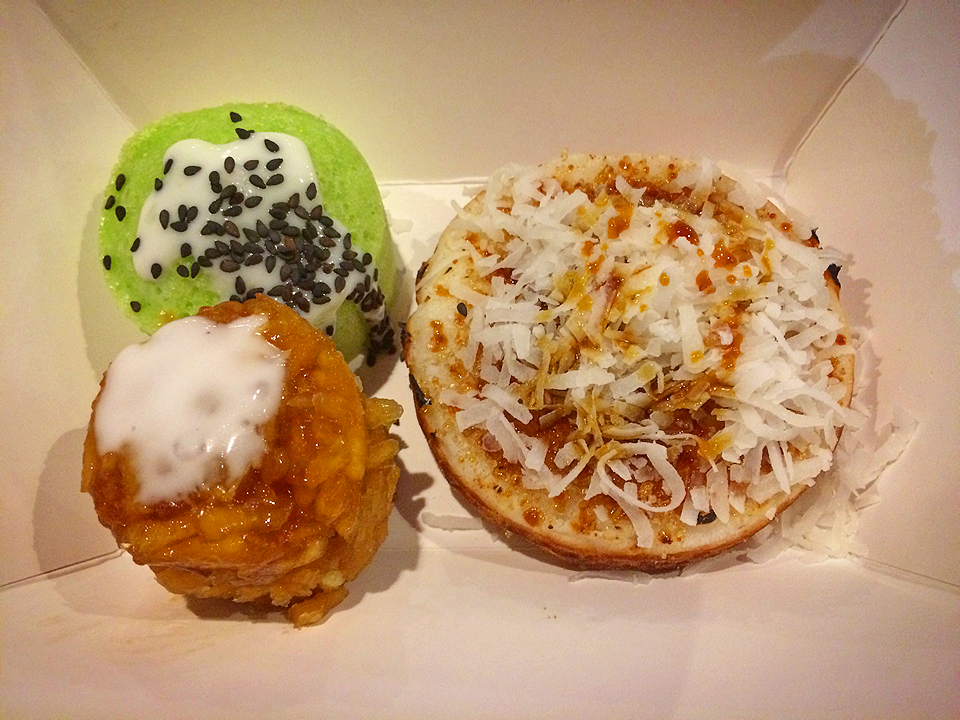
Check out who’s landed at the Queens International Night Market! It’s Moon Man, and they’re absolutely one of the best vendors there. They do amazing sweet Indonesian street snacks in three varieties that can be crowned with over seven different toppings including coconut, chocolate, sesame, peanut, and Java palm sugar. If you’re a mathlete, you can calculate the permutations and combinations on those numbers. If not, then do what I did: get their tasting menu and you can try all three delicious cakes – a combo of Indonesian kue pancong (coconut pancake) with Java palm sugar, kue putu (pandan steamed cake) with black sesame, and steamed cassava cake with sweet coconut paste.

They pop up here and there but this Saturday, October 28, you’ll find them at QINM for this season’s closing night. They’re hoping to situate themselves in a more permanent space, so keep an eye out for them because QINM is only one small step for Moon Man…I’m looking forward to a giant leap into a new uncharted space!

Follow them at hellomoonman.com | facebook.com/HelloMoonMan | instagram.com/HelloMoonMan


Homemade Pumpkin Pie

Instagram Post 10/13/2017

(Click on any image to view it in high resolution.)

More of my home cooking!
🎃
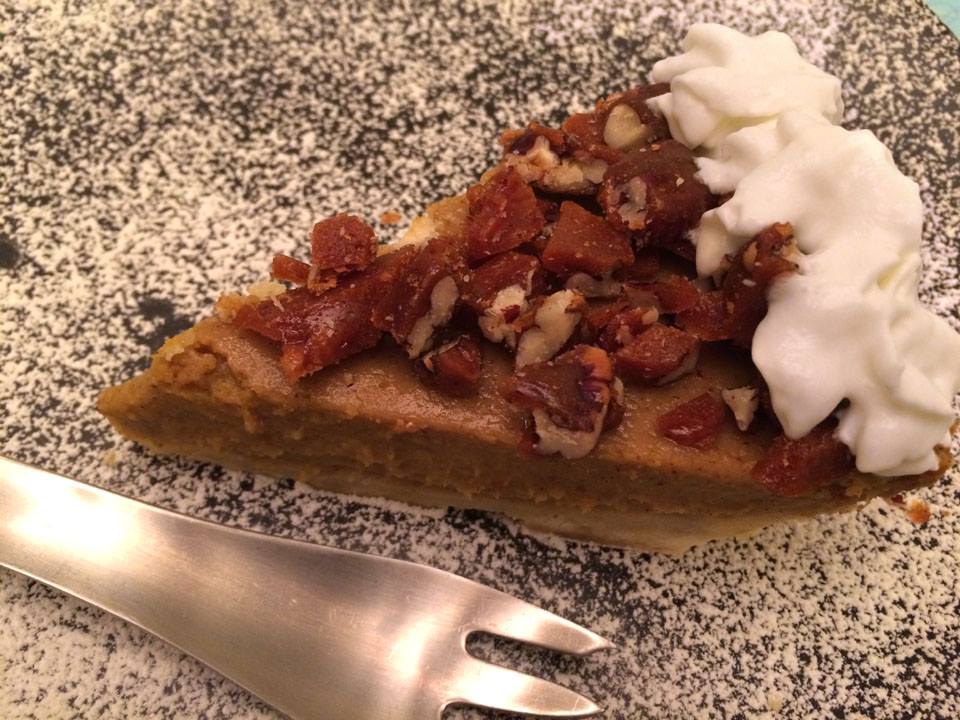
It’s pumpkin season and I’m preparing my perennial parade of peak-of-perfection pumpkin pies! I’m pleased as punch and proud (okay, enough with the p’s) that there’s so much 💖 for these babies; I seriously did go through countless iterations developing my recipe until I got it to exactly my idea of what the ultimate pumpkin pie should be. (One of the tricks is to use only fresh pumpkin – none of this canned stuff.) That’s homemade pecan brittle adorning the top and real honest to goodness snow on the plate. (Okay, I lied about the snow – it’s powdered sugar – but the rest is gospel!)


Taiyaki NYC

Instagram Post 10/10/2017

(Click on any image to view it in high resolution.)

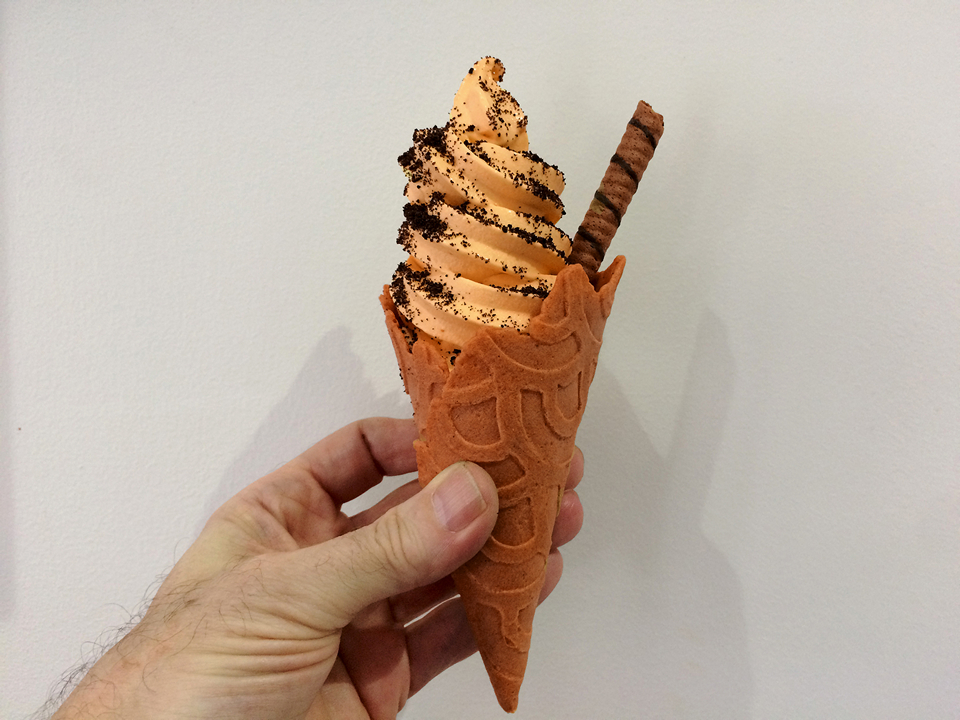
‘Tis the Season! Well, I guess it’s always the season for something and this time of year it’s pumpkin spice everything. Shown here, pumpkin spice soft serve in a pumpkin spice cone. I’m pleased to report that not only did the ice cream hit the spot, but the cone actually tasted like pumpkin spice, so 💯 extra points guys. Lots more choices as well at Taiyaki NYC, 119 Baxter Street, Manhattan, NY.


Christmas 2016 Cookie Assortment

Christmas 2016 Cookie Assortment: Linzer Stars, Pecan Whiskey Balls, Marzipan Cookies, Biscotti (three kinds – Amaretto Cherry Almond, Pistachio, Anisette Orange Almond), and Identity Crisis Cookies – so named because I couldn’t decide whether to make chocolate chip walnut or oatmeal raisin or toasted coconut and since I had all of those on hand…well, you get the picture.


Smart Cookies

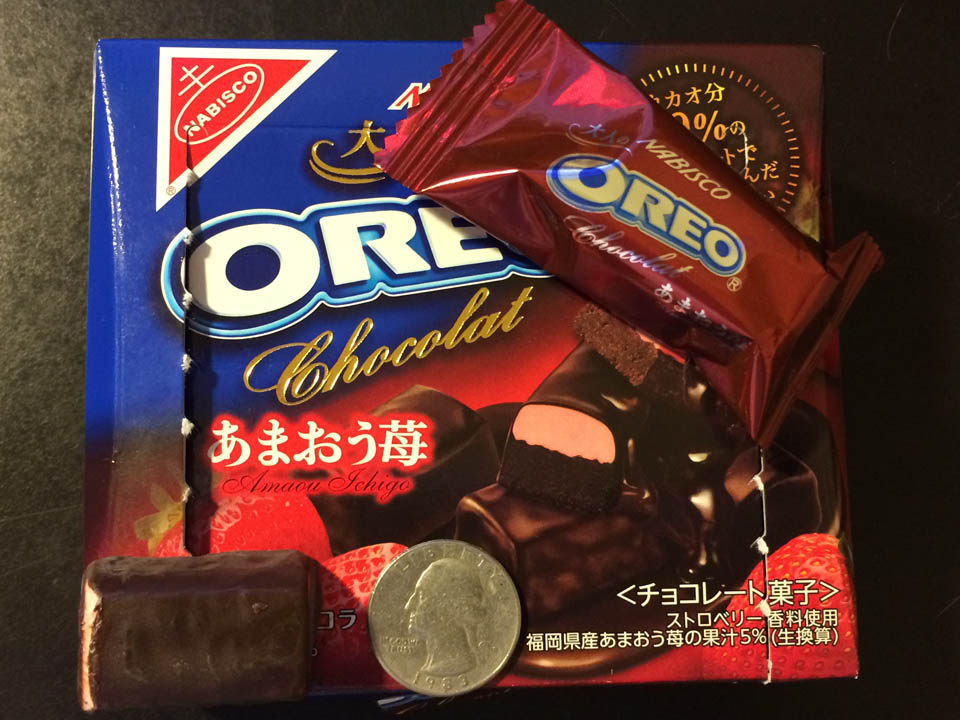
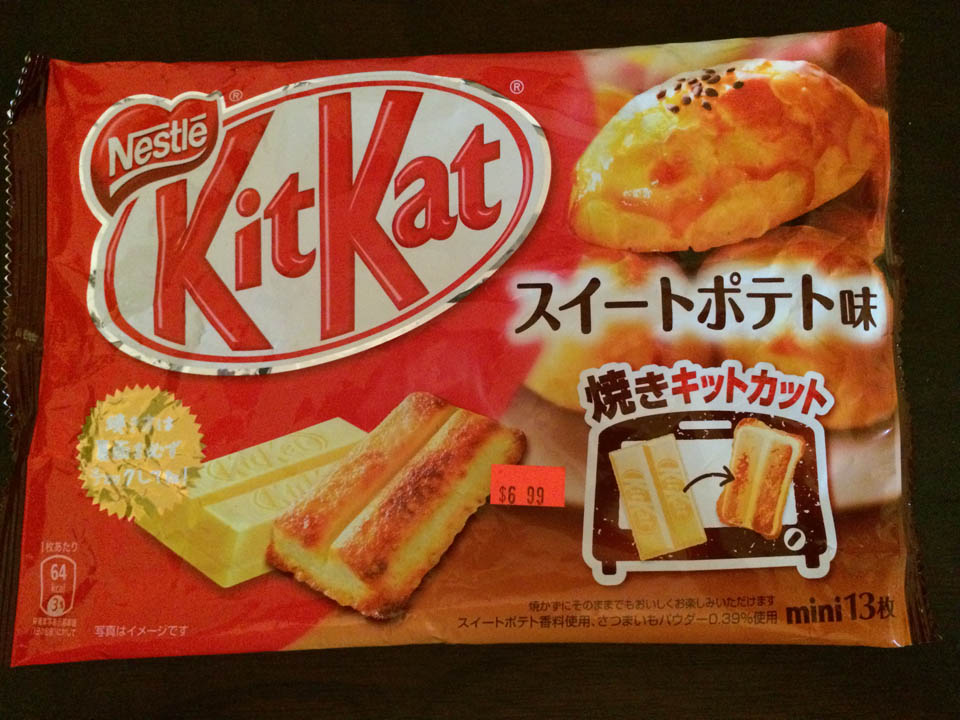
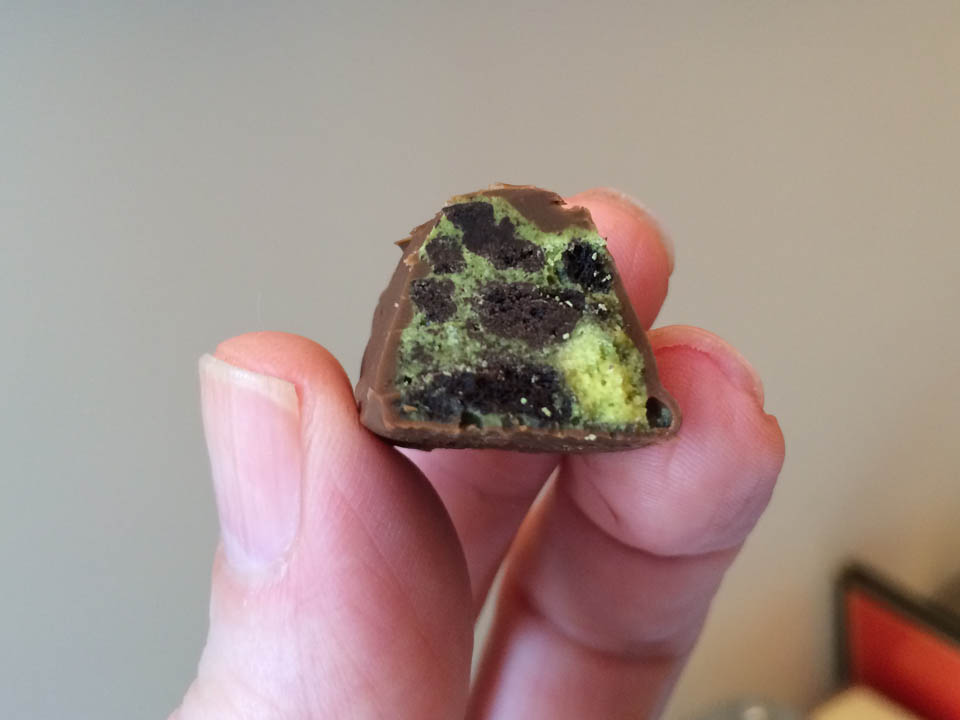
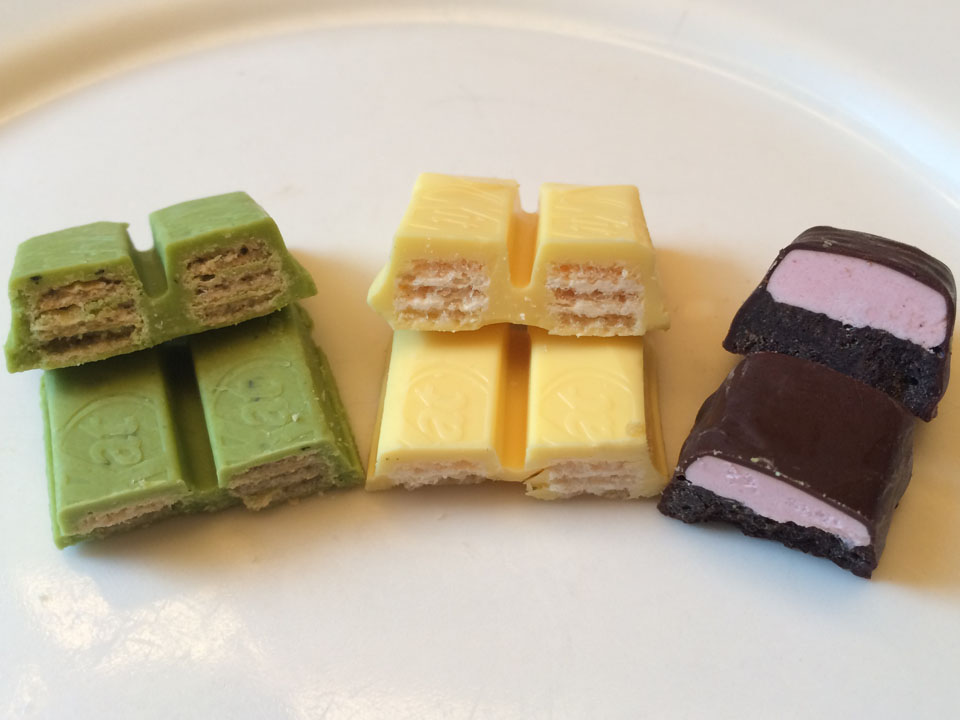
If you’ve visited the confectionery aisle at almost any Asian market, you know there’s no shortage of packaged cookies and cookie-like treats to tempt your tastebuds and purge your pocketbook. Japanese renditions of American classics take that to the next level, both in terms of snackability and sticker shock (at least what I can find stateside). A cursory perusal of one such aisle revealed variations on the theme of mini Kit Kats and Oreos (in a bite-sized format unfamiliar to me); I was tickled to find matcha green tea versions of both as well as strawberry Oreo and sweet potato Kit Kat varieties. (This last sported instructions on the back for optional toaster-oven crisping!)

Oreo Matcha BagOreo Strawberry BoxKit Kat Sweet Potato Bag

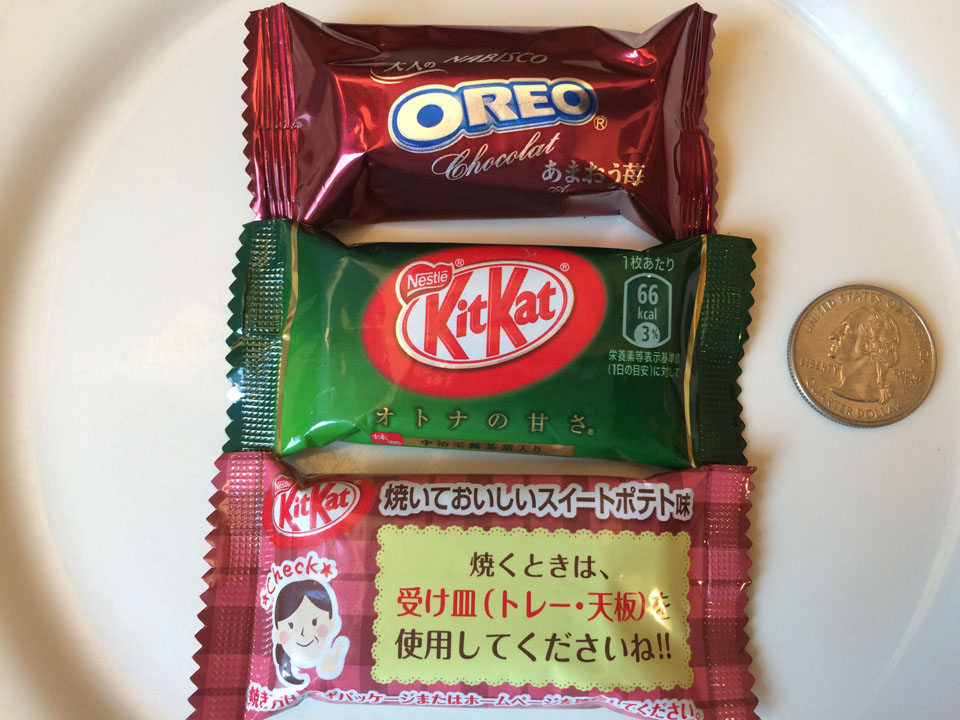
I was less tickled by the prices, however. Certainly the packaging is attractive – bright colors, shiny gold, embossed even! – but lots and lots of air surrounding teeny tiny morsels of sweet crunchiness. (Reminds me of a quote from Monty Python’s Flying Circus: “There will now be a whopping great intermission, during which small ice creams in very large boxes will be sold.”) This 9½ inch wide bag of mini Kit Kats, for example, offers about a dozen individually wrapped pieces, each weighing in at about 12 grams – less than half an ounce – for $6.99, but I guess I do understand why the pricing is what it is.

Oreo Matcha PieceThree individually wrappedThree unwrapped

In terms of taste, the sweet potato Kit Kat was, for an instant, sort of sweet potato-y, then it turned somewhat artificial and a little metallic. The matcha was more subtle but was also more true to its green tea flavor description. Strawberry Oreo straddled the fence between fruity and artificial.

(I’ve always theorized that if a being from another planet landed on Earth and was tasked with the challenge of reconciling how the taste of artificial cherry, grape, et al. has any resemblance whatsoever to real cherries or grapes, it would shake its heads, concede defeat, and return home with its tails between its legs. Somehow, after years of ingesting these chemical concoctions, we’ve become inured to their ersatz essences and have accepted the use of the word “raspberry”, for instance, to describe both disparate flavors. Such is the wonder of modern food science as it confronts our ability to suspend culinary disbelief. But I digress.)

It turns out that Japan comes by its penchant for wild and crazy cookie flavors honestly. Since 2000, Nestlé has developed some 200–300 (reports vary) extreme Kit Kat flavors: cinnamon, hojicha roasted tea, strawberry cheesecake, brown sugar, pear, crème brulée, apple, apple vinegar, ginger ale, blueberry cheesecake, hazelnut, raspberry, orange, rum raisin, pumpkin pudding, orange pineapple, choco-banana, pancake, black honey, taro, chili pepper, red bean, edamame, sake, wasabi, soy sauce, and dark chocolate (how’d that get in there?) as well as something called “mixed juice” to name a few. (I can’t help but wonder what flavor “Midnight Eagle” might be.)

The story, as I understand it, of Kit Kat’s overwhelming popularity in Japan has to do with its name – it sounds roughly like “kitto katsu” which translates as “you will surely win”. The smart cookies at Nestlé became aware of burgeoning sales every January when the appropriately named sweet was given to students as a good luck gift prior to taking college entrance exams.

Now, sixteen years later, the candy is the number one seller in Japan, even promoted in schmancy department stores and specialty shops. The unusual (by Western standards) varieties pay homage to the unique flavors of Japanese foods; some of them are based on the particular character of a specific region in the country with limited distribution of each signature flavor to its region.

If you’d like to read more about how Kit Kat became a phenomenon in Japan, check out this story in the online version of the British newspaper, The Telegraph. In it, they write about innovations like an extravagant version covered in gold leaf and a Kit Kat croissant available in a coffee shop chain that sells out on a daily basis. (Take that, Dominique Ansel.)

I’m certain that more of these delicious wonders are lurking throughout the New York City area. (Update: I subsequently found bittersweet chocolate, strawberry, and Japanese sake. And more recently, I’ve discovered a designer version, the “Chocolatory Moleson”, the first decorated Kit Kat, which is topped with dried cranberries and almonds – placed there by hand!) Fellow ethnofoodies: let me know what you find and where you found it and I’ll update this post along with a hat tip for your hunting prowess!


Sponge Information

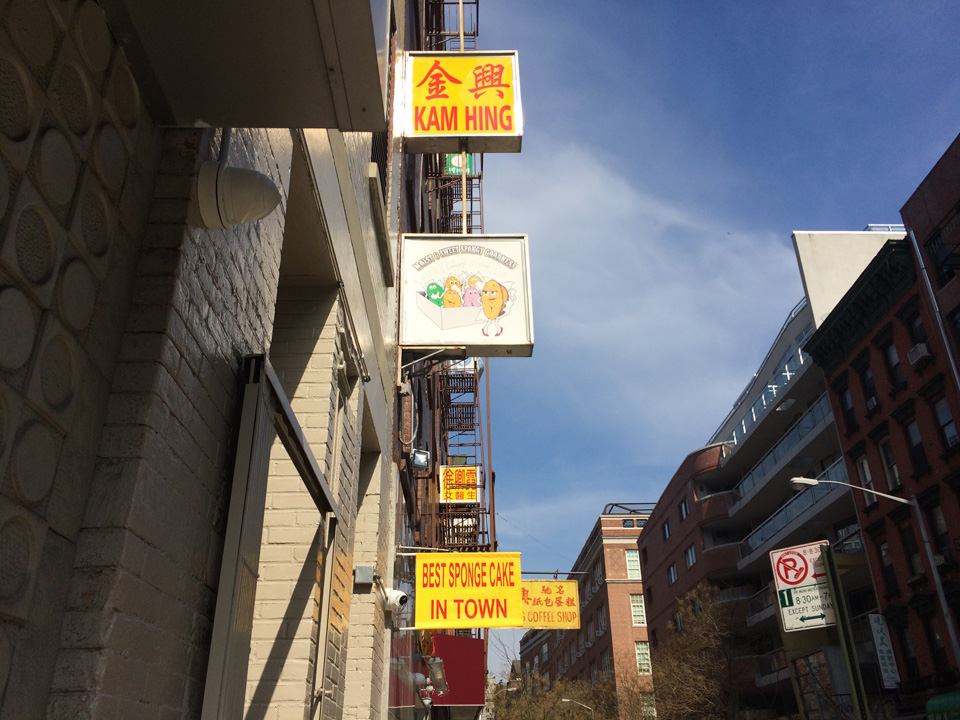
Kam HingI read the sign with no small measure of suspicion: BEST SPONGE CAKE IN TOWN, it shouted in all caps. Writing up this one will be a piece of cake, I thought, ignoring my own pun. Two words should do it: “Oh, really?” I mean, ya tried one sponge cake, ya tried ’em all, right? Eggy, airy, moist, a little sweet, and that about sums it up.

Seventy-five cents and one bite later, I began to wonder if I had let my prejudice get the better of me. Shouldn’t I at least compare this one with another if only to prove to myself that all sponge cakes are created equal? So I randomly entered another Chinese bakery (no shortage of those in Manhattan’s Chinatown) and emerged with a contender. The difference was subtle, but there was indeed a difference – enough to compel me to purchase a third rival. Again, the basic premise echoed the first two, but with a distinct personality of its own. With a sigh of resignation, it became evident that my story would exceed two words and I headed home to do some preliminary investigation.

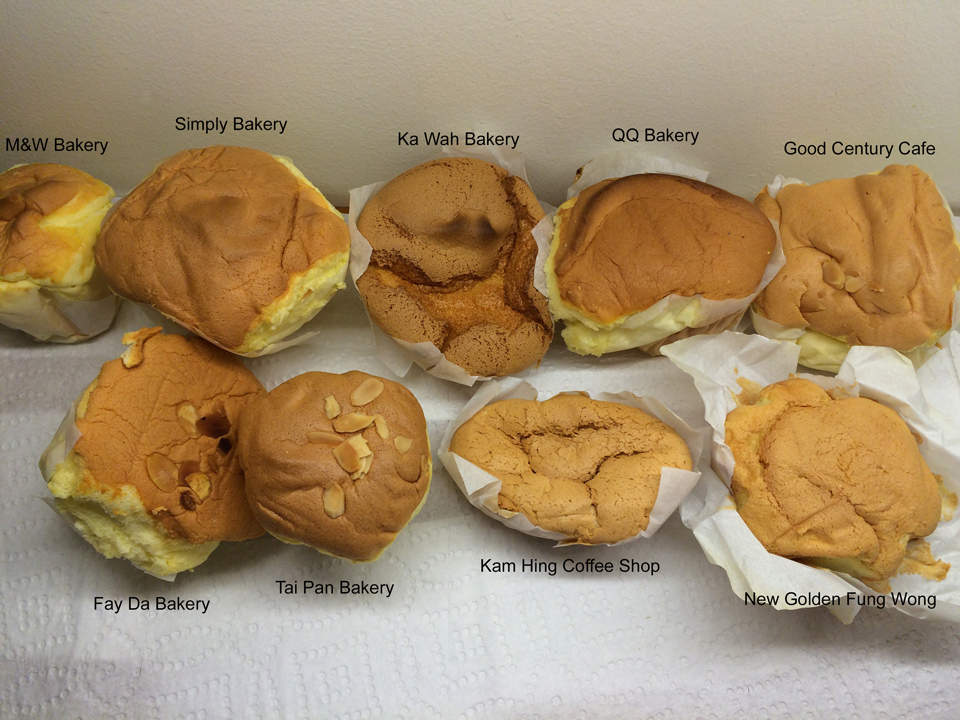
The first order of business was to see what other NYC food writers had to say about the subject because attempting to taste every sponge cake at every bakery in Chinatown would be a herculean task. A few minutes of poking around on the web revealed that there are definitely a few favorites (four or so were always mentioned) among the experts. I made note of them and returned the next day armed with a list and the decision to hit up a few additional bakeries selected arbitrarily along the way just to be fair. I gathered nine examples (that’s all that would fit in my tote) and headed home to set up an Excel spreadsheet. (Those of you who know me are aware that I can get a little OCD sometimes, particularly when it comes to taste testing.)

I decided to rate them based on my initial definition of sponge cake characteristics: egginess, airiness (a continuum of spongy to cakey), moistness, and sweetness; crust and special features would factor in as well. My personal opinion of these qualities is that ideally they should be pretty middle of the road: eggy but not overly so, sweet but not too sweet – you get the idea – but above all, the cake should taste great.

I did a blind taste test and was amazed to discover that for the most part my independent research bore out the conventional wisdom. So I’m pleased to report that I stand corrected, disabused of any notion that sponge cake is sponge cake.
Sponge Cakes
If you’re an information sponge too, here are the details – my ranking in order of overall deliciousness (you won’t be disappointed in any of the top five):

Kam Hing Coffee Shop, 119 Baxter St.
75¢ (2 oz)
Yes, believe it or not, the one that claimed to be the best! Perfect balance.

Tai Pan Bakery, 194 Canal St.
$1.10 (2.5 oz)
Lemony! Almonds on top provided a little crunch and a lot of flavor.

Ka Wah Bakery, 9 Eldridge St.
$1.00 (3.25 oz)
Excellent as well; crust a little eggier than others.

M&W Bakery, 25 East Broadway
$1.20 (2.5 oz)
Very good; tight crumb but still moist.

Fay Da Bakery, 83 Mott St.
$1.20 (3 oz)
Pleasant “baked” flavor to crust; almonds on top.

New Golden Fung Wong, 41 Mott St.
$1.00 (3 oz)
A little more cakey; a little drier.

Simply Bakery, 70 Bayard St.
$1.10 (4.25 oz)
Sweet but average.

QQ Bakery, 50 East Broadway
$1.25 (3.75 oz)
Moist but average.

Good Century Café, 243 Grand St.
$1.00 (4.5 oz)
Biggest cake, smallest flavor.
 
 
Of course, now I need to investigate sponge cakes in Queens and Brooklyn Chinatown bakeries too. (Told you I was OCD.)


Luky Duck

Thai desserts (khanom thai) are sweet but not overly so, light, and delicious. Generally, they draw from a limited repertoire of ingredients but those are mixed and matched and combined and presented in a wide array of variations. Sticky rice, jackfruit, mango and other tropical fruits, pumpkin custards, pandan, sweet egg yolk threads boiled in syrup, and black beans and mung beans and corn (oh, my!) make their way into puddings, jellies, soupy concoctions, tiny cakes, candies, and a host of other delights.

One popular dessert is look choop (you may run across it as luk chup or any number of other transliterations) which look similar to shiny marzipan but taste nothing like it. The process is painstaking: soak and boil mung beans, sweeten with coconut milk and sugar, cook it down, mold or shape into miniature vegetable or fruit shapes, paint with food coloring, then glaze with agar-agar (like gelatin, but stiffer), and the result is something perfectly precious that looks too good to eat. (Little wonder that these were formerly served exclusively to royalty.)

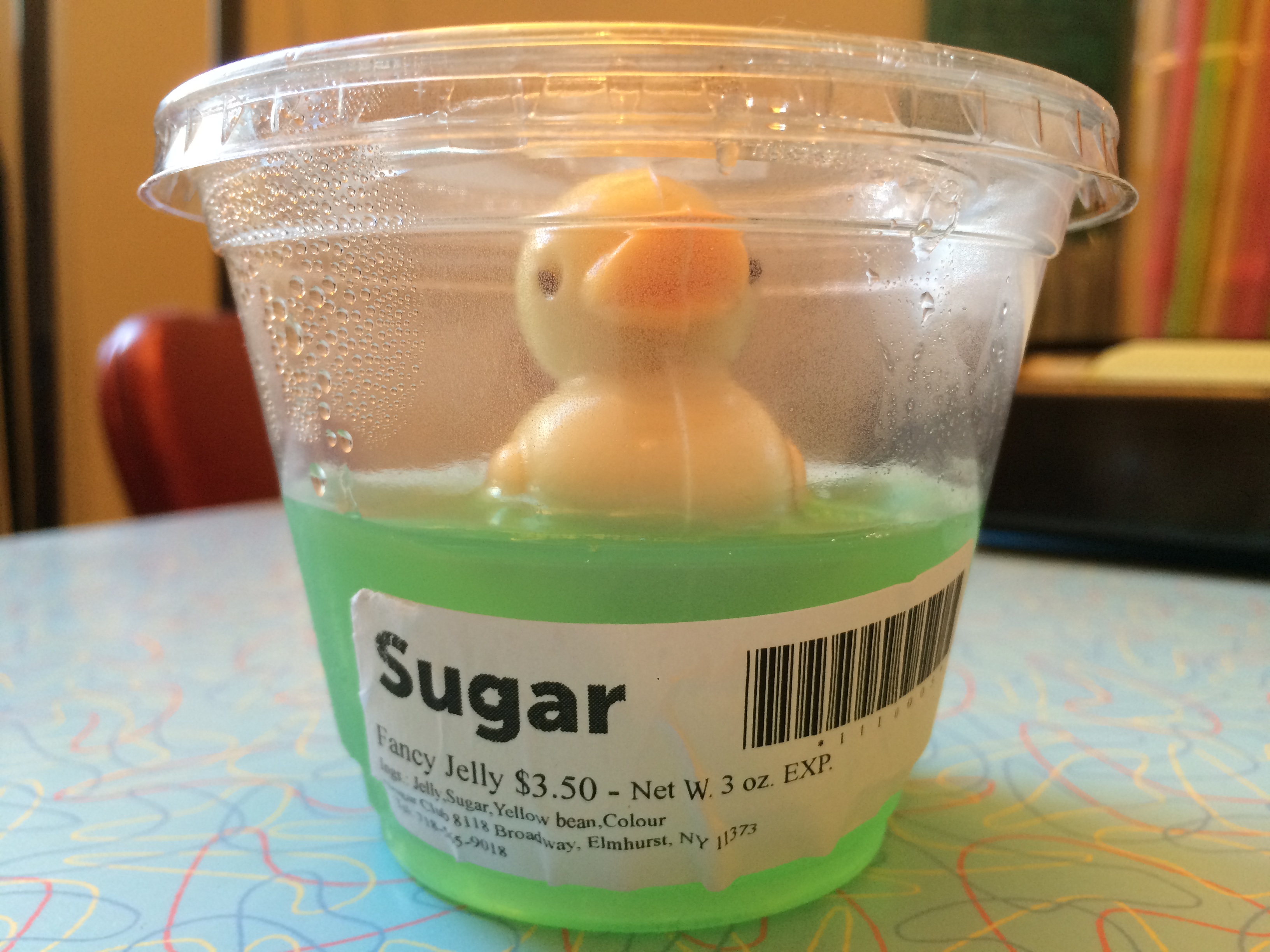
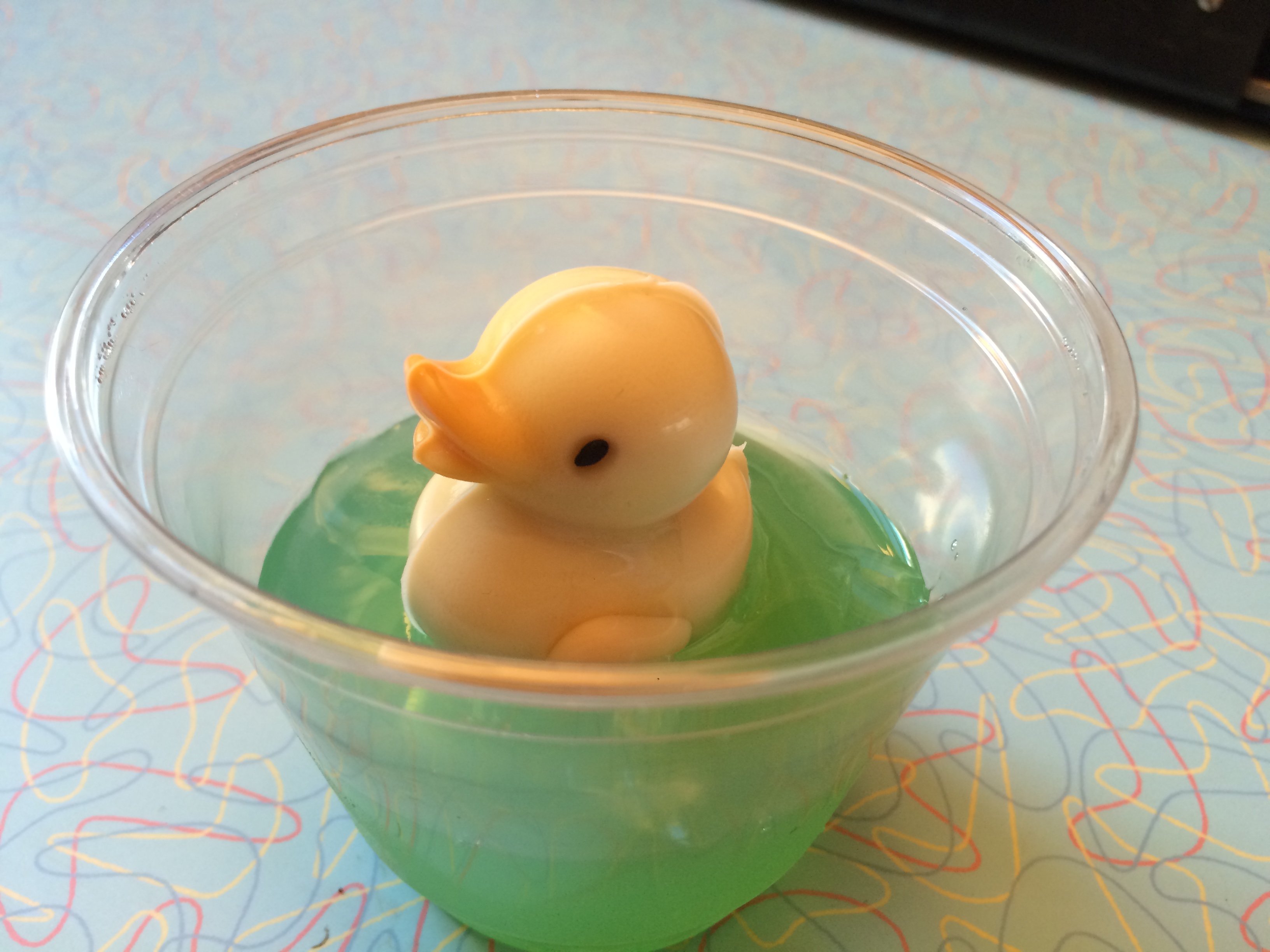
Elmhurst’s sweetly named Sugar Club is my hands-down favorite market for khanom thai (as well as for outstanding prepared foods as good as you’ll find in any Thai restaurant). Recently, I was perusing their dessert case and, desperately struggling to restrain myself from buying one of each, decided that I’d better choose just one – but which? Out of the corner of my eye, I spied what at first I thought might be a children’s toy: a little yellow duck. What’s that doing in the dessert case? But a closer inspection disabused me of that notion – it was look choop molded in the shape of a classic rubber ducky floating atop a sea of green gelatin!

Look ChoopDucky 1Ducky 2
So deciding which dessert to choose was easy: look choop ducky, you’re the one!

 
Sugar Club
8118 Broadway
Elmhurst, NY
718-565-9018
 

Filipino Polvorón

Ever tasted polvorón? The correct response is, “Which kind?”

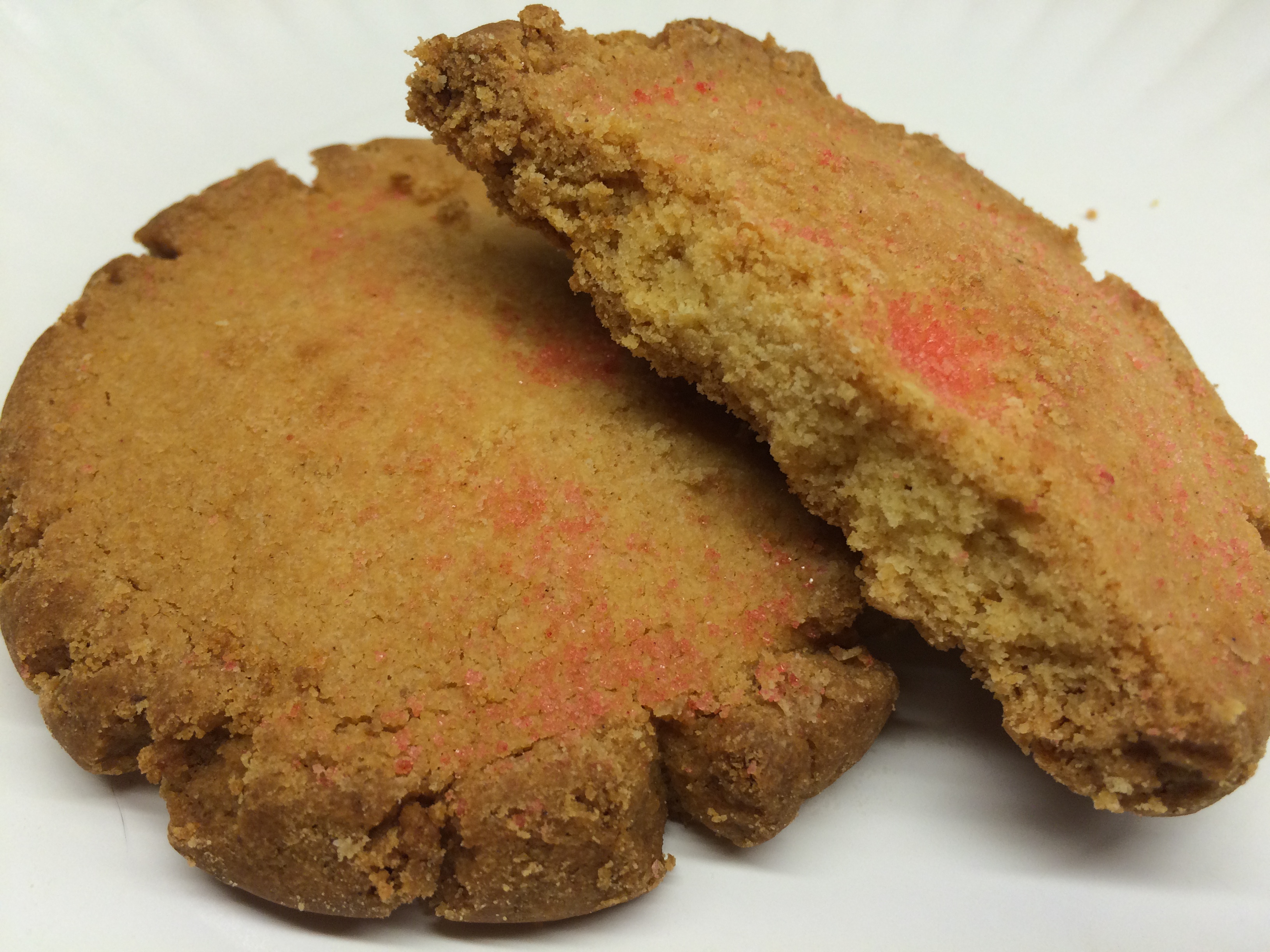
If you’ve ever wandered the streets of a Mexican neighborhood, you may have passed a panaderia that featured polvorónes, a soft, crumbly cookie that is essentially the Spanish version of shortbread and akin to the goody known as Mexican wedding cookies; the texture is almost like a Chinese almond cookie. One bite and you’ll know what I mean by crumbly – polvo means powder, after all. (Photo on the left.)

In the Philippines, polvorónes are made of powdered milk and toasted flour and are even more crumbly (if that’s possible) and to my taste, they’re more like a candy than a cookie. (Photo on the right.)
Mexican PolvoronFilipino polvorón

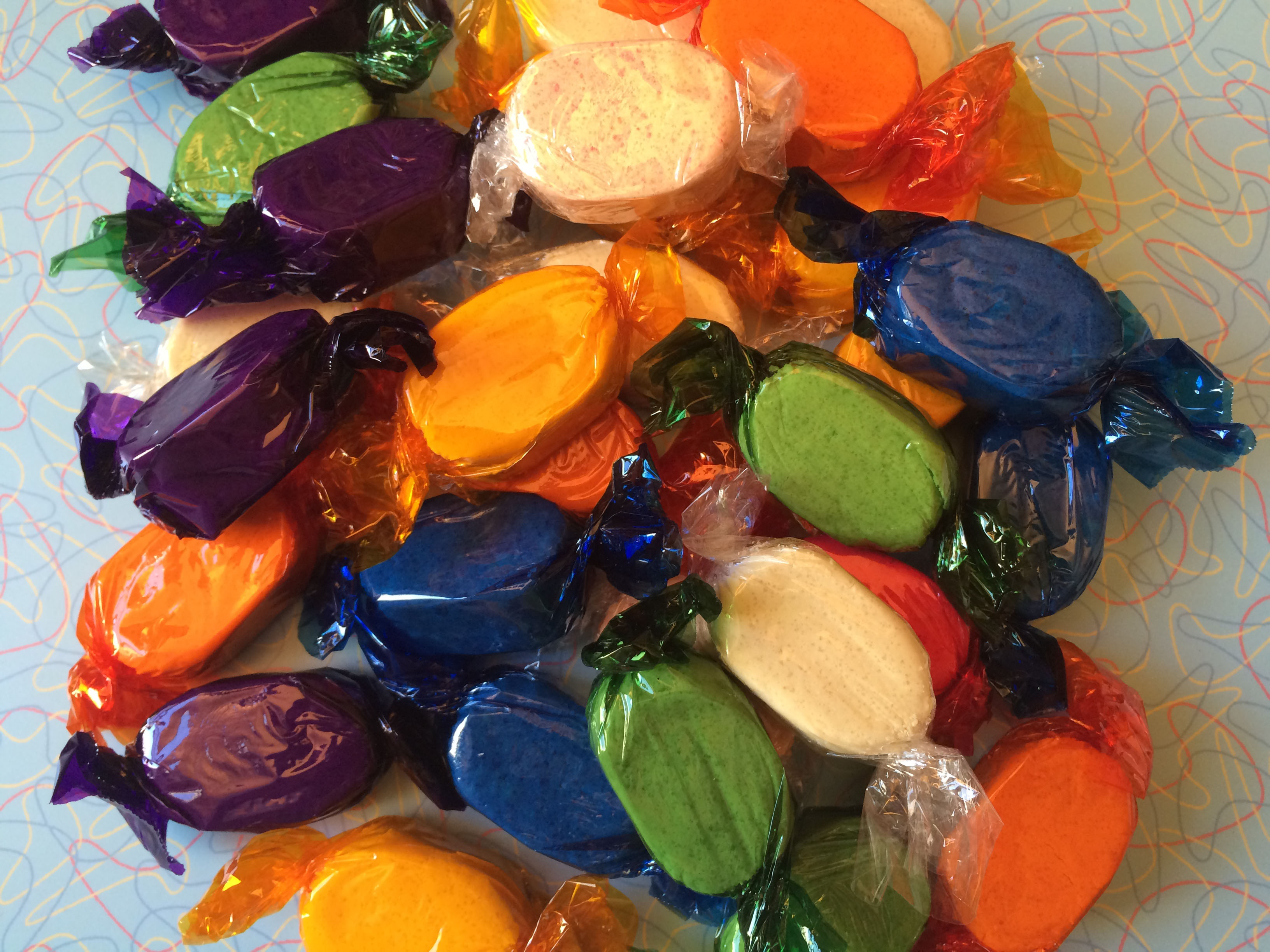
Typically wrapped in brightly colored cellophane twisted on the ends, Filipino polvorónes barely hold their shape and instantly crumble into sweet delicious dust when bitten into. They’re available in flavors like cashew, peanut, ube and pinipig (crisped rice).
Cellophane WrappedBox

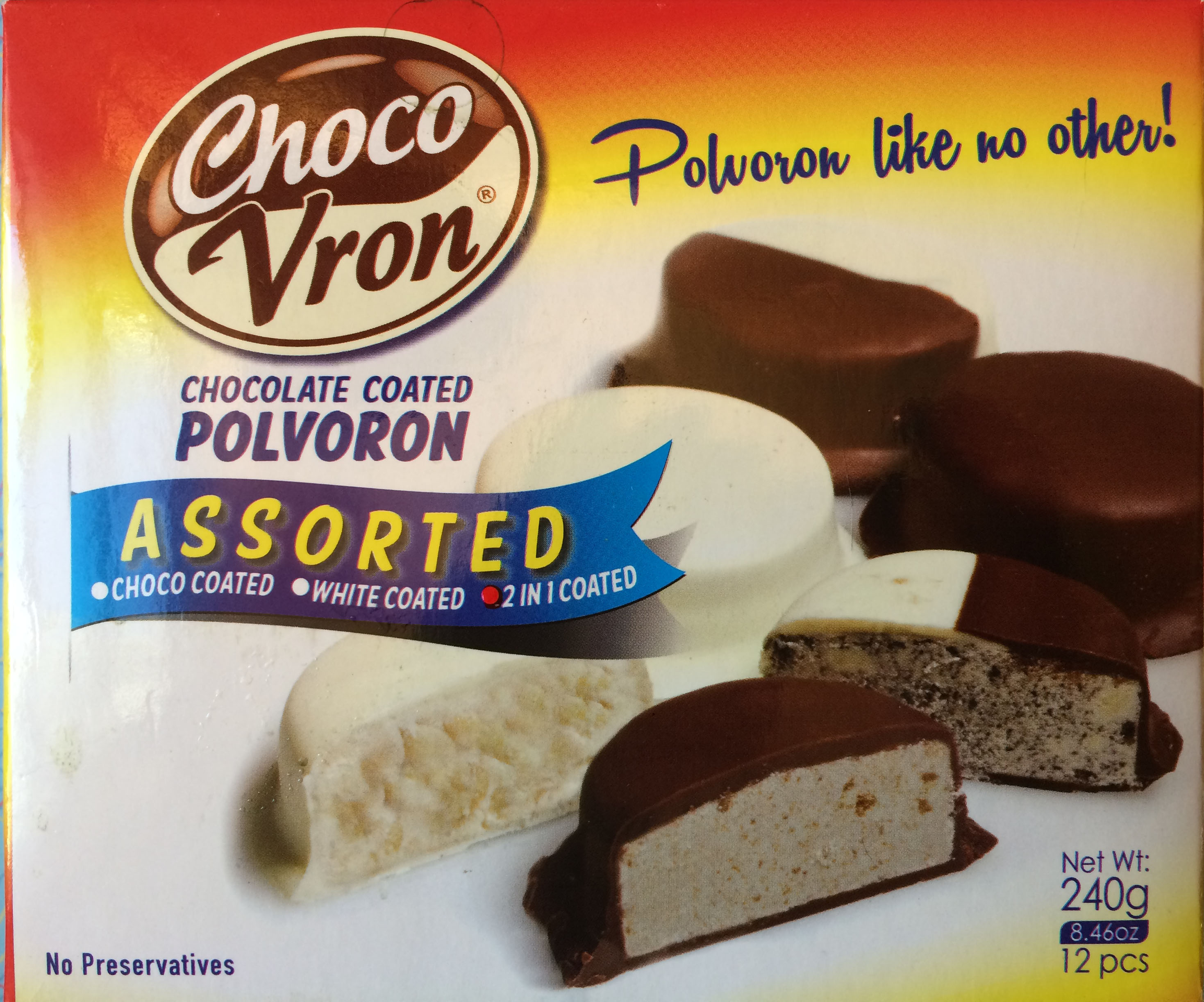
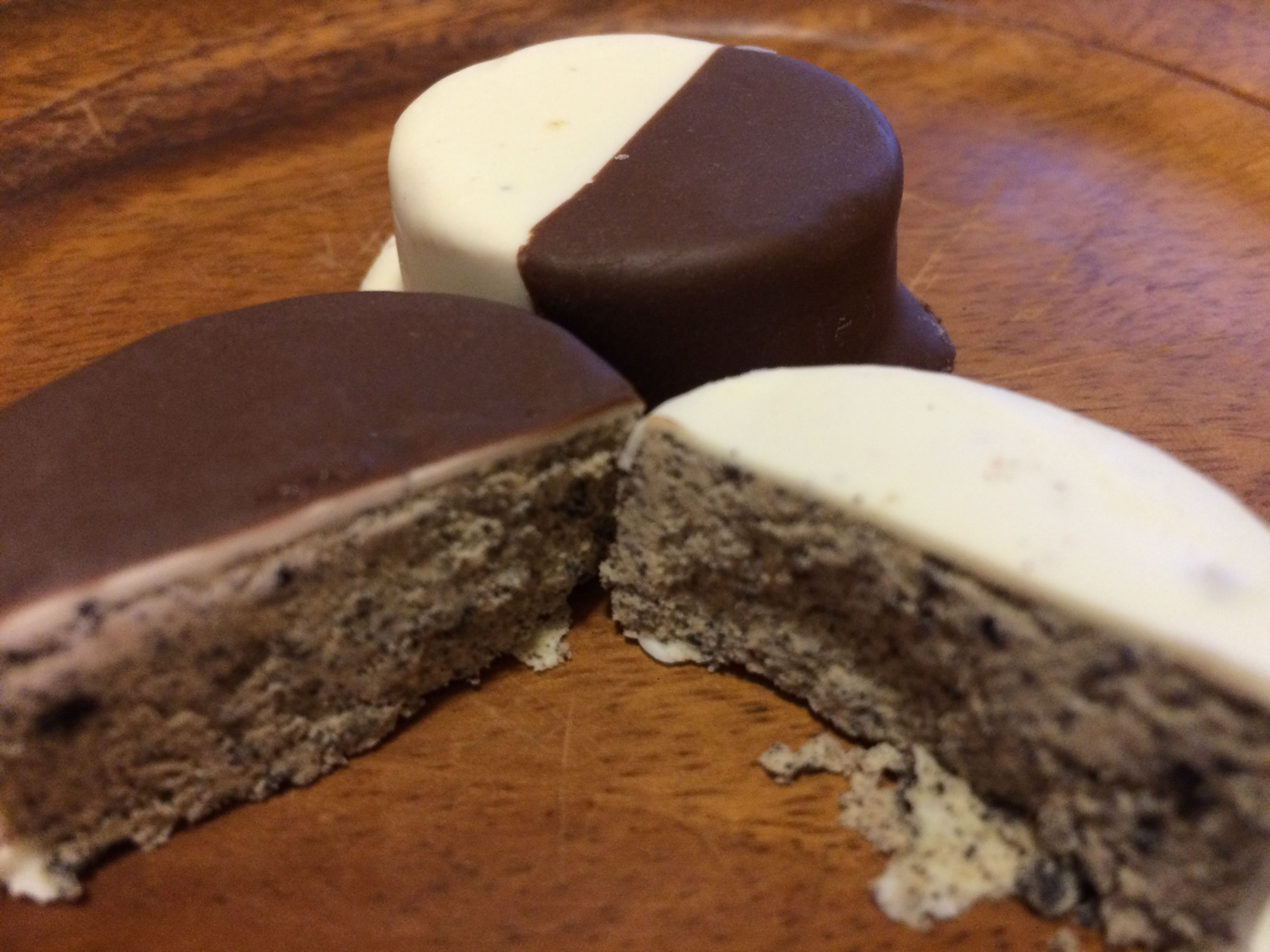
I thought I had sampled every available version of this treat. Until now, that is. Chocolate coated polvorónes. Chocolatey goodness on the outside surrounding polvorón in flavors like cookies & cream on the inside. Surely a case of lily-gilding, but what’s to not like? I was certain that no further embellishment was conceivable.
Chocolate CoatedChocolate Coated 2

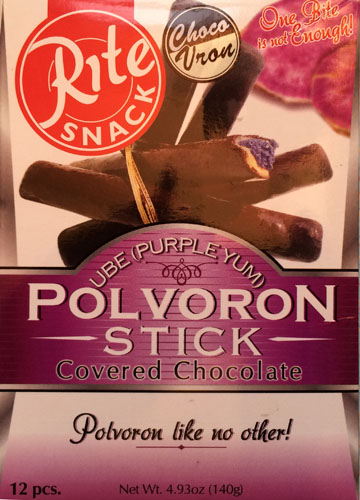
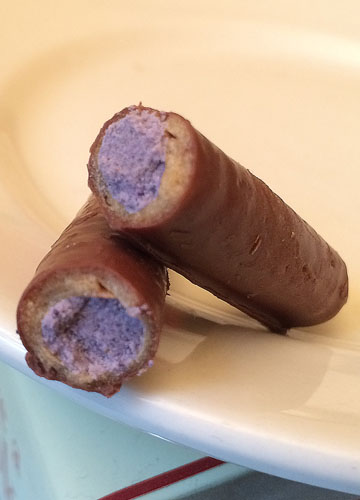
Wrong again. Because I had stumbled upon ChocoVron’s Rite Snack Polvorón Sticks. They’re similar to the cylindrical crispy wafer cookies called Pirouettes but covered in chocolate and filled with polverón, in this case ube. (Ube is purple yam — or purple yum if we’re to believe the package labeling.) Their slogan “One Bite is not Enough” is tauntingly accurate. Beware: these are addictive. (Actually, anything that goes crunch is addictive, but that merely serves to prove the point.) Buko Pandan (coconut pandan) and Classic flavors invite a return visit.
Polvoron Sticks 360x500Inside Polvoron 360x500

 
Found at Sariling Atin Grill and Filipino Grocery
89-12 Queens Blvd.
Elmhurst, NY
718-397-1200