Doshirak Box

Instagram Post 6/9/2019

(Click on any image to view it in high resolution.)
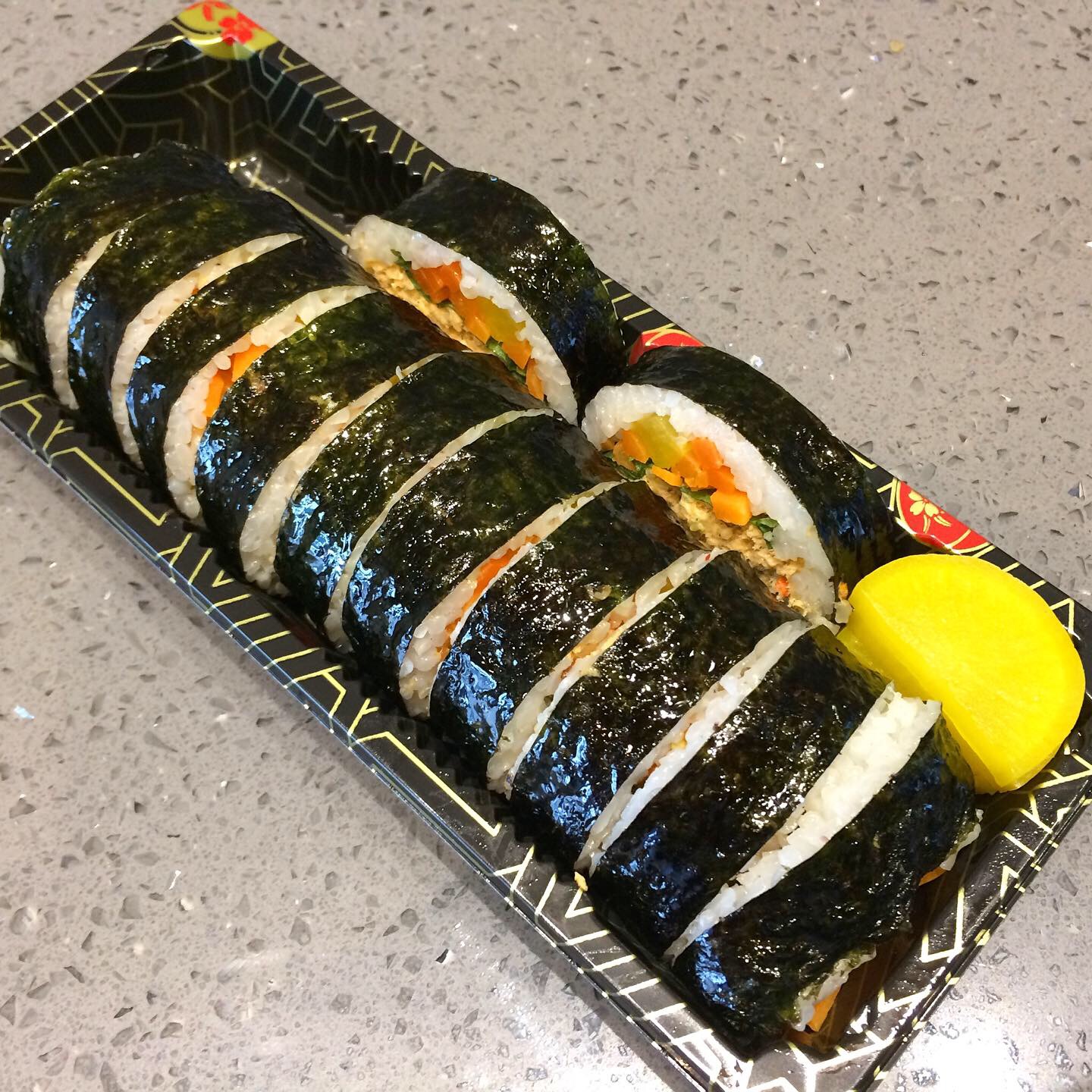
Dosirak (도시락), in Korea, denotes a lunchbox kind of meal, packed up and ready to travel, their often compartmentalized grab-n-go version of Japanese bento boxes. Doshirak Box, in Flushing, is the name of a shiny new Korean place at 136-31 Roosevelt Ave suitable for a quick snack or takeout. (The syllable “si 시” is pronounced “shi” in Korean.) I landed there on the first day of their soft opening – that’s code for they didn’t yet have everything on their incredibly extensive menu of about 75 items. After striking out a couple of times, I went for the kimbap (김밥), Korea’s version of Japanese maki; kim (you might see gim) refers to the nori wrapper and bap means cooked rice.

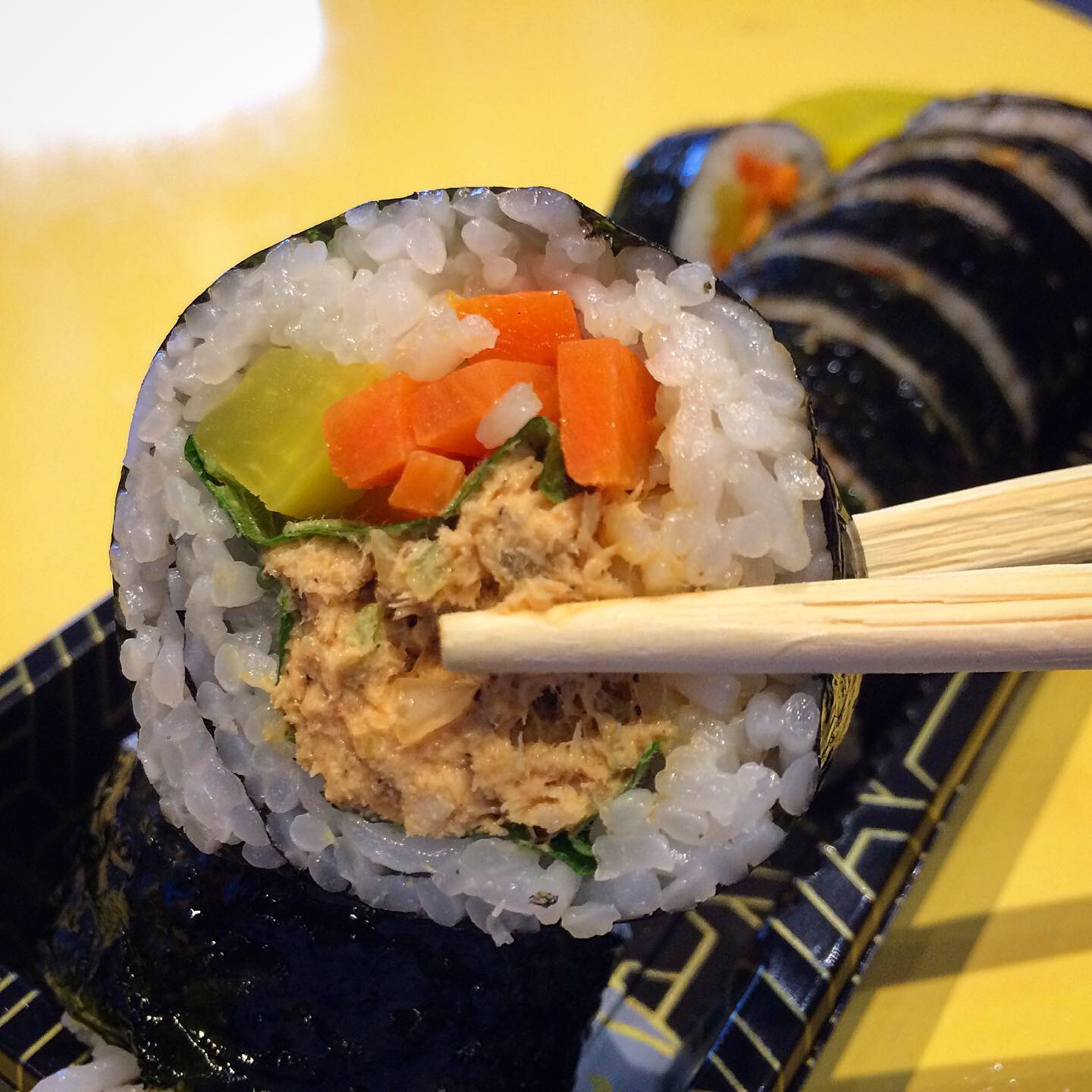
I’ve always been a fan of kimbap – to my mind there’s something picnicky and informal about it. I chose the Spicy Tuna with Perilla Leaves: pickled daikon, carrots, perilla leaves (akin to shiso leaves popular in Japanese cuisine), and spicy tuna salad. In my experience, tuna kimbap is always made with canned tuna, not the raw, chopped, kicked-up tuna you may know from similar Japanese rolls, and this one is true to form. Maybe that’s why it seems picnicky and informal to me.


Brooklyn Suya

Instagram Post 6/6/2019

(Click on any image to view it in high resolution.)
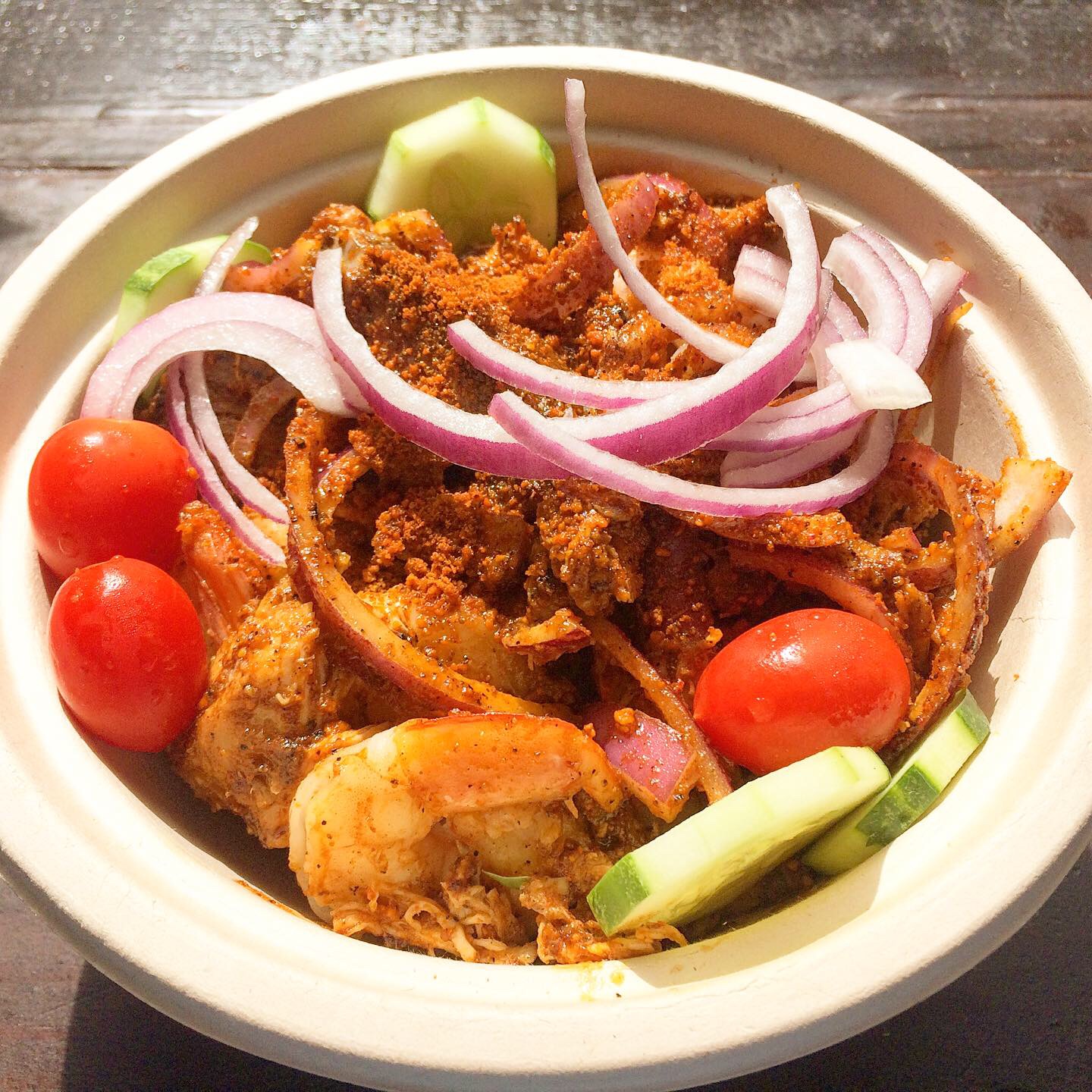
[1] Suya is a popular street food in Nigeria (and elsewhere in West Africa) and there’s little doubt as to why. Sliced beef and other meats are marinated, skewered, grilled, liberally peppered with a spicy, peanutty, powdery seasoning blend and generally accompanied by slices of raw onion. Brooklyn Suya maintains the tradition at 717 Franklin Ave in Crown Heights with its Suya Bowls: choose steak, chicken, or shrimp and two of kale, plantain, egg, or avocado, all over rice. Or, you can order suya solo, sans all those healthy accoutrements; that’s what you see here.

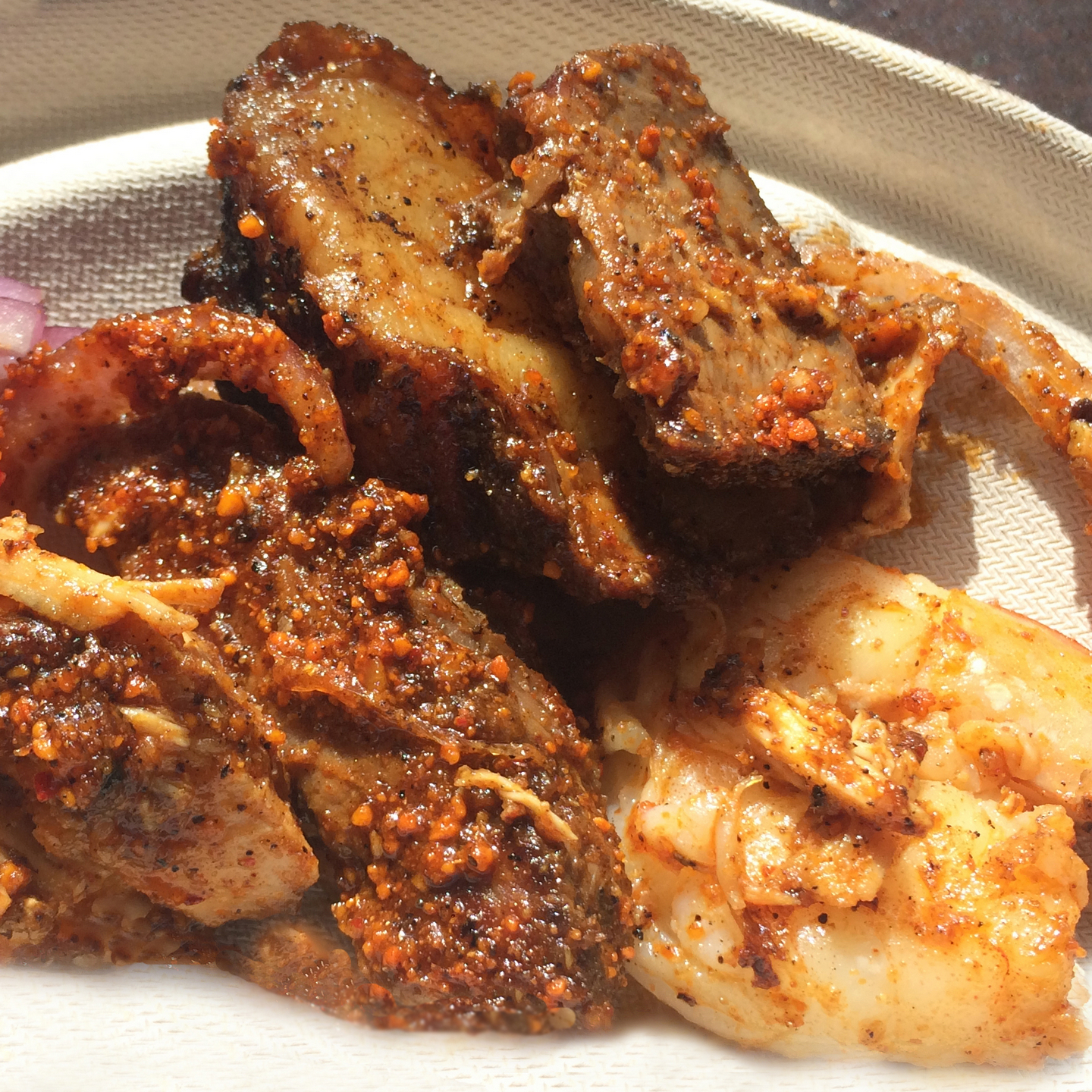
[2] Extreme close-up of chicken, steak, and shrimp – just to get the juices flowing. It’s a tiny space, with a few window perches and a counter, so you might consider take-out, but that didn’t deter us. Incidentally, they sell their custom blends of seasoning/marinade if you want to try your hand at making suya – but if you enjoy cooking, I suspect you’ll find dozens of other uses in the kitchen for their piquant spice blends.


Kashkar Cafe

Instagram Post 5/29/2019

While fine tuning my ethnojunket through Little Odessa, I visited Kashkar Café, 1141 Brighton Beach Avenue in Brooklyn. Kashkar serves the food of the Uyghur people, a primarily Muslim ethnic group who live in the Xinjiang region of northwest China near Kyrgyzstan and Kazakhstan; as you’d expect, the fare is a comingling of Chinese and Central Asian cuisines and definitely worth getting to know.

(Click on any image to view it in high resolution.)

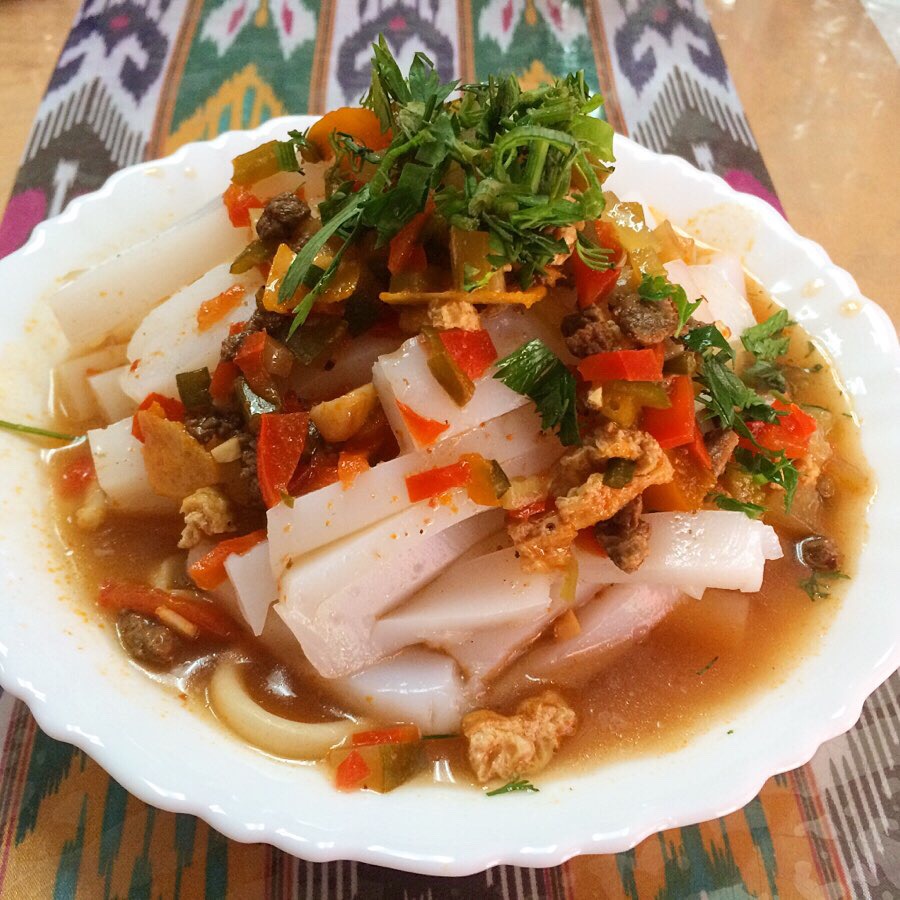
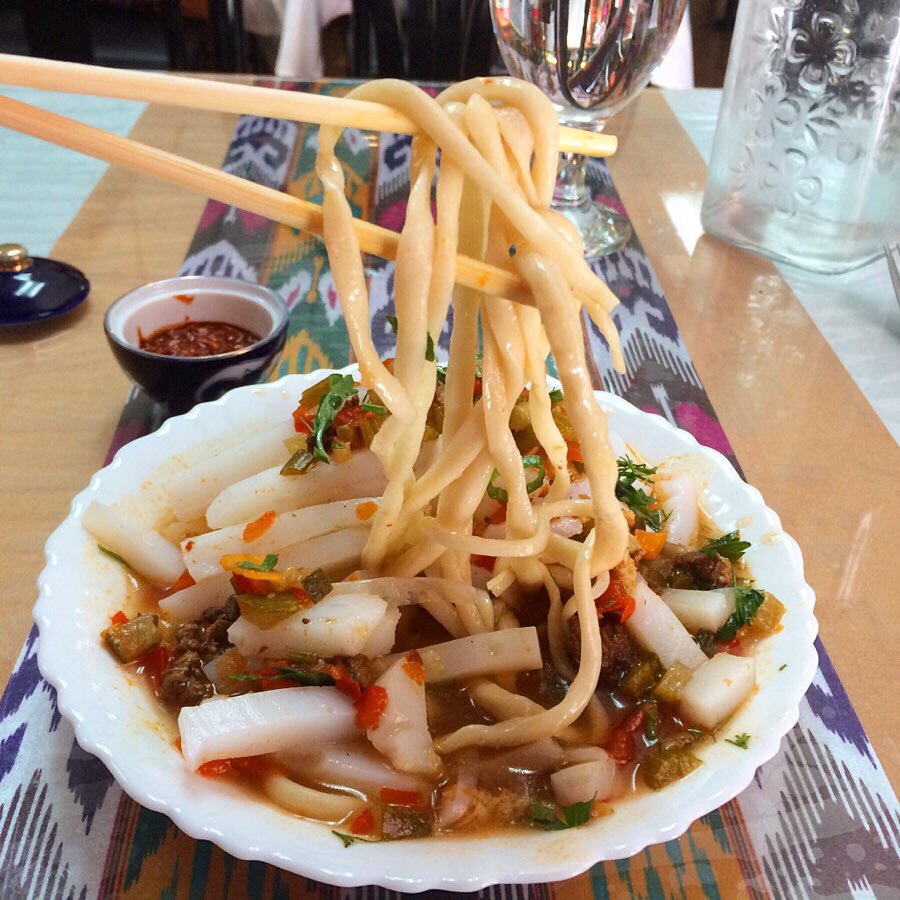
Ashlangfu (ашлангфу) salad, aka lang-foo noodles. If you’ve enjoyed Chinese mung bean jelly noodle, you’ll recognize these slippery slices as their cognate, liangfen. The dish included bits of lamb and chopped vegetables in a light, tangy sauce, but lurking unexpectedly beneath the pile was lagman, Uyghur’s claim to noodle fame (Chinese cognate: lo mein).

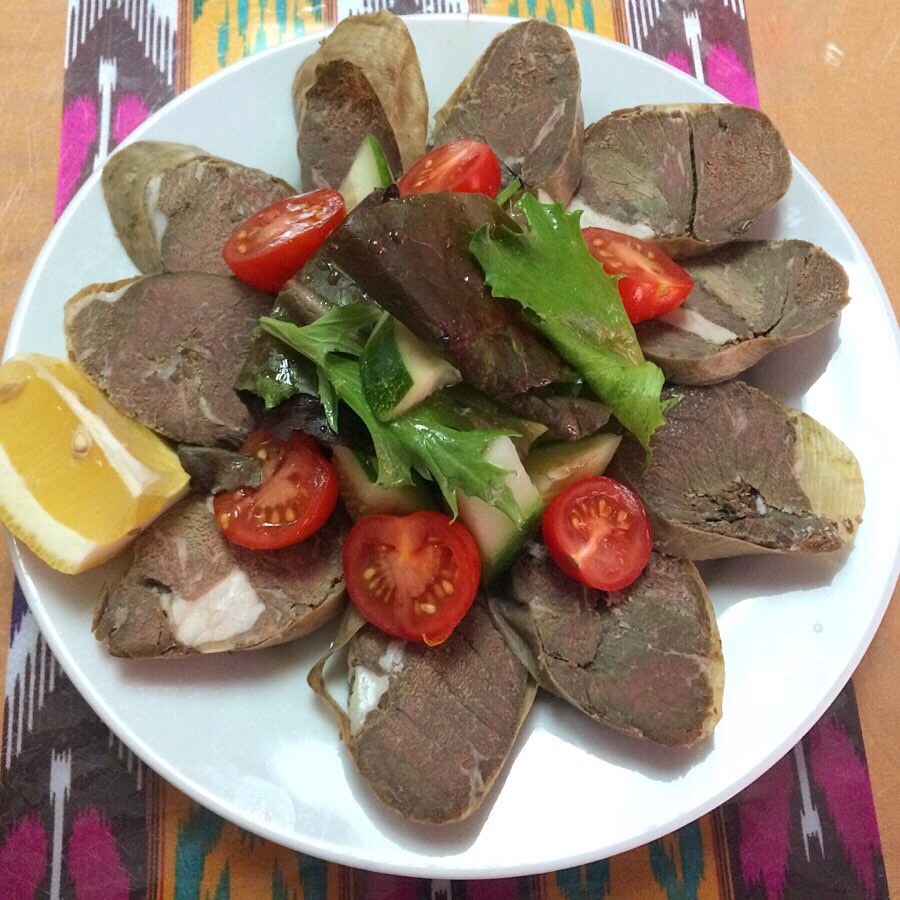
Kazi (you might see qazı) was described as “pickled sausage from the beef meat in home styles”; in Central Asia, kazi is made from horsemeat, so the annotation was reassuring. This isn’t a ground meat type of sausage, rather it’s dry cured rib meat in a natural casing, served cold. Not particularly pickled in flavor, it was dense and earthy and the vegetables plus a squeeze of lemon were a welcome accompaniment. A little goes a long way with these slices, but it’s worth doing once.

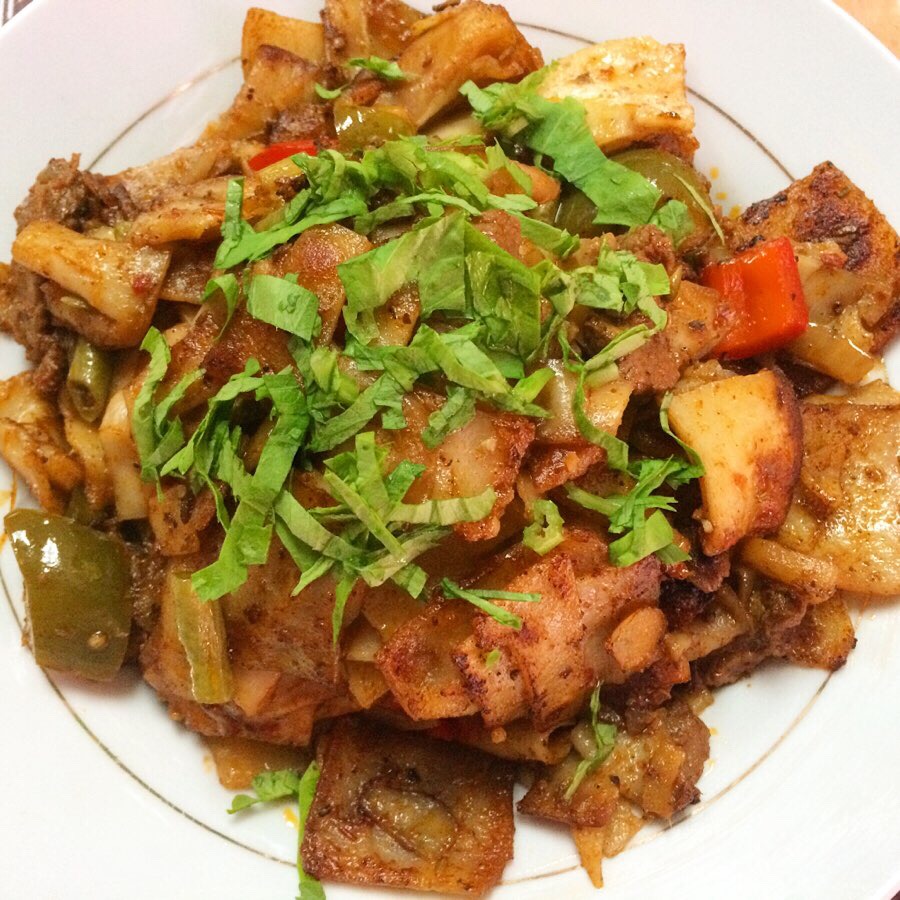
This was a winner. Tsomyan (цомян), cognate with chow mein, was described as sliced fried dough and lamb meat with vegetables. When you see “dough” on the menu, it refers to a thick doughy noodle that’s a little reminiscent of Xi’an hand pulled noodles if a bit drier; the term distinguishes it from lagman noodles. Splendid char on those chewy noodles; really excellent.

📣 📣 📣 📣 📣 📣 📣 📣
AND speaking of Little Odessa, there are some slots open for Tuesday, June 4th’s ethnojunket along Brooklyn’s Brighton Beach Avenue! Simply click here to find out how to join in the fun!
📣 📣 📣 📣 📣 📣 📣 📣


Dolma House Restaurant

Instagram Post 5/27/2019

The Southern Caucasus lies between the Black Sea and the Caspian Sea and comprises Armenia, Georgia, and Azerbaijan. The three states have diverse cultures and cuisines and happily we are privileged to partake in all of them right here in New York City.

The word dolma and its many linguistic cognates refers to any of a vast number of stuffed vegetable dishes prepared across the Mediterranean, Eastern Europe, Central and Western Asia, the Middle East, and our current focus, the Southern Caucasus, specifically Azerbaijan. The eponymous Dolma House is located at 311 Avenue X in Gravesend, Brooklyn.

(Click on any image to view it in high resolution.)

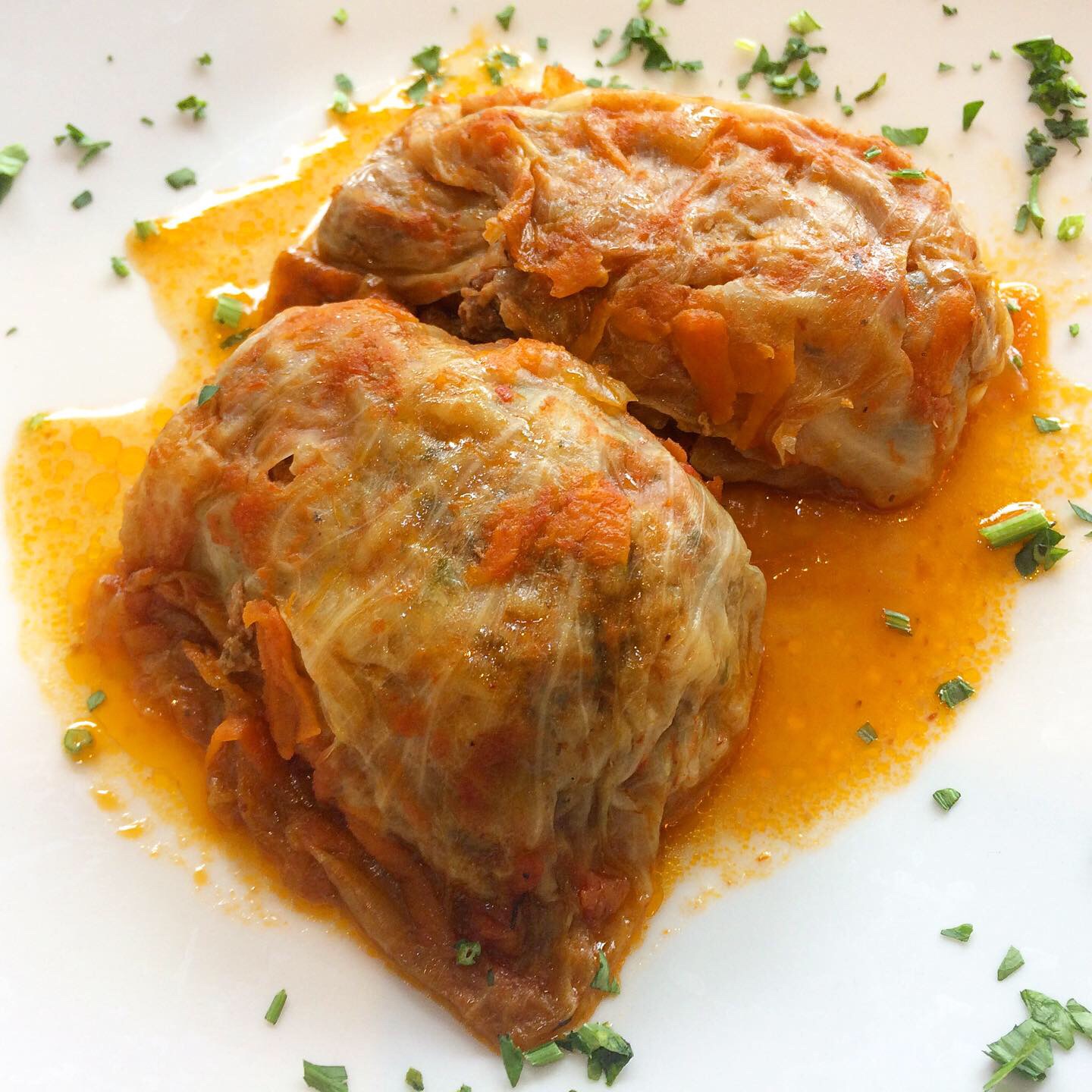
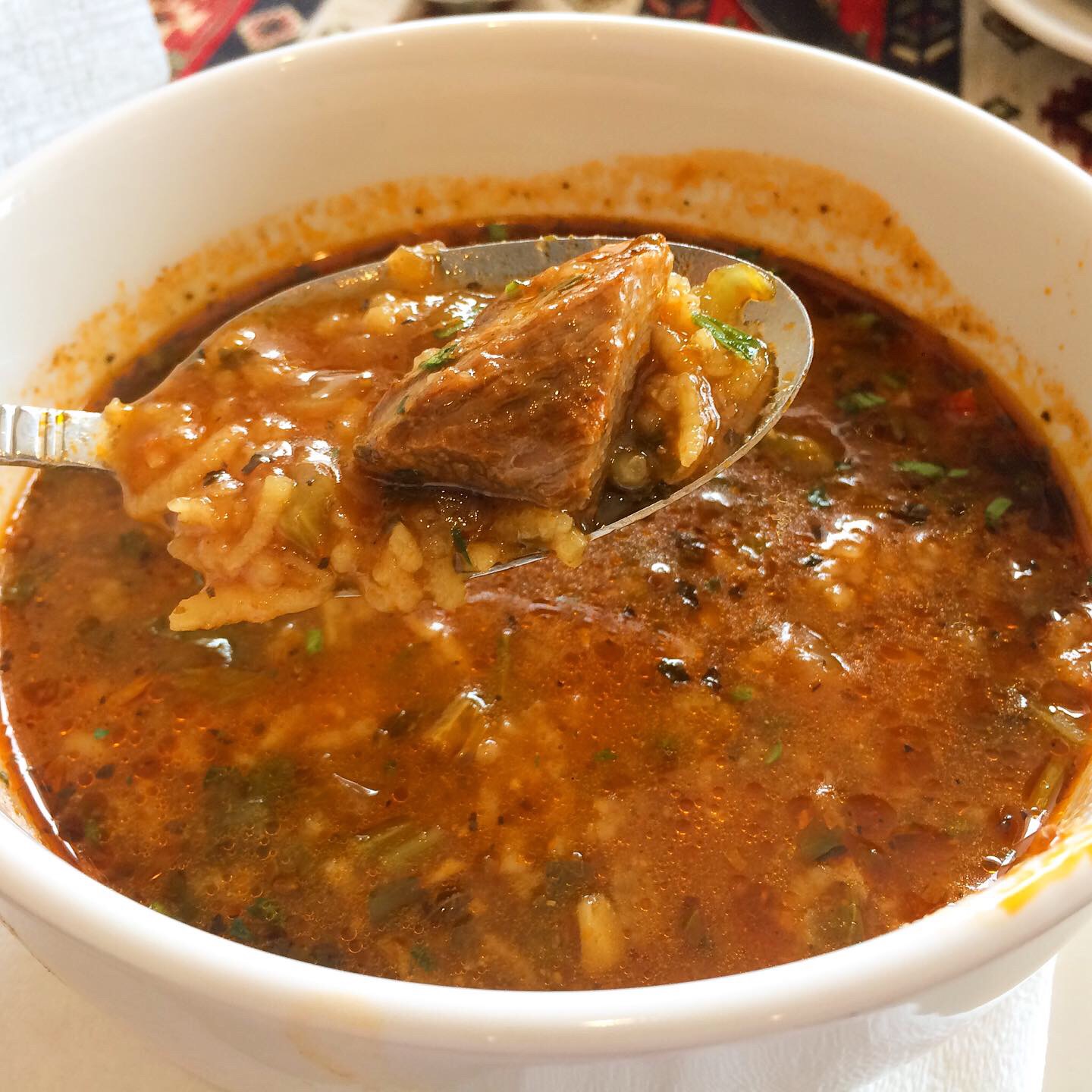
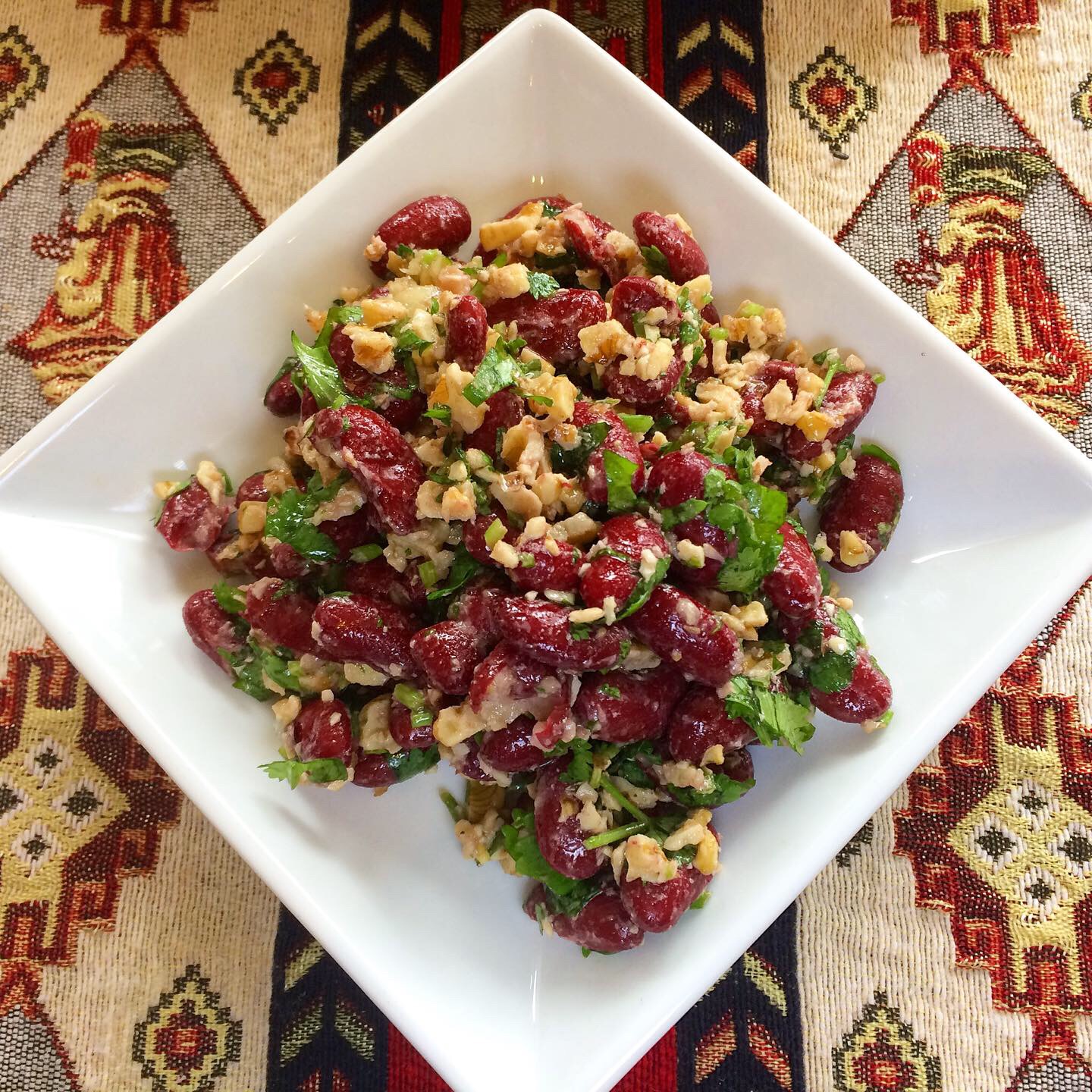
A mix and match lunch special featured one such dish, Kalam Dolma, (cabbage stuffed with lamb), plus Harcho (spicy lamb soup), and Lobio Salad (red kidney beans with chopped walnuts), all of which were good for sure (lunch specials anywhere being what they are) but I urge you, as I always do, to forego the prosaic in favor of the distinctive.

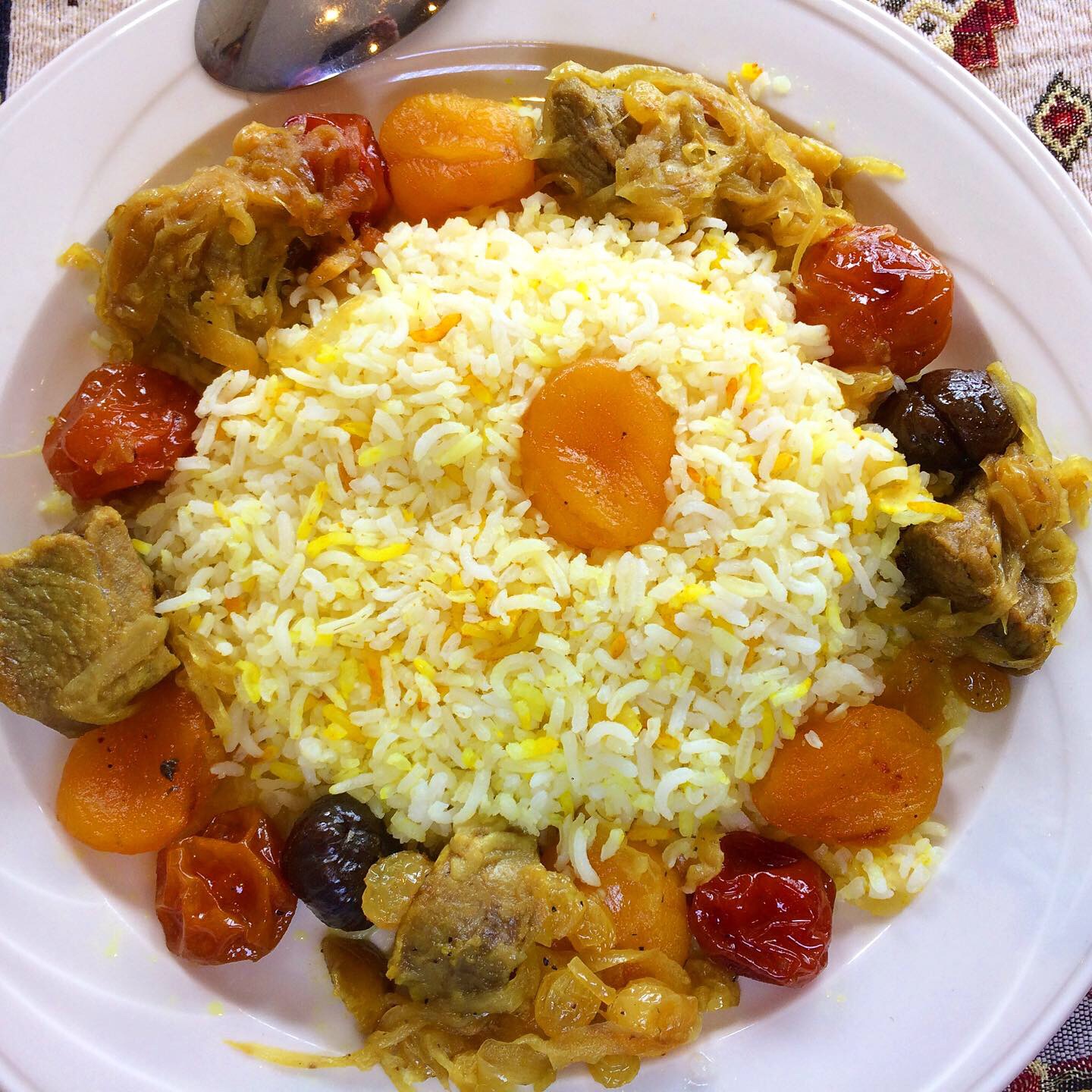
Turshi Plov – rice topped with lamb and dried fruits. Plov is another of those words with cognates that spread across half the planet: pilaf, pulau, etc. The topping, in this case, featured preserved chestnuts, apricots, plums, and raisins along with unctuous, tender lamb. But the rice was the star: cooked with lamb fat that was so delicious we sopped up the residue with our lepeshka, bread fresh from the tandir.

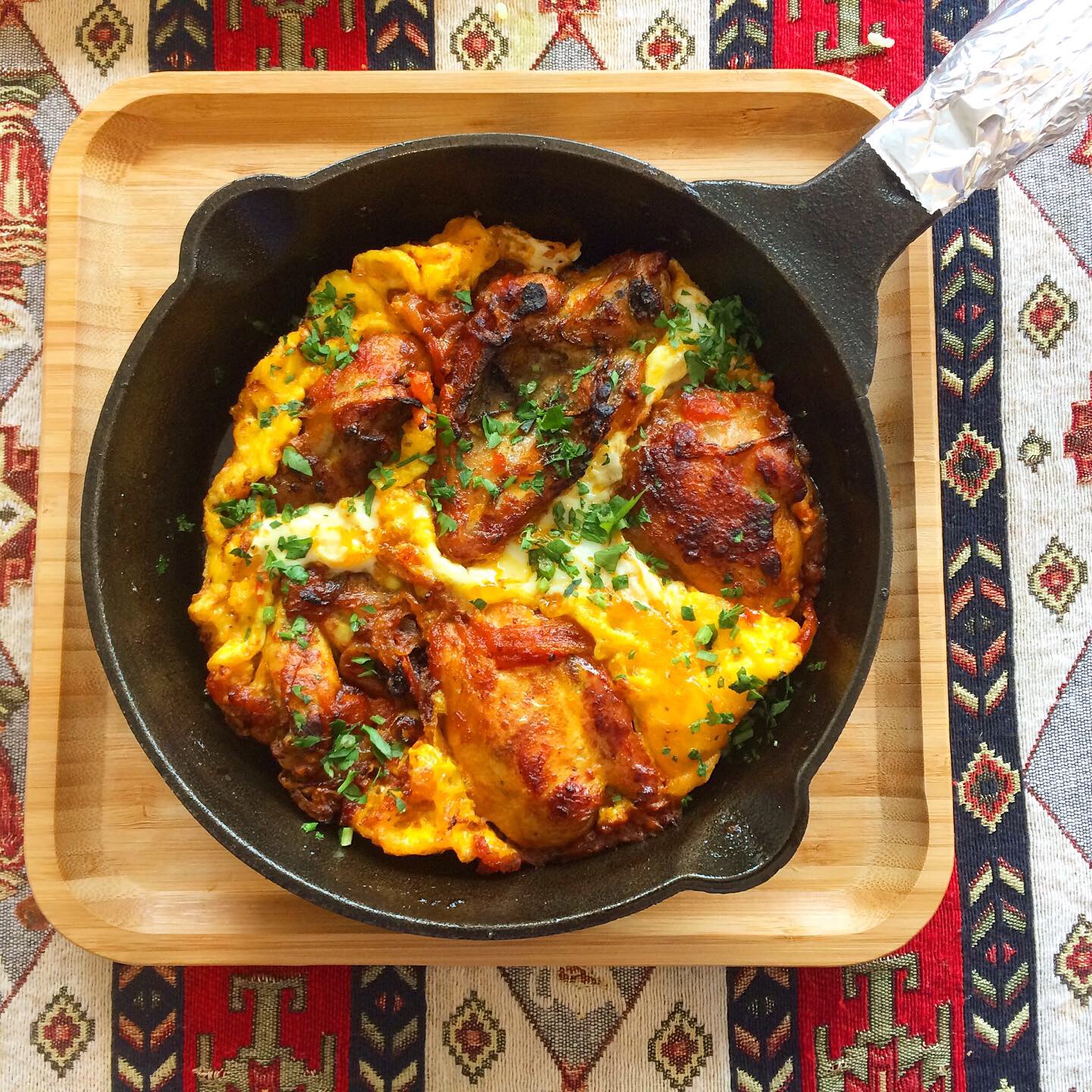
Chigirtma – chicken, eggs, and tomatoes cooked together with onions and served up in a cast iron pan. For starters, just the union of eggs and onions is pretty magical; eggs and tomatoes are besties as well. Combine the three and you’ve got a ménage that guarantees a happy ending. (I have it on good authority that the word chigirtma means “screaming”. Just sayin’.) The chicken, taken alone, is a little dry but this is one of those dishes where you need to get a bit of everything in each mouthful to reveal its awesomeness. Good stuff.


Eat Gai

Instagram Post 5/20/2019

Gai is Thai for chicken, and if you want to eat gai, Eat Gai is the place to do it. But it’s not just random chicken; there are two specialties and both are exemplary.

(Click on any image to view it in high resolution.)

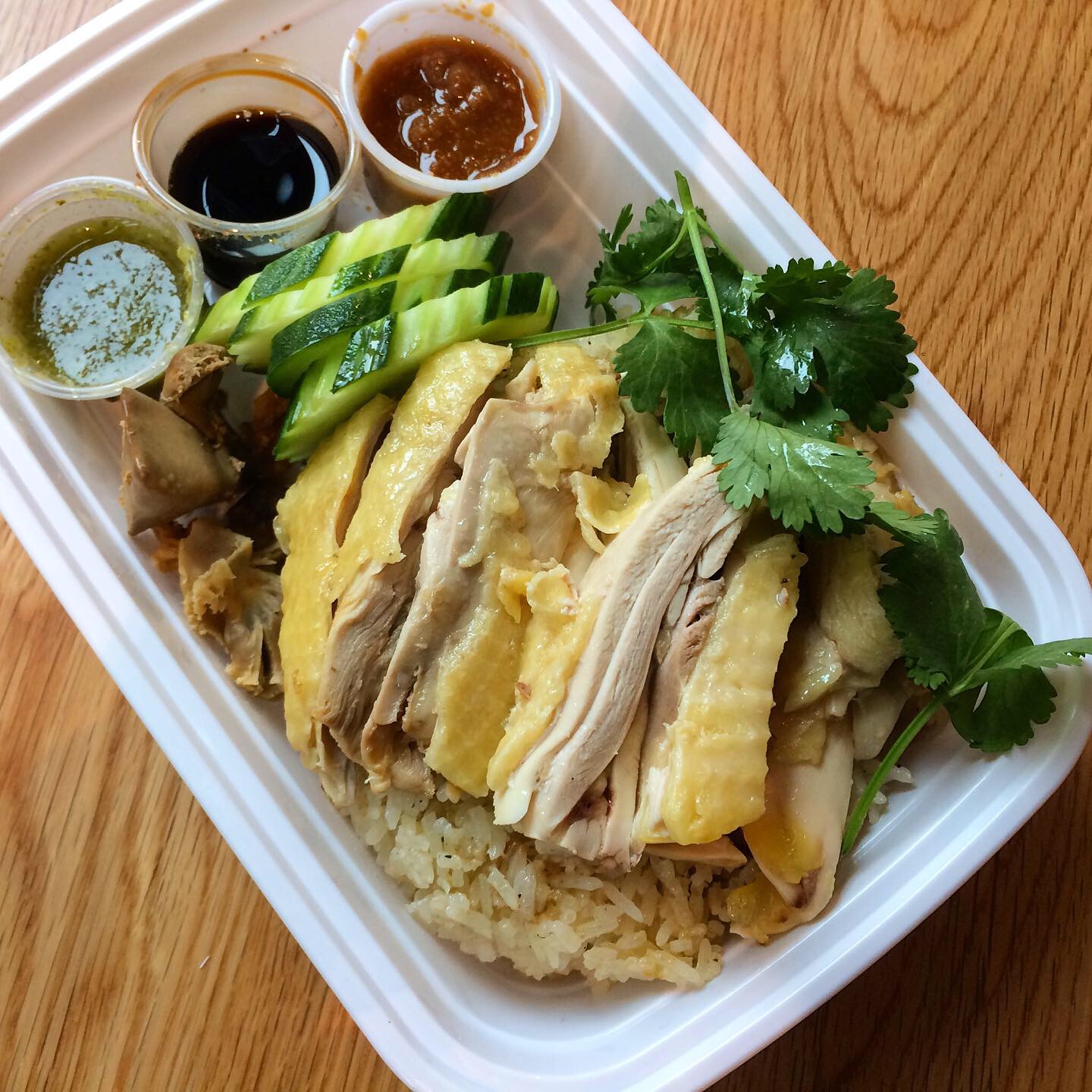
Khao Man Gai is Thailand’s answer to Hainanese Chicken, but the exquisitely tender, poached chicken is only part of the story; the rice, the broth, and the sauce are where the chef’s talents can shine – and here they do just that. Khao means rice and Man means oily or fatty so the name is approximately oily rice chicken; but notice that rice – oh, that chickeny, gingery rice – comes first. A cup of chicken broth is traditionally served alongside (not shown here) but it’s not your everyday, thin, afterthought of a chicken broth; one sip unleashes a rich, collagen laden stock shock, pointed up by a float of cilantro. Three custom sauces are raveworthy as well: spicy green chili sauce, amazing brown ginger sauce, and black sweet soy sauce round out the dish along with fresh cilantro and cucumber. Check out the bits of chicken gizzard and liver that are neatly tucked away as well.

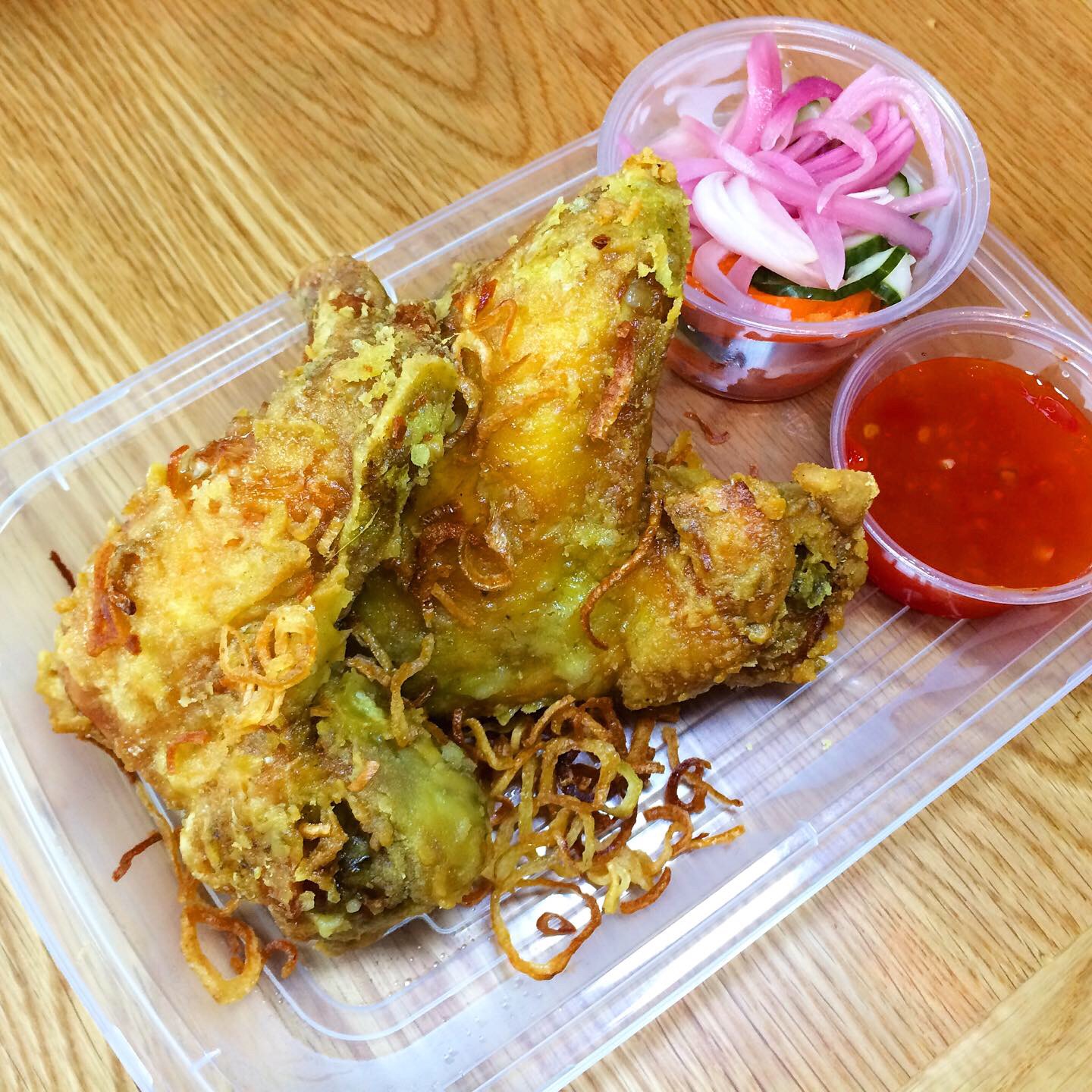
Southern Thai Fried Chicken Wings. If you’re a fan of jumbo, crispy, meaty fried chicken wings, you’ve found a home. Coated with Thai inflected seasonings, lightly pickled veggies on the side and that spicy sweet sauce that’s the perfect complement for Thai chicken, you might not want to share. Just sayin’.

Eat Gai is in booth 46 at the new Essex Market, 88 Essex Street (crossing Delancey from the old Essex Street Market) in Manhattan.


Hills Kitchen

Instagram Post 5/13/2019

(Click on any image to view it in high resolution.)

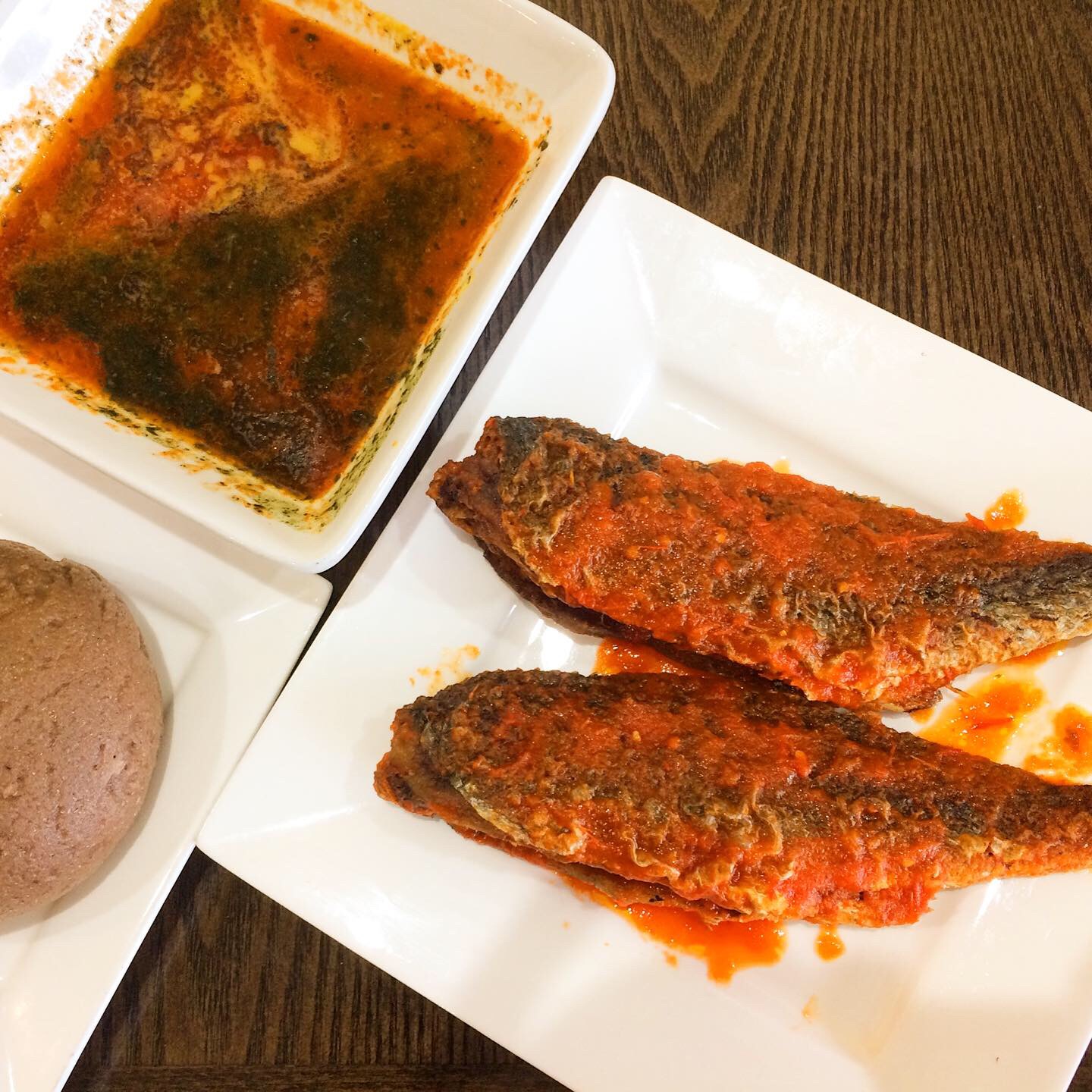
Given what I do, people often ask me what my favorite restaurant is; the answer is “any place where the food was so good that I need to go back and try everything else on the menu.” That was the case with Hills Kitchen in Bushwick. My dining buddy contacted me a few days ago and we met at their location, 252 Knickerbocker Ave in Brooklyn. We shared only two dishes that day but I can recommend both enthusiastically.

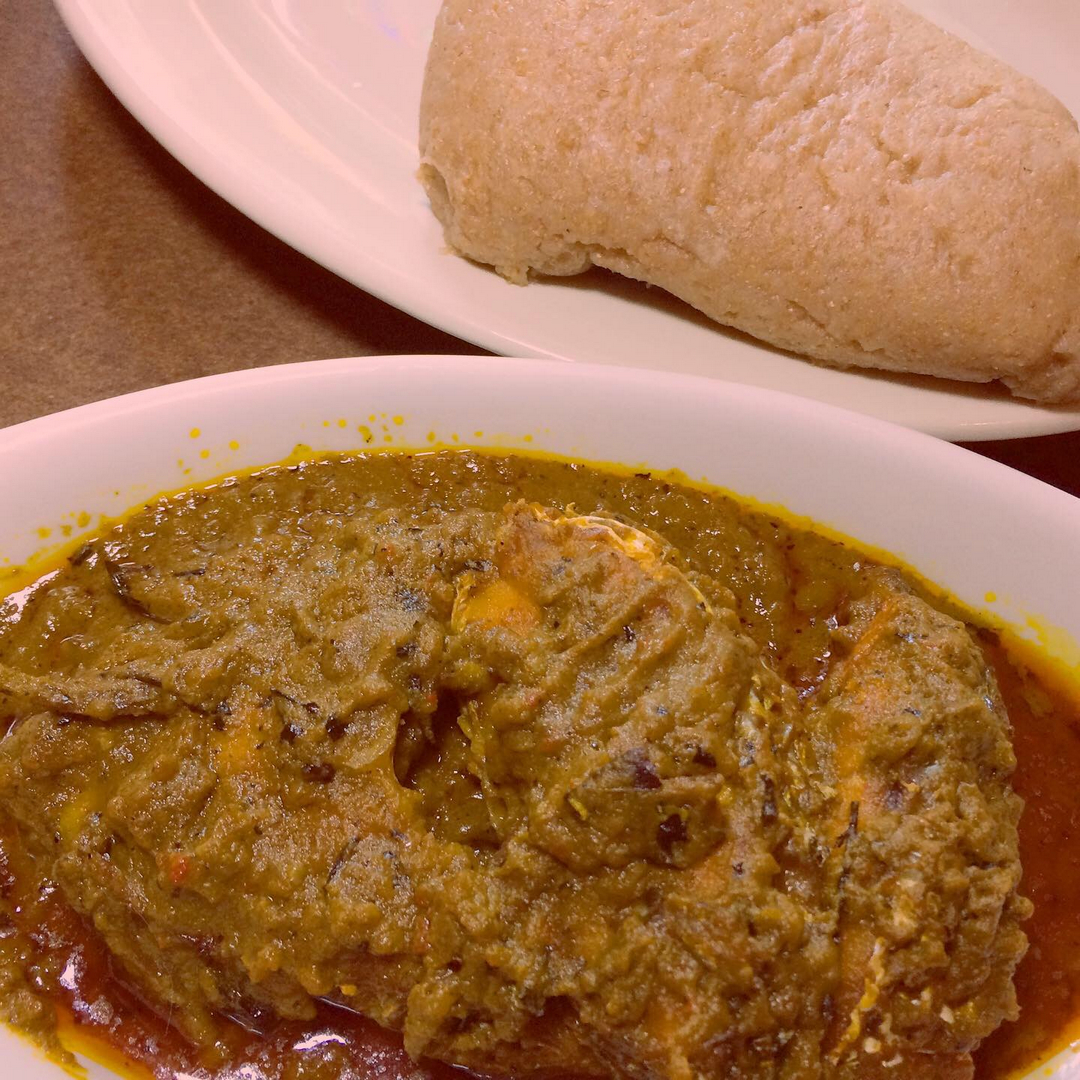
Keep in mind that in West African cuisine, the words soup, stew, and sauce are often used interchangeably. This one is Banga, also known as Ofe Akwu, based on the palm nut/palm fruit, a tasty ingredient that figures into a number of Nigerian sauces. We ordered ours with fish, specifically croaker, which was excellent. West African stews are incomplete without some kind of starch, sometimes called a “swallow”; that’s what turns these sauces, soups and stews into a meal. You pinch off a bit, dip it into the delectable soup, and enjoy – really hands-on cuisine! Our choice for this dish was identified only as “wheat” and it was a perfect complement.

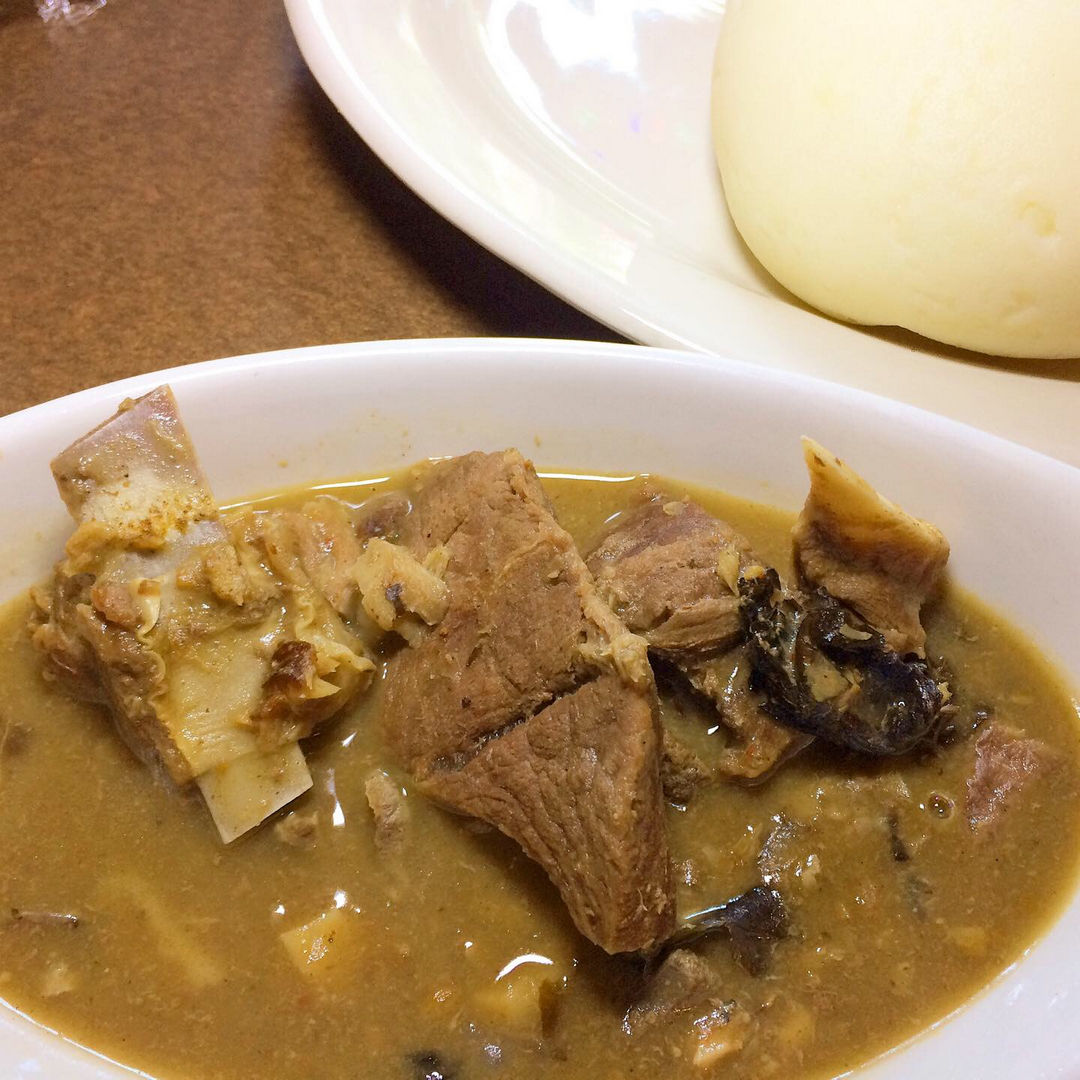
Next up was White Soup, also known as Nsala, which was tender, flavorful goat meat in an accessible, lightly seasoned, thin sauce. My understanding is that this is one of the few Nigerian soups made without palm oil so it was distinct from our Banga; we chose pounded yam for our swallow, itself a gentle, comforting accompaniment, hence another good match.

Hills Kitchen has been open for a little over two months. I intend to go back soon – hope to see you there!


Little Egypt Restaurant

Instagram Post 5/12/2019

(Click on any image to view it in high resolution.)

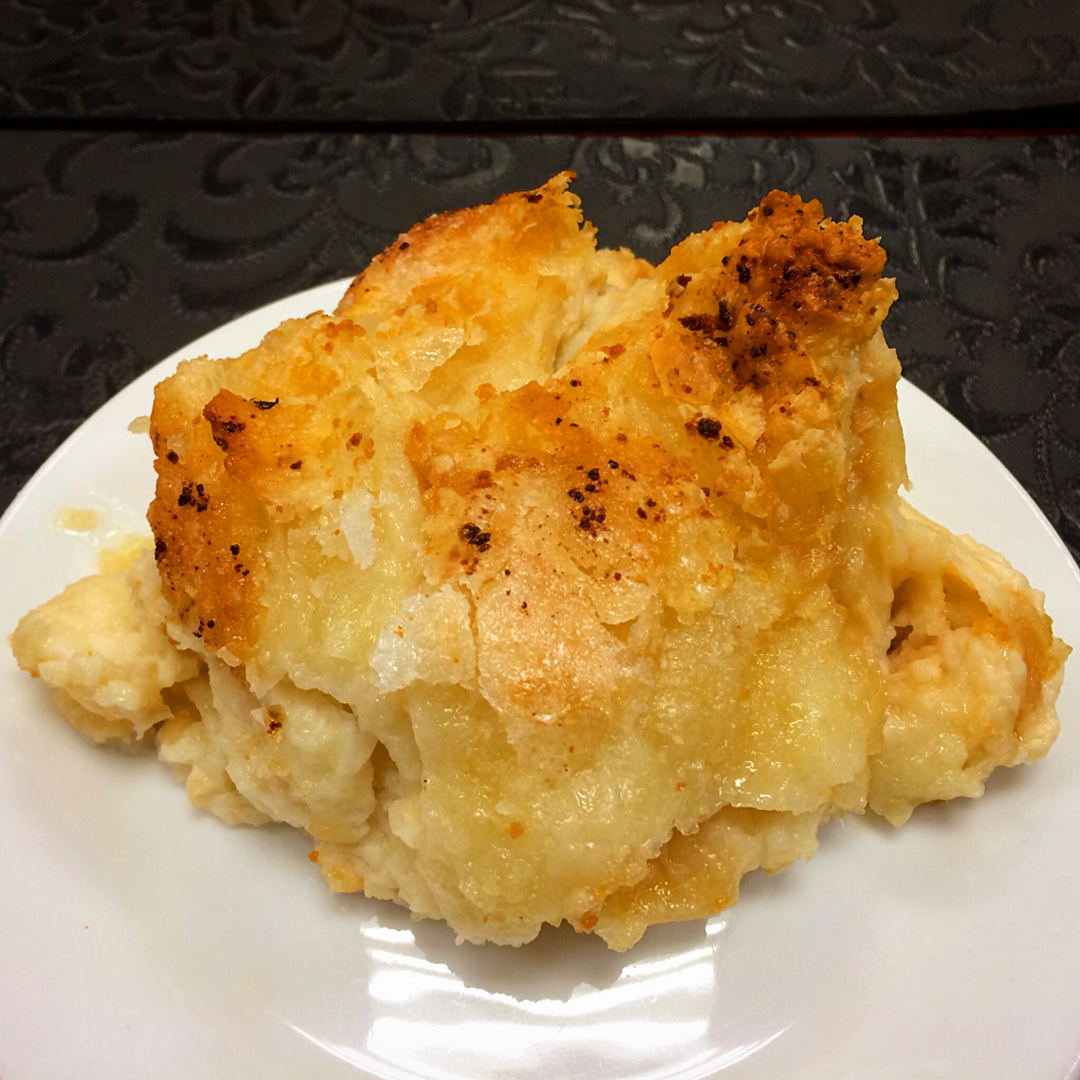
Little Egypt Restaurant, 66-28 Fresh Pond Road, Ridgewood, featured a special dessert coinciding with Mother’s Day: Om Ali (you might see umm ali), أم على. The phrase translates as “Ali’s mother” and of course, fables abound as to its name. Essentially Egypt’s answer to bread pudding (only better if you ask me), it’s made with phyllo dough, milk (and occasionally, richer dairy considerations) and sugar, sometimes elevated by raisins, nuts, and cinnamon. There are legions of recipes for this traditional Ramadan treat; that day, our delightful version came with sour cream and ground nuts on the side for garnish, ad libitum.


Honey Bee’s Kitchen

Instagram Post 5/10/2019

Since I enjoy the cuisine, I make it a point to visit as many Nigerian restaurants as I can locate, and it’s not all that difficult here in NYC. Many have similar menus with similar preparations of the “greatest hits” but I was surprised and delighted by the unique spin on our choices at Honey Bee’s Kitchen, 9322 Avenue L in Canarsie, Brooklyn. My dining buddy and I grabbed only a handful of items but that just guarantees a return trip! Three from the appetizers section where most of the dishes were tagged “in spicy pepper sauce”; each was unique and delicious.

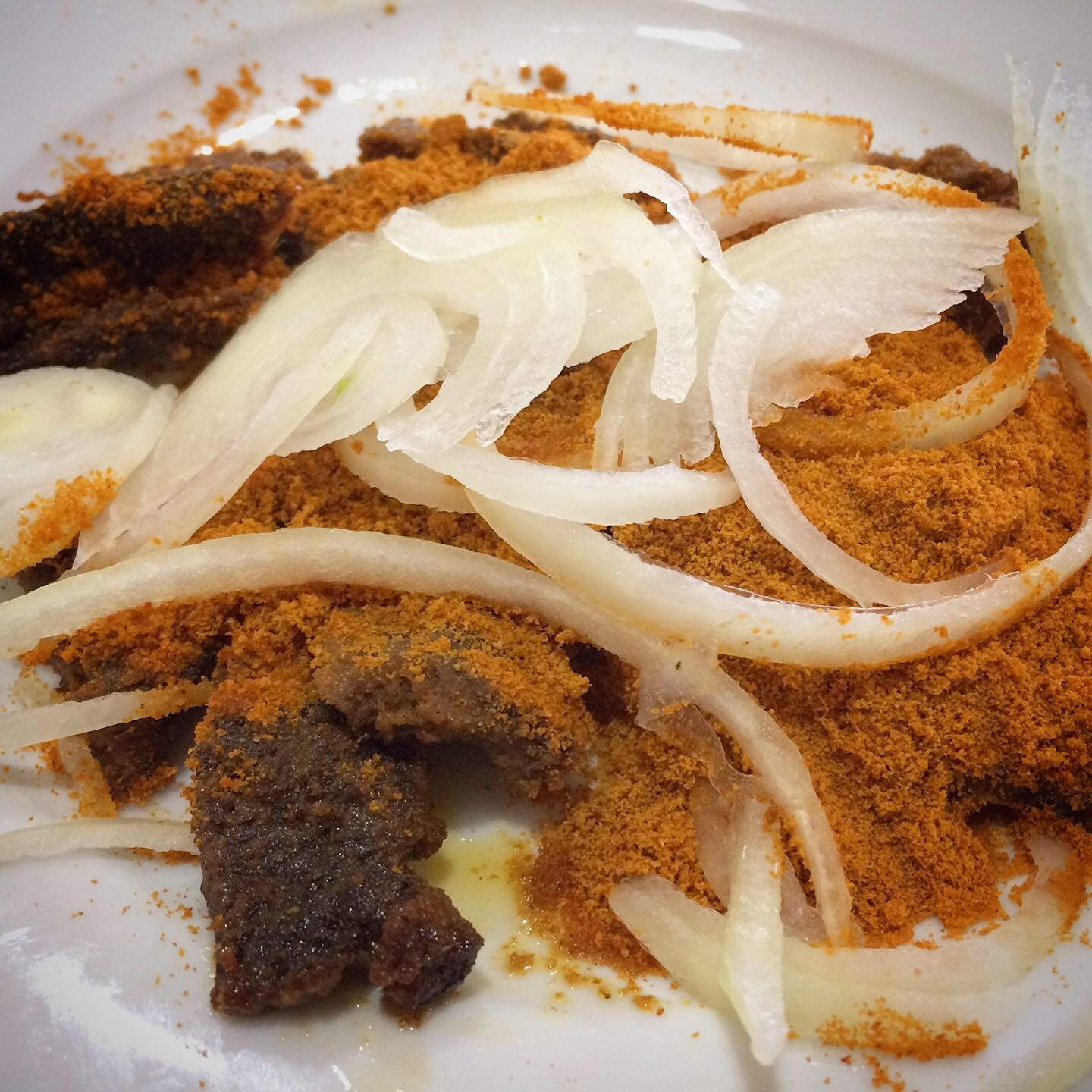
(Click on any image to view it in high resolution.)Suya. Grilled beef often served on a stick but always served with spicy peanut powder and raw onion, a favorite Nigerian street food.

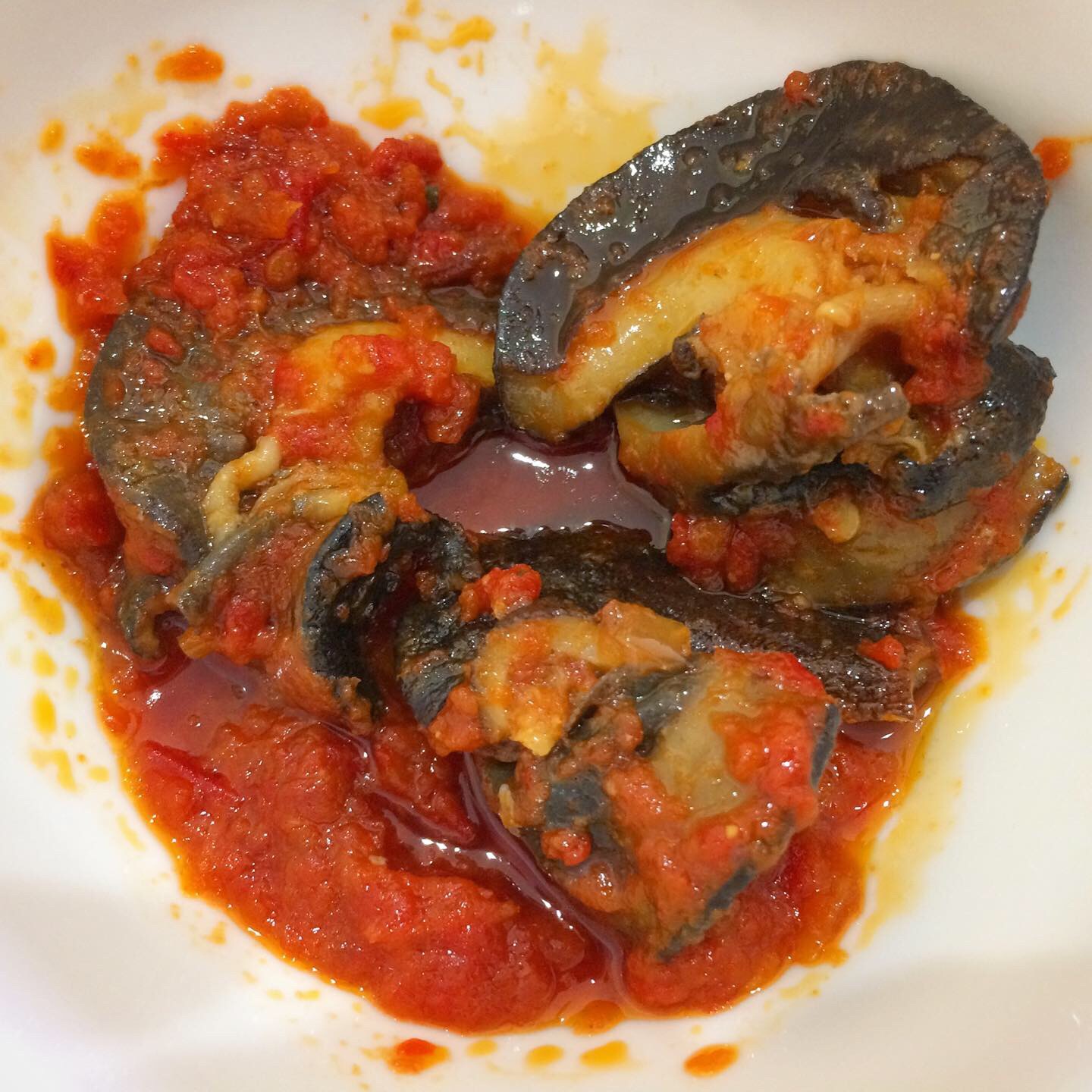
Peppered Snail. I’ve had these elsewhere but the snails were tough. Not the case here: they were sautéed to perfection and the sauce was so good that we reserved what was left to adorn some rice.

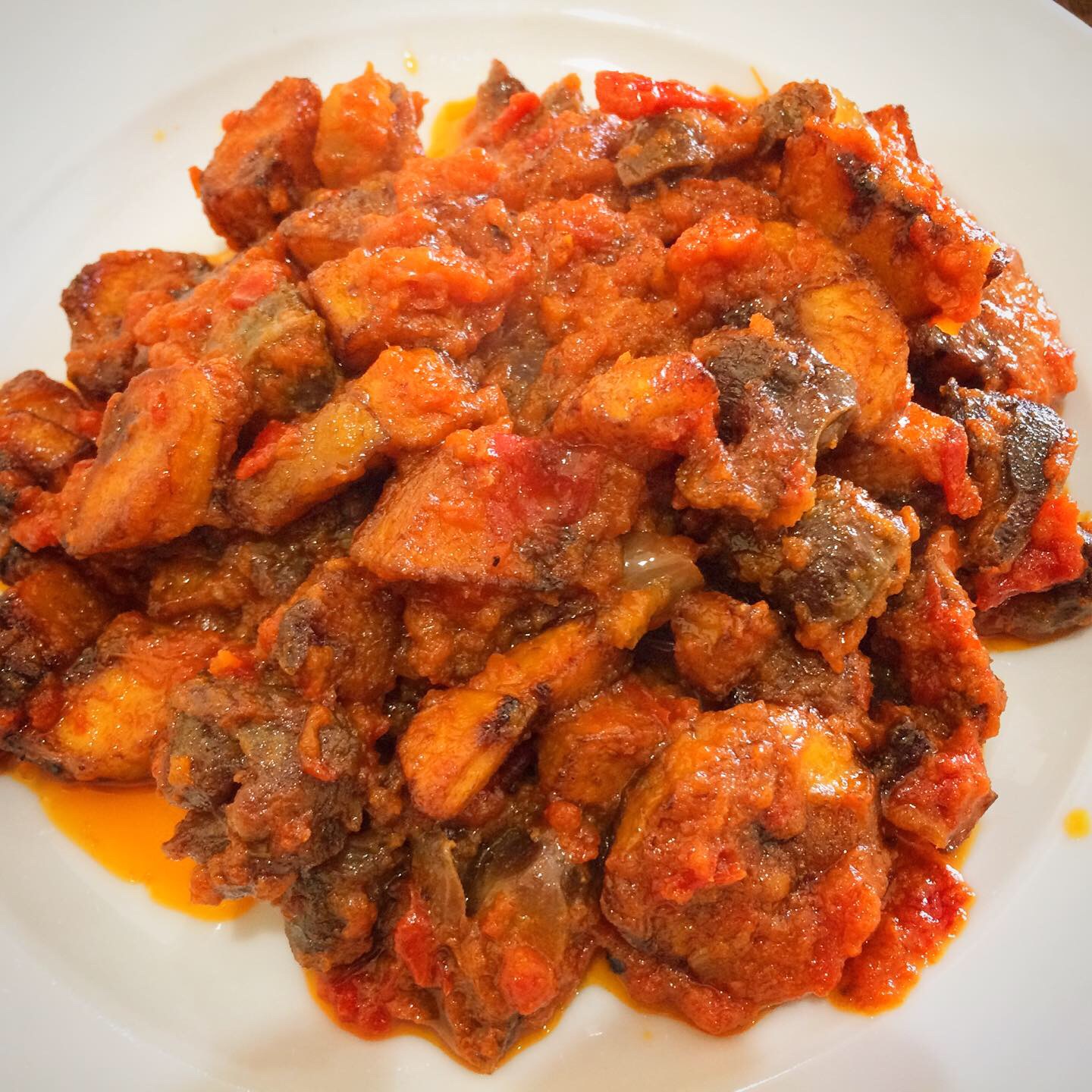
Gizdodo. Chicken gizzards (the “giz”) and fried plantains (called “dodo” in Nigeria) cooked together and infused with herbs in a tomato based sauce. Hard to stop eating this.

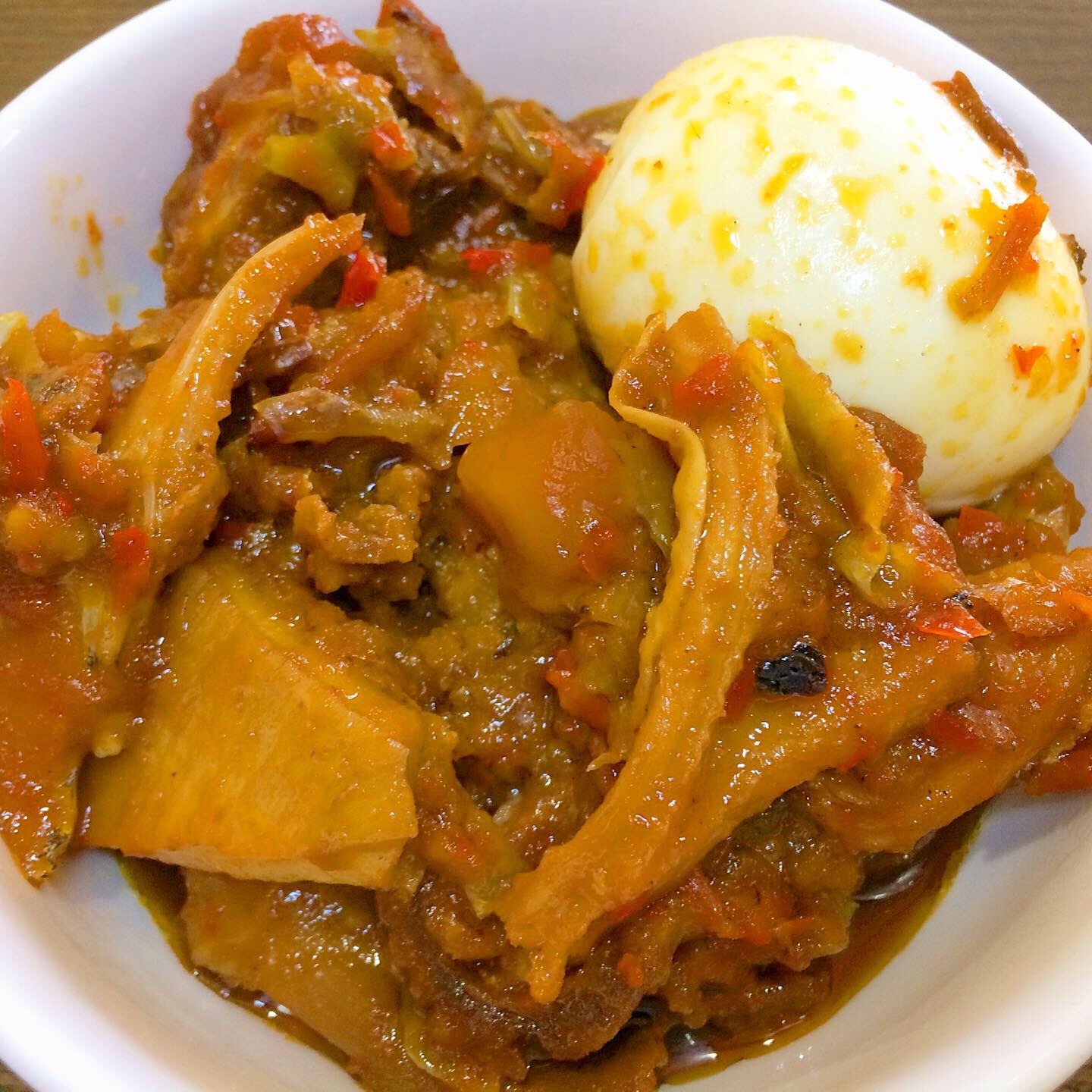
From the entrées section: Rice with Ayamatse sauce with assorted meat, stockfish (dried unsalted fish) and a hardboiled egg. Ayamatse (you might see ayamase) sauce is made from hot peppers, bell peppers, and palm oil and although ours wasn’t all that hot, it was tasty nonetheless. The menu refers to “HBK sauce”; after some reflection, I realized it stands for Honey Bee’s Kitchen!

Gbegiri (bean soup) and Ewedu (jute leaves blended with egusi, melon seeds) counterpoised in a jaunty triangle, served with amala (pounded dried yam) and croaker (the fish, of course!).


Dumpling Galaxy

Instagram Post 5/9/2019

(Click on any image to view it in high resolution.)

While shepherding folks through Flushing’s food courts on a recent ethnojunket, the thought struck me that with so many tempting treats to be had, it makes the job incredibly easy. At the same time, it also makes it incredibly difficult. Take dumplings for example. (Take several, they’re small.) Dozens of purveyors fashion hand-crafted bespoke specialties while displaying ennui-tinged sprezzatura as they vie for our appetites and confound our decisions. What’s a tour guide to do?

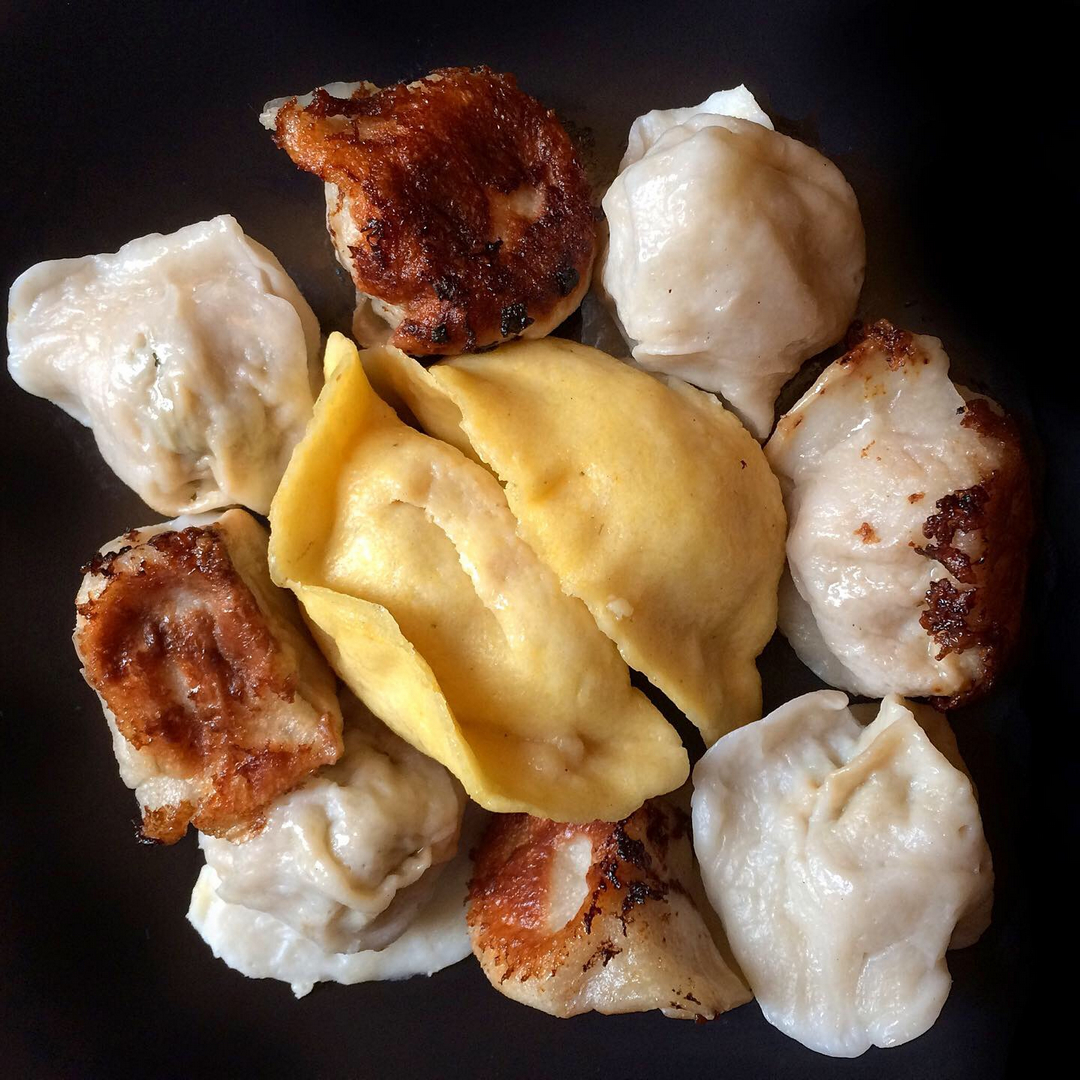
Why, sample nearly all of them, of course. (On my own time naturally.) A few standouts emerged, one of which was the venerable Dumpling Galaxy. A far cry from its days in the dingy rabbit warren of Golden Mall, it’s now a proper restaurant touting about 100 varieties just half a mile from this newer outpost at Super HK Food Court, 37-11 Main St, Flushing where there are just enough stellar examples to please everyone.

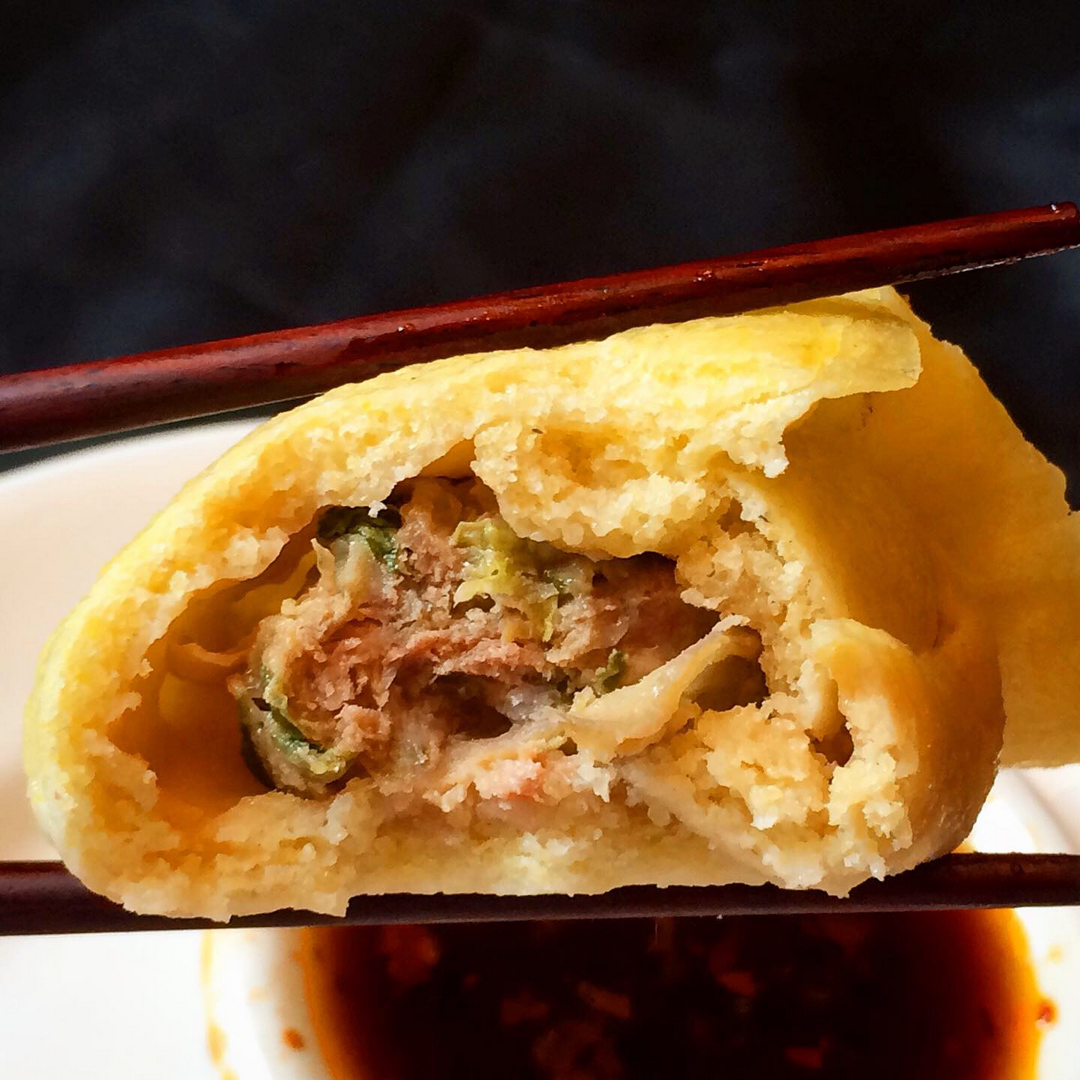
[1] Shown here are pan fried lamb dumplings with green squash, steamed pork dumplings with dill, and the less commonplace cornmeal dumplings with pork. The filling is what it promises to be; the unusual wrapper is thick, dry, and a little akin to a corn muffin bereft of sugar.

[2] The inside view of that last one.


Rayhon

Instagram Post 5/8/2019

(Click on any image to view it in high resolution.)

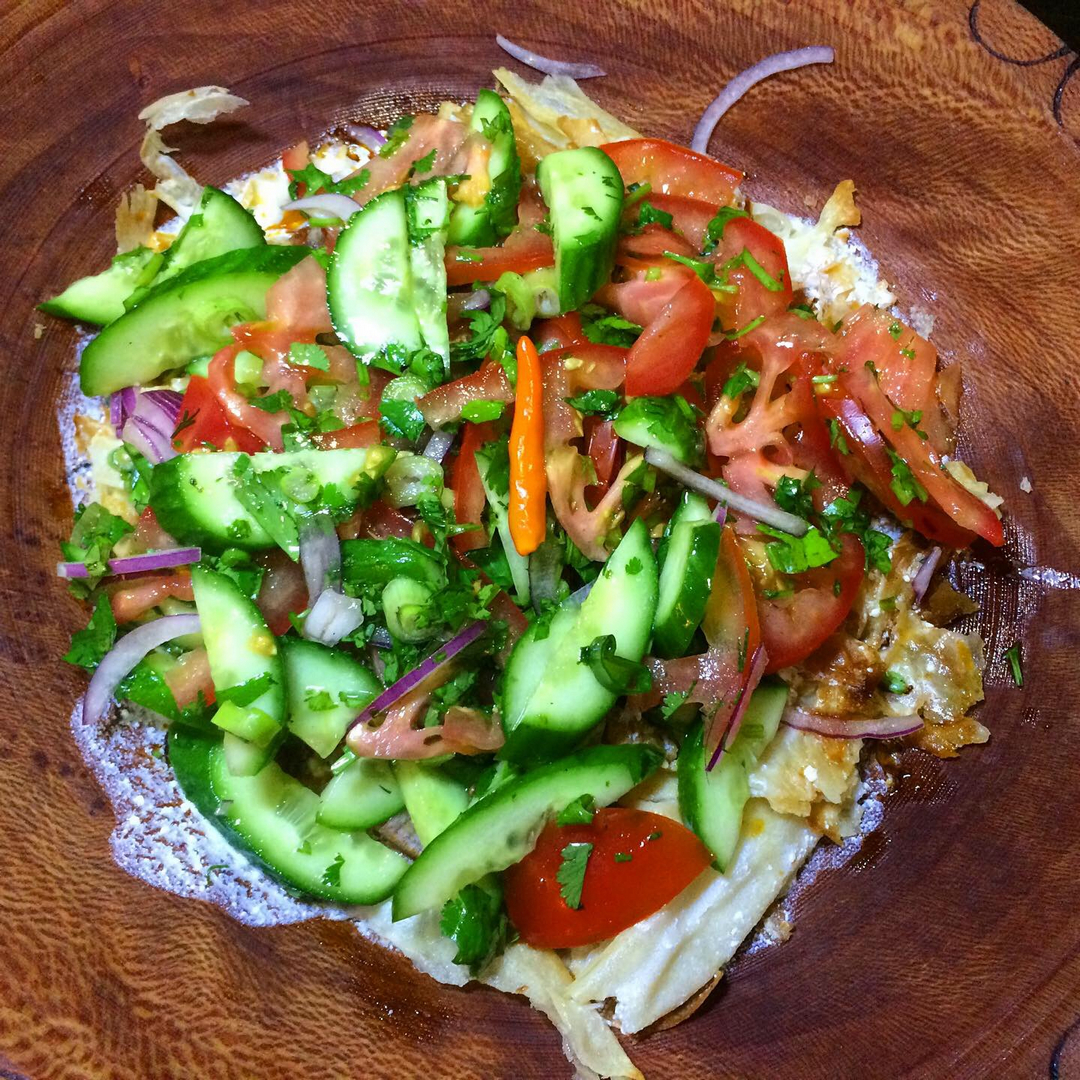
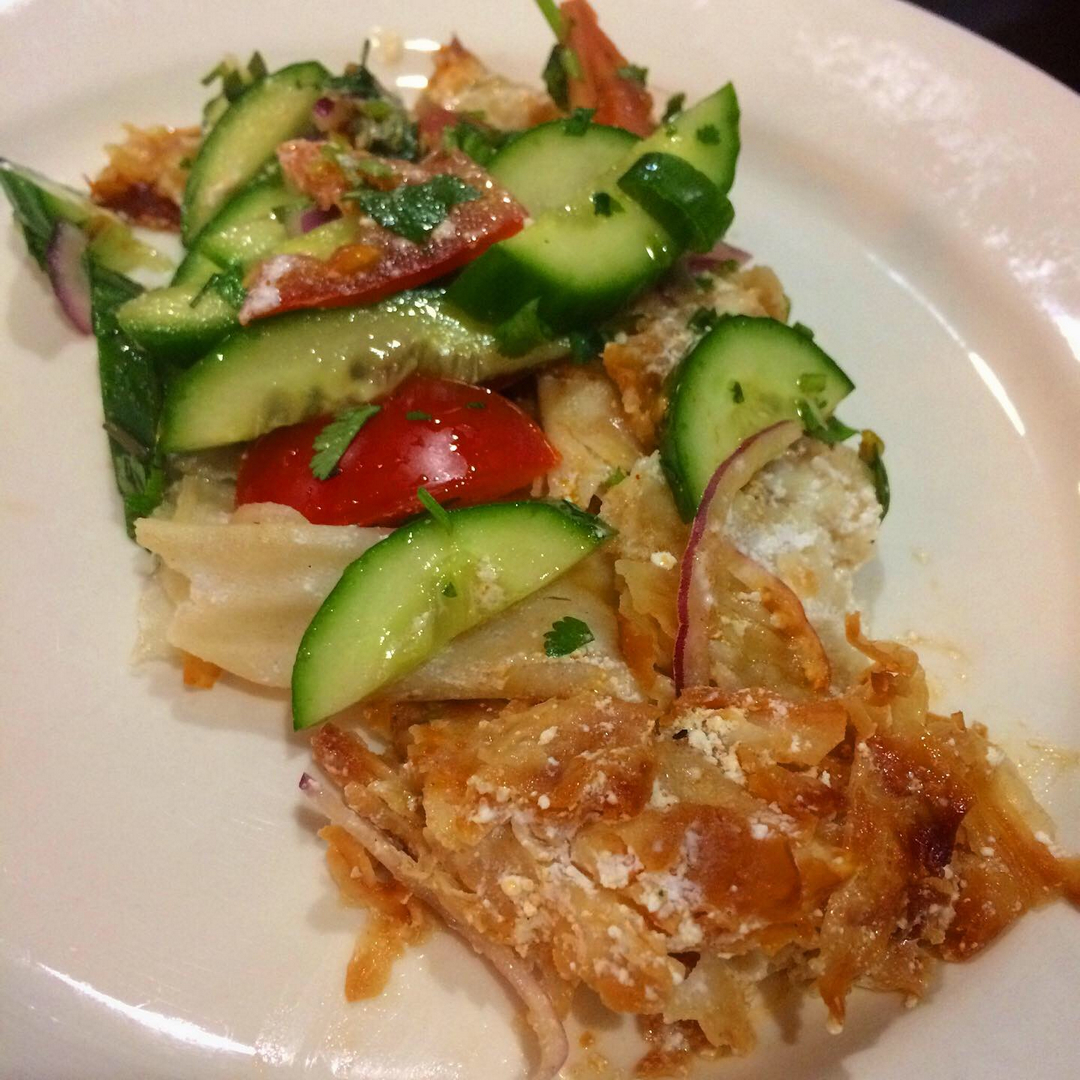
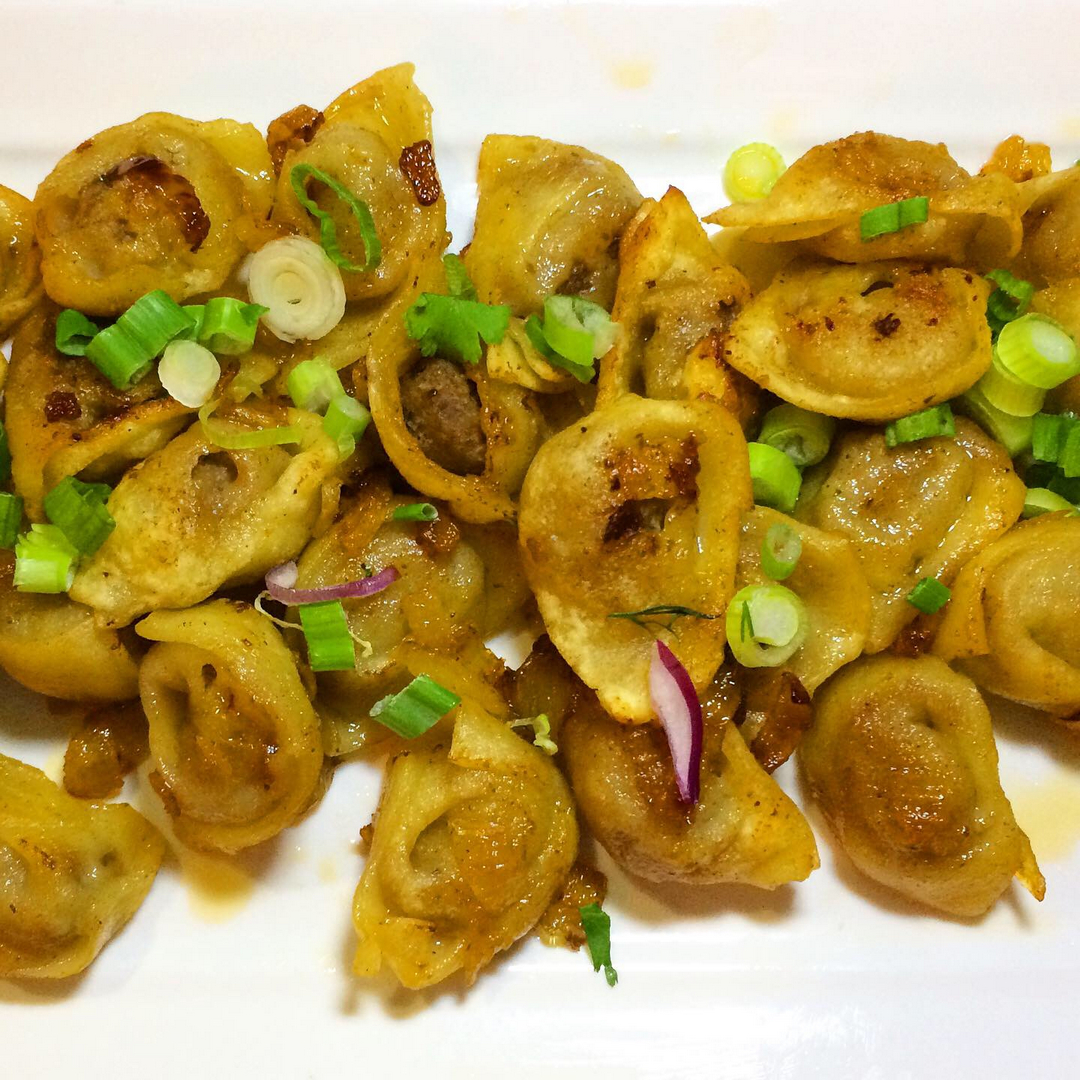
The food of Uzbekistan is relatively easy to track down in Brooklyn; that of Tajikistan, its neighbor to the east, less so. The cuisines are similar, but Tajikistan claims kurutob (you may see qurutob or qurutov) as its own. We enjoyed a vegetarian version of it (also available with meat) at Rayhon, the Tajik-Uzbek restaurant at 1915 Avenue U in Brooklyn’s Homecrest.

[1] Essentially a bread salad (Tajikistan’s answer to Italy’s panzanella, perhaps), kurutob ascends beyond the level of granting second life to shards from a stale loaf in that it features fatir, the delicate, flaky, layered bread that provides the base for the herby (rayhon means basil) salad of tomatoes, cucumbers and red onion. Topping off the qurutob is its essential piquant sauce made from qurut (hence the name), a salty yogurt cheese, that gets soaked up by the fatir.

[2] The yogurty fatir gets its well-deserved moment in the spotlight, downstage.

[3] Crispy chuchvara (Russia’s answer to chuchvara are pelmeni, BTW), fried beef and lamb dumplings with an allium troika: caramelized onions provide sweetness, raw scallions for a little bite, and a few slivers of red onion just because. Not as redundant as you might think. But the dish as a whole was a little monotonous and could have been rescued by a bit of sauce on the side.