Ratcheting Up Sriracha

Fancy Food Show SrirachaIt is written in some ancient tome, or so my rather hazy understanding would have it, that during times of inclement weather the more sagacious among us hunker down in our kitchens and prepare mass quantities of pain perdu. Otherwise why would so many well-meaning mediarologists exhort us to make a beeline for our local supermarket in a frenzied quest for whatever remains on the shelves of bread, eggs, and milk?

So following the spirit of the law, although not the letter, I made the obligatory pre-disaster pilgrimage to stock up on essentials. I returned home and gingerly set my lumpily filled bags down outside my door. I was fumbling with the keys to my apartment when my neighbor, affectionately known to the denizens of my building as Windy, emerged.

Windy had a wiry frame and wore owlish Harold Lloyd glasses. His shaggy gray hair was usually half hidden beneath a weathered Australian cork hat. Somehow the corks were always in motion, even when Windy stood still, bobbing about as if propelled by some unseen force.

“Hey, Ethnojunkie! Got plenty of bread, eggs, and milk in there, right?”

“Um, yeah. I mean, no, not really. I’m not planning on making French toast.” The contents of my limp plastic bags were redistributing now, making themselves more comfortable on the dingy tile floor as I continued to grapple with the lock.

“All ready for the mother of all storms?”

“I thought that was Sandy.”

“Yep,” he continued, ignoring me. “The Blizzard of ’16. Snowmageddon. Snowzilla, they’re callin’ it. The blizzard to end all blizzards. Snowpocalypse….”

“Been watching a lot of TV, Windy?”

“…Gonna be a real snownami. A snowlapalooza.”

Windy himself could generate a gale greater than even the most virulent hurricane might ever aspire to. Having pretty much exhausted his supply of snowstorm metaphors, he went on to do what he did second best: pry.

“Got yer emergency preparedness kit ready?” He craned his neck and peered into my bags to inspect their contents. I slid them out of his line of sight with my foot.

“Sure thing,” I lied. “I’ve got wind-up batteries, sustainable “last-forever” wick-free candles, and solar powered #2 pencils, sharpened, of course.” At that moment, one of the bags shifted and my bottle of Sriracha tumbled out.

A bewildered look passed across his face as he squinted at the bottle with a gimlet gaze. “What kind of emergency were you expecting?” he sniffed. He was right. My idea of an emergency preparedness pack was somewhat skewed. “What’s in that bottle anyway?”

“It’s Sriracha. Like a kind of hot sauce,” I replied, stuffing it back into the bag and finally pushing my door open.

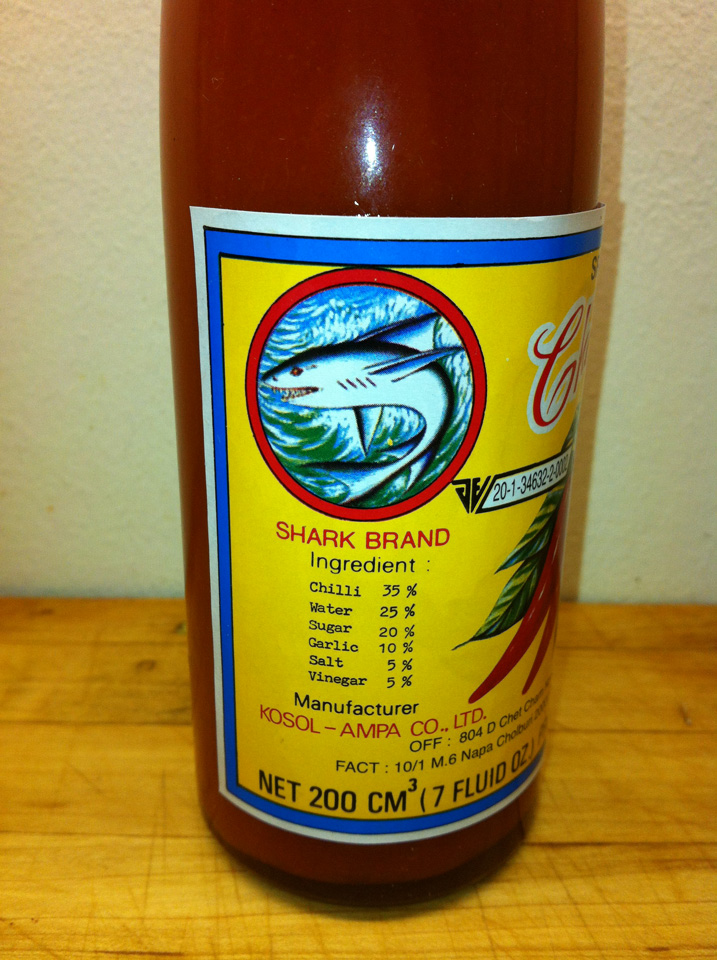
“That’s not Sriracha! Sriracha has a rooster on it! This one’s got a shark!”

“Right. Well, it’s a different brand. Sometimes I like it better than Huy Fong, the one with the rooster.”

“What’s the difference?”

Seizing the opportunity to go on about ethnic food, I began, “Well, they’re all chili, garlic, and vinegar, plus sugar and salt, but that’s where the similarities end. This one is a little sweeter….”

He interrupted, “No, no, I mean what’s the difference which one you get? Sriracha is Sriracha. Okay, I gotta go back inside and watch the storm.” He pivoted on one Birkenstock and marched back into his apartment, corks bobbling wildly, never allowing me to inquire as to whether he thought mayo is mayo or cola is cola.

I scooped up my bags and lugged them into my apartment, bemused by the interchange. But my reflection on our conversation wasn’t because of Windy’s dismissal of my brand preference. If Windy knows about Sriracha, everybody knows about Sriracha. Years ago the darling of a few culinary cognoscenti, the stuff is now ubiquitous.

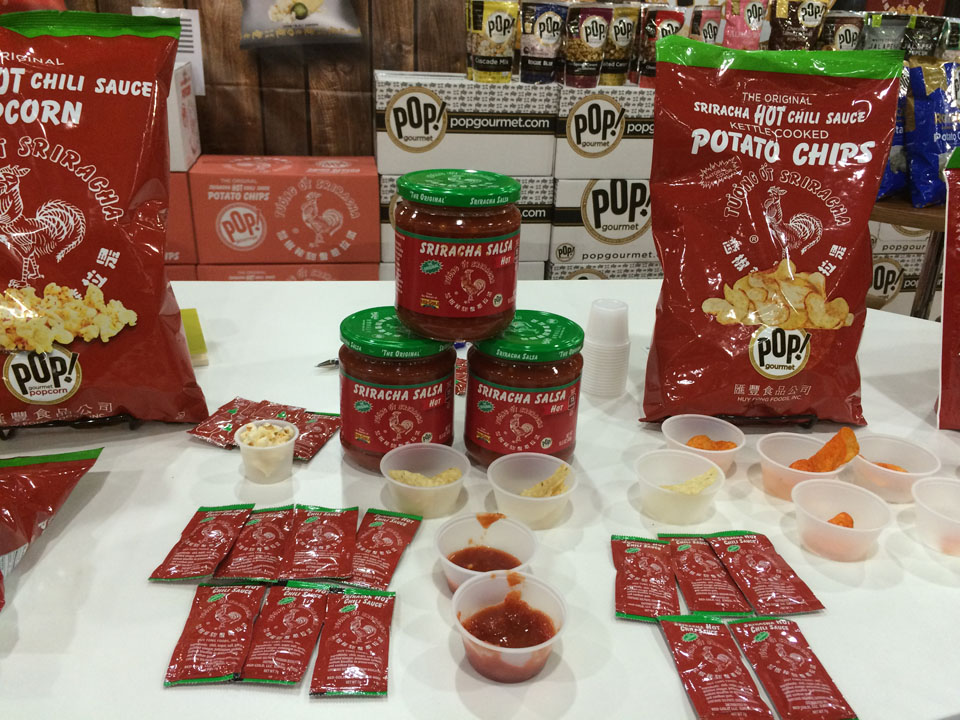
Huy Fong brand (with the rooster imprint) was developed in 1980 in California by a Vietnamese-American; by 2010 Bon Appétit magazine had crowned it “Ingredient of the Year”. I’ve spotted it gracing the tables of diners and restaurants having no pretense of being Asian. It’s in every supermarket – they even sell it at Bed, Bath & Beyond. And now it’s available in individual packets like ketchup or mustard, not to mention their line of Sriracha popcorn and chips.

Shark brand, the favorite of Andy Ricker of Pok Pok fame, is a product of Thailand and is markedly distinct from Huy Fong.

So pitting the rooster against the shark, let’s examine the differences (with apologies to Windy).

Huy Fong is tangier and sharper (think horseradish kind of sharp) with a coarser texture and tiny bits of chili within. Shark is thinner, sweeter, more garlicy, more vinegary, a little herbal and significantly brighter.

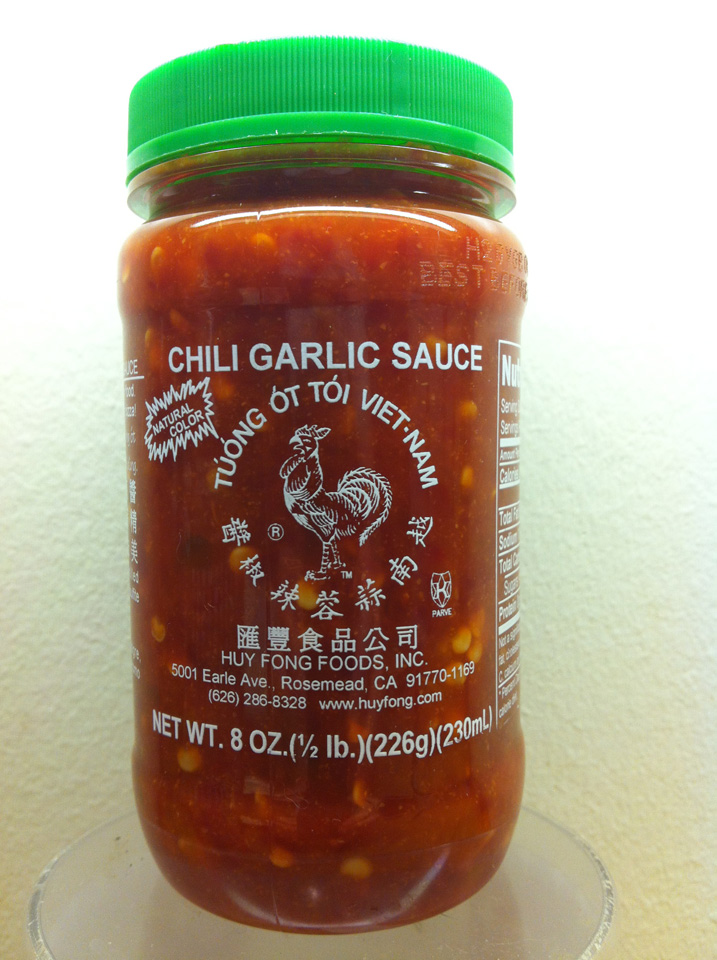
Incidentally, Huy Fong also makes a chili garlic sauce, available in 8 ounce jars, that’s thicker than their Sriracha (you would spoon it out rather than squirt it); it’s earthier, more garlicy, less sweet and less vinegary. Just for kicks, I tried mixing the two Huy Fong products together and I thought the combination was great – not to mention that if you try this at home, seasoned Sriracha aficionados will ask you which brand you’re using. Simply smile coyly and say it’s your custom house blend; it’ll be our little secret.
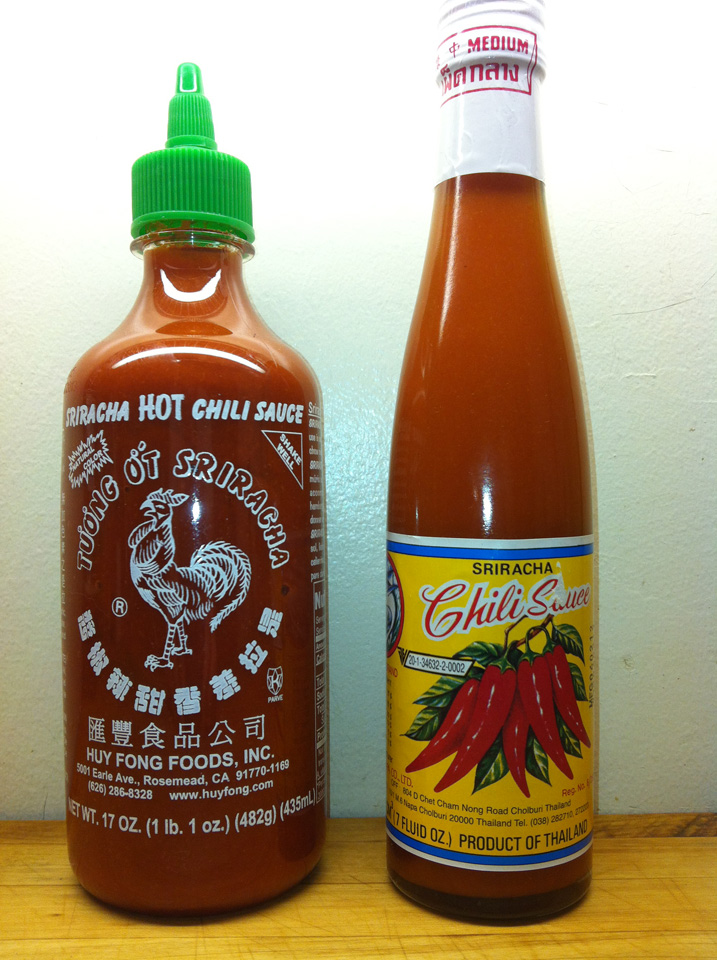
Rooster vs SharkShark CloseupChili Garlic Sauce

Which do I like better? It depends on what I’m doing with them, but I lean more towards Shark for straight-out-of-the-bottle applications. And yes, there are plenty of other brands as well. Perhaps I’ll write about those when my emergency preparedness pack needs replenishing during the next Blizzard to End All Blizzards.
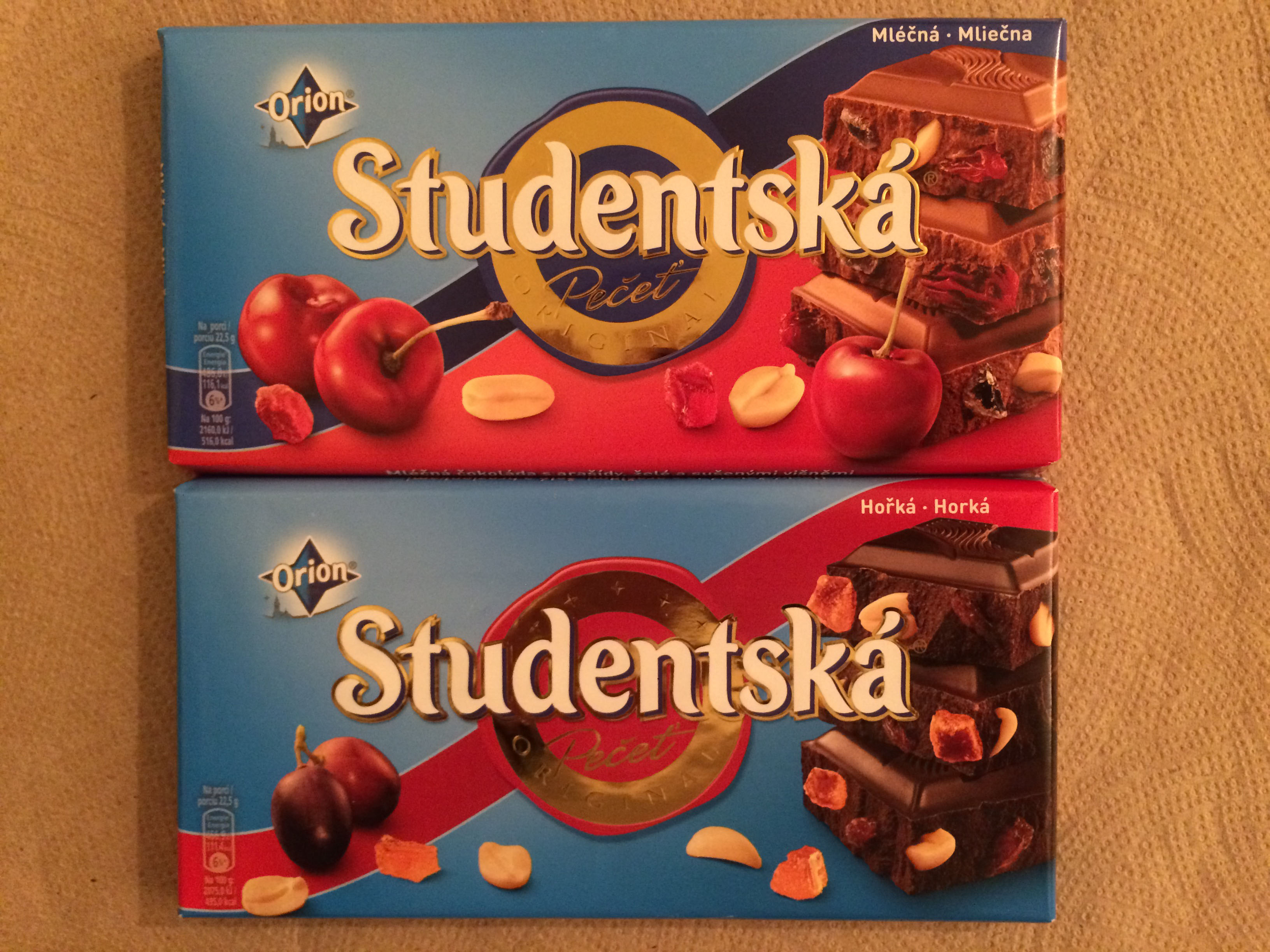


Got Milk? (Milk chocolate, that is.) Czech!

Some years ago I wandered into Slovak-Czech Varieties expecting only that I’d find a broad enough spectrum of Eastern European treats to pique my ethnojunkie palate. I bought a bit of this and that and, innocently enough, a bar of Studentská Pečet milk chocolate with nuts and sour cherries. Little did I realize at the time that I had just purchased what was to become a persistent craving and the stuff of which daydreams are made.

Any attempt to describe that flavor combination would pale into insignificance next to the reality of this delicious sweet; suffice it to say that my chocolatey dream fostered a number of subsequent visits. Unfortunately, my timing was terrible, and each time I returned, they were sold out. So recently, determined to consummate a rendezvous with my fantasy once again, I called the establishment repeatedly until I was certain that it was back in stock. Needless to say, I made a beeline to the shop to pick some up. (They also feature chocolates filled with rum, dark chocolate with raisins and nuts, and unusual little tubes of sweetened condensed milk as well as innumerable other sweets.)

chocolateChocolate 2

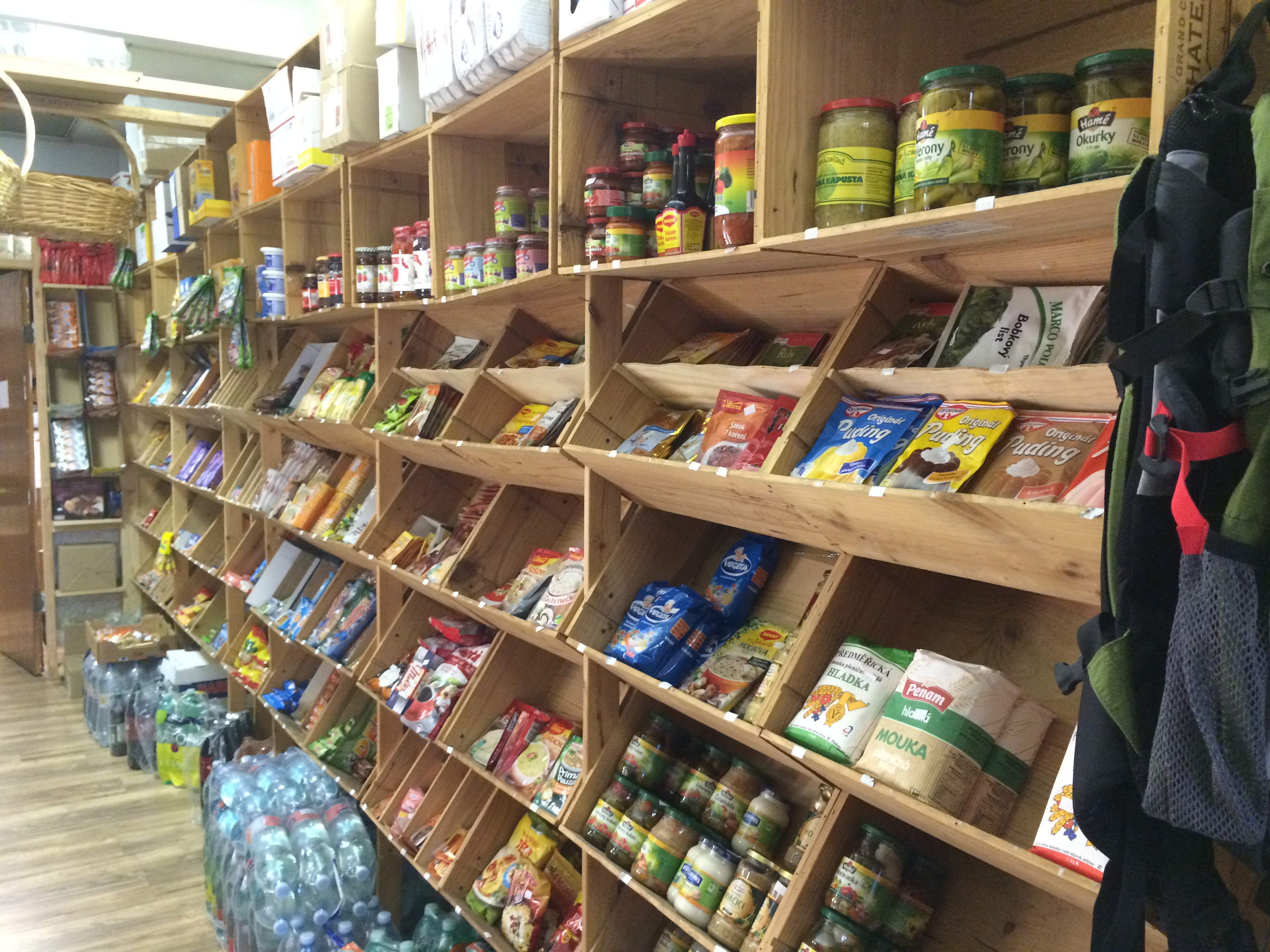
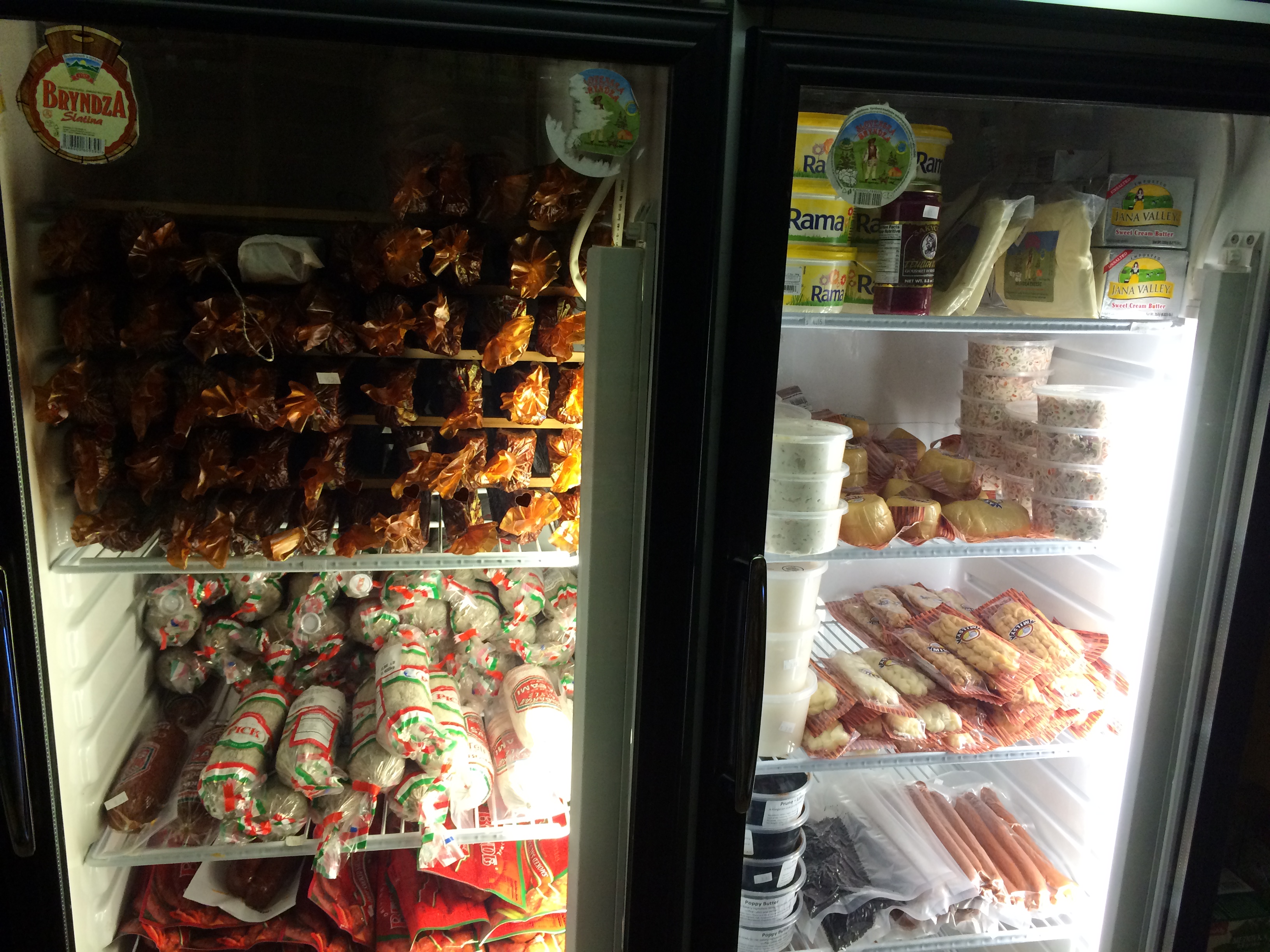
Settling back down to earth, my frenzied jones now satisfied, I realized that there was much more to Slovak-Czech Varieties than their formidable selection of candies. Their stock hails from the Czech Republic, the Slovak Republic, Hungary, Germany, Croatia and Poland. As a matter of fact, you could put together a pretty tasty meal just from their assortment of artisanal sausages (such as a delicious Hungarian dried sausage called csabai, available in sweet or spicy variations), smoked cheese, mustards and the like. You’ll also find unusual sodas in flavors like pampeliška (dandelion), gaštan (chestnut), and mateřídouška (thyme). A wide assortment of packaged mixes, both savory and sweet, rounds out the selection of merchandise. And they’ve just recently set out a selection of Christmas specialties including chocolate Christmas tree ornaments and seasonal cookies and treats.

storefridge

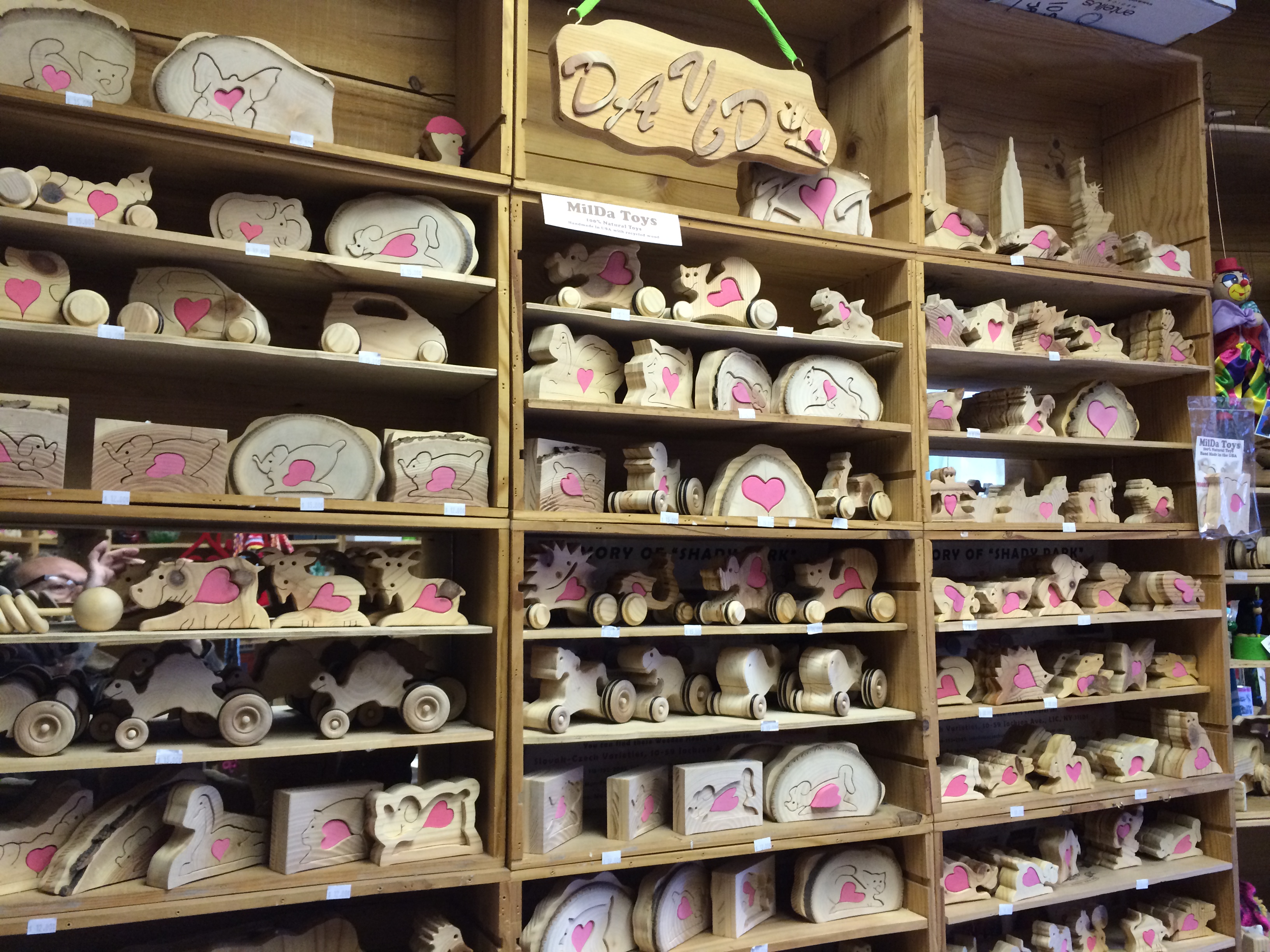
Co-owners Milan and Jarka are more than helpful, answering questions, offering recipes, and translating the cryptic labeling. But beyond their eagerness to please lies another interesting story. As you enter the store, you’ll see a set of shelves crowded with adorable hand-crafted wooden figurines, from endearing animals to charming little pull-toys. Milan told me that making these toys is his hobby and he’s been doing it for about 40 years, having started in his homeland in his late teens. “It’s what we did to pass the time on winter nights; we didn’t have television or computers.” He fashions the toys from wood that boxes of wine were delivered in, laminating layers and honoring the “imperfections” (like knots or the grain) “just like Tiffany did with his glass,” he explained.

toys
 
Seems to me that one of those toys plus some Christmas goodies sure would make a kid happy this time of year. Not to mention a bar of Studentská Pečet milk chocolate with nuts and sour cherries for the shopper!
 
 
Slovak-Czech Varieties
10-59 Jackson Ave., Long Island City, NY
718-752-2093


West African Home Cookin’

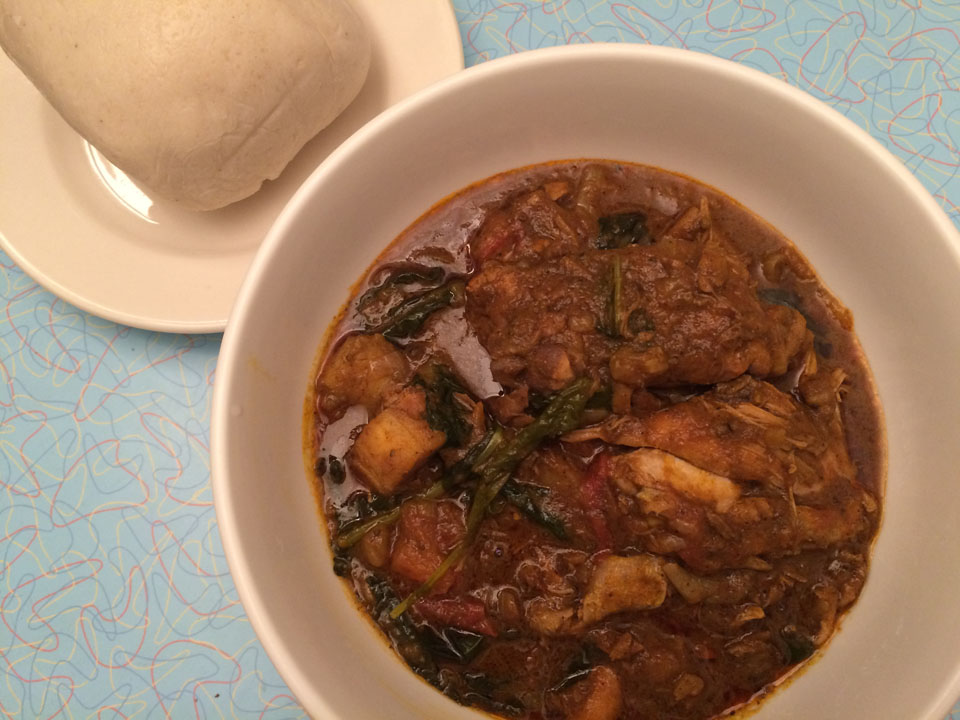
I’ve been getting into cooking West African cuisine lately. Here’s my rendition of Palmnut Cream Stew with chicken, smoked dried fish, squash, plantain, tomato and kale. That’s fufu (pounded yam) on the side. Turnip Greens with Peanut (not shown) rounded out the meal.
Palmnut Cream Stew
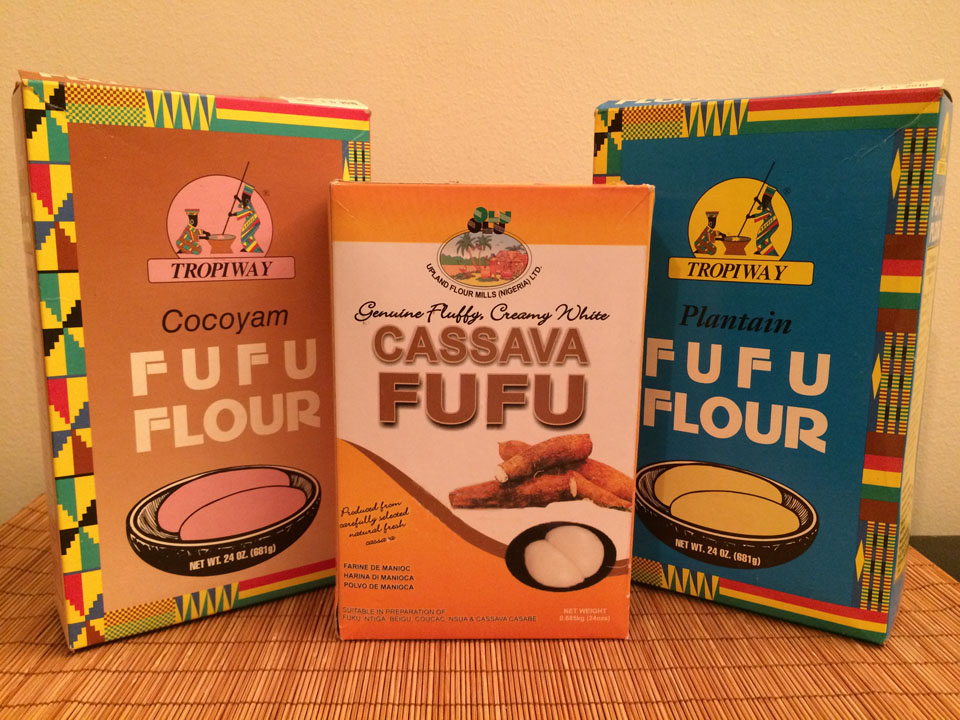
There are many variations on the theme of fufu; plantain, cassava, and cocoyam are relatively easy to find. If you’re shopping in a West African market, you’ll find fufu flour packaged in a box: just add a little water and a lot of elbow grease and your considerable efforts will be rewarded.
3 fufusGa KenkeyFanti Kenkey
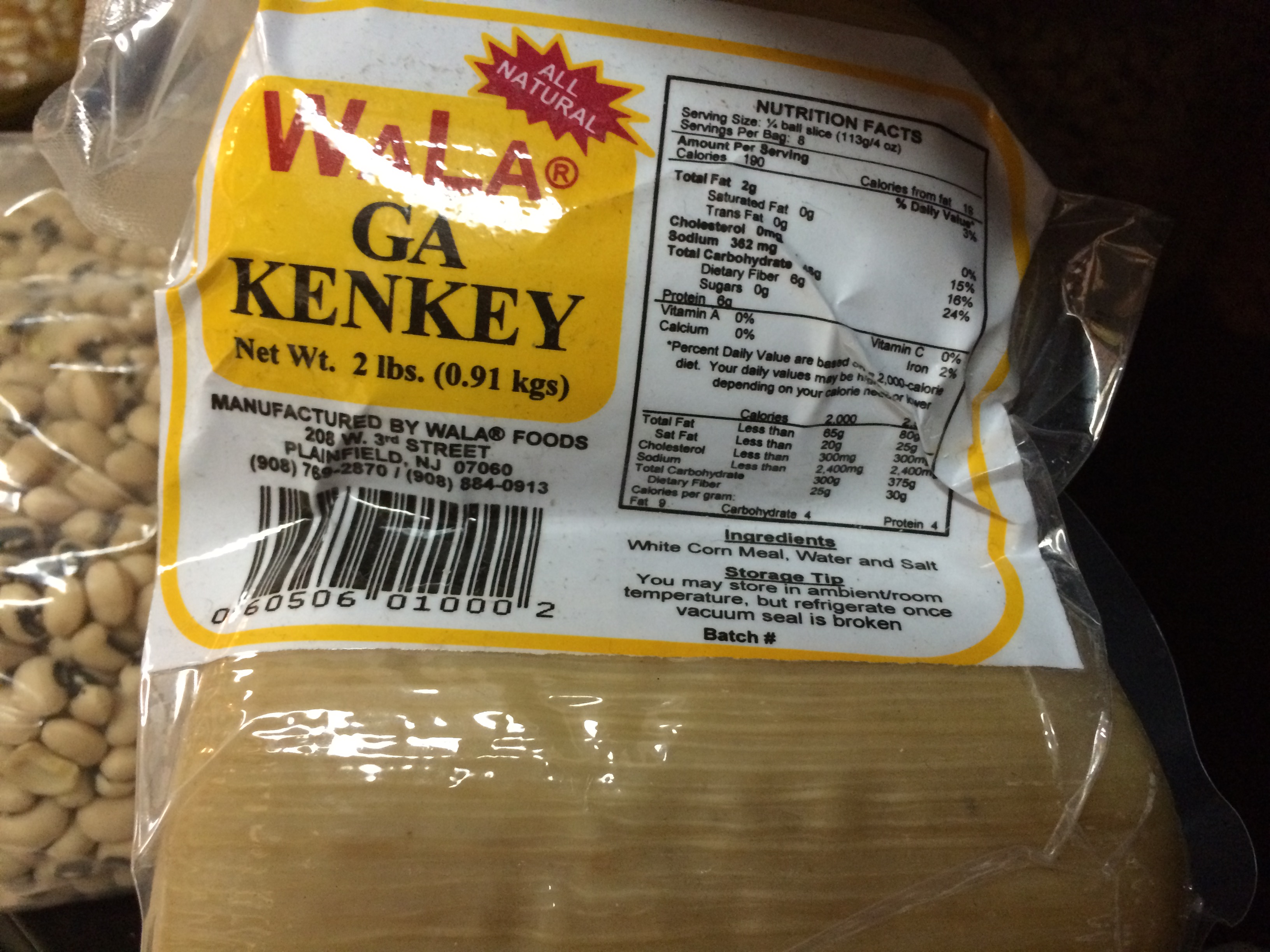
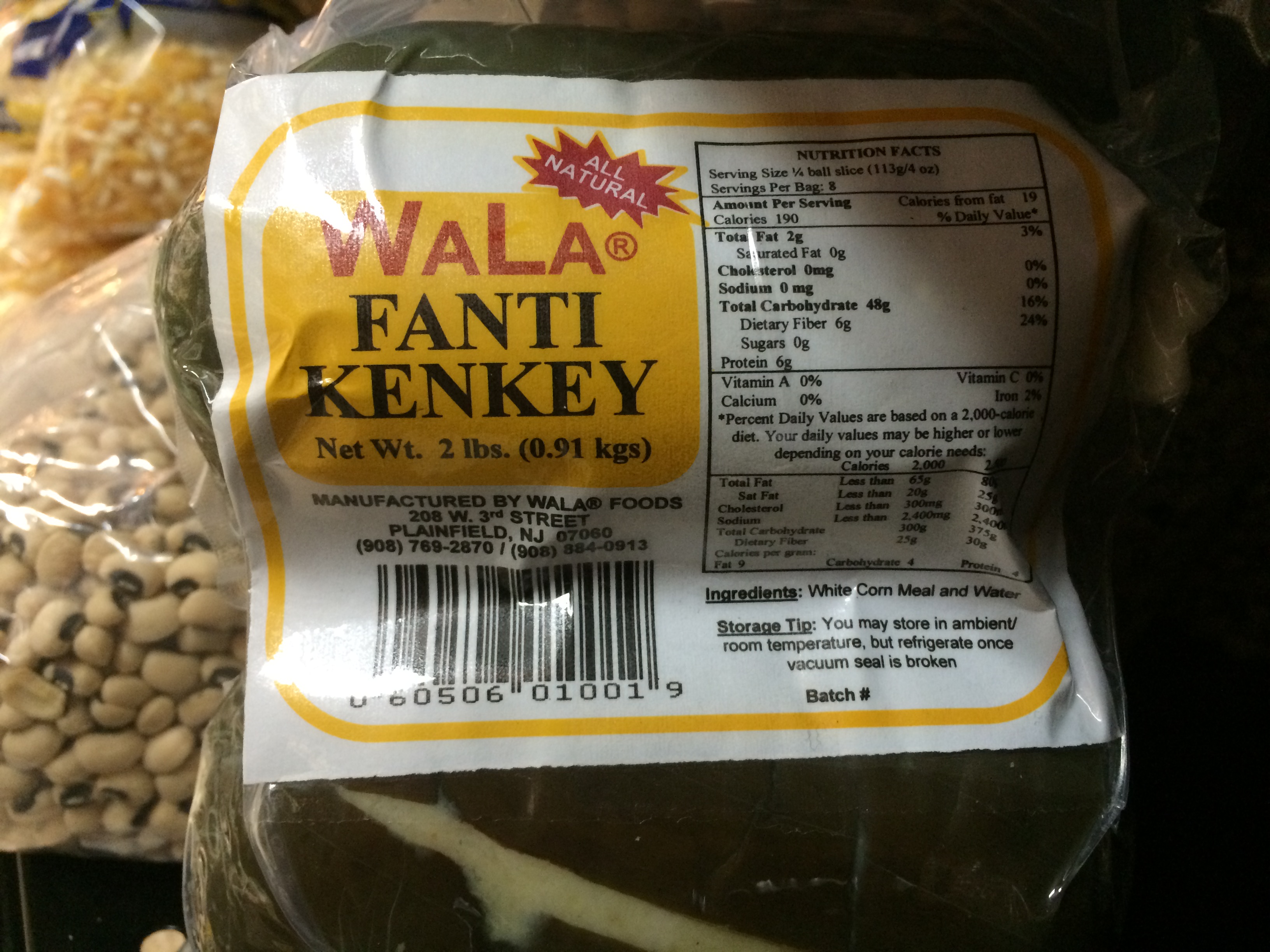
I also experimented with fufu-like kenkey and banku, both made from corn. They differ significantly from fufu in that they’re fermented and almost a little too sour if you’re tasting them straight, but they harmonize perfectly with the smoked dried fish flavor of many of the regional dishes. You’ll see them in Ghanaian markets wrapped in plastic and ready to steam. I’ve spotted two varieties of kenkey, Ga and Fanti; the words describe two neighboring ethnic groups and the difference between the kenkeys was subtle: Ga came wrapped in a white corn husk and had a grainier texture than Fanti which was shrouded in a green corn husk and was stickier than Ga. Banku (no husk, just plastic) was a little less fermented and tasted somewhat smoky.

Thiakry
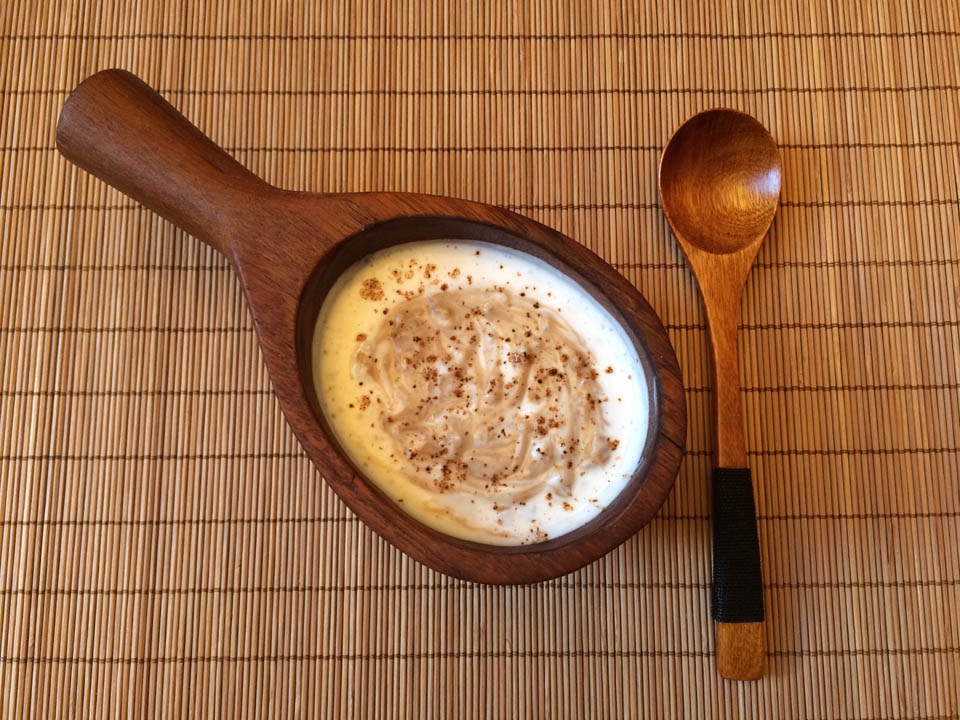
In keeping with the West African theme, dessert was thiakry, a sweet dish made from millet and yogurt or buttermilk or the like (I use both). My spin on it contains swirls of baobab fruit with peanut crème (which itself is the basis for another sweet dish called ngalakh). Thiakry is often served for breakfast or a snack, and “dessert”, as such, isn’t a feature of most African cuisines – it’s similar to China in that regard – but sweets do indeed make an appearance, just not necessarily at the end of a meal. As a matter of fact, an internet search turns up a number of recipes for thiakry (aka déguê) in which it’s described as a Senegalese dessert. In this case, I wanted to make something that would provide a sweet finish to a savory meal and whose flavor profile would be in complete contrast to the main dish.

Hungry for more? Check out the Home Cookin’ section of the site!


Luky Duck

Thai desserts (khanom thai) are sweet but not overly so, light, and delicious. Generally, they draw from a limited repertoire of ingredients but those are mixed and matched and combined and presented in a wide array of variations. Sticky rice, jackfruit, mango and other tropical fruits, pumpkin custards, pandan, sweet egg yolk threads boiled in syrup, and black beans and mung beans and corn (oh, my!) make their way into puddings, jellies, soupy concoctions, tiny cakes, candies, and a host of other delights.

One popular dessert is look choop (you may run across it as luk chup or any number of other transliterations) which look similar to shiny marzipan but taste nothing like it. The process is painstaking: soak and boil mung beans, sweeten with coconut milk and sugar, cook it down, mold or shape into miniature vegetable or fruit shapes, paint with food coloring, then glaze with agar-agar (like gelatin, but stiffer), and the result is something perfectly precious that looks too good to eat. (Little wonder that these were formerly served exclusively to royalty.)

Elmhurst’s sweetly named Sugar Club is my hands-down favorite market for khanom thai (as well as for outstanding prepared foods as good as you’ll find in any Thai restaurant). Recently, I was perusing their dessert case and, desperately struggling to restrain myself from buying one of each, decided that I’d better choose just one – but which? Out of the corner of my eye, I spied what at first I thought might be a children’s toy: a little yellow duck. What’s that doing in the dessert case? But a closer inspection disabused me of that notion – it was look choop molded in the shape of a classic rubber ducky floating atop a sea of green gelatin!

Look ChoopDucky 1Ducky 2
So deciding which dessert to choose was easy: look choop ducky, you’re the one!

 
Sugar Club
8118 Broadway
Elmhurst, NY
718-565-9018
 

Boffo Bofe

I received my marching orders for the Panamanian Day Parade in time to beat the band of revelers. The colorful annual procession in Crown Heights stretches along Franklin Avenue north of Eastern Parkway, but I, typically, was drawn to the food vendors clustered south of it along Classon Avenue – a sensible arrangement given the size of the jubilant throng lining the parade route.

Amid the dishes you might expect – pernil, fried fish, oxtail, arroz con pollo, stew chicken, curry chicken, BBQ chicken (you get the idea), and numerous variations on plantains and empanadas – there were a number of Panamanian specialties that caught my eye (as well as my appetite). Pictured below are cow foot soup, bofe, and chicheme. (Click to enlarge.)

Cow Foot SoupBofeChicheme
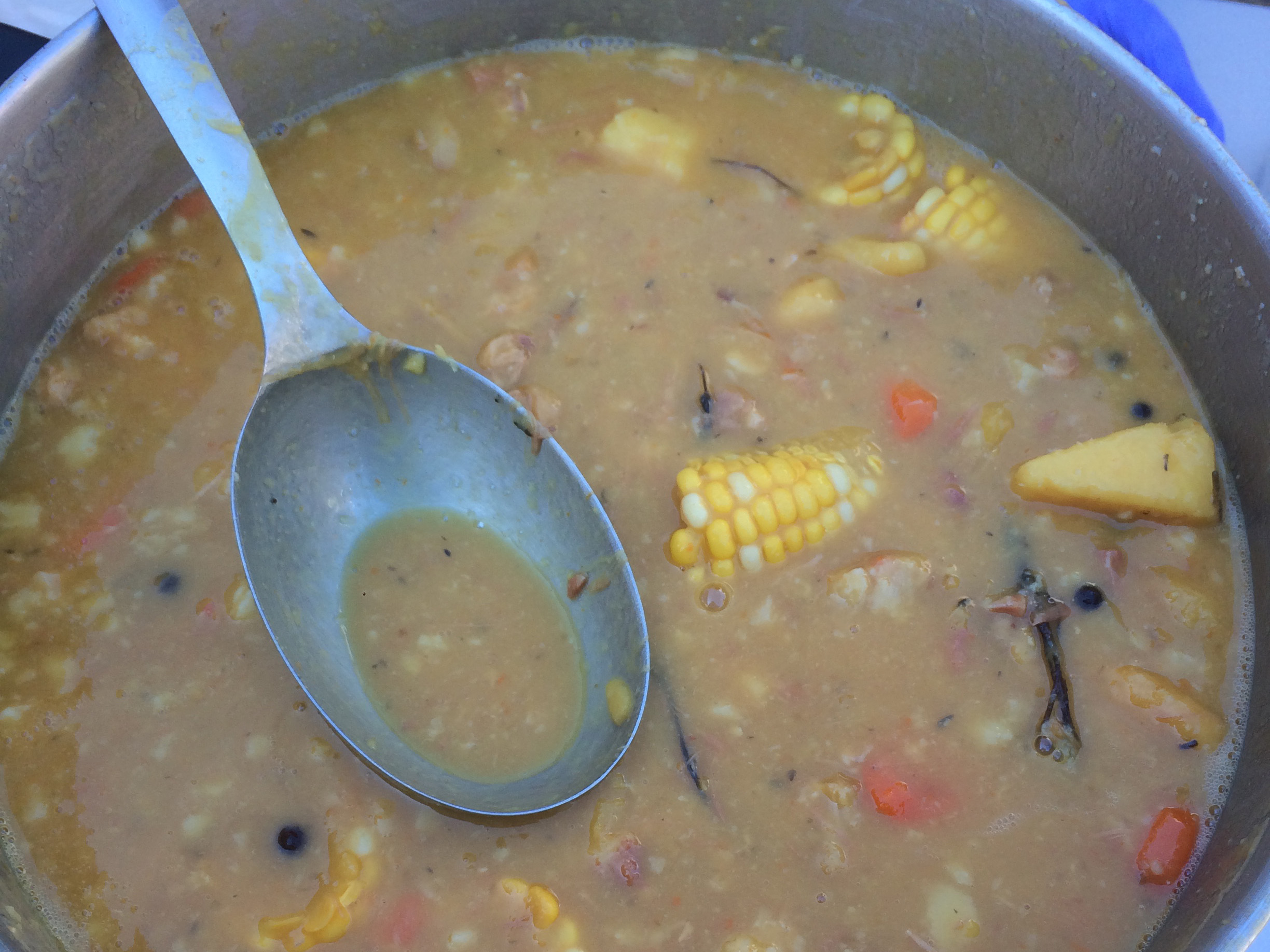
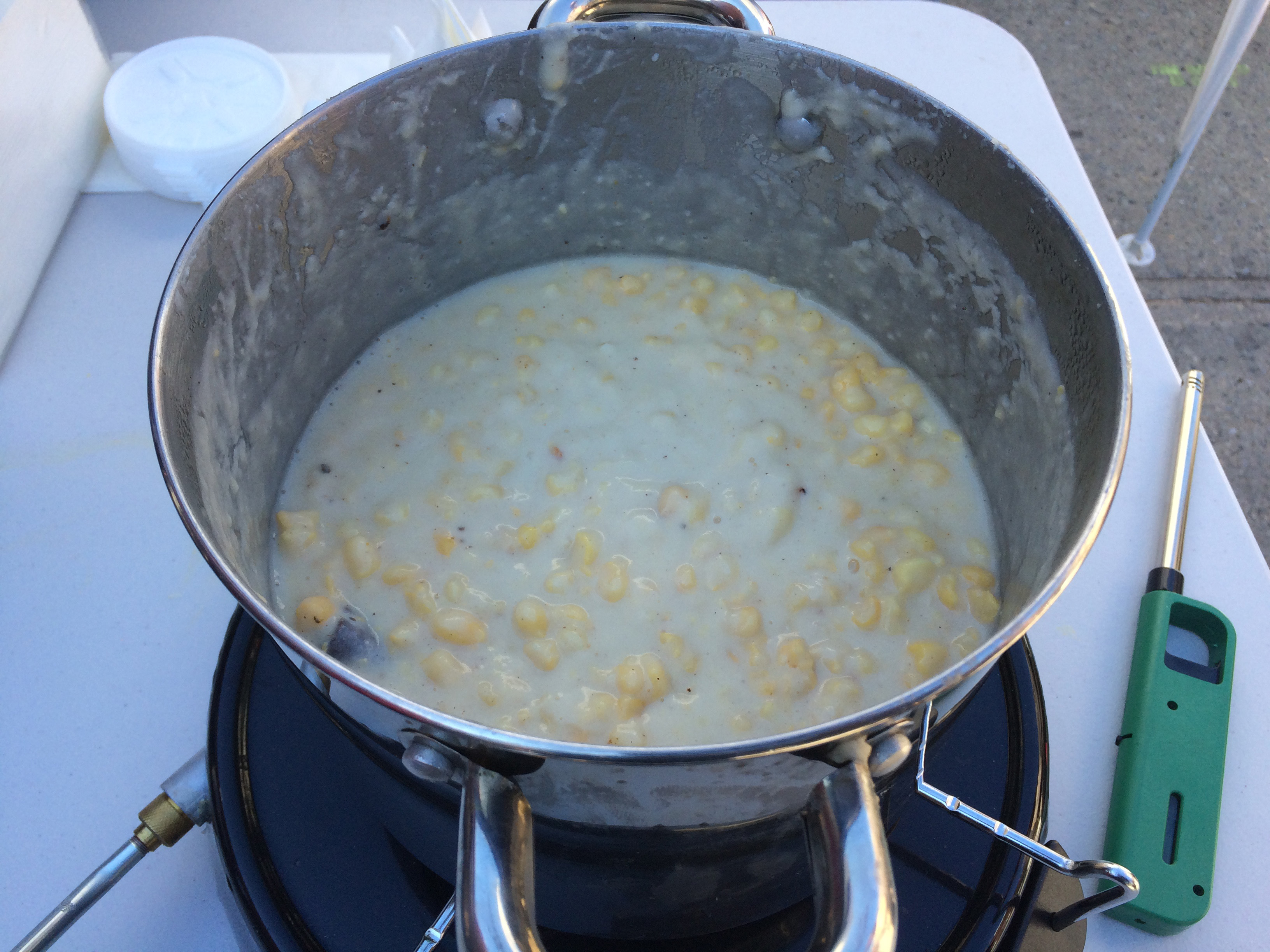
Cow foot soup is a thick, comforting dish with chunks of corn, potatoes, and assorted other vegetables and herbs that was absolutely delicious. (Don’t let the “cow foot” part put you off. Soup begins with water and bones, right?) It can be found throughout the Caribbean.

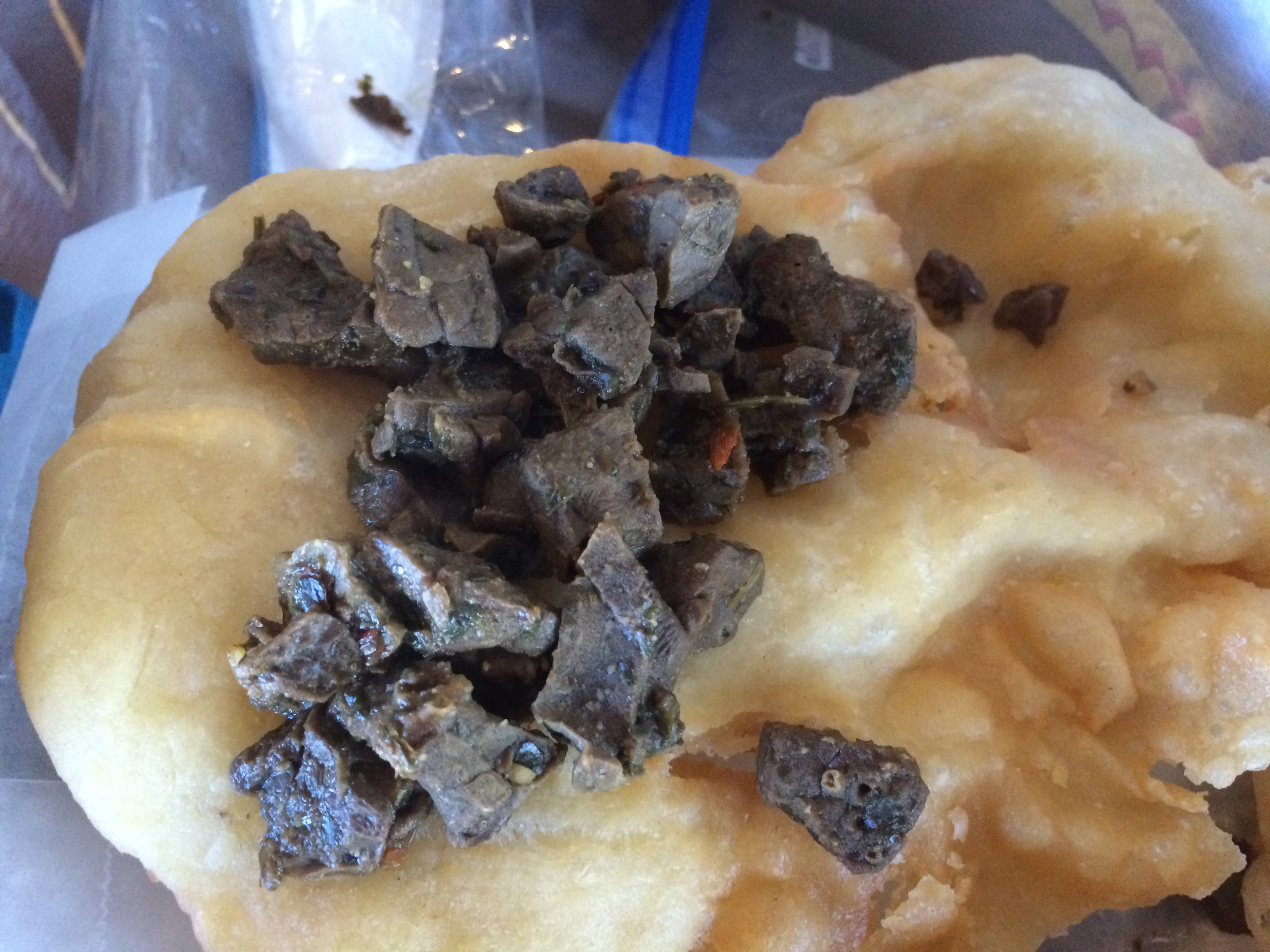
On the other hand (foot?) I’ve only found bofe (rhymes with snowday) on Panamanian menus and recipes for it on the web are scarce. Bofe is beef lung. I think the idea of it may be more daunting than the taste itself, which is milder than most offal. There were several renditions of it at the festival, but all were served with fried bread called hojaldre (from the Spanish word hoja meaning leaf) which, in my opinion, is the perfect accompaniment.

Wash it down with chicheme, a creamy, sweet, corn-based beverage enhanced with evaporated or sweetened condensed milk. Redolent of cinnamon and vanilla, it’s served hot and is vaguely reminiscent of Mexican atole.

The Panamanian Day Parade is always held on the Saturday of Columbus Day weekend. If you’ve never tasted Panamanian fare, jump on the bandwagon to next year’s festivities!


Pom and Circumstance

The annual August celebration of Suriname Day at Roy Wilkins Park in St. Albans, Queens seemed remote – certainly On Beyond Z-Train, not to mention the E and the J – but I had never experienced Surinamese food and the perfect circumstances through which I could explore it prevailed.

Occupying a tiny corner of northeast South America, Suriname was settled by the British but taken over by the Dutch (it’s the official language) in the 17th century. Demographically diverse, its cuisine promised influences from indigenous peoples, East Indians, West Africans, Javanese, Chinese, Brazilians, Portuguese, and Jews, not to mention the Dutch; and since for all intents and purposes it is culturally Caribbean, I anticipated a serious geographical culinary contribution as well. I was not disappointed.

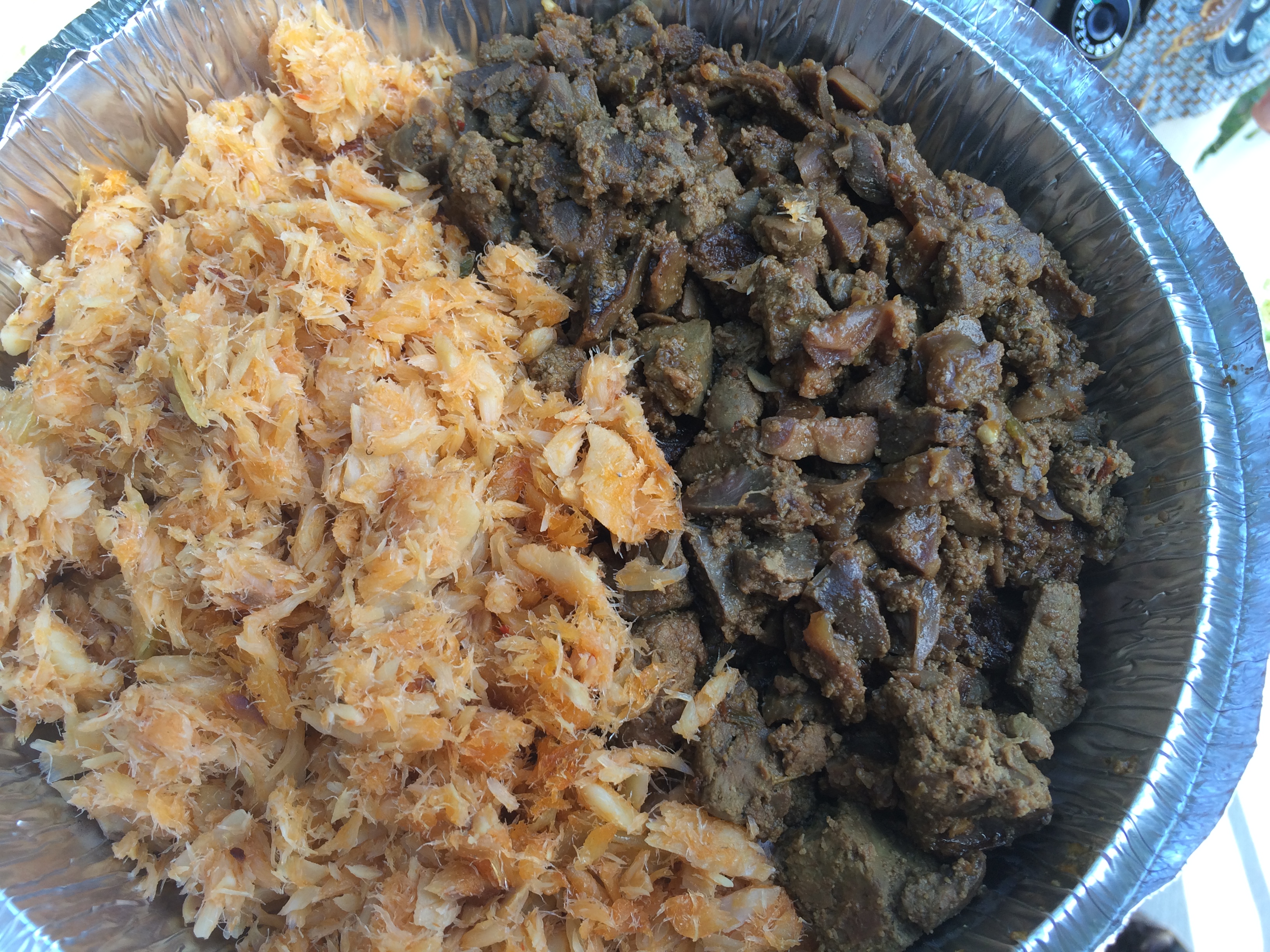
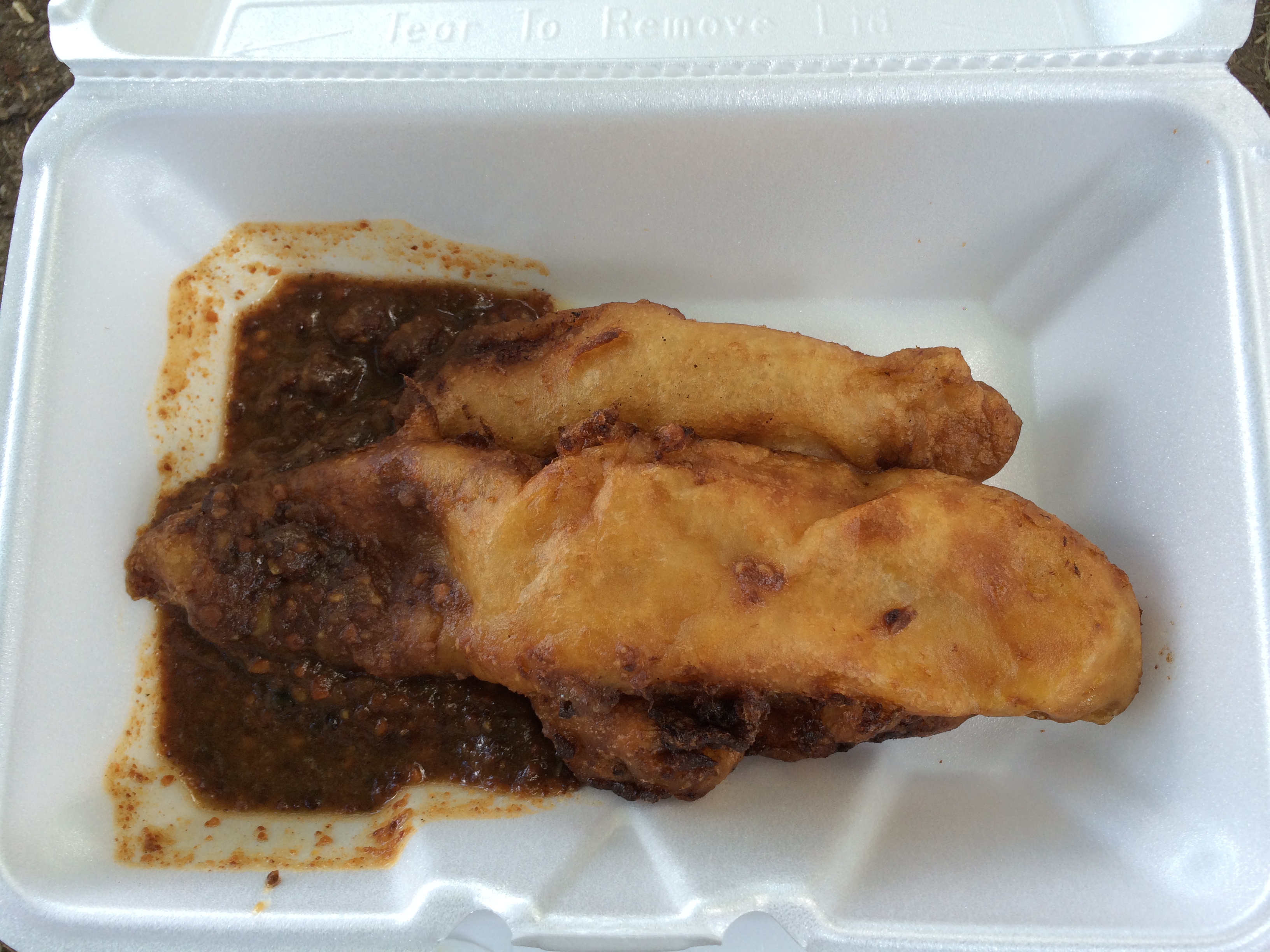
In addition to numerous rice dishes, some of the fare I sampled (see below) included salt fish and spicy chicken gizzard and liver, bakabana (fried plantain with spicy peanut sauce), trie and telo (anchovies and cassava/yuca)…
Saltfish and Spicy Chicken Gizzard and LiverBakabanaAnchovies and Yuca

…and pom.

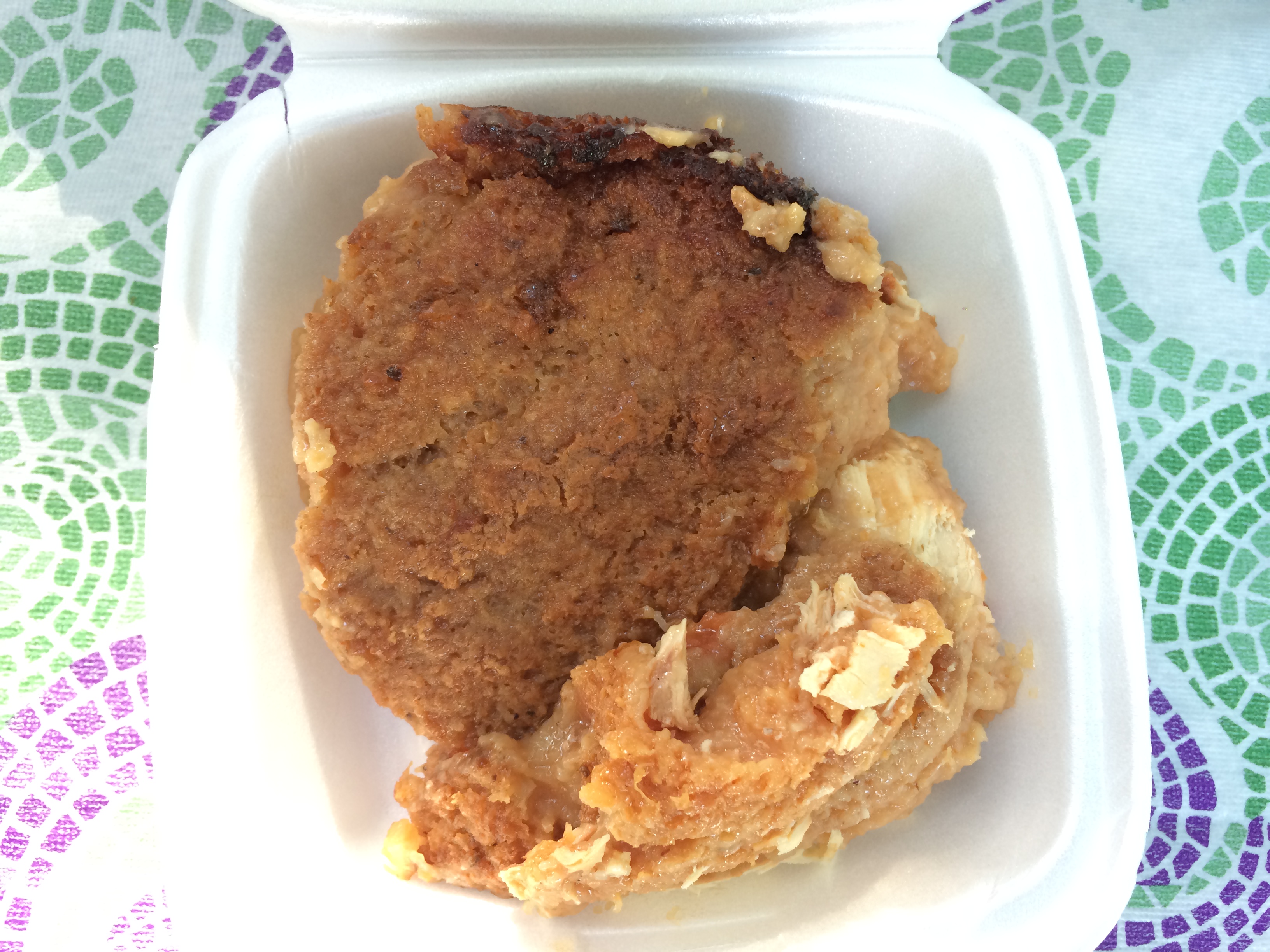
Pom? I was familiar with the others in one incarnation or another (although certainly cloaked under unfamiliar aliases here) but pom? Hardly obscure at this venue, it seemed that every table was offering their version of the dish.
PomPom 2

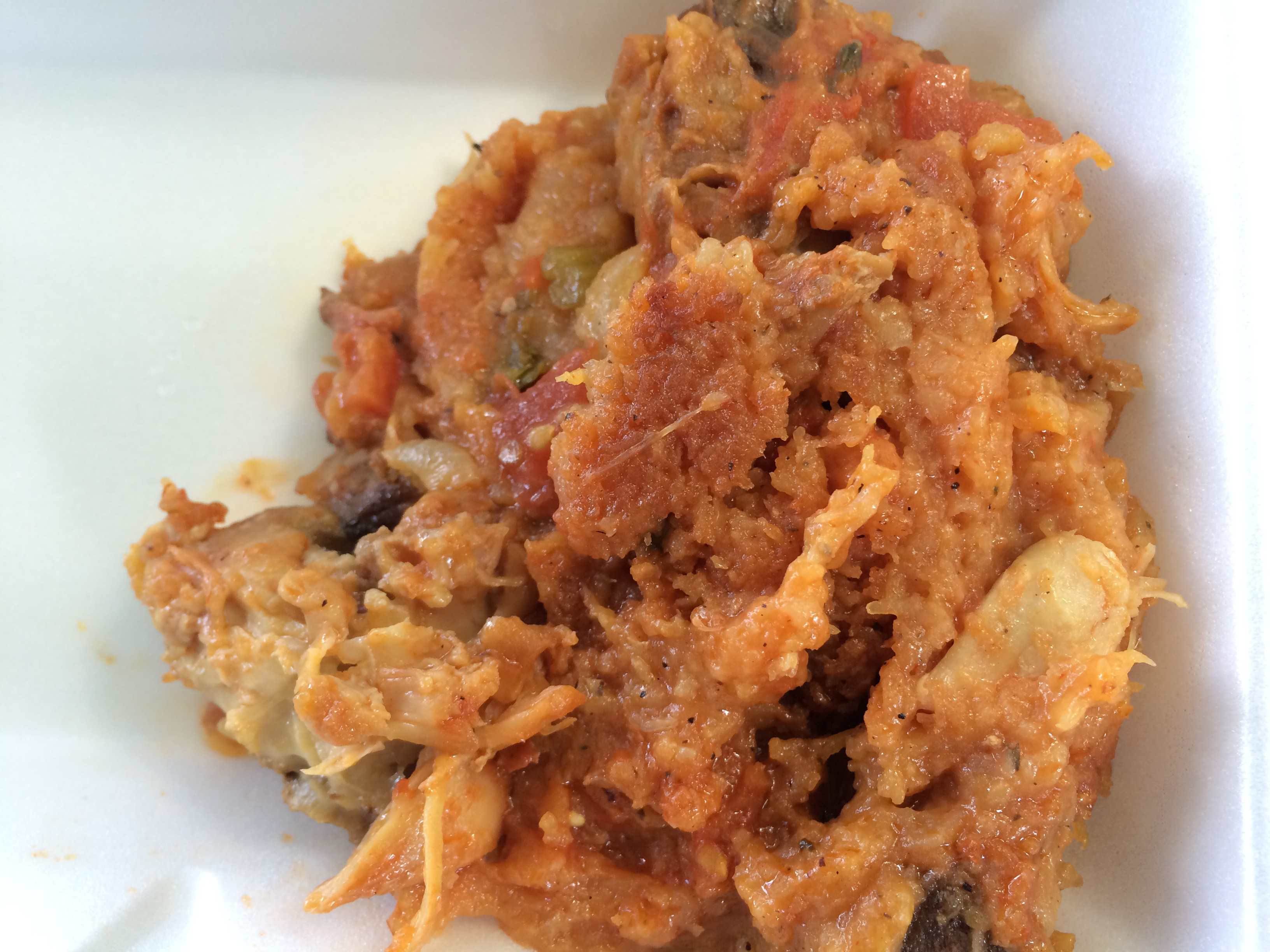
Subsequent research revealed that pom is a sine qua non of festive occasions in Suriname, as the expression “without pom there is no birthday” makes abundantly clear. Made from grated pomtayer (the tuber/corm of Xanthosoma sagittifolium) plus chicken and citrus juice (often orange) along with onions, tomatoes, and various seasonings, the dish is baked until it’s GBD (golden brown and delicious).

I took my place in line anticipating my first taste of pom. The flavor was sweet, the texture about what you’d expect from a mashed yam as it coddled the flavorful chunks of chicken buried within. It was wonderful. My fellow food adventurer, having disappeared as I was waiting, returned with another version. It was better than the first. This humble dish was etching itself indelibly on my culinary sense memory. I queued up at another booth now, eager to try a third version. A brief eternity later, it was my turn. Pointing at the tray filled with golden brown deliciousness, I gushed, “One please; I love pom!” fairly swooning.

At that point my buddy stepped up behind me and intoned to the woman behind the table, “He means having tasted it for the first time today, he loves it.”

My cover blown, I confessed, “He’s right. But it was love at first sight. Or first taste actually. Can you dig that?” I asked the vendor.

“Mm-hmm,” she smiled knowingly.

I clutched my styrofoam trays of precious pomish treasure and hurried home to attempt to recreate this wonder. But where would I locate pomtayer? That turned out to be the easy part. Yautía (preferably the red/pink variety), also known as malanga, is the moniker under which I’d find it in this area; one could use taro root in a pinch, but I think that might be straying a bit far from the original. The hard part, it turns out, was unearthing a recipe. Usually bursting with helpful culinary instructions for every dish imaginable (and some not so much), the internet had surprisingly few offerings, each different from the last. The “various seasonings” I referred to above are the key. One used pickles, another rum, yet another called for salt pork; some were Jewish inflected, some Chinese, some Javanese, some Hindu. Like the pom at the festival, I could see that these would all be radically different from each other. Once again, I found myself in my kitchen/lab reverse engineering a recipe relying as much on my taste buds as the web and striving for deliciousness and authenticity. I’m pleased to report that my efforts were rewarded with a dish that met my expectations. As a matter of fact, I was so pleased with it that I’m happy to share it with you.

Leave me a comment, and the recipe is yours.


I’m Just Wild About Harry (and Ida’s)

…Pastrami, that is.

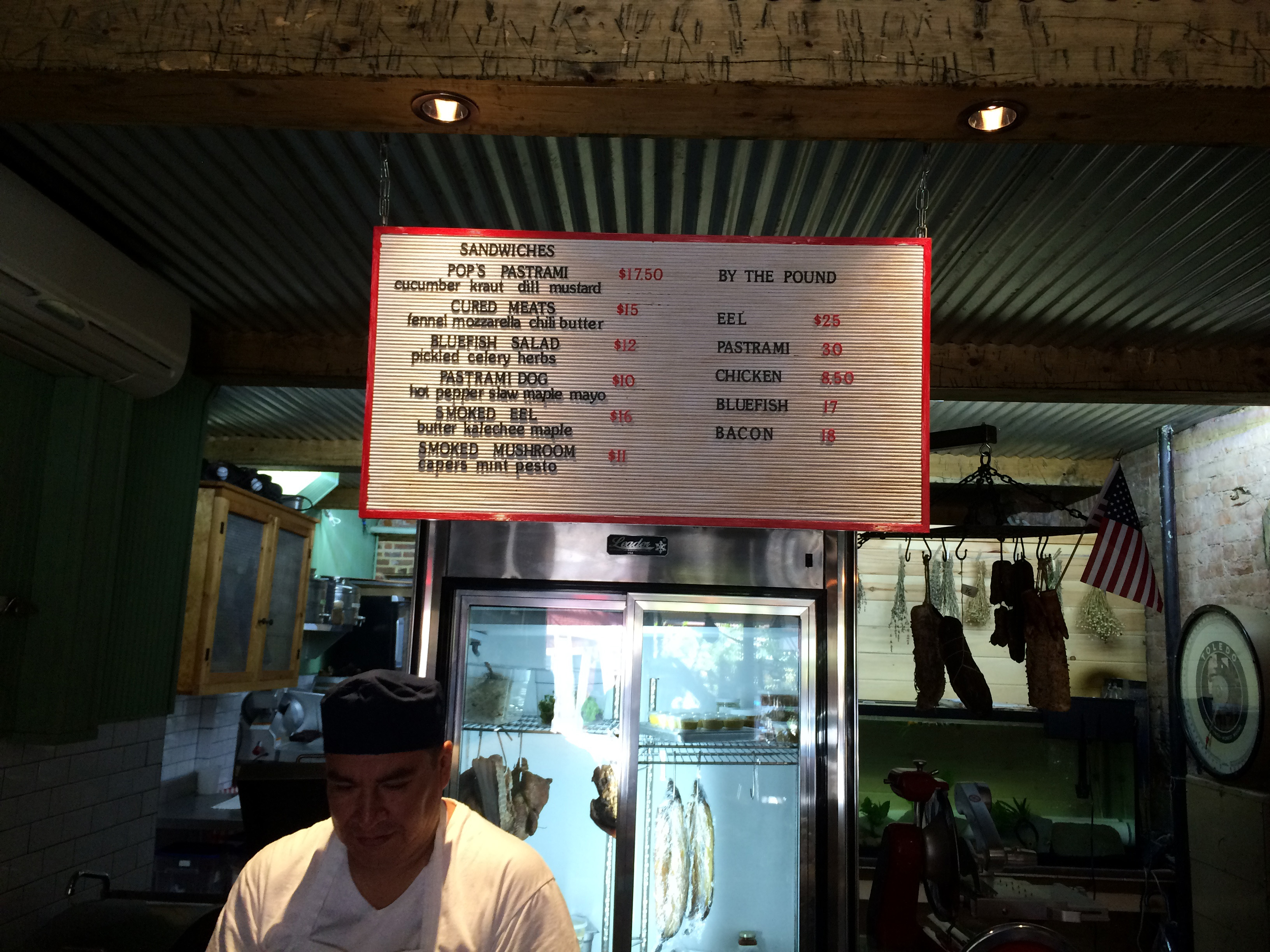
Yes, they are purveyors of artisanal, in-house cured meats along with rows of mustards and pickles and the like…
Harry and Ida SignPantry
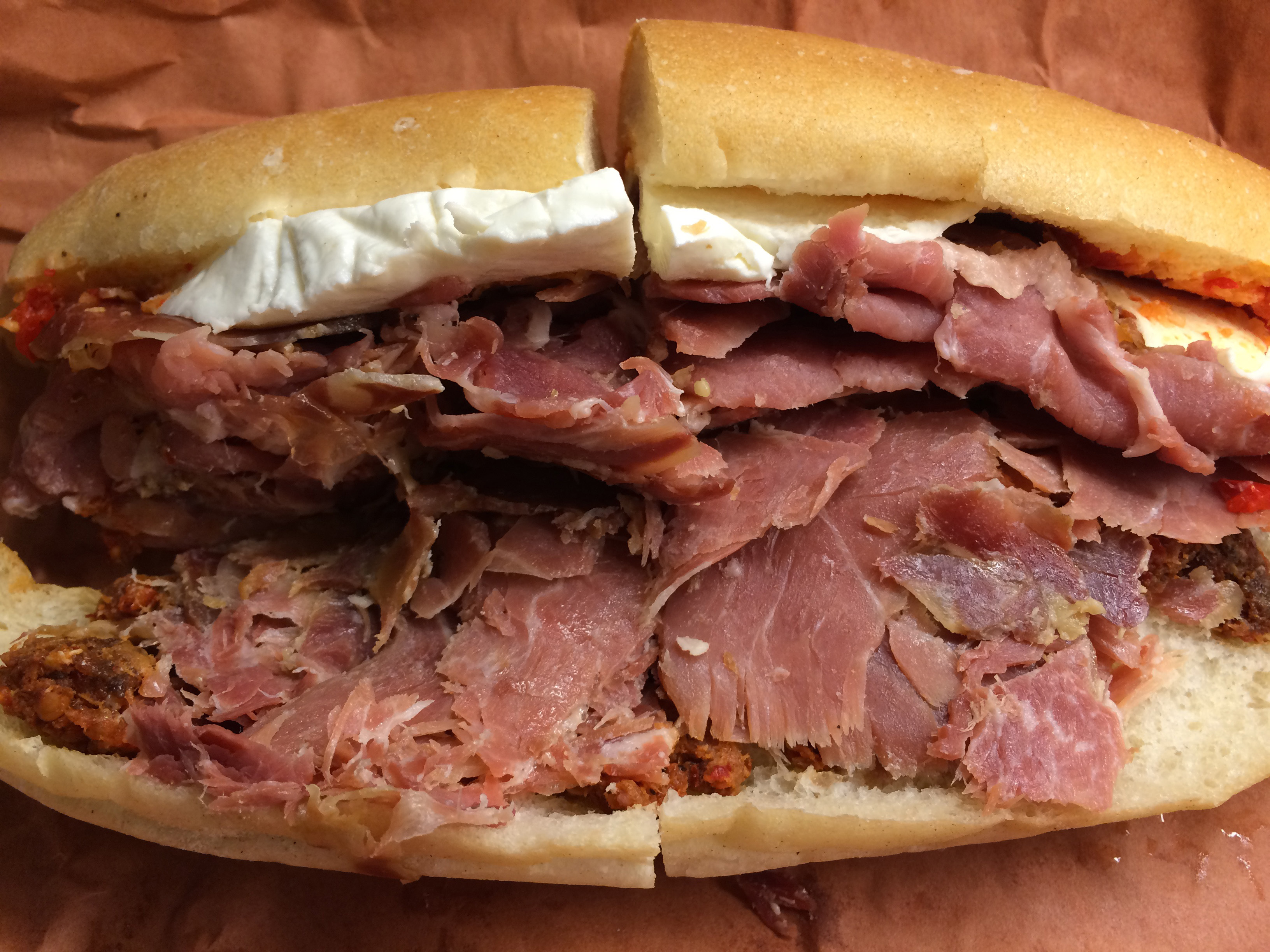
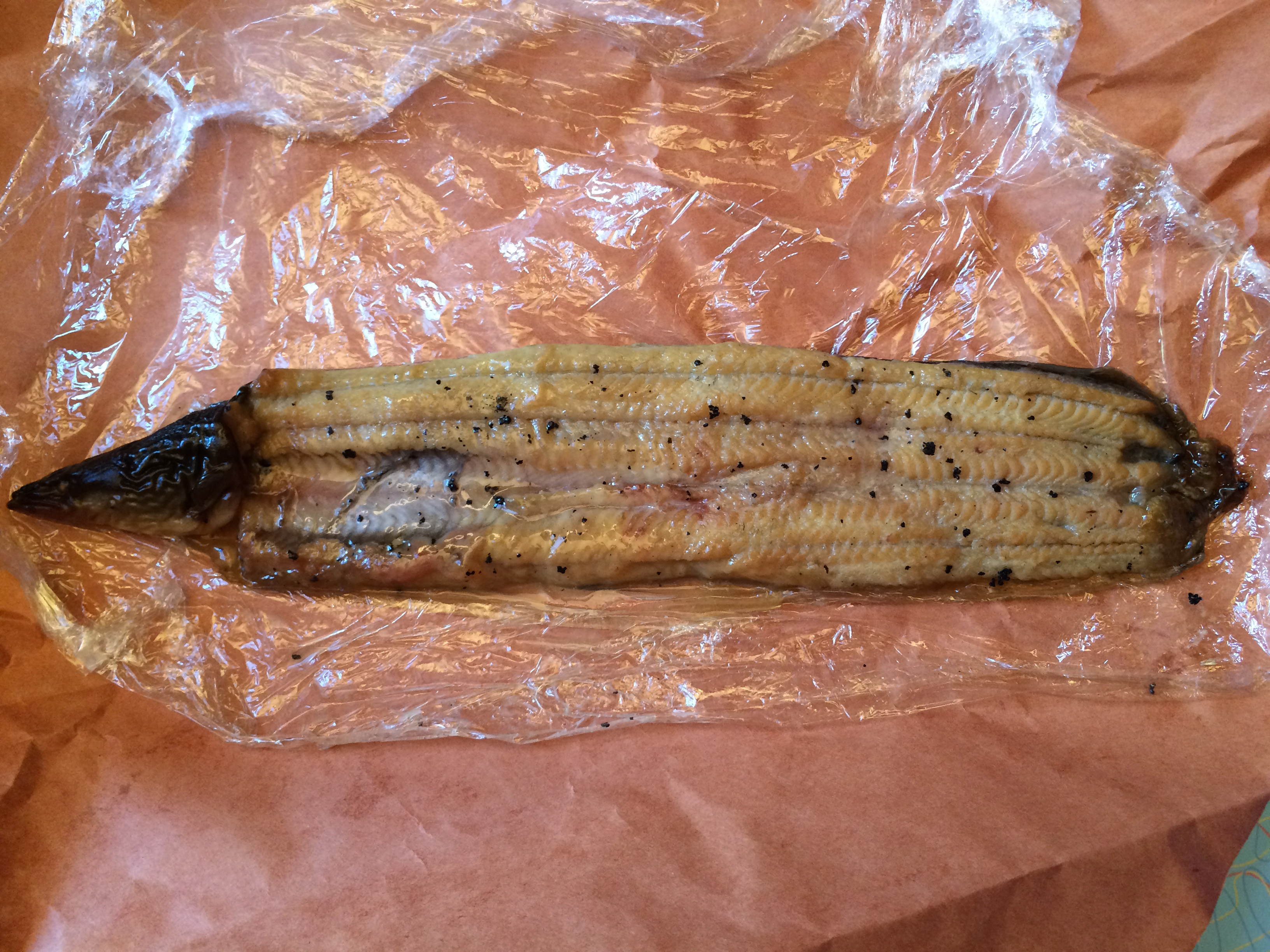
…and they cobble together a hefty sandwich of Benton’s ham, Edwards ham, andouille, and cured beef all nestled against a thick slab of mozzarella; and they feature their bespoke renditions of smoked bluefish and smoked eel (try it if the only eel you’ve ever tasted is Asian).
SandwichEel

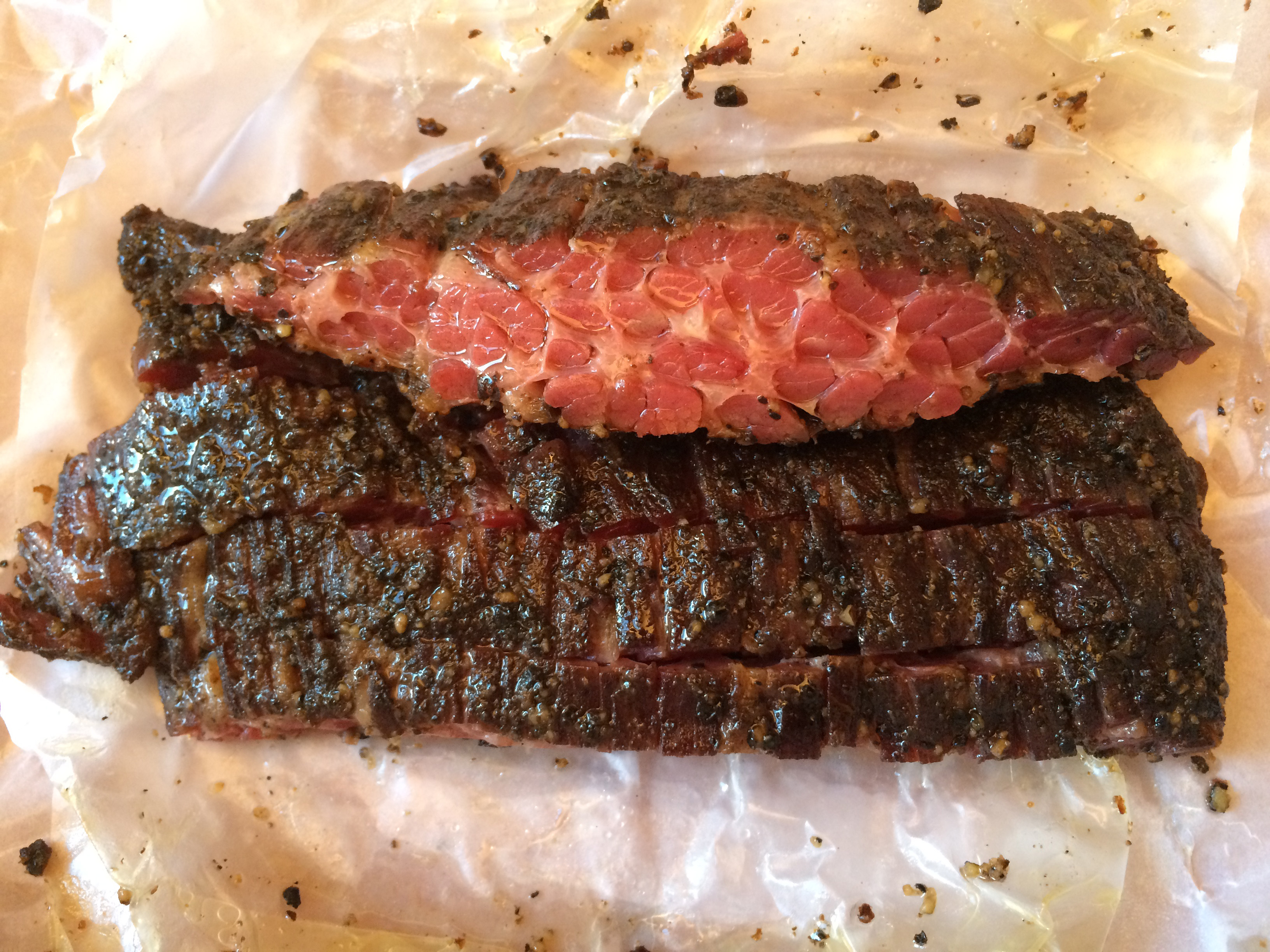
But the reason to join the choir and sing the praises of Harry and Ida’s is their remarkable pastrami. This delicacy, the perfect harmonization of rich protein and buttery fat, is unlike any I’ve ever tasted – and I’m no stranger to pastrami. Simply put, this is not your mama’s pastrami. (Certainly not mine.)
Pastrami

Savoring this delight is like immersing yourself in a three-act opera: The story begins sweetly, betraying a gentle innocence unattainable by its crude, monotoned rivals. A moment later, a chorus of intense beefiness resounds, bullishly commanding your tastebuds. The finale peaks in a crescendo of spices bursting into peppery climax.

Yes, I like the stuff.

Oh, and lest I forget, they’re one of the few places in NYC that sells Foxon Park Soda, that splendid libation crafted in East Haven, CT and formerly known only to the fortunate denizens of the region. Perhaps I’ll wax rhapsodic about their Iron Brew or White Birch Beer in a future post; a serenade might be appropriate.
 
(Gosh, I think I got carried away with this one. Better go compose myself.)


Harry and Ida’s Meat and Supply Co.
189 Avenue A, New York, NY
(646) 864-0967


It’s Poké, Man!

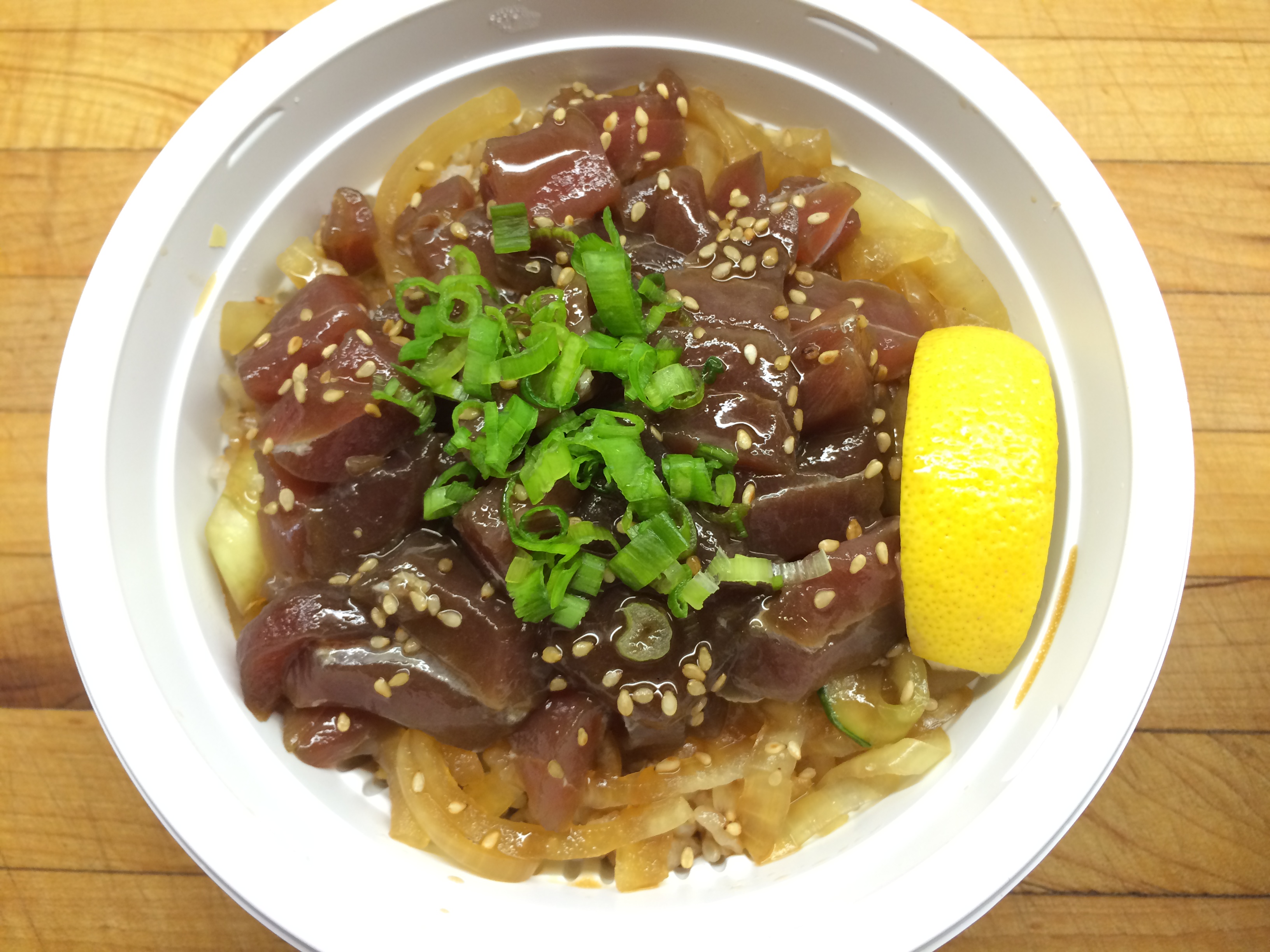
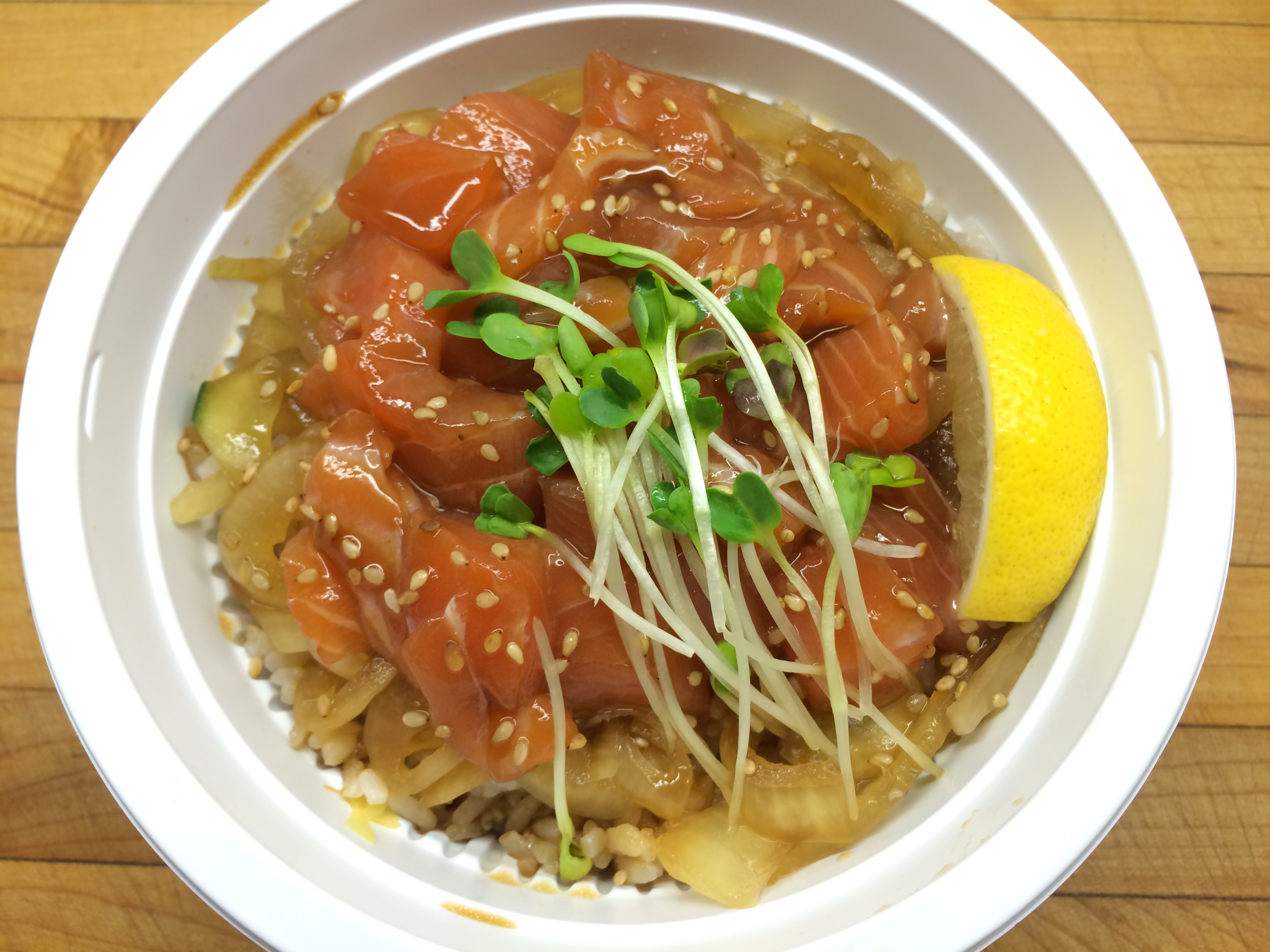
Poké means cut or slice in Hawaiian. In this case, it refers to morsels of raw fish that have been marinated in soy sauce and sesame oil, often accompanied by sweet onions, chopped scallion, seaweed, chili pepper (or a similarly spicy component like sriracha chili sauce), ginger, and occasionally roasted crushed candlenuts or macadamia nuts.

Think of it as sashimi dressed up as a fashion plate or perhaps Hawaii’s answer to ceviche.

Tuna PokeSalmon Poke

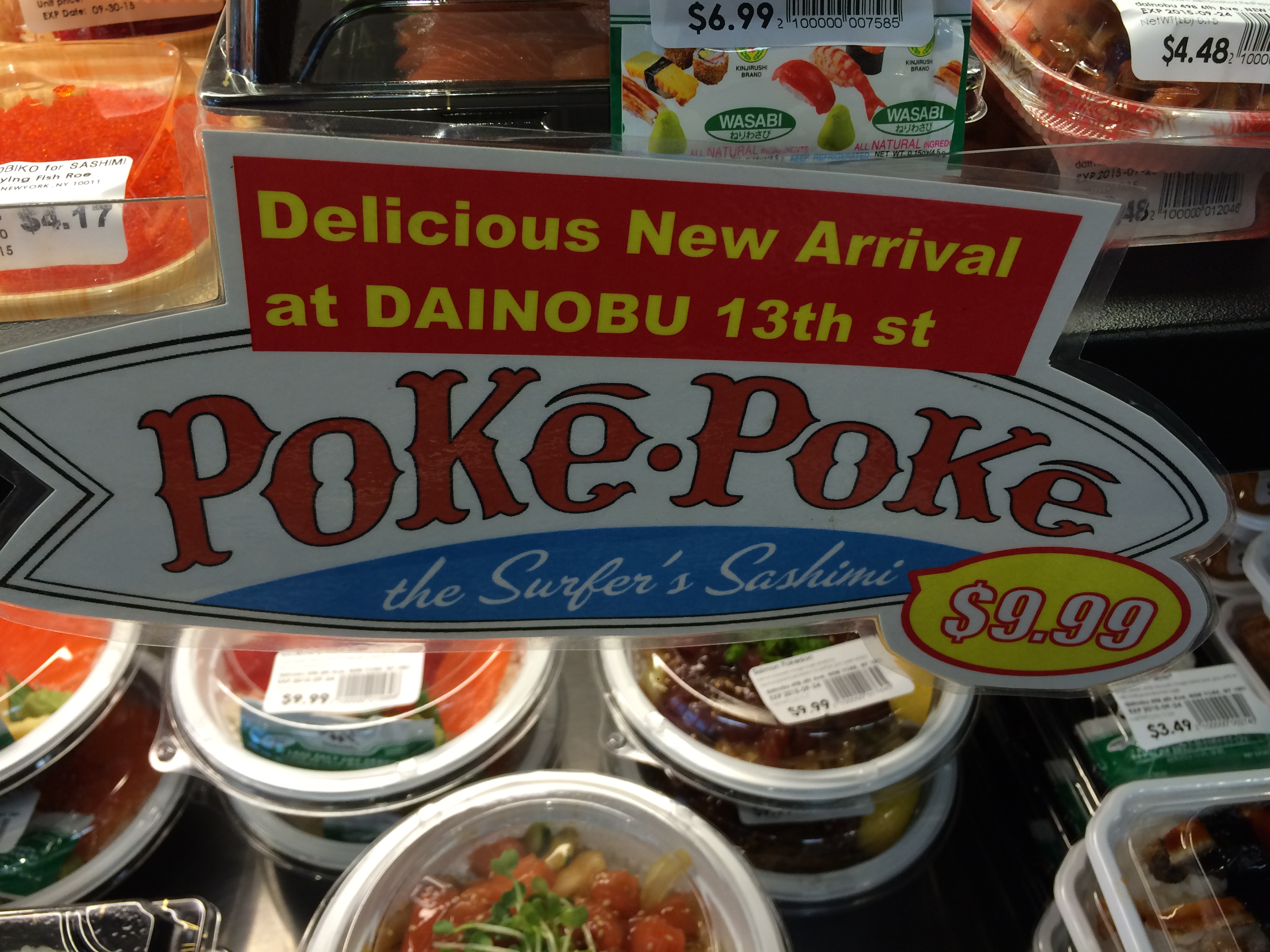
In Japanese, donburi (丼), often truncated to simply don, means “bowl” and refers to a bowl of rice served with numerous options of simmered toppings: pokedon is a bowl of poké over rice. Although not impossible to find in our fair city (as a matter of fact, I suspect it’s poised to be the Next Big Thing around these parts), I was surprised to see a grab ‘n’ go rendition at Dainobu, the Japanese deli and grocery chain. Considering the fact that I’ve been spoiled by stores like Mitsuwa in Edgewater, New Jersey and Sunrise Mart on Stuyvesant Street in the East Village, I was happy to discover a dizzying array of all things Japanese including an udon bar in the back. Even better, you’ll find both salmon and tuna pokedon there.

SignageDizzying Array

I gussied mine up with some pickled ginger and furikake (a mixture of seaweed, sesame seeds, dried bonito and the like, available in a panoply of variations). But the squeeze of lemon that was included in the bowl was just what it needed to get its game on.


Found at Dainobu
498 Sixth Avenue near West 13th Street
New York, NY
(212) 645-0237


Lard A’mighty!

Bacon? Delicious.
Pâté? Of course.
Bacon Pâté? Um, yeah, okay. Er, I guess.

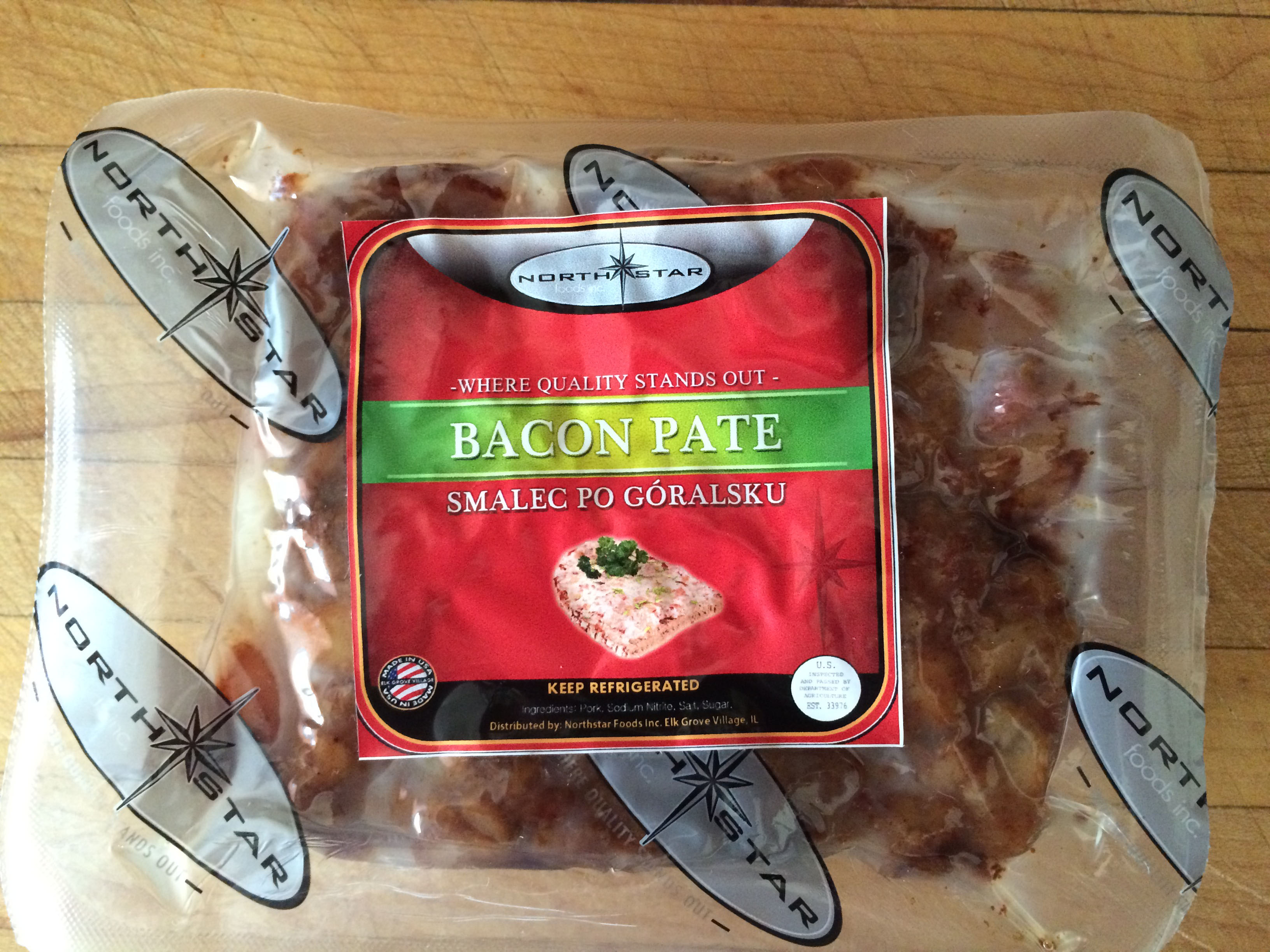
Not much to look at, I thought, peering through the thick plastic package. Still, it beckoned to me as I navigated the narrow aisle that bisects Polam International Market, one of the bright spots for Polish food in Greenpoint. Seems like an oxymoron: I think of bacon as having ribbons of fat interspersed with lean (the Jack Sprat recipe for marital harmony) and pâté as a paste, coarse or fine, but easily spreadable. I couldn’t be certain of course, but this looked like little chunks of fried bacon suspended in lard.

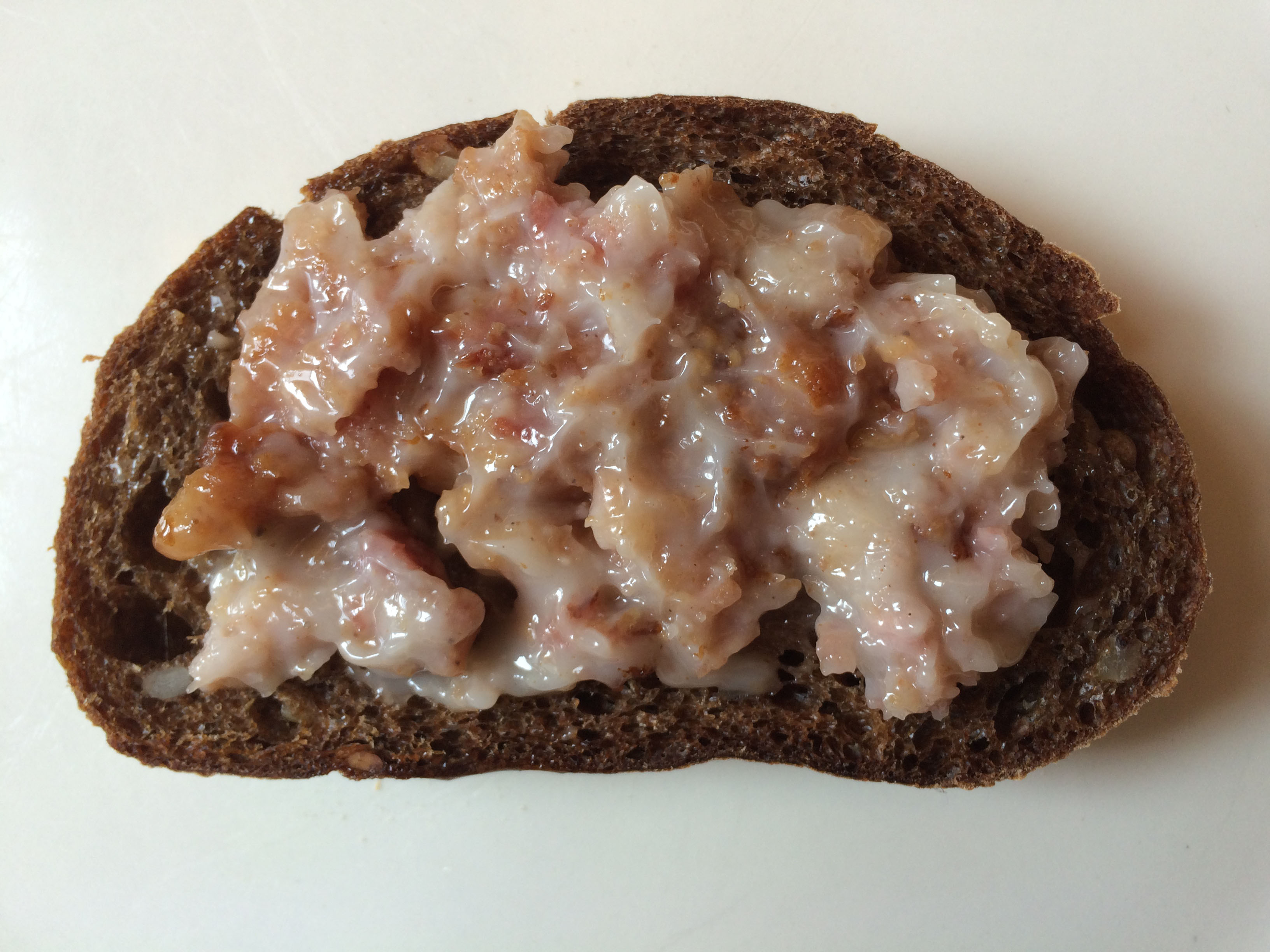
Bacon PateOn Bread

At home, I poured it into a bowl to get a better look.

It still looked like little chunks of fried bacon suspended in lard.

Because that’s precisely what it was. So I went online to learn more about what to do with it: Smalec po Góralsku translates as Mountaineers’ Lard. “Spreadable bacon goodness!” proclaimed the description. “Traditional simple peasant spread typically used as a substitute for butter – put it on the dark bread, add some salt and you will enjoy the Polish mountain village specialty.” Okay, I’m game. For starters, I had to get past the fact that I was about to wrap my lips around glorified lard supported only by a piece of excellent pumpernickel. (I had long since given up on trying to figure out an explanation for the “pâté” part.) I took a bite. I understood where it wanted to go, but its charms were eluding me. I felt that it had potential however. What could I do with it to make it delicious enough to write about? And then I remembered Zoltán.

Zoltán was an affable fellow of Hungarian descent who lived in the country. (When you’re a New Yorker, anywhere on the far side of a bridge leading out of the city is “the country”.) I hadn’t thought about him in years. His claim to fame was that every summer, he’d get a fire going in a little pit in his backyard and make Szalonna. He’d impale a hunk of Hungarian back bacon on a stick and hold it over the flames and just as the fat began to sizzle and render, he’d pull it out of the fire and hold it over a piece of fresh bread until the drippings dwindled. Then back over the flames it went for another round – repeatedly until the bread was saturated. Sometimes it was topped with onion, cucumber, or bell pepper. Neighborhood kids would come running to his yard as the heavenly, porky aroma filled the air. The Good Humor man had nothing on Zoltán.

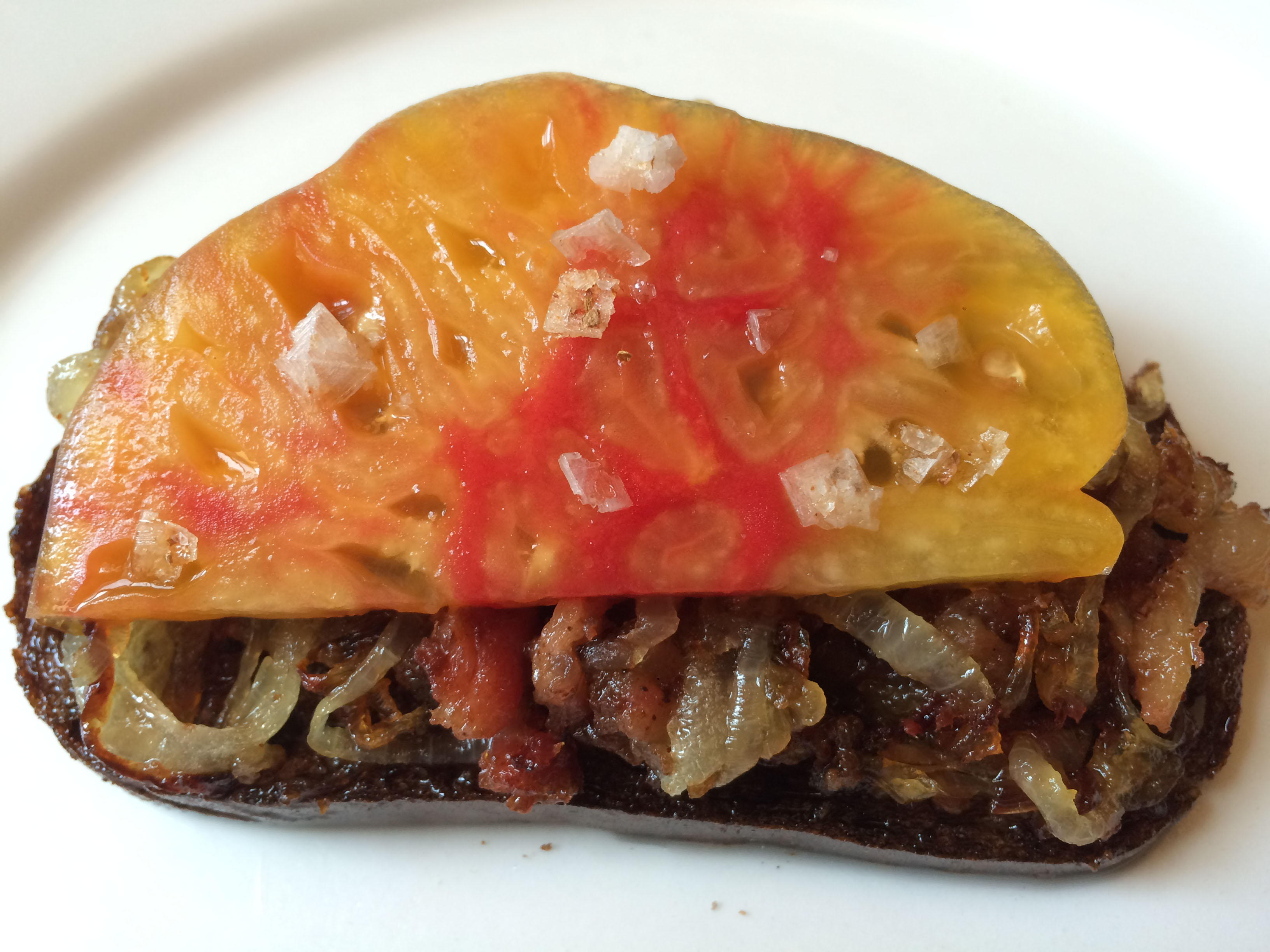
So taking a tip from those ancient sense memories, I concocted a plan. Caramelize thinly sliced onions very slowly in the bacon pâté. While they grow sweet, slice an heirloom tomato and oven toast a slice of pumpernickel. When the onions are done, drench the toasted pumpernickel in the rendered lard, add the onions and bacon pieces, top with a slice of tomato, and sprinkle with wild mushroom sea salt.
Bacon Pate with Caramelized Onions and Heirloom Tomato

Looks good, doesn’t it? Tasted even better.

Of course, I had to go through several of these to make sure they were as wonderful as I thought they were on the first bite. Ah, such sacrifice.


Found at Polam International Market
952 Manhattan Ave.
Greenpoint, Brooklyn, NY
(718) 383-2763


Chechil – Smokey for Beer

Eight minutes. That was all the time I had before I was scheduled to meet my friend in Sunnyside for a nearby foodie event. The choice: I could simply neutralize this slice of time and wait outside the frenetic smack-in-the-middle-of-Queens-Boulevard subway entrance savoring the malodorous traffic fumes, or I could prowl around. But what could I ferret out in eight minutes?

Twenty seconds and half a block later I found Superior Market/Beer World. The store was bursting with craft beers from around the world — but that’s not the kind of thing I usually write about on these pages. A quick glance around the place and I realized I was on familiar Russian turf: some prepared foods, fresh baked goods, the usual suspects, and a lot of non-Russian products as well to satisfy their mixed clientele. With that cursory inspection and only a few minutes to spare, I found nothing special to tell you about, so I was about to leave empty handed. But something I had never seen before caught my eye as I passed the refrigerator case on my way to the door.

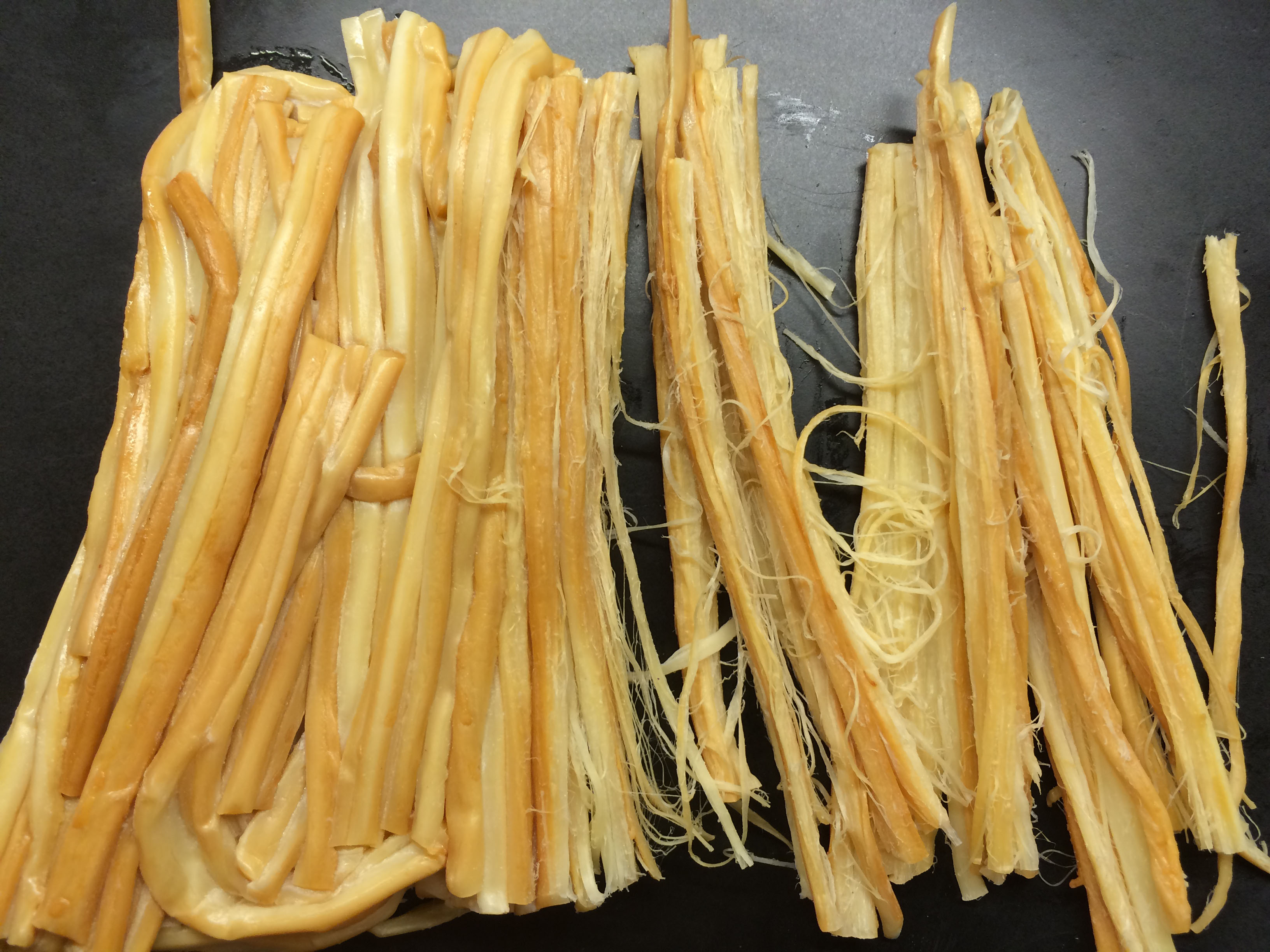
The vacuum packed pouch revealed what looked a bit like a bundle of short thin ropes about 4 inches in length. I picked my way through the Cyrillic text on the label. The first line was easy: СЫР – cheese. The second (hyphenated) line began with Чечил. I sounded it out: Chechil. I had no idea. Then the next word. I struggled with the Russian script: you think you’re seeing “cnazemmu” but what looks like a “c” sounds like “s”, what looks like an “n” is a “p”, “z” is “g”, “m” is “t” and that “u” is actually a lower case version of the letter that looks like a backwards N, so it must be – s, p, a, g, e, t, t, i? Really? But yes, that’s the second part of that line – spaghetti. (Well, it did look like spaghetti in sort of a dwarfed, tannish way.)
Chechil PackageChechil

Hurriedly, I bought a pack and plunged into my research as soon as I returned home. I pulled off a string; it came apart in shreds. Very smoky. Certainly salty. Almost aged mozzarella-ish but much drier. Rather chewy. Delicious. I wondered if it would melt: I peeled off another strip. Nope. Not in the microwave, at least. After only a couple of seconds in the belly of that magnetron beast, it became even drier and oddly bubbly in a freakish sort of way but nothing I would call melted. (Should have tried a more conventional approach. Well, there’s always next time.)
Chechil ShreddedChechil Bubble Burst

I hit the interwebs and discovered that I was enjoying Smoked Chechil Beer Snack. (The third line on the label means smoked.) Ah — this Russian cheese is destined to be savored with beer, the featured product of the eponymous Beer World. Its roots are in Armenia but it’s popular throughout Central Asia and Russia. Larger hunks of this cow’s milk pasta filata cheese (which is why it reminded me of mozzarella) are typically braided into a figure 8, this being a small snippet from one of those skeins.

So this Russian string cheese is described as “spaghetti” which is the diminutive plural of spago in Italian which means “string”.

And that ties it all together.
 
 
Found at Superior Market/Beer World
40-08 Queens Blvd.
Long Island City, NY