Sanguinaccio Dolce

(Click on any image to view it in high resolution.)
An equal opportunity celebrant, I’m always keen to learn about traditional foods that are associated with religious holidays. Lent, the forty day period that begins today with Ash Wednesday and ends just before Easter Sunday, is celebrated in southern Italy with an unusual delicacy called Sanguinaccio Dolce, a sweet (“dolce”) dessert pudding made with pig’s blood (“sangue”) although some bakeries around these parts opt for beef blood. (For the faint of heart <groan> bloodless versions can be found.)

Now don’t go running off: if you follow me you know that I wrote a piece for Edible Queens suggesting that durian pizza is the gateway drug for durian, the much maligned tropical fruit. I propose that sanguinaccio dolce fulfills the same role for food crafted with blood as an ingredient. Numerous cultures are at home with it – blood rice cakes in China, blood pancakes in Sweden, dinuguan in the Philippines, as well as sausages in Great Britain and Ireland, morcilla in Spanish speaking countries worldwide, boudin in France, and so many more in Northern and Eastern Europe. Pretty much everywhere actually. And you also know that I only recommend truly tasty food; I have never been one to embrace the sensationalism of “Look what gross thing I just ate!” No. This is genuinely delicious.

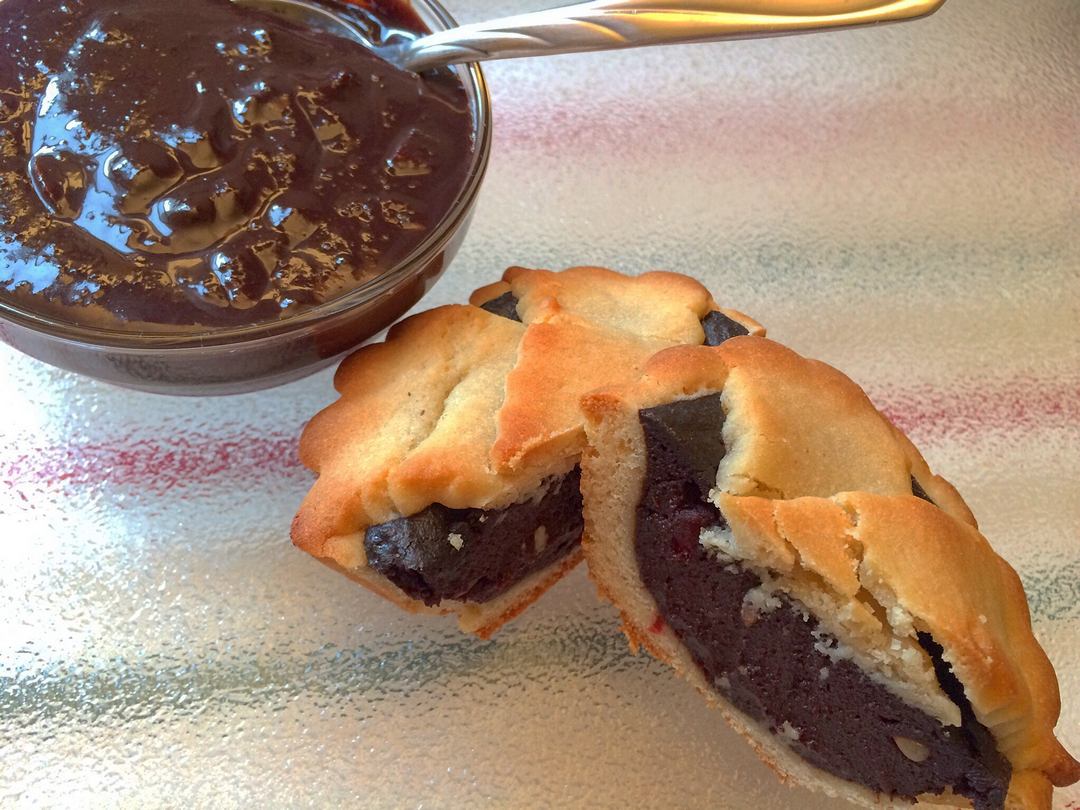
An expertly crafted version tastes like a rich, dense, dark chocolate pudding that carries notes of cinnamon and bits of candied orange peel, pine nuts and sliced almonds. There is no hint of minerally blood flavor. It’s often served with savoiardi, crisp ladyfingers, but a spoon will suffice. The pasticciotto sports a tender shortbread crust with a kiss of lemon and is filled with sanguinaccio. These two examples came from Morrone Pastry Shop at 2349 Arthur Ave in the Bronx last year but it can be found at other hardcore Italian bakeries as well.

If, like me, you appreciate the concept of snout-to-tail cooking and decry food waste, you should look into this. But if you just want to sample the richest, most delicious Italian dark chocolate pudding you’ve ever tasted, you need to give this a chance. Unless of course you just don’t like chocolate pudding at all, in which case move along, nothing to eat here.

#bloodydelicious (couldn’t resist 😉)


C’est Mardi Gras!

(Click on any image to view it in high resolution.)

C’est Mardi Gras! Laissez les bons temps rouler! (Ou en anglais, it’s Fat Tuesday! Let the good times roll!) The “fat” descriptor signals the last chance to consume indulgent, rich, high-calorie foods before the spartan Lenten season begins on Ash Wednesday. Needless to say, New Orleans pulls out all the stops for its annual celebration with a virtual parade of Creole and Cajun culinary delights on display.

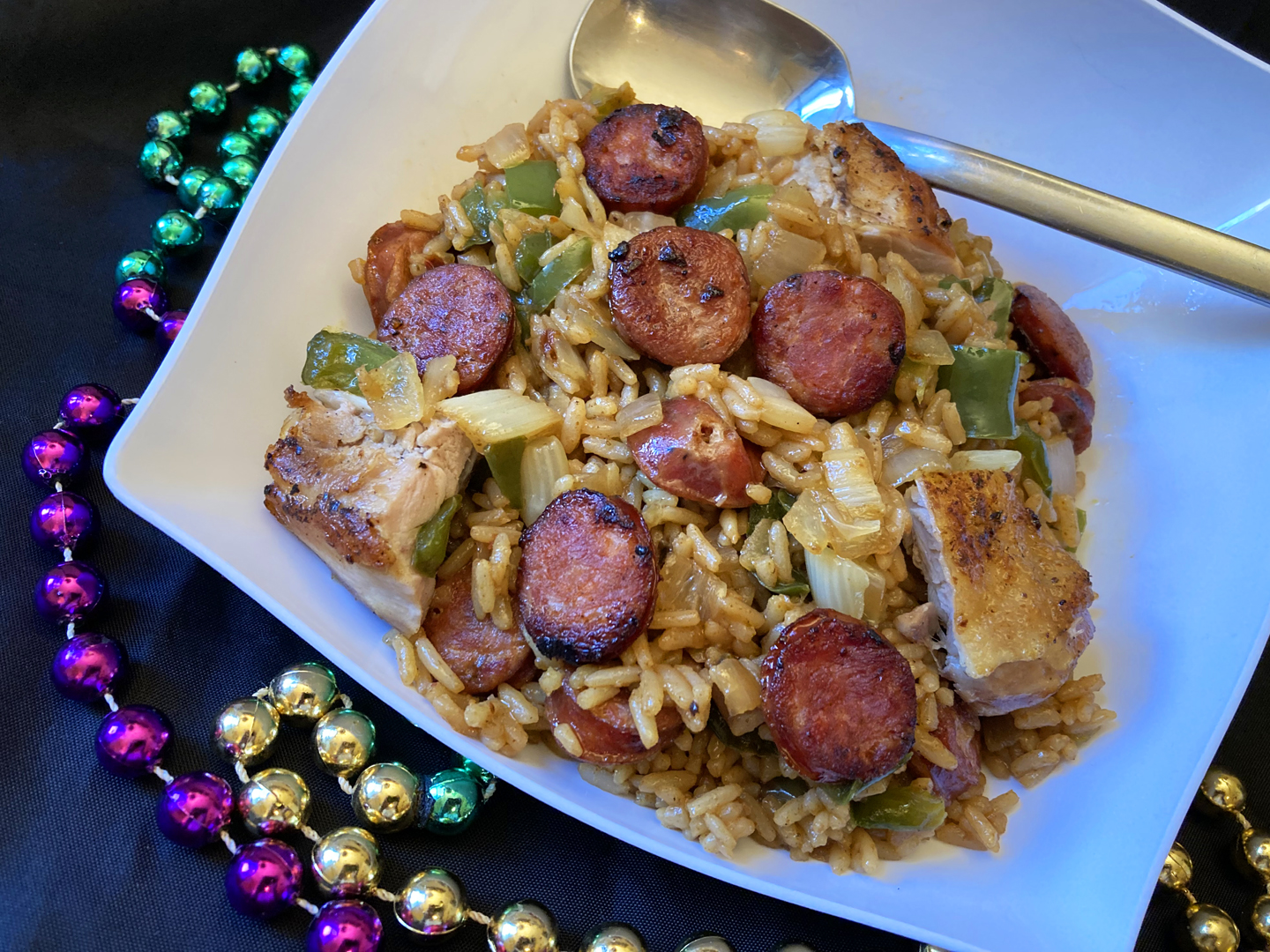
This is homemade Jambalaya, a rice dish that typically features spicy andouille sausage along with other meats or seafood. I’ve used chicken as the supporting player here, but in the past I’ve made it more traditionally with shrimp – that was back when you didn’t have to take out a mortgage to buy it. The Creole version contains tomatoes, the Cajun style that I’ve prepared here does not, but both incorporate a significant measure of spice. I start with a base of diced onions, celery, and bell peppers known as “the trinity” in Cajun cooking; it’s akin to mirepoix in French cuisine which consists of onions, celery, and carrots, or sofrito in other cultures where ingredients vary by geography – but whatever the provenance, it’s all about that base.


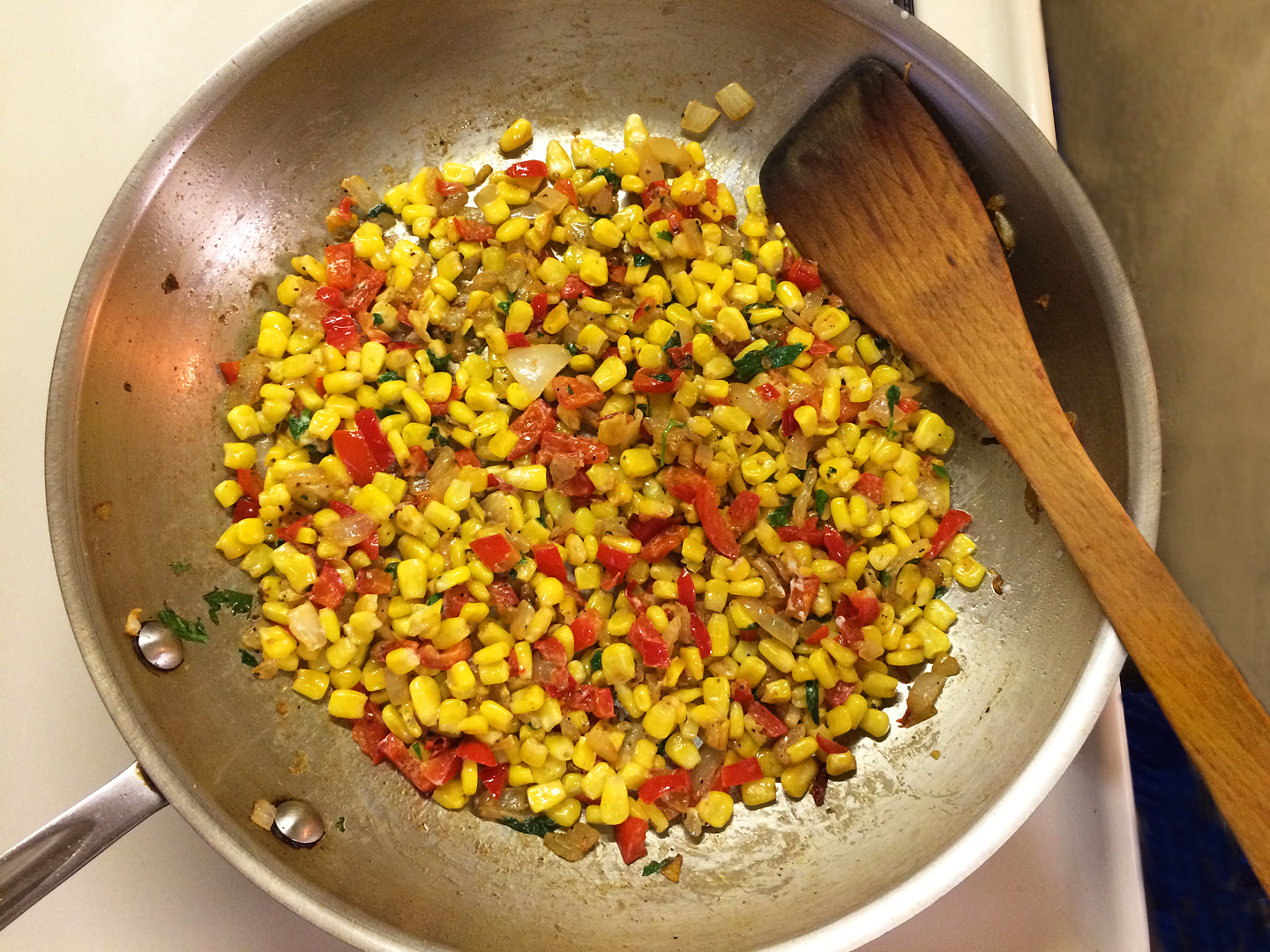
On the side, I made another popular Louisiana specialty, maque choux, a mélange of fresh corn, bell peppers, onions, celery, and tomatoes cooked up in bacon fat with more Cajun spices and a little cream at the end to ensure the proper degree of decadence.

Tomorrow’s Ash Wednesday post will feature a Lenten delicacy (sounds like an oxymoron, doesn’t it?) that’s bloody delicious! Stay tuned….


It’s National Khachapuri Day in Georgia!

(That’s Georgia, the former USSR country, not Georgia, the US state of course!)

(Click on any image to view it in high resolution.)

Khachapuri is a traditional Georgian bread filled with cheese and unequivocally one of the country’s greatest culinary hits; the name leaves no doubt as to the nature of the dish: khacha means cheese curds, puri means bread. As a matter of fact, it’s so universally beloved that the Gastronomic Association of Georgia created National Khachapuri Day, celebrated every February 27, to honor the dish as a symbol of the country’s gastronomic culture and to promote culinary tourism in Georgia.

Two of my favorites among at least a dozen types of khachapuri that I’ve encountered are adjaruli and megruli.


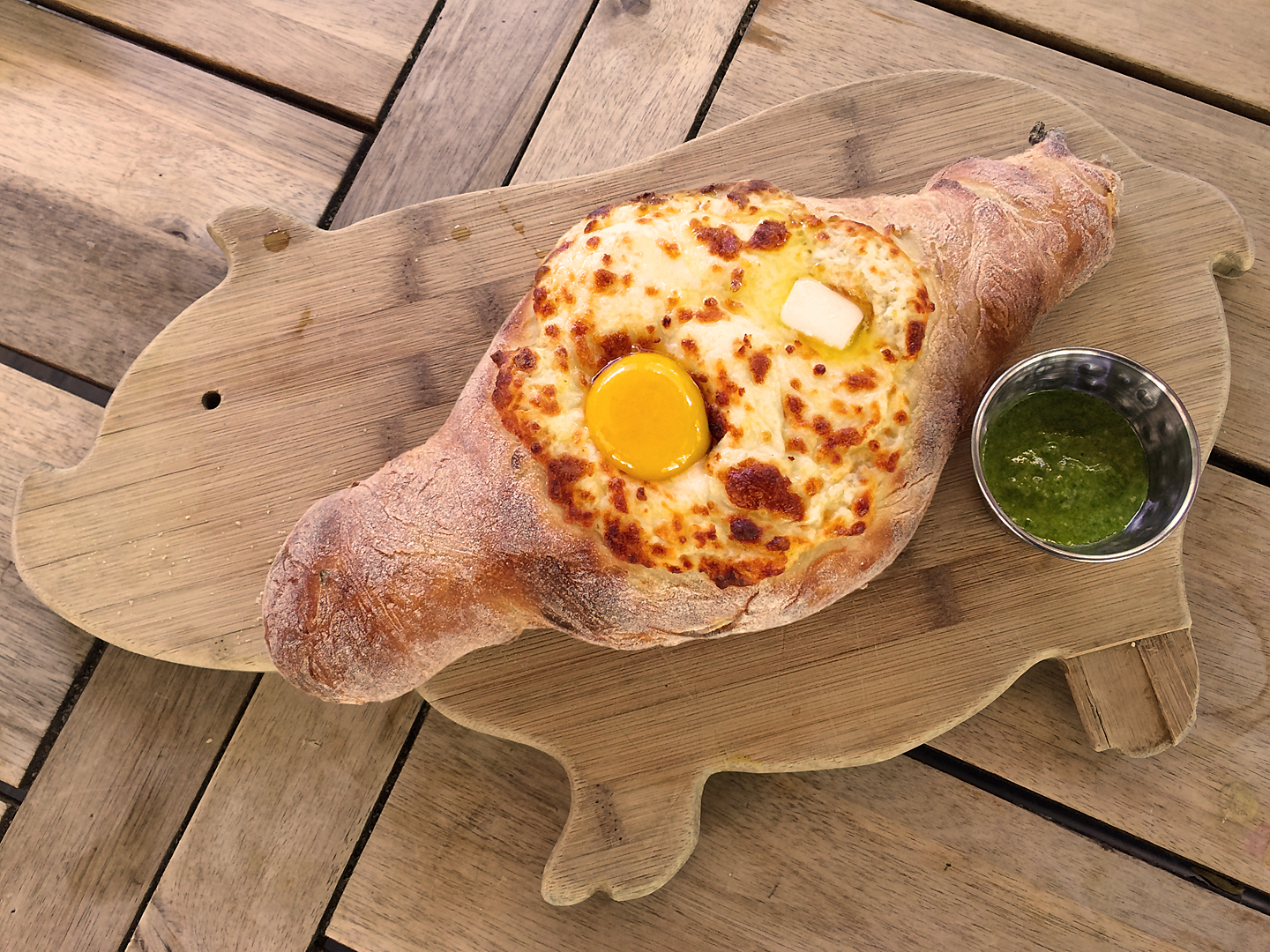
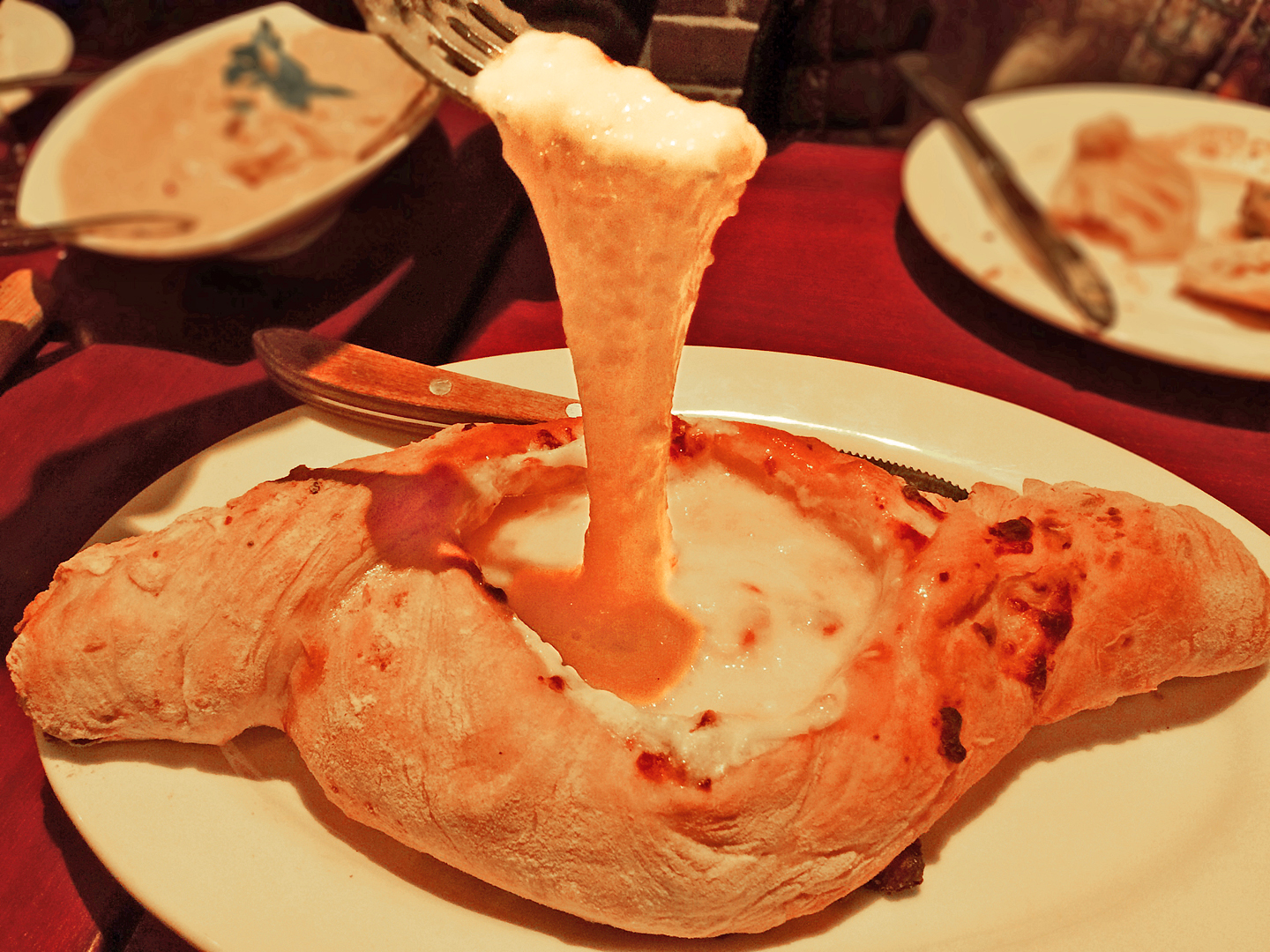
This is adjaruli, filled with tangy, salty sulguni cheese and imeruli, a fresh crumbly cheese which when melted together combine to make stretchy, cheesy nirvana; recipes vary, but it’s always delicious. It’s shaped like a kayak, the center of which is filled with the cheese mixture; a raw egg and a chunk of butter are added just as it’s removed from the oven. Stir the mixture: the egg cooks and combines with the butter and hot, melted cheese. Break off pieces of the bread and dip them into the cheese mixture. Now picture hot bread with melted buttery cheese that you eat with your hands, fresh out of the oven – what’s not to like?


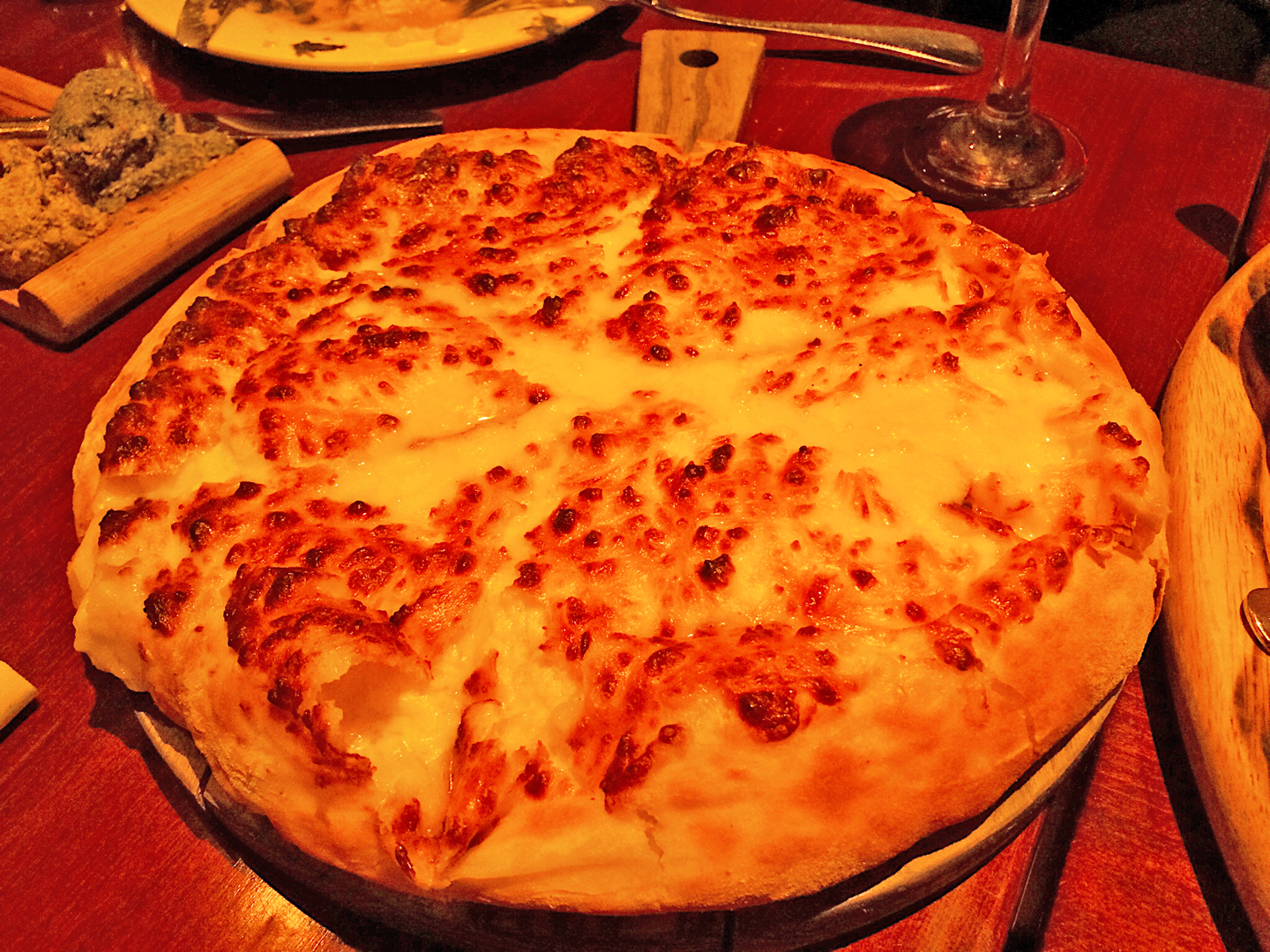
Megruli is a little more self-contained: cheese bread filled with cheese and then topped with more cheese and baked. Did I mention cheese? Think Georgian stuffed pizza.

If you’ve never sampled these magnificent delicacies, you should definitely join one of my food tours through Brooklyn’s Brighton Beach area, also known as Little Odessa, where we’ll taste at least one kind of khachapuri – maybe even achma, a kind of decadent, buttery, cheesy, lasagna-like (but sans tomato sauce), Georgian comfort food. Tempted? Click on Ethnojunkets at the top of any page on my website for more information; now that the COVID-19 crisis appears to be waning and seasonal temperatures are waxing, my tours will be starting up soon. Hope to see you then!


Chinese New Year 4720 (2022)

(Click on any image to view it in high resolution.)The two-week long Chinese celebration of the Lunar New Year begins today – it’s 4720, the Year of the Tiger. The Tiger is known for his strength, bravery, and particularly his ability to purge evil – and if ever we needed that specific set of superpowers, it’s now.

But even COVID can’t stop us from embracing all of the traditions that make this holiday so extraordinary. One that I particularly enjoy is the way in which wordplay and homophones factor into the selection of traditional foods specially prepared to mark the occasion. For example, at festive gatherings a whole fish will be served, because the word for fish (yu) is a homophone for surpluses.

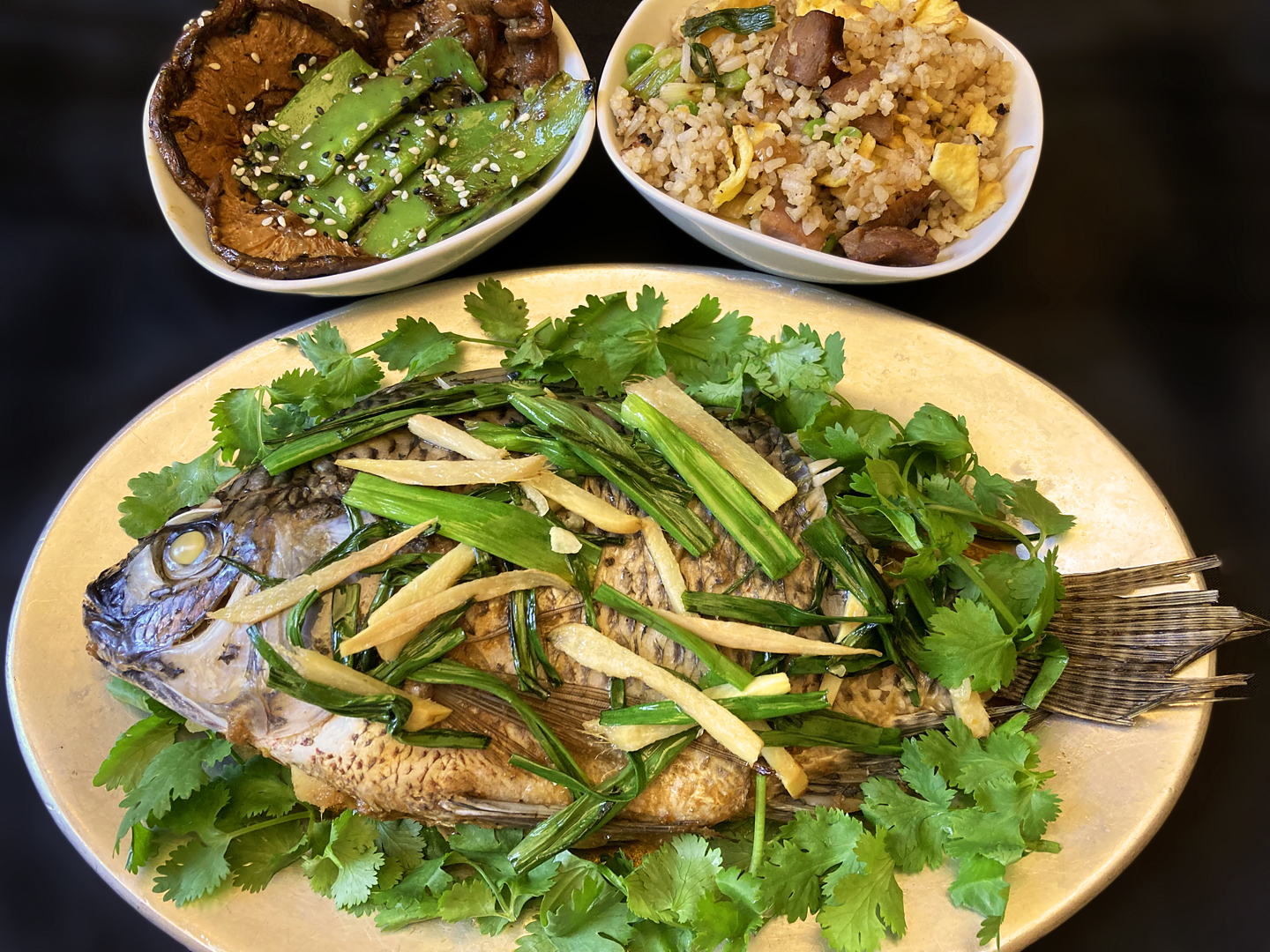
So since I could definitely use some surpluses right now, I’ve made a whole steamed fish stuffed with ginger and scallions and bedecked with even more julienned fresh ginger, scallions, chives, and cilantro for the centerpiece. Accompanying the star of the show were snow peas and black mushrooms in black bean sauce, and char siu fried rice (homemade char siu, to be sure).

Now, if you read me, you know that of course there’s a backstory that involves the preparation of this feast, and I’m going to save the near miss details for a future post. But there is a Lunar New Year story I would like to share with you now, one I wrote a few zodiac signs ago, a mystery involving a particular nian gao (the traditional sweet rice cake and a homophone for high year) that resonates to this day. It’s all in my very short story, “The Case of the Uncrackable Case!”

新年快乐! Xīnnián kuàilè!
恭喜发财! Gong hei fat choy!


Pongal

(Click on any image to view it in high resolution.)
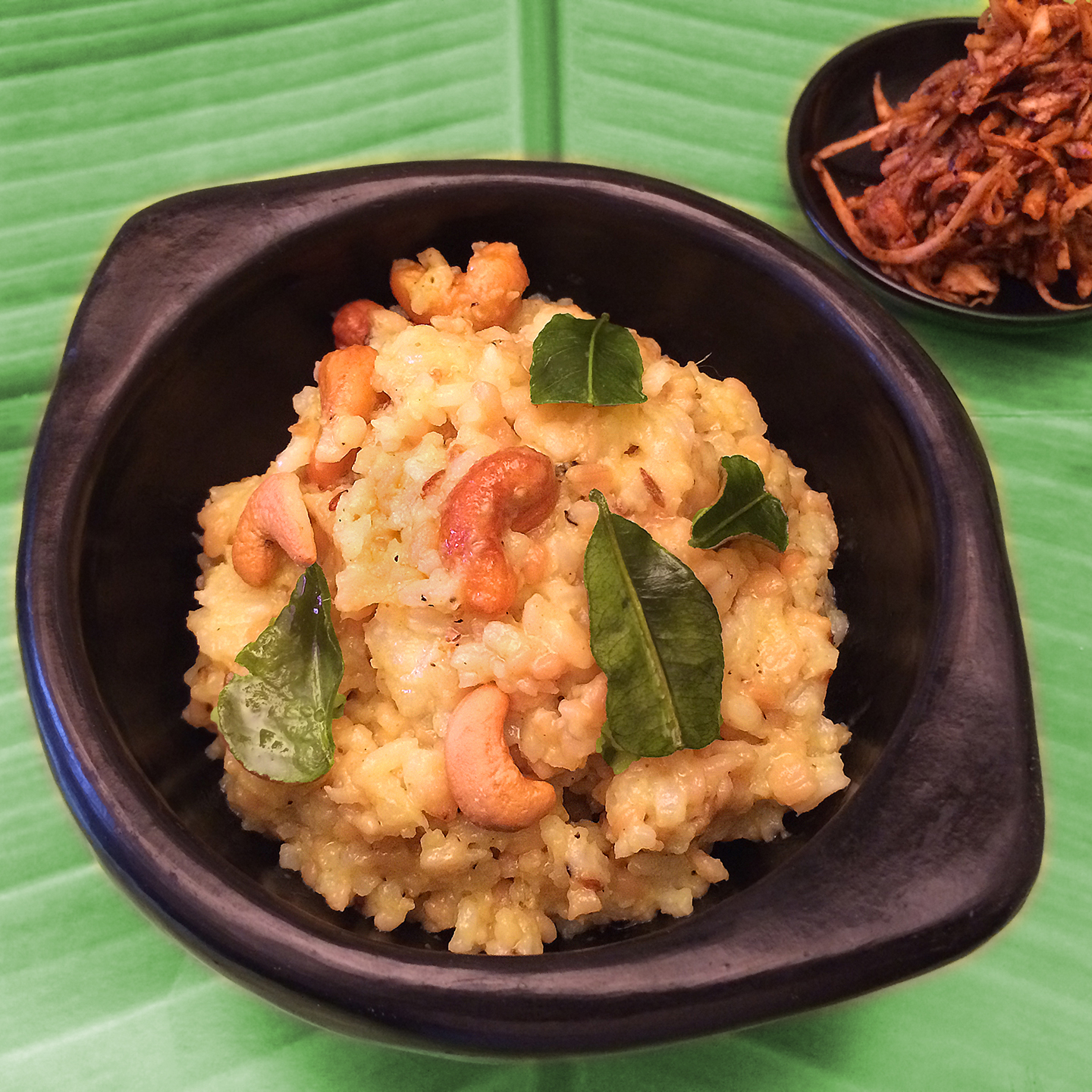
Pongal, the holiday, is a four day long harvest festival occurring around mid-January (on the 14th this year) that is observed primarily in the South Indian state of Tamil Nadu but like most spiritual anniversaries can’t really be confined to a specific geographical area, diasporas being what they are. One of the most important holidays celebrated by the Tamil community, it is characterized by social gatherings, time-honored rituals, prayers for health, happiness, and prosperity, and, of course, traditional foods. Bidding farewell to the winter solstice and marking the beginning of the sun god’s annual ascent in the zodiac, each day of the holiday features its own set of conventions. It is the second and principal day on which pongal, the dish, is prepared.

The word pongal means to boil or spill over and the seasonal milk plus newly harvested rice preparation does indeed overflow as it cooks, symbolizing the abundant harvest for which participants exuberantly give thanks. The dish manifests in two varieties: sweet (chakkara or sakkarai pongal) which calls for jaggery (unrefined cane sugar) along with raisins, cashews, and spices like cardamom, and savory (ven or khara pongal) which emphasizes an array of more potent spices and herbs.

A multitude of recipes is extant, of course, some saturated with copious ghee (usually the savory variants), some shot through with coconut (usually the sweet), but most of the recipes I’ve found call for the addition of moong dal (mung bean or green gram) to keep company with the rice, similar to North Indian dal khichdi. For today’s culinary adventure, I decided to prepare the savory version.

After toasting the dal, I cooked it together with rice in equal parts (again, recipes vary, often with more rice than dal) using more water than customary to achieve the proper cohesive consistency; they’re prepared sans seasoning – all of the distinctive ingredients are folded in afterwards.

One of the essentials of many world cuisines involves dry toasting spices to bring out their essence. In addition to employing that technique, Indian cuisine takes it one step further by making a tadka, tempering whole herbs and spices in oil to bloom their flavors beyond dry roasting and to flavor the oil as well; it’s the foundation of many Indian dishes and one I frequently use. In this case, ghee provided the lipid component (make sure it’s high quality and fresh) and my “distinctive ingredients” were cashew nuts, cumin seeds, cracked Tellicherry peppercorns for their citrusy notes, curry leaves, grated fresh ginger, green chilies, a pinch of hing (aka asafoetida) and turmeric.

Simply fold the tadka into the prepared rice and dal mixture, cook for another minute or two, et voilà. The texture of the dish should be a little like risotto, think porridge rather than discrete grains like biryani – after all, it’s comfort food; some recipes even call for mashing the rice a bit. It’s often served with coconut chutney (see photo) and sambar.

I confess to consuming it with greedy gusto since this particular combination of cashews, herbs and spices really resonates for me; of course, now I’m craving the sweet version too. Next time!
 
 
Happy Pongal!


Egg Drop Soup

And speaking of holiday leftovers….

(Click on any image to view it in high resolution.)

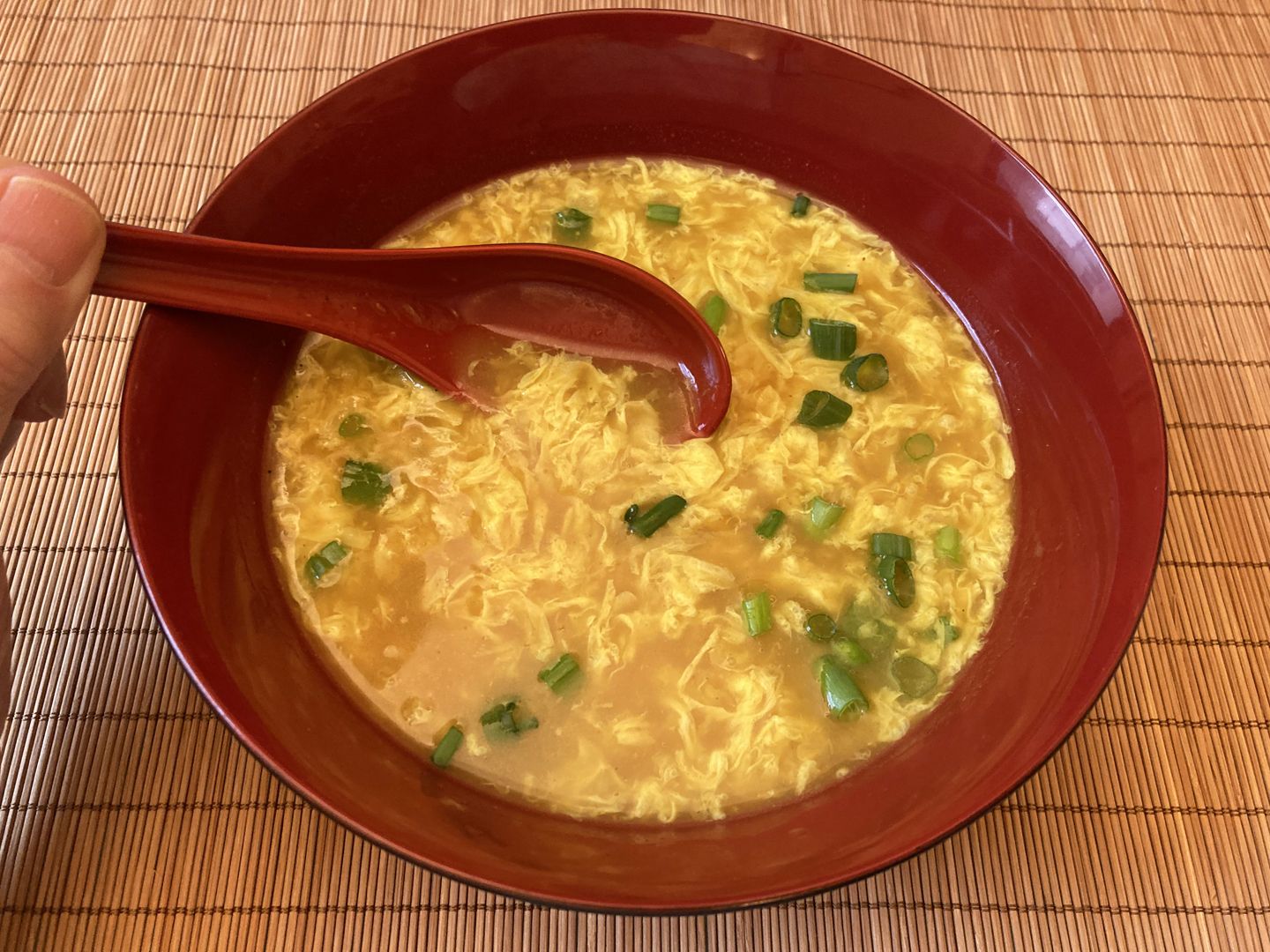
I usually use chicken broth when I make egg drop soup.

But the idea here was to use up all the leftover turkey with deference to glorified frugality beyond the ritual turkey salad sandwiches, turkey hash, turkey mole, turkey tetrazzini, turkey burritos, turkey pot pie (see last post) and an occasional treat for the cats, so the broth that went into this dish was made from leftover roasted turkey bones.

If only I had a leftover turkey egg to use in this…. 🙃


Turkey Pot Pie

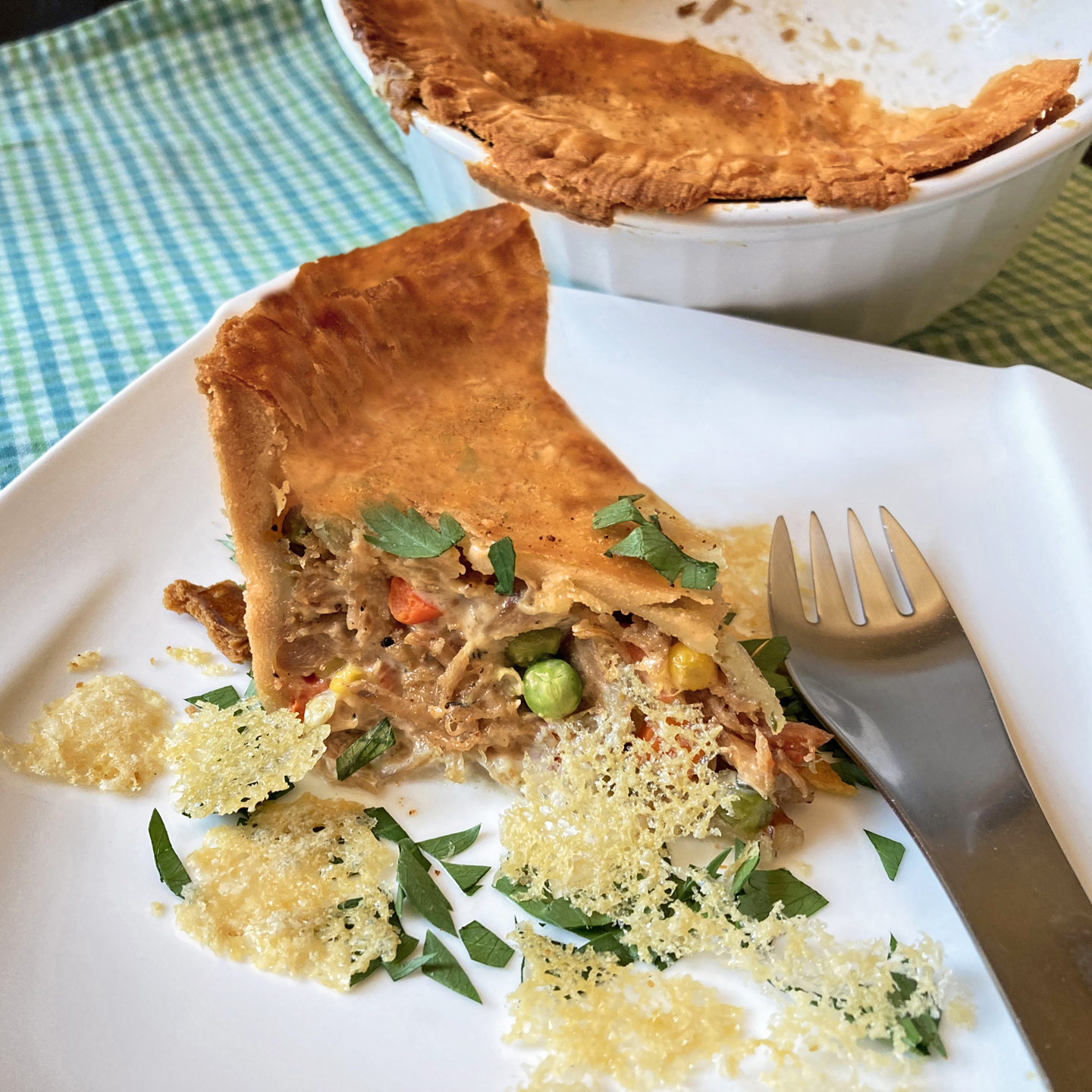
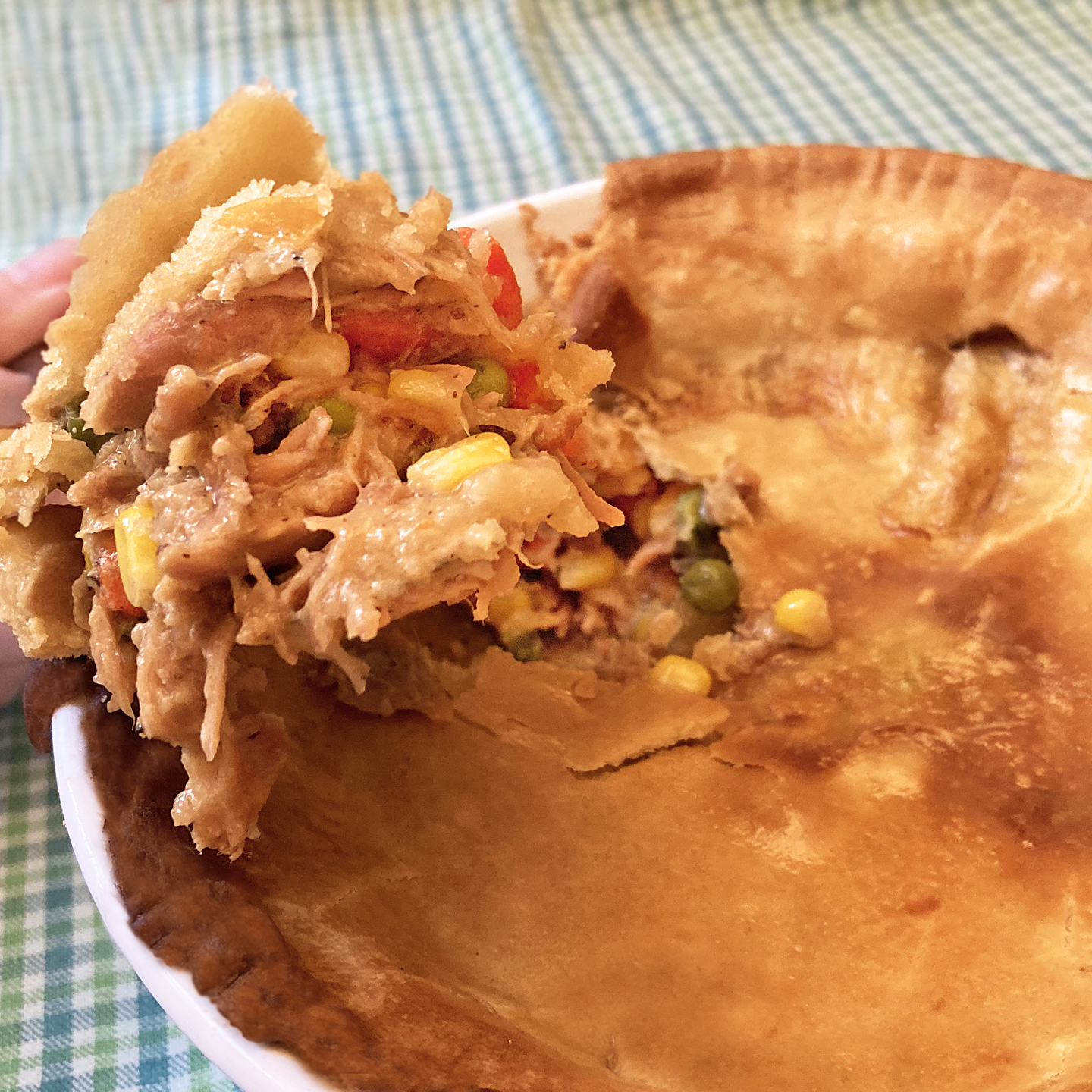
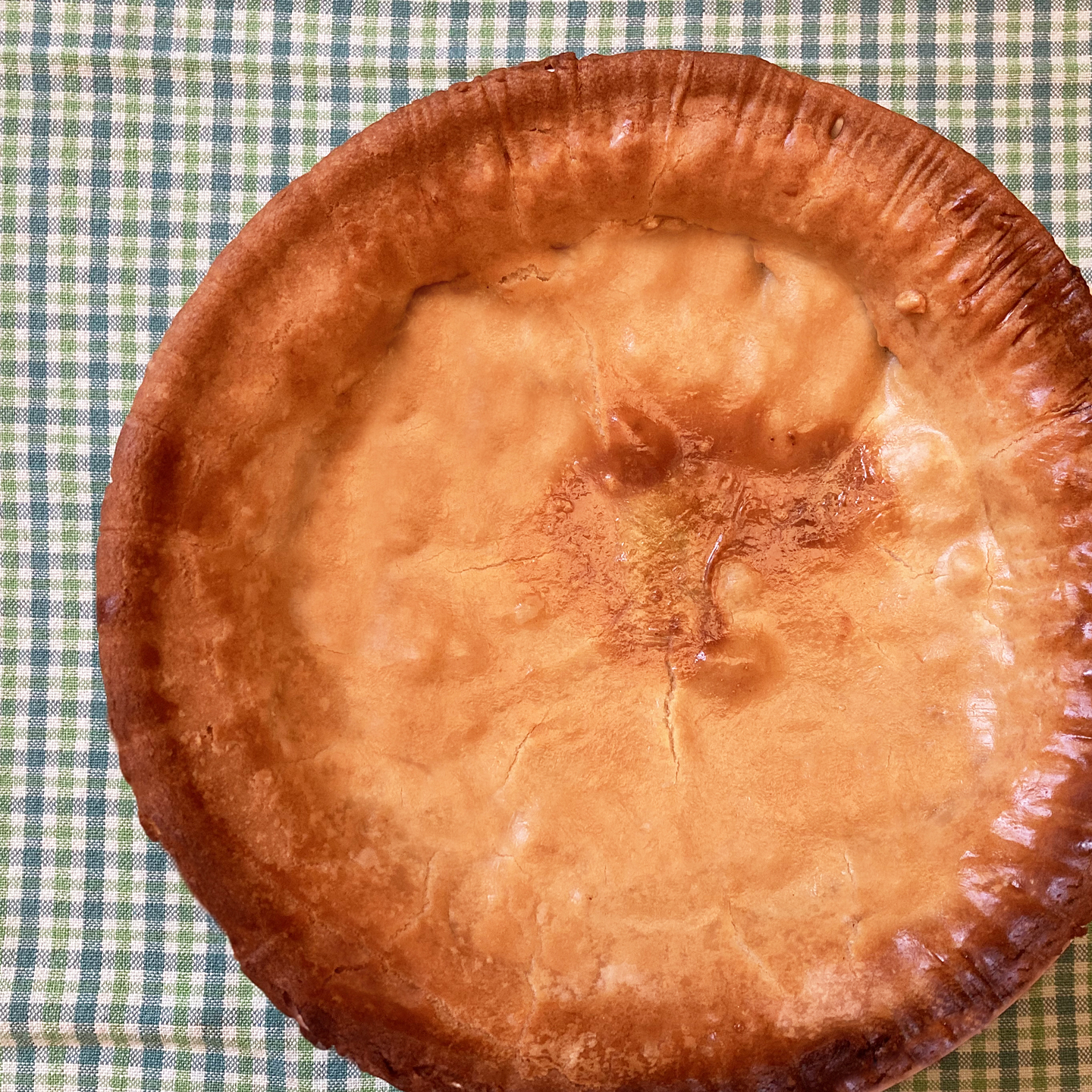
I’ve written about the procession of leftover Thanksgiving turkey dishes that parade through my kitchen annually, but I’ve never posted any proof. So if you don’t mind a few more Home Cookin’ pix, here, in reverse order of presentation, are some photos of this year’s Turkey Pot Pie. The lacy crispy bits are fried Parmigiano Reggiano cheese, aka frico.

(Click on any image to view it in high resolution.)

Plated: prettified with parmesan and peppered with parsley.


Preparatory probe plowing into pot pie prior to plating.


Preliminary portrait. Picture perfect – practically. 🤷
 
 
Clearly, I have too much time on my hands. 😉


Russian Orthodox Christmas

(Click on any image to view it in high resolution.)

I was having a conversation with a friend just the other day. “The holidays are over,” she sighed. “No more excuses to procrastinate.”

“Don’t be so sure,” I countered. “Remember, you’re talking to the Equal Opportunity Celebrant.”

“Okay, so what’s up next?” she asked, grateful for the reprieve.

“Russian Orthodox Christmas.”

“Russians celebrate Christmas?”

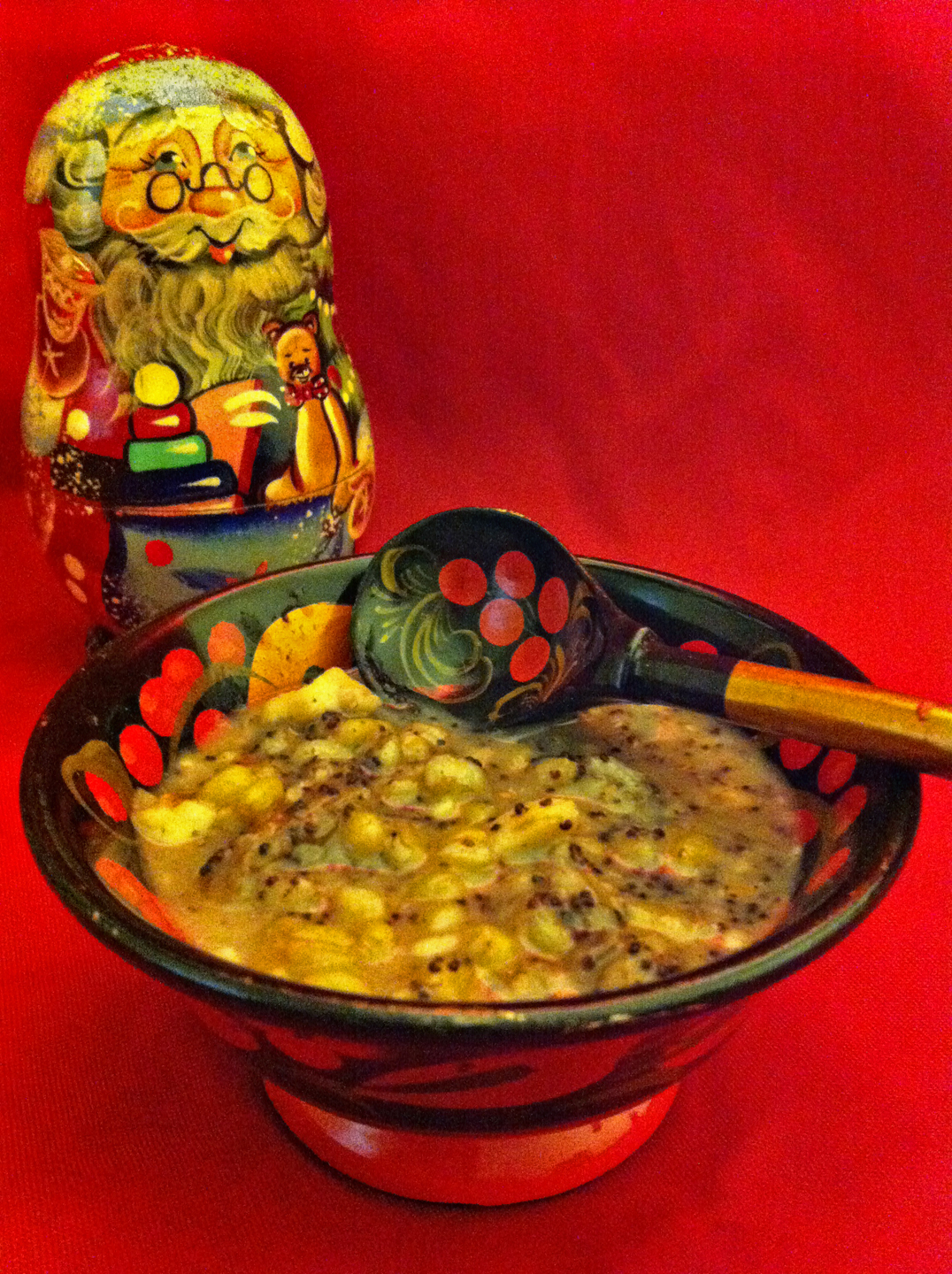
“Indeed they do, every January 7. And it’s pretty cool, especially the ritual of flinging a spoonful of a very special Christmas treat up to the ceiling to see if it sticks.”

So I pointed her to a story that I had written long ago. Precisely the story I’m pointing you to right now. Read on….


Alternate Side of the Sweet

(Click on any image to view it in high resolution.)

If you read me regularly, you know that I didn’t orchestrate an over-the-top Thanksgiving feast this year; our annual gathering was an out-of-state potluck with each family member contributing some favorite side dishes. (I brought these two.)

But I missed my Dandy Brandied Candied Yams. (Actually, they’re sweet potatoes, but that’s a story for another day.) On a subsequent shopping trip, I tossed one in the basket, but upon contemplating the solitary and rather forlorn looking sweet potato back in my kitchen, I knew that I wasn’t going to go through the process of creating a mini version of the elaborate side dish for just myself. I also knew that I wasn’t really up for a plain roasted sweet potato, no matter how much butter I doused it with. I needed to come up with an alternate side for that sweet potato.

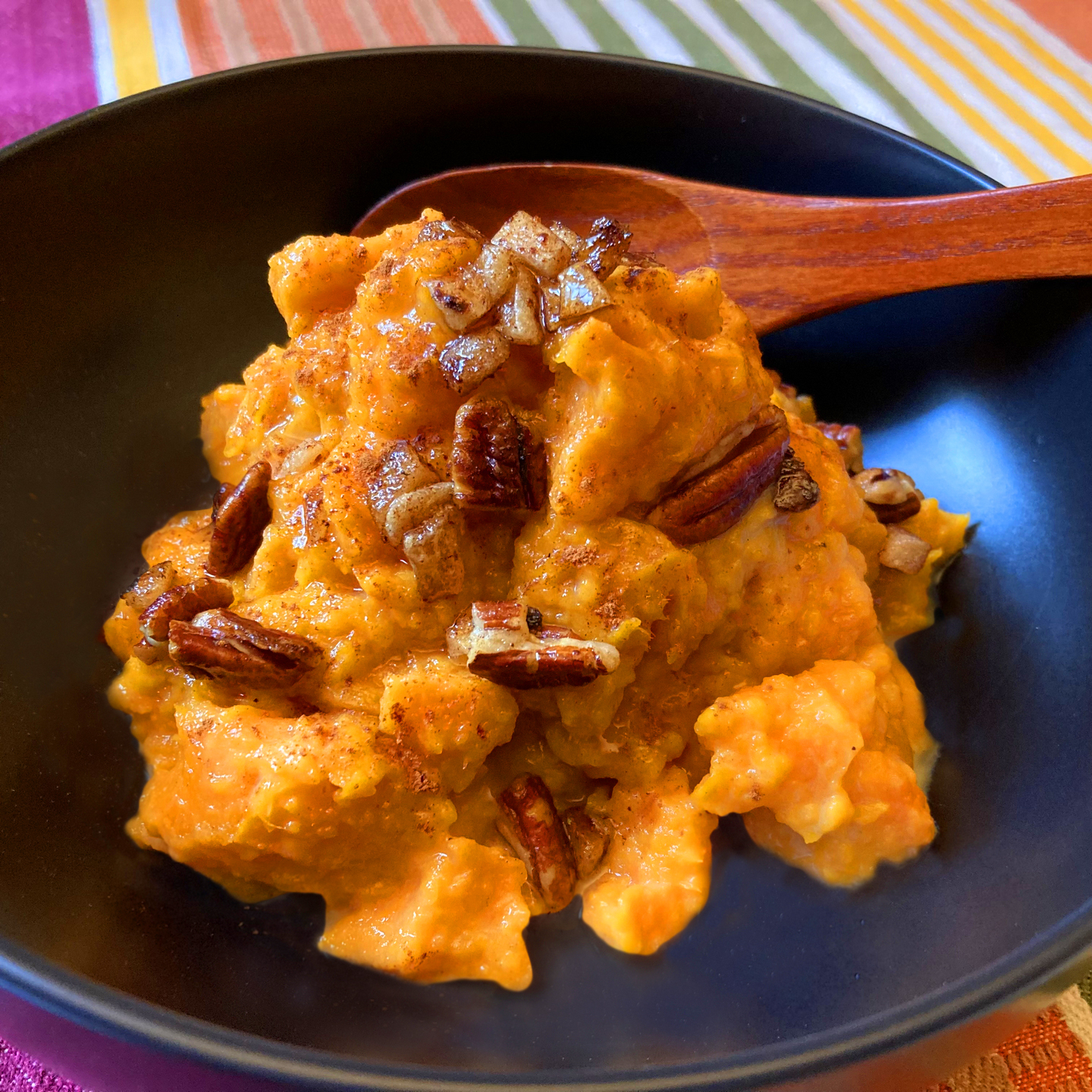
So I decided to experiment. (Mwah-ha-ha!) I performed a cursory inventory of the fridge and the pantry and hatched a scheme: Roast the root, mash the flesh and instead of brown sugar for sweetness and butter for creamy unctuousness (two of the many DBCY ingredients), I’d use eggnog.

Now wait – before you go “Ewww!” stay with me; this is how recipes are born. Upon testing, the theory proved reasonably solid although it needed some intensification. For texture, I added some butter-toasted pecan pieces and crystallized ginger (both of which I had on hand). But it still needed a bit more sweetness (I was surprised, too) plus a jolt of spice so I drizzled a thread of maple syrup over the nogified veggie mash and sprinkled a bit of cinnamon and freshly grated nutmeg on top.

Trust me: if it hadn’t worked, I wouldn’t have taken the time to photograph it and write it up for future fine tuning. Reckless abandon to the rescue again!


Joyful Kwanzaa!

Kwanzaa is the annual celebration of African-American heritage, unity, and culture; it begins on the day after Christmas and extends through January 1. The name Kwanzaa comes from the Swahili phrase “matunda ya kwanza” which means “first fruits” referencing the first fruits festivals in Southern Africa.

It’s no secret that I’m a fan of the many and varied cuisines in Africa and over the years it has been my pleasure to write about some delicious meals I’ve had the good fortune to experience at numerous African restaurants. Some of you know that I also enjoy cooking these cuisines at home; I make no claim to any expertise or authenticity in these West African dishes, but I was happy with the way they turned out so I’m sharing some here, virtually, with you.

(Click on any image to view it in high resolution.)

Groundnut Stew, also known as peanut stew, maafe, sauce d’arachide, and other handles depending upon its country of origin. This version started with a base of onions, canned tomatoes, and chilies, garlic and fresh ginger, then some chicken stock and spices including soumbala (ground néré seeds), with the addition of creamy natural peanut butter and ground peanuts, sweet potatoes and leafy greens. Pounded cocoyam (aka malanga) on the side.


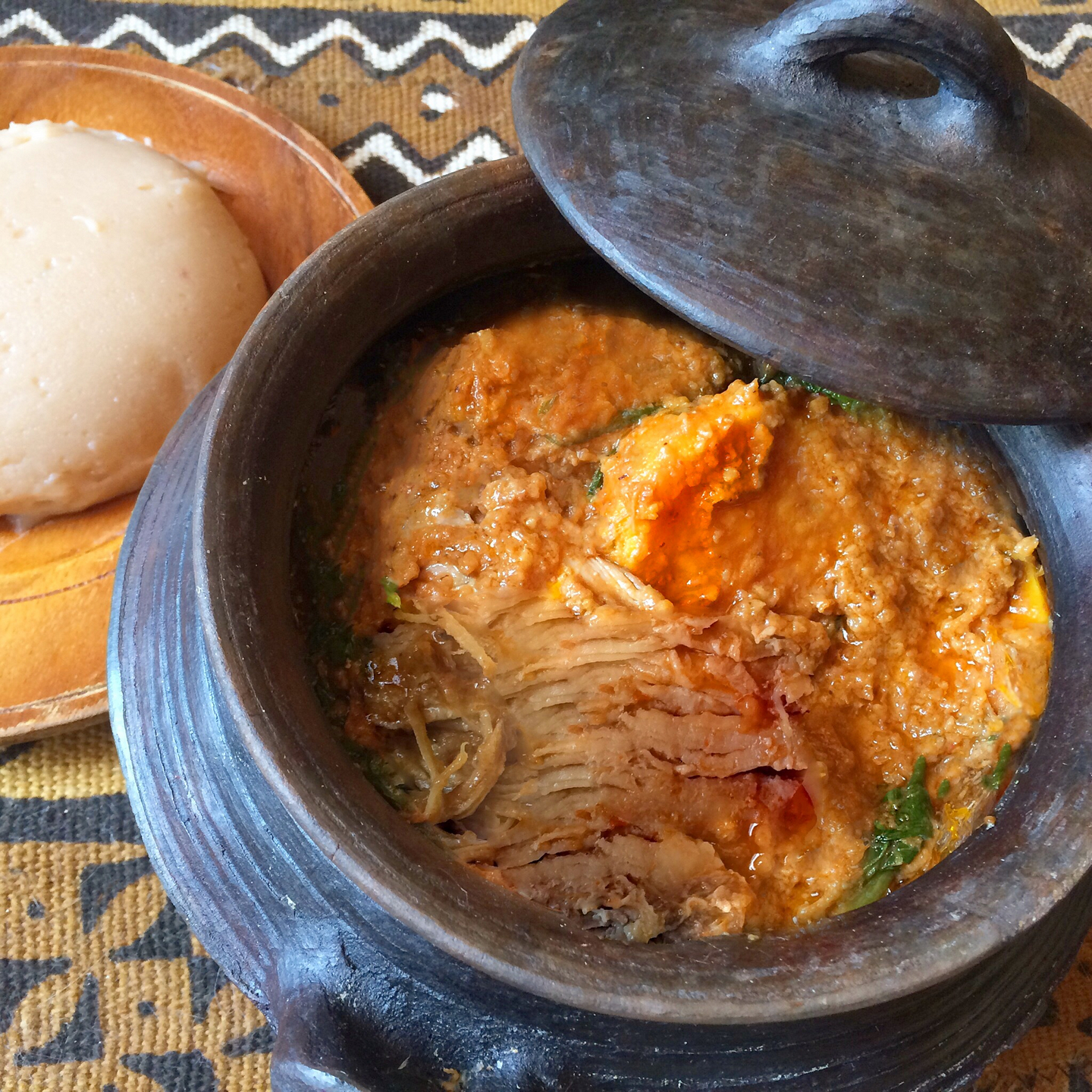
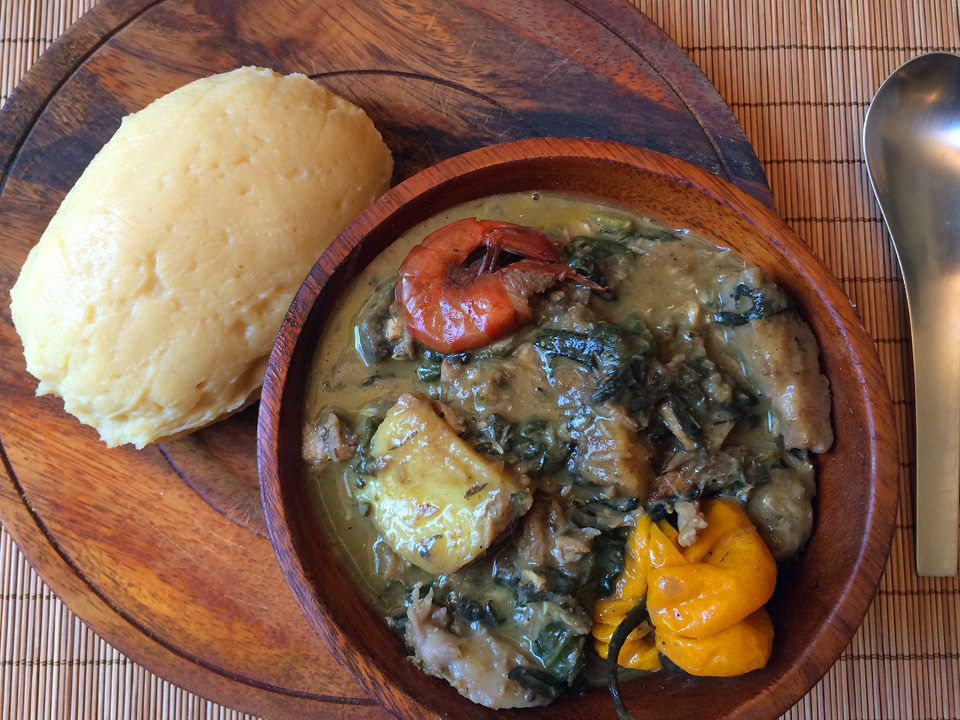
Fish and Yam Soup. Fresh red snapper, stockfish, smoked bonga fish, dried prawns, crayfish powder, two kinds of yam, potato leaf, water leaf, and a fistful of spices. Fufu, plantain this time, at the ready.


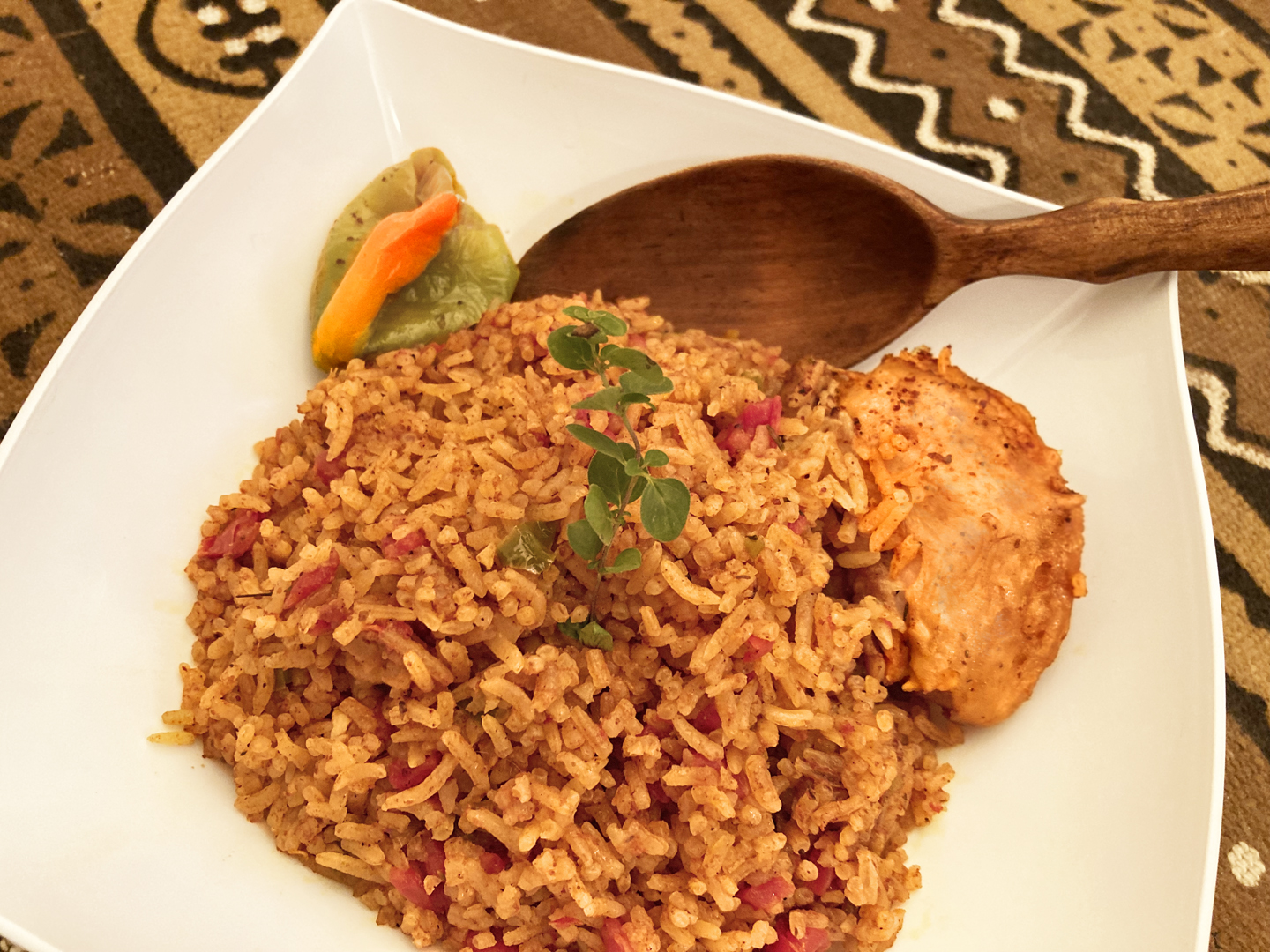
Jollof Rice. A playful rivalry endures between Ghanaian and Nigerian recipes over this popular dish and I’m not getting in the middle of it! This one is closer to a Ghanaian version in that it uses jasmine rice as opposed to the long-grain rice found in Nigerian kitchens. There’s a base of tomatoes, onion, green peppers, ginger and garlic, and the seasoning I used this time (it’s not set in stone) contains Maggi cubes, Jamaican curry powder, star anise, smoked paprika, soumbala, pepper soup spice blend, and a touch of shito (hot pepper sauce) among others. That’s a green, yellow, and orange Scotch bonnet pepper in the corner and a smoked turkey tail on the side.


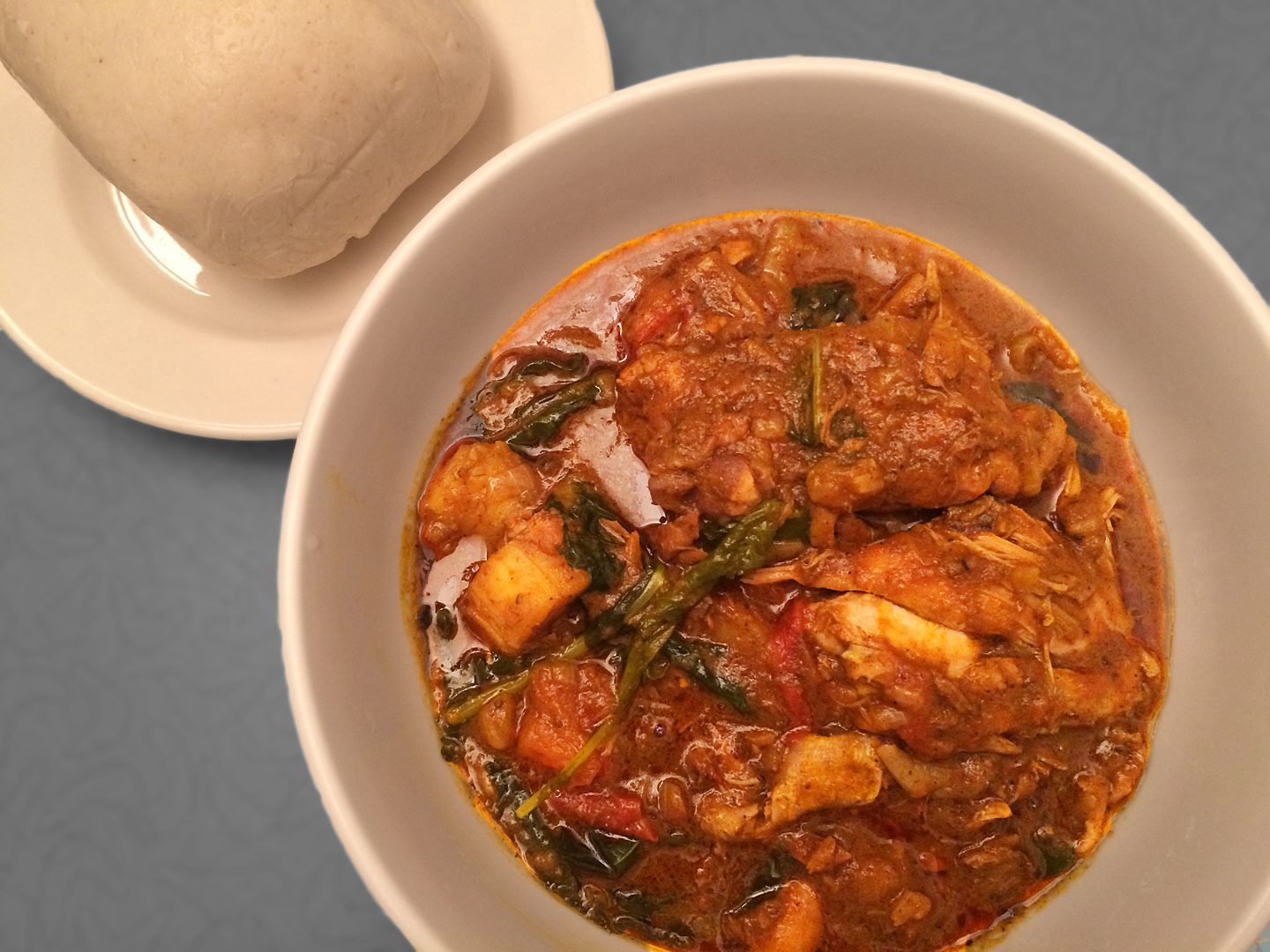
Palmnut Cream Stew. My rendition with chicken, smoked dried fish, squash, plantain, tomato and kale, fufu to make it complete.


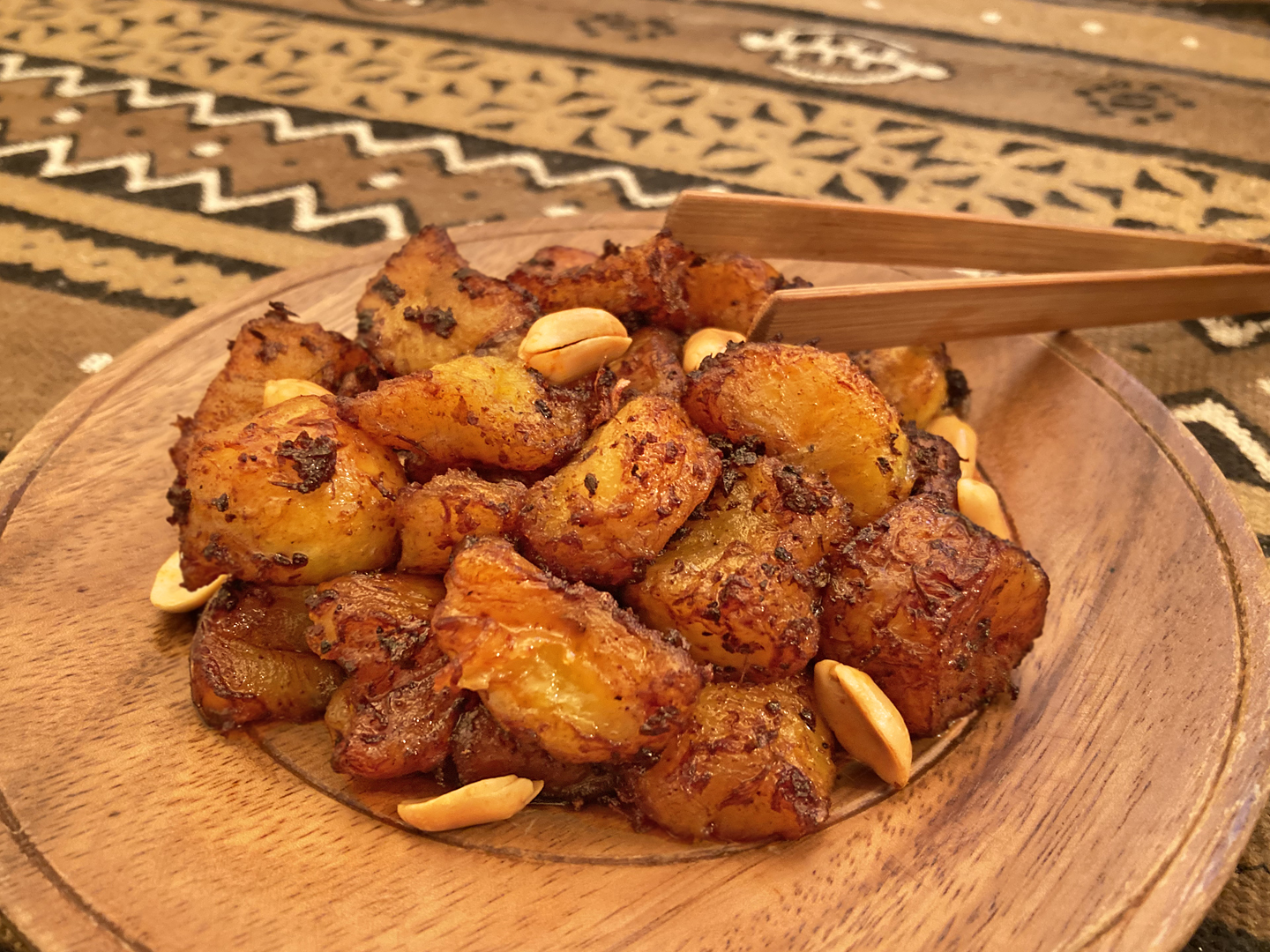
Kelewele. Spicy, fried ripe plantains with a toss of peanuts for some crunch. Every country in West Africa has its own recipe, of course!


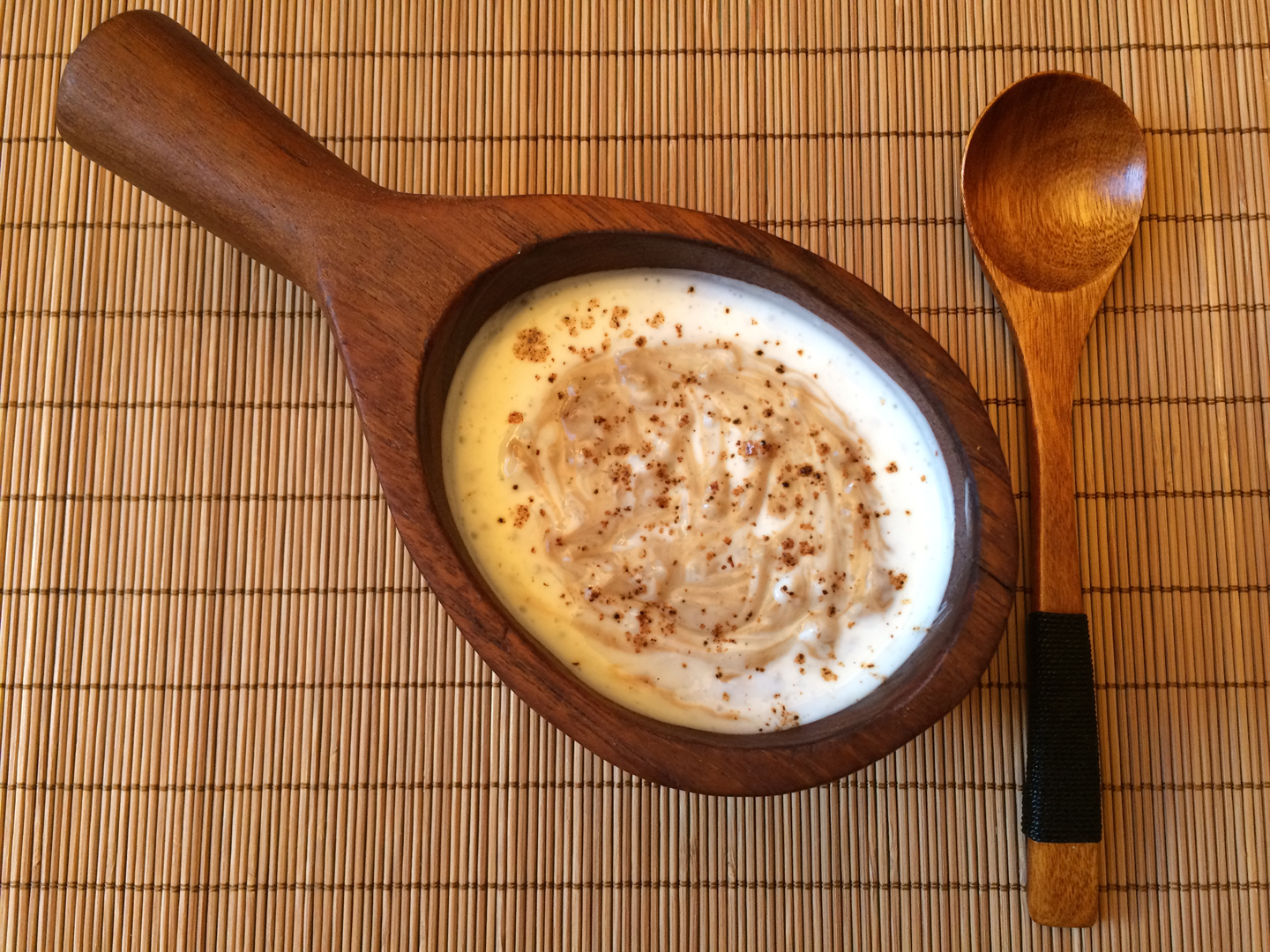
Thiakry. A sweet dessert made from millet. My spin on it contains swirls of baobab with peanut crème (which itself is the basis for another dessert called Ngalakh).
 
 
Joyful Kwanzaa!