Chinese Mooncakes Demystified

Or, The Equal Opportunity Celebrant – Part 2

 
Originally posted on September 6, 2019. Because of the COVID-19 pandemic, some businesses may be closed – temporarily, we hope – and prices may vary. The Mid-Autumn Festival, however, will be with us forever – as long as there are autumns to celebrate!

(Click on any image to view it in high resolution.)
A visit to any Chinatown bakery this time of year will reveal a befuddling assemblage of mooncakes (yue bing) in a seemingly infinite variety of shapes, sizes, colors, ornamentation, and fillings, all begging to be enjoyed in observance of the Mid-Autumn Festival. Also known as the Autumn Moon Festival, this important holiday occurs on the fifteenth day of the eighth lunar month (around mid-September or early October on the Gregorian calendar) when the moon looms large and bright – the perfect time to celebrate summer’s bounteous harvest. They’re sold either individually or in attractive gift boxes or tins since it’s customary to offer gifts of mooncakes to friends and family (or lovers!) for the holiday. Since my porcine appetite apparently knows no bounds (2019 is the year of the pig – how appropriate 😉), I felt compelled to purchase an assortment of these delicacies in order to learn about their similarities and differences and to shed some light (moonlight, of course) on their intricacies.

The first point to note is that various regions of China have their own distinct versions of mooncakes. A quick survey of the interwebs revealed styles hailing from Beijing, Suzhou, Guangdong (Canton), Chaoshan, Ningbo, Yunnan, and Hong Kong, not to mention Taiwan and Malaysia. They’re distinguished by the types of dough, appearance, and fillings, some sweet and some more savory. In my experience, Chinese bakeries in Manhattan, Brooklyn (Sunset Park), and Queens (Flushing) favor the Cantonese style, but Fujianese mooncakes are easy to find along stoop line stands outside of markets in neighborhoods where there’s a concentration of folks from Fujian.
jinhua-hammoon-cake-mold
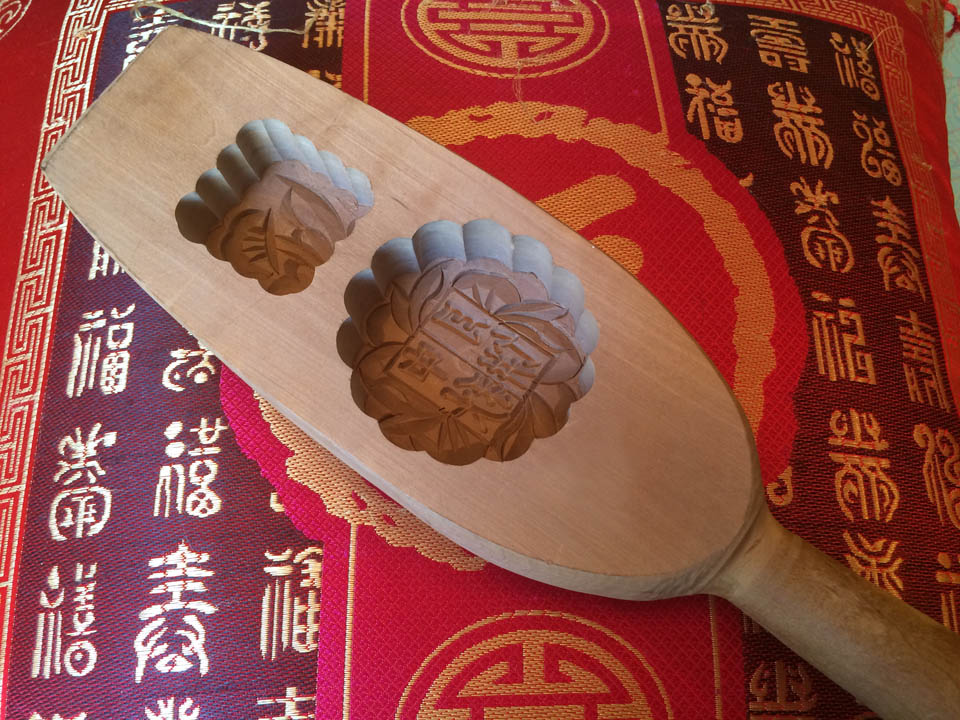
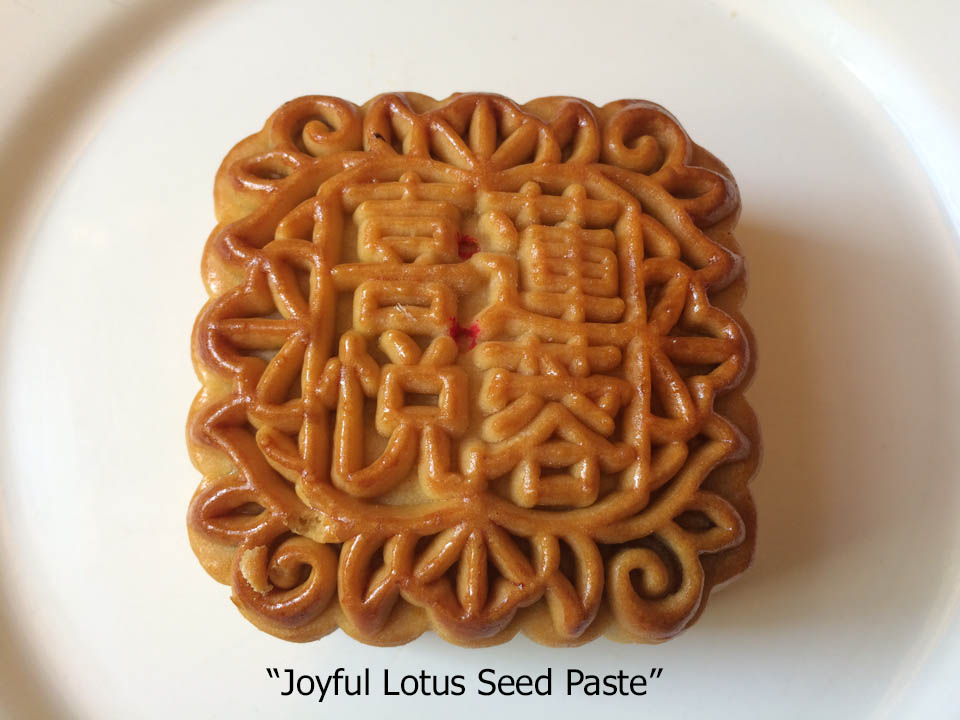
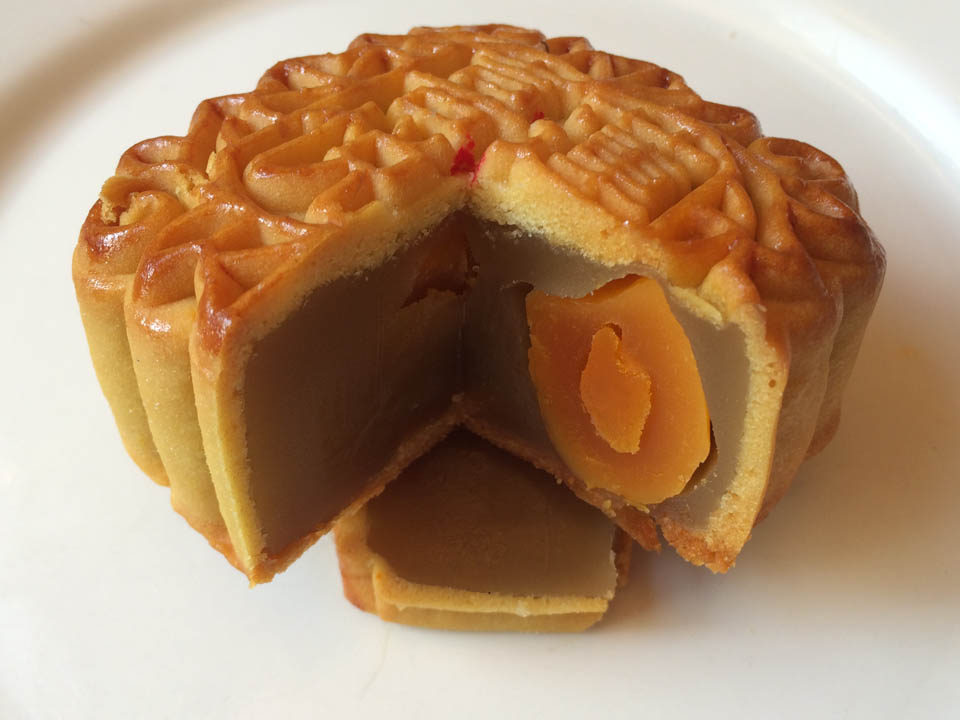
You’ll commonly find mooncakes with doughy crusts (golden brown, soft, somewhere between cakey and piecrusty, often with an egg wash sheen) as well as those with white, paper thin flaky layers that betray lard as a critical ingredient; chewy glutinous rice skins (these aren’t baked); and gelatinous casings (jelly, agar, or konjak), the most difficult to find in the city. Golden-baked, elegantly decorated Cantonese versions are round (moon shaped, get it?) or square, are fluted around the perimeter, and have been created using molds made of intricately carved wood to provide the ornate design or an inscription describing what’s inside (see photo).
joyful-lotus-seed-pastejoyful-lotus-seed-paste-inside
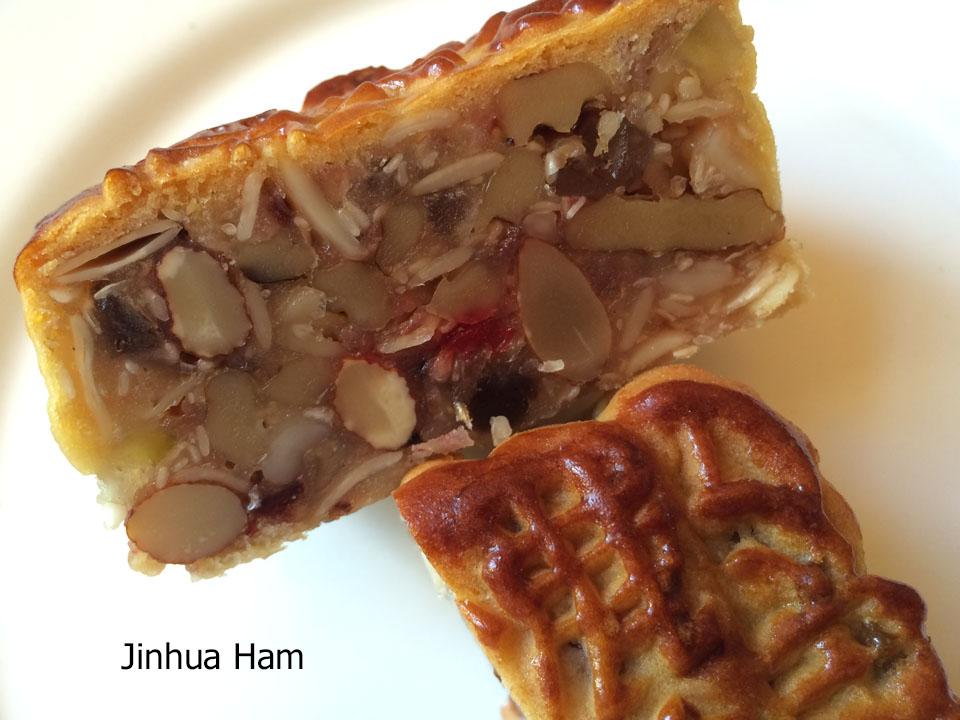
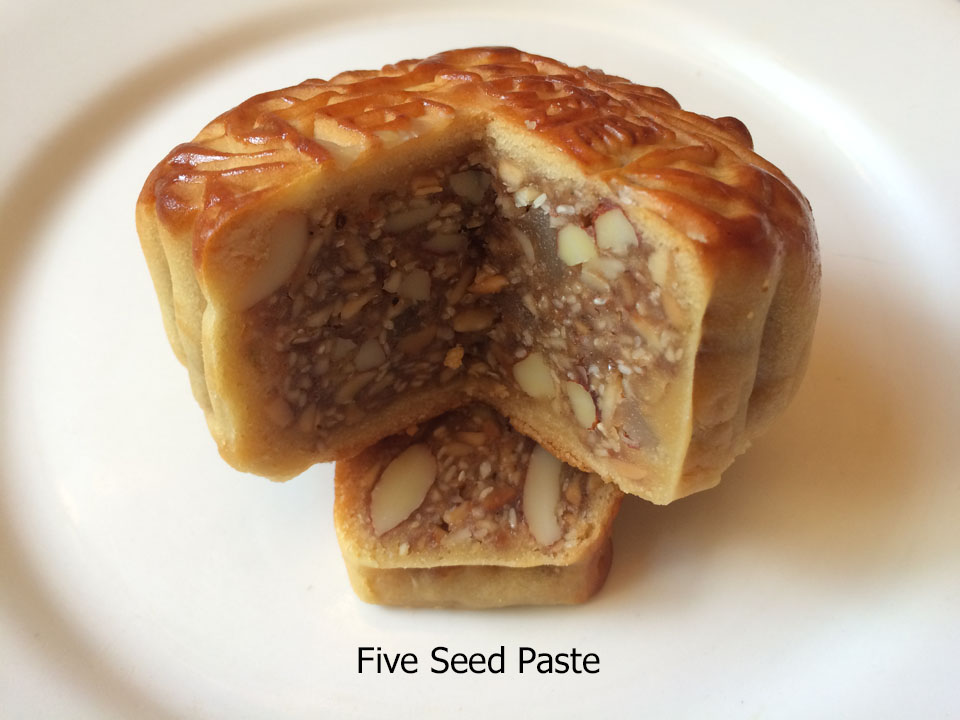
Fillings among the Cantonese types are dense and sweet and include lotus seed paste, white lotus seed paste, red bean paste, and mung bean paste, sometimes with one or two salted duck egg yolks (representing the harvest moon) snuggled within. In addition, there are five-nut (or -kernel or -seed) versions, packed with chopped peanuts, walnuts, almonds, pumpkin seeds, and watermelon seeds as well as a variety made with Jinhua ham, dried winter melon, and other fruits buried among the nuts; its flavor was a little herby, not unlike rosemary, but I couldn’t quite identify it. These last two were particularly tasty. All are about 3 inches wide and 1½ inches high and sell for about $4.50–$6; mini-versions are available as well.
five-seed-pastepineapple-lychee-pandan
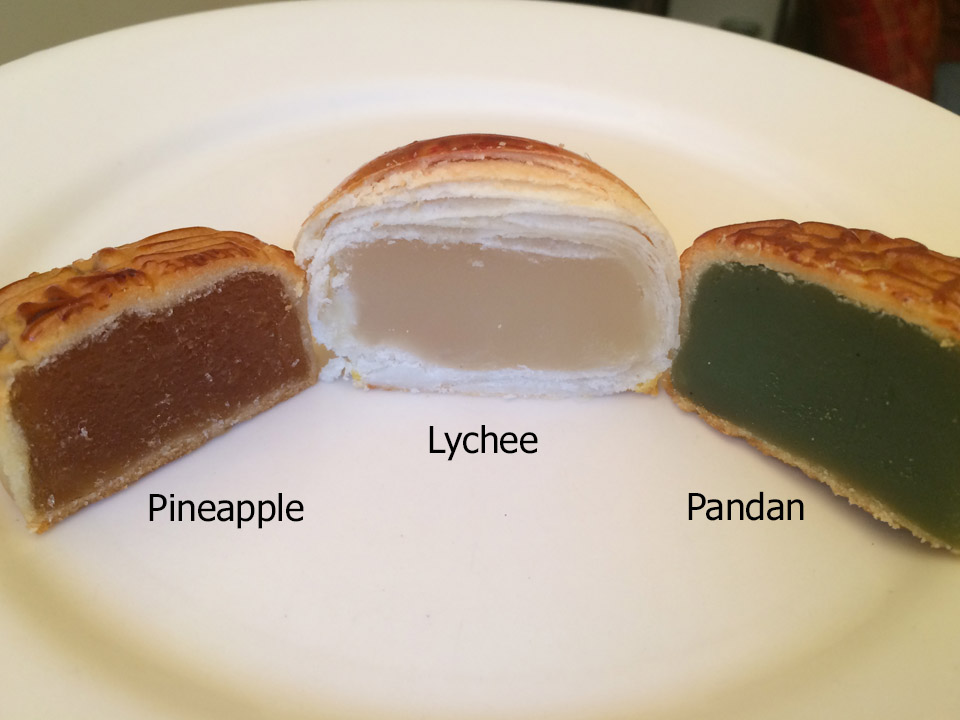
A visit to Flushing exhibited all of these as well as some outstanding fruity varieties including pineapple, lychee, and pandan; these can be best described as translucent fruit pastes and are perfect for the novitiate – a gateway mooncake if ever there was one.
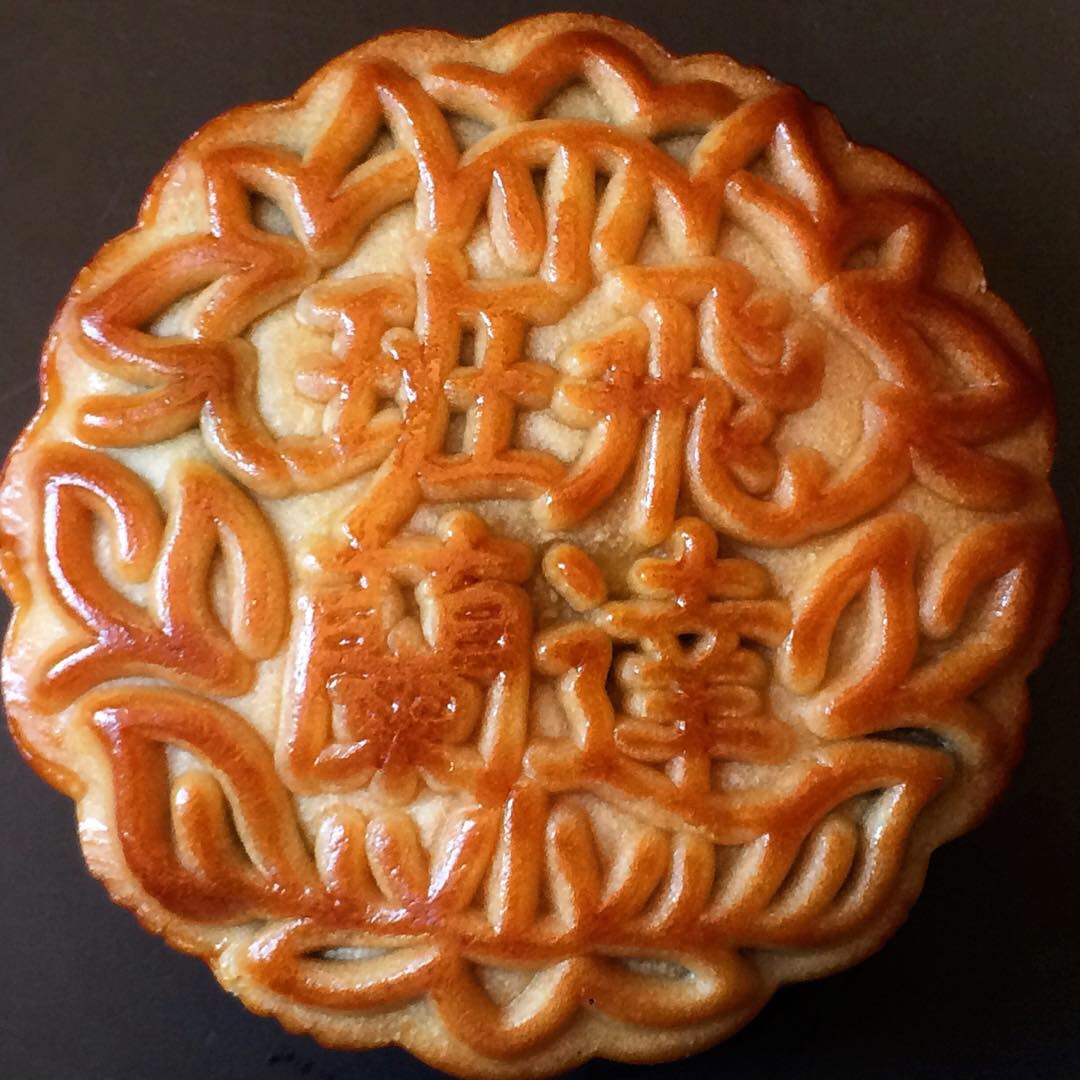
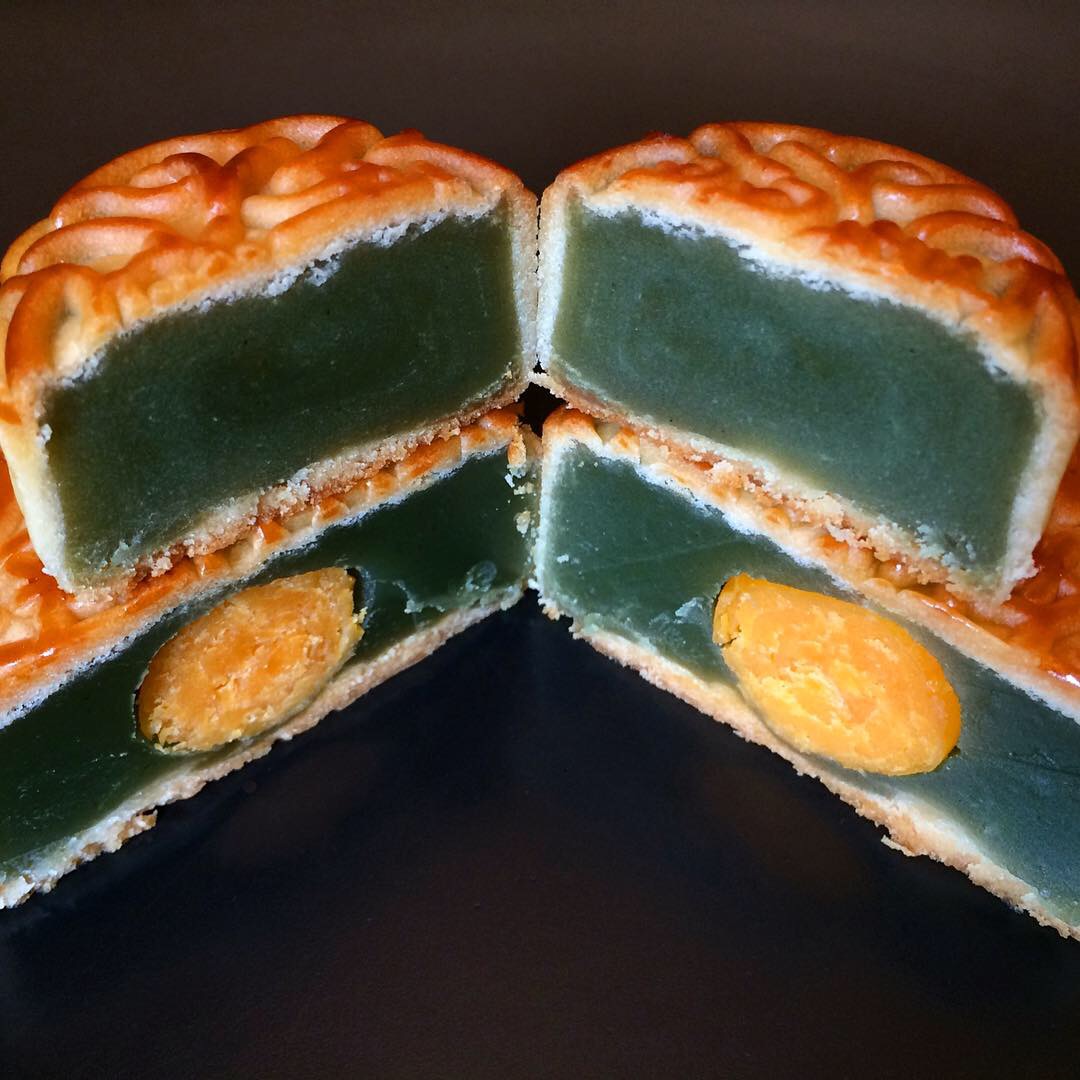
Here are two pandan mooncakes, one with preserved egg yolk and a mini version without, from Fay Da Bakery at 83 Mott Street in Manhattan’s Chinatown.

In another market, I found a white, flaky pastry version, Shanghai style, I believe; the filling was like a very dense cake with a modicum of nuts and fruits providing some contrast and crunch – certainly tasty.
durian-with-bean-paste-snowy-moon-cakeicy-moon-cake-boxes
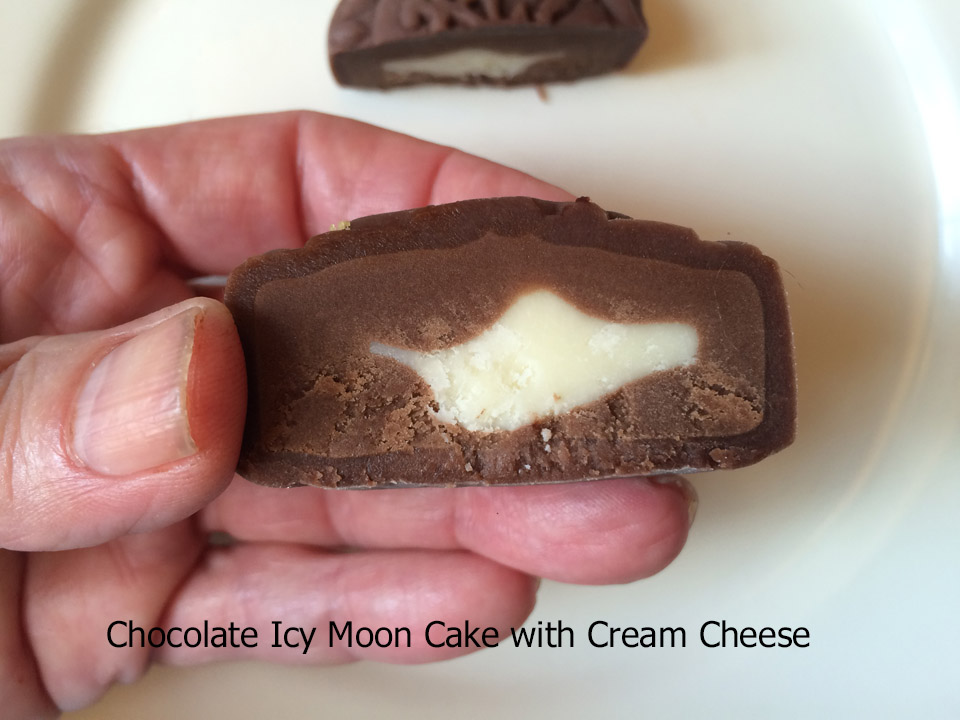
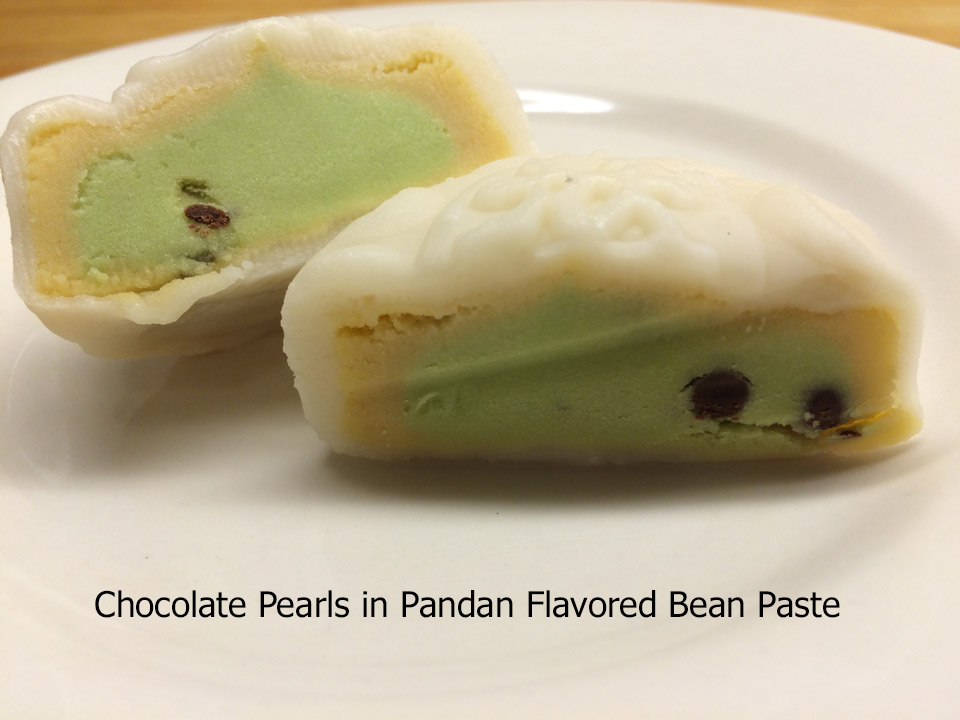
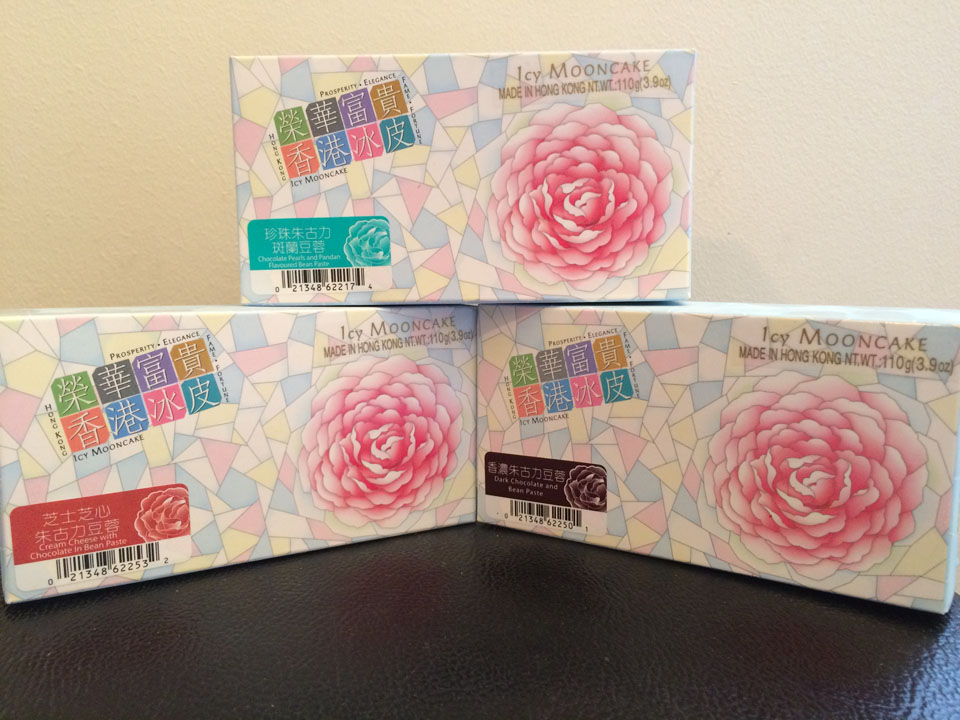
chocolate-icy-moon-cakechocolate-icy-moon-cake-with-cream-cheesechocolate-pearls-in-pandan-flavored-bean-paste
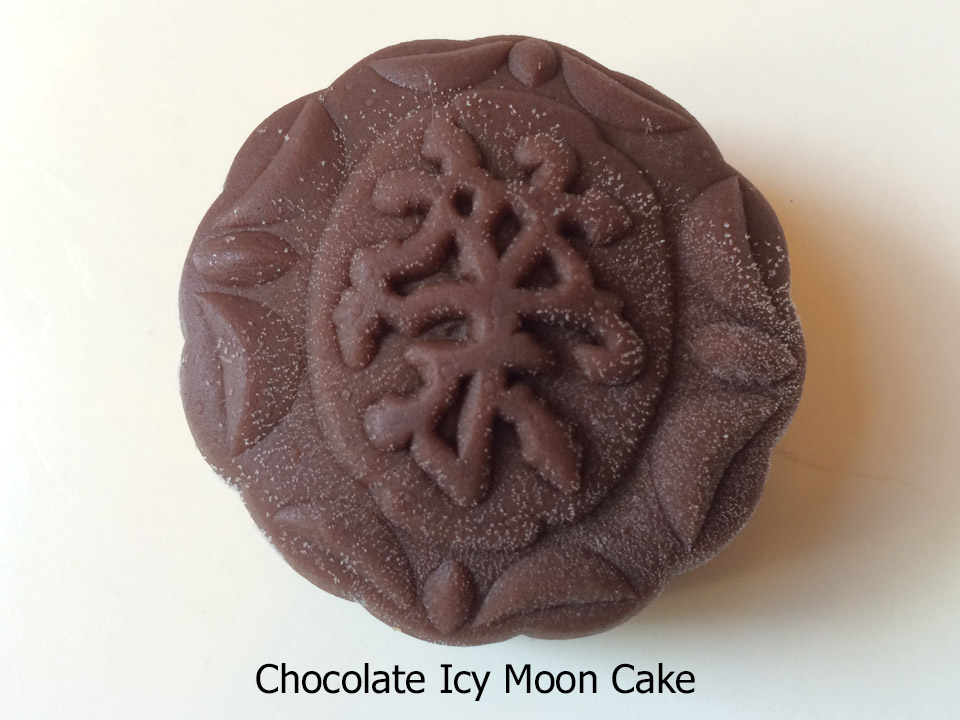
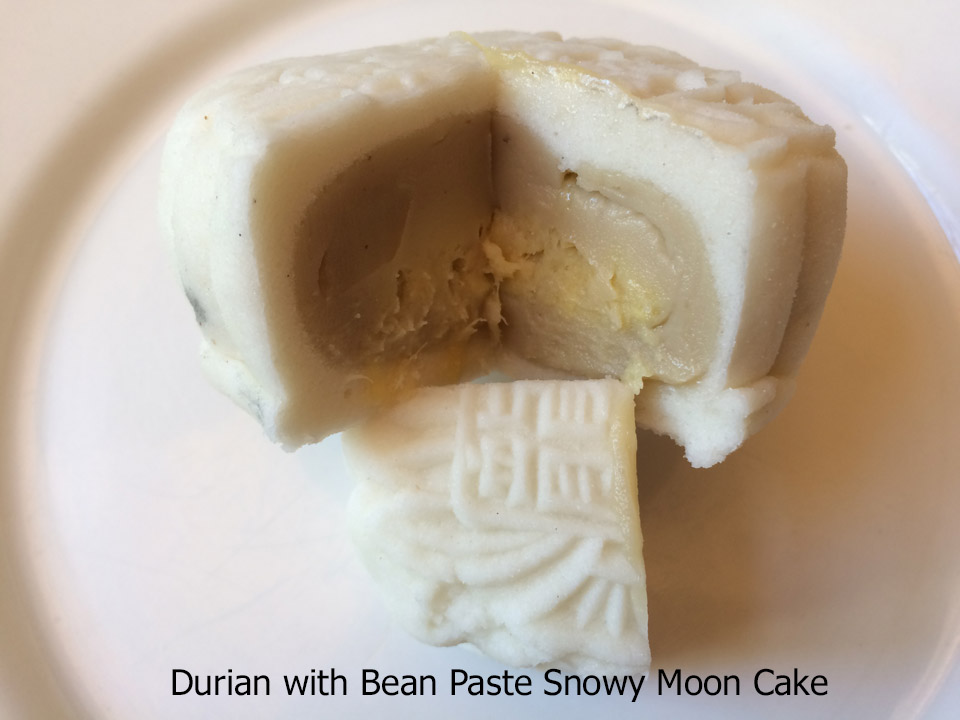
Then there are trendy snow skin versions that hail from Hong Kong all of which are equally accessible and delicious. Think mooncake meets mochi: rather than dough-based and baked, the skins are almost like the sweet Japanese glutinous rice cake, but not quite as chewy. These snowy and icy mooncakes must be kept chilled. The snowy flavors are contemporary: strawberry, mango, orange, pineapple, honeydew, peach, peanut, taro, chestnut, green tea and red bean; one version featured durian flavored sweet bean paste with bits of the fruit and enveloped by a skin of sweet, almost almond paste texture and flavor. Icy mooncakes come two to a box (they’re smaller, about 2 inches by ¾ inch) with imaginative flavors like pandan bean paste with chocolate pearls (tiny crispy, candy bits, crunchy like malted milk balls, but probably puffed rice), dark chocolate bean paste (the skin is like mochi with chocolatey paste on the inside and a piece of dark chocolate or a bit of cream cheese nestled within), durian, mango, blueberry, custard, chestnut, black sesame, strawberry, and cherry. Prices range from $6–$9.50 each or for a box.
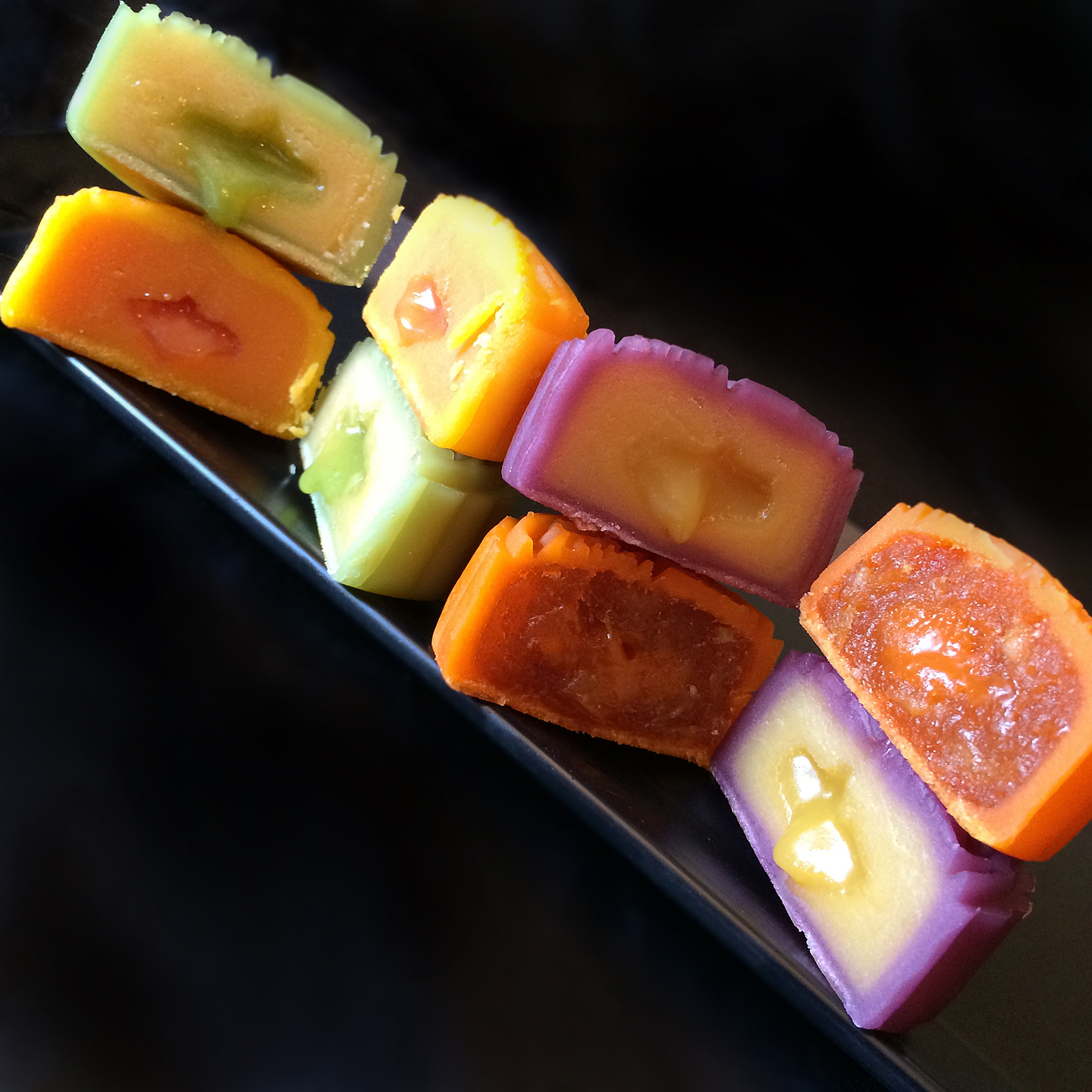

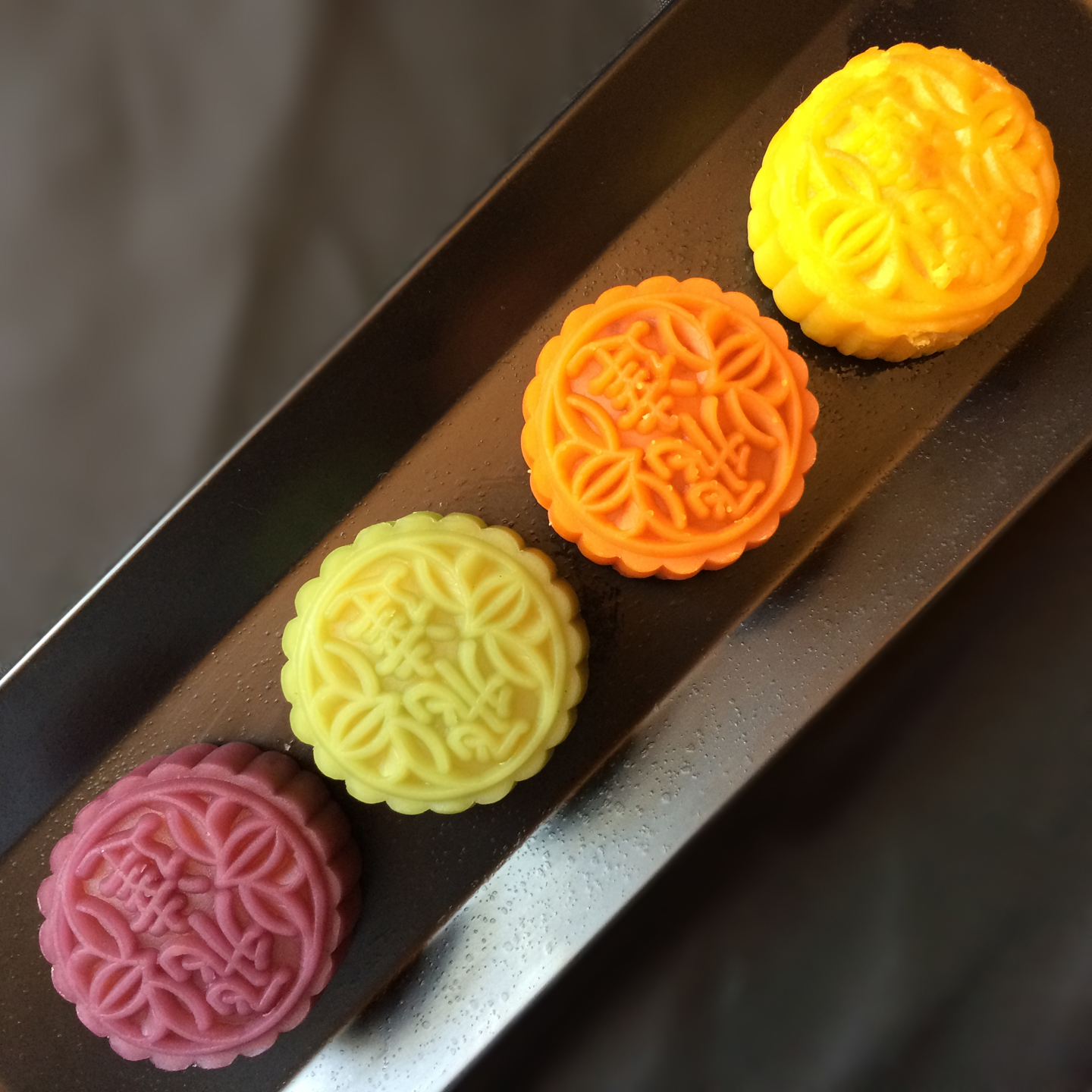
It seems that each year brings a fashionable new interpretation, eye-catching and tongue-pleasing, and 2019 is no exception. These sweet multihued gems came from Fay Da Bakery, a chain boasting a baker’s dozen locations (some outside of Chinatown). Our fascination with desserts that gush when pierced is serviced by Lava Mooncakes clad in colorful skins. Purple on the outside, golden within, the durian flavor was perfect; the green matcha member of team proved sweet; yellow custard was eggy – almost duck eggy – and in terms of flavor, a fair hybrid of classic mooncake and this modern rendition; orange was less about lava and more about marmalade, riddled with bits of orange peel – a pleasant surprise.
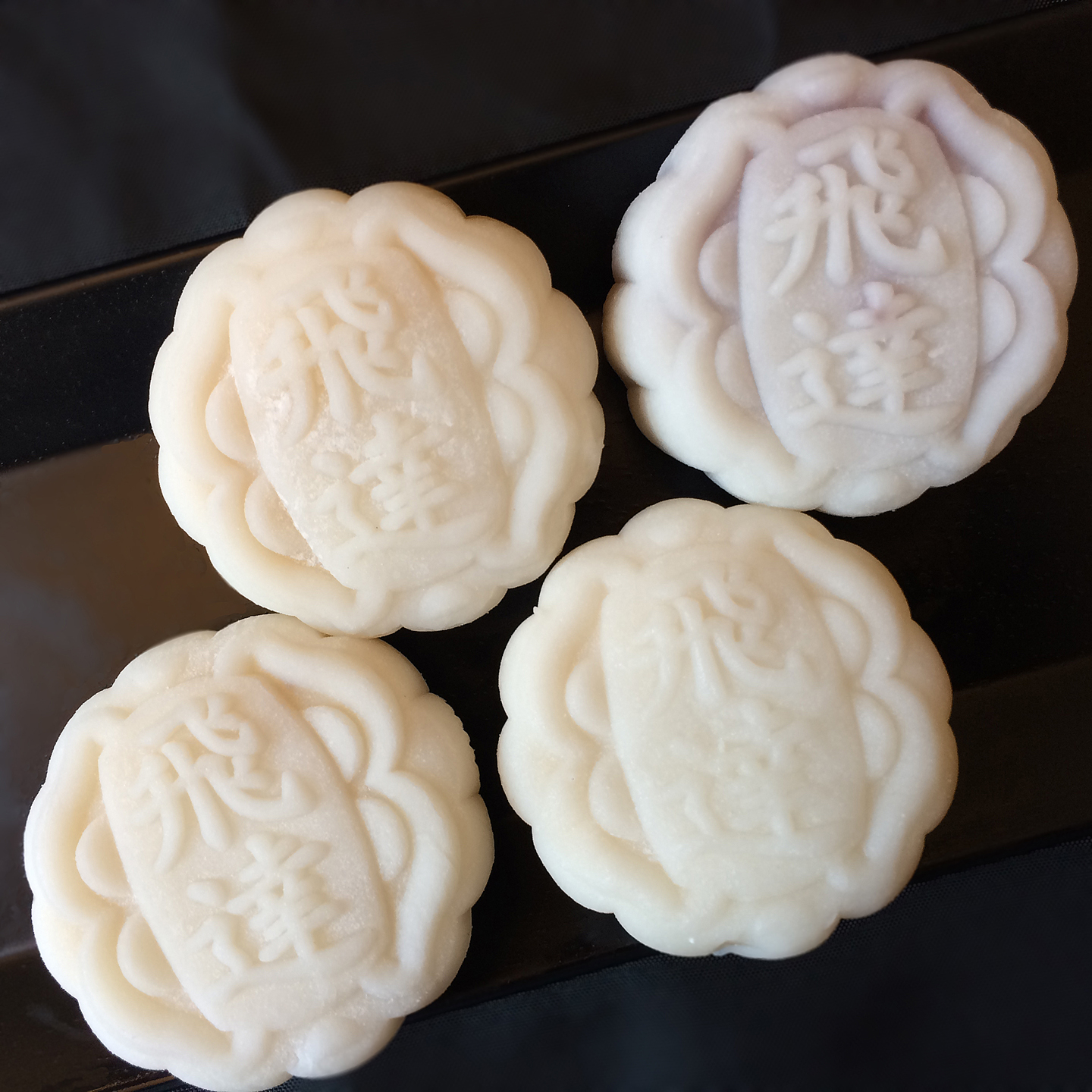
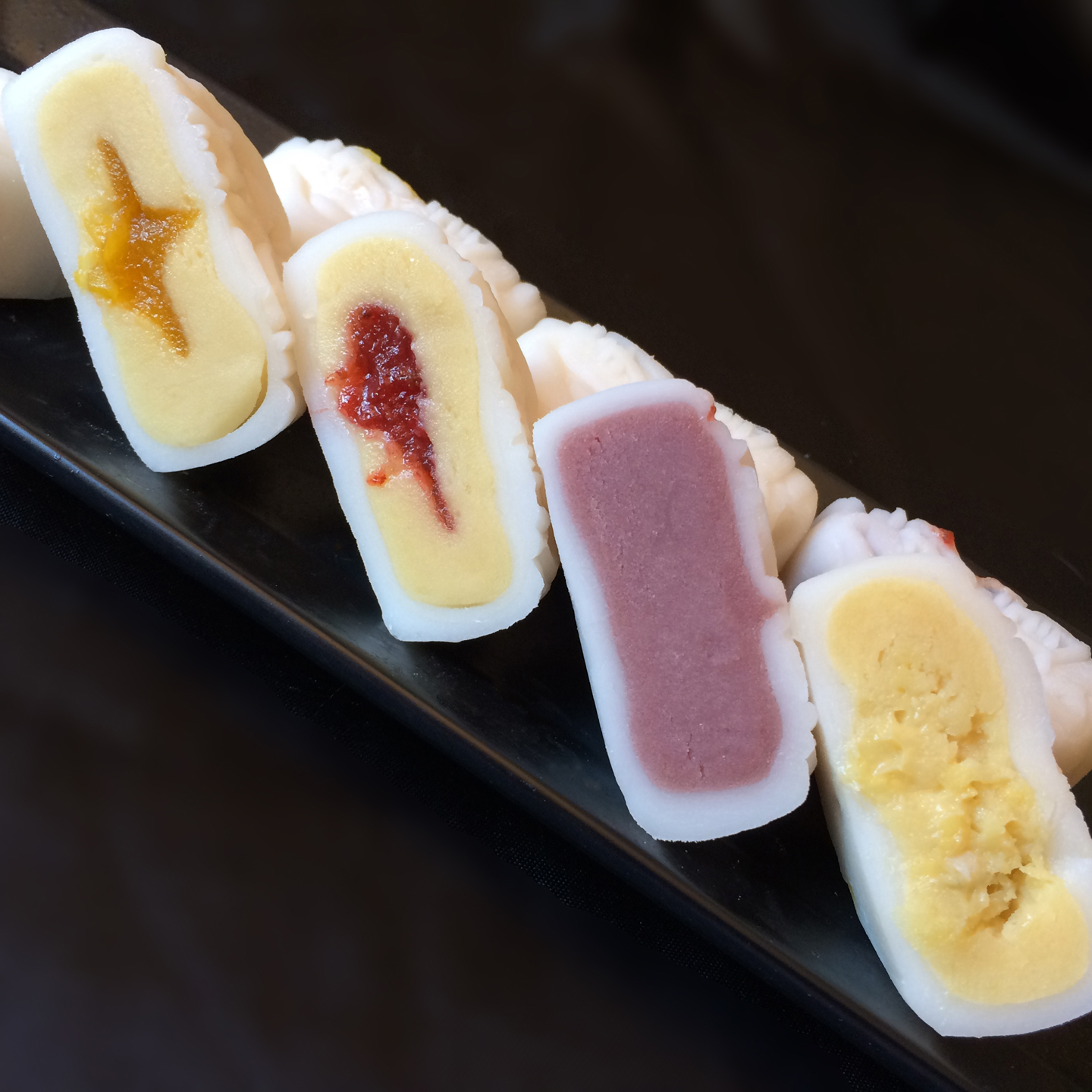
The Snowskin Mung Bean Mooncakes were also a treat: mango featured a good balance between mung bean and mango; strawberry tasted like strawberry preserves from a jar, not that it was bad, just how it was; purple yam was sweeter than I anticipated and quite flavorsome; durian, like its lava mate, was not overpowering but decidedly durian.

Even the Häagen-Dazs in Flushing’s New World Mall was touting sets of ice cream mooncakes!
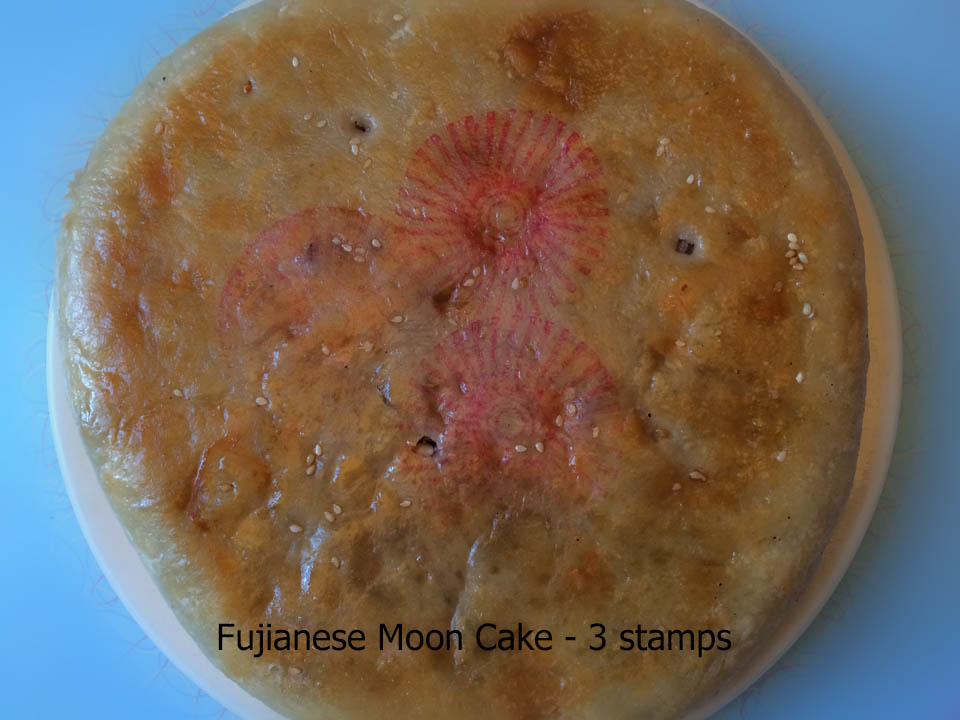
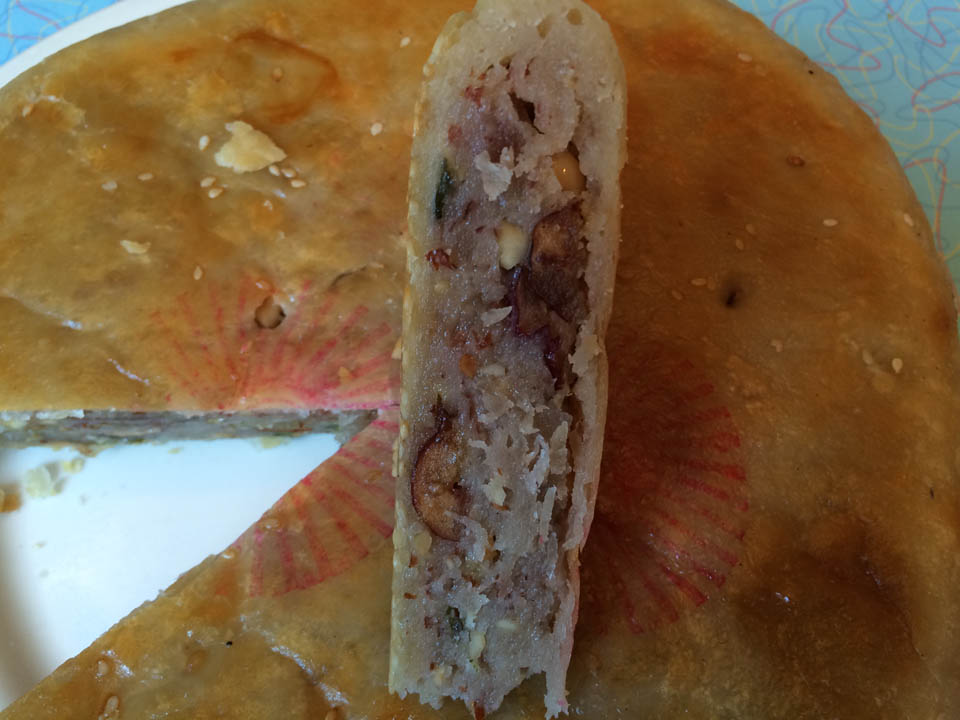
fujianese-moon-cake-3-stampsfujianese-moon-cake-insidePerhaps the most unusual are the mooncakes found in Fujianese neighborhoods, particularly along East Broadway in Manhattan’s Chinatown. These round behemoths (about 8½ inches in diameter and an inch or so thick) are simple in appearance. Wrapped in a single flaky layer covering a more substantial crust (a mixture of rice and wheat flours) with red food coloring stamps on top to delineate varieties, they are an embarrassment of lard and sugar with the addition of chopped peanuts, dried red dates (jujubes), bits of candied winter melon and other nuts and fruits supported by sesame seed encrusted bottoms. I’m wary about cautioning you that these might be an acquired taste as they are certainly unlike anything you might find in Western cuisine and I don’t want to put you off; some friends liked them immediately, others had to think about it. In any event, the flavors will grow on you regardless of your starting point. These hefty disks exemplify the phrase “a little goes a long way” and a cup of tea nearby helps cut the oiliness. Cost is about $10 each.

I have to admit that I hit a wall in my attempt to decipher the inscriptions on the Fujianese mooncakes. Most bore a number of red sunburst shaped identifiers and were stamped, once, twice, three times or four. I was hard pressed to taste the difference between the single and double stamped versions; they were the simplest of the lot – sweet, lardy, and a little fruity perhaps. By the same token, the three-stamp and four-stamp versions were similar to each other and boasted the addition of sweet jujubes and other fruits – more interesting and better in my opinion, certainly sweeter because of the jujubes, but I couldn’t tease out the distinction between the two. Alas, there were other stamps as well – words, I suspect – but the color had run so they were undifferentiable to me. I have friends who can handle Mandarin and Cantonese, but not the Fujianese dialect, and none of the vendors had a word of English, so my questions were fruitless (unlike the 4-stamp mooncake). I’m not going to let this go, though, so keep an eye out for an update to this post.

Update as promised: Never one to be satisfied with “…and the rest” (as the theme from television’s Gilligan’s Island once crooned – but only for the first season), I had no choice but to return to East Broadway in Manhattan’s Chinatown where I had first tapped into the motherlode of Fujianese mooncakes.

On that visit, I had spotted one that displayed somewhat illegible writing rather than a mini-constellation of stamps but I had already purchased a surfeit of mooncakes that day and decided that I didn’t really need to buy one of each. Silly me; I should know better by now. So since that particular mooncake was eating at me (instead of the other way around), I hazarded $12 to try and solve the mystery.
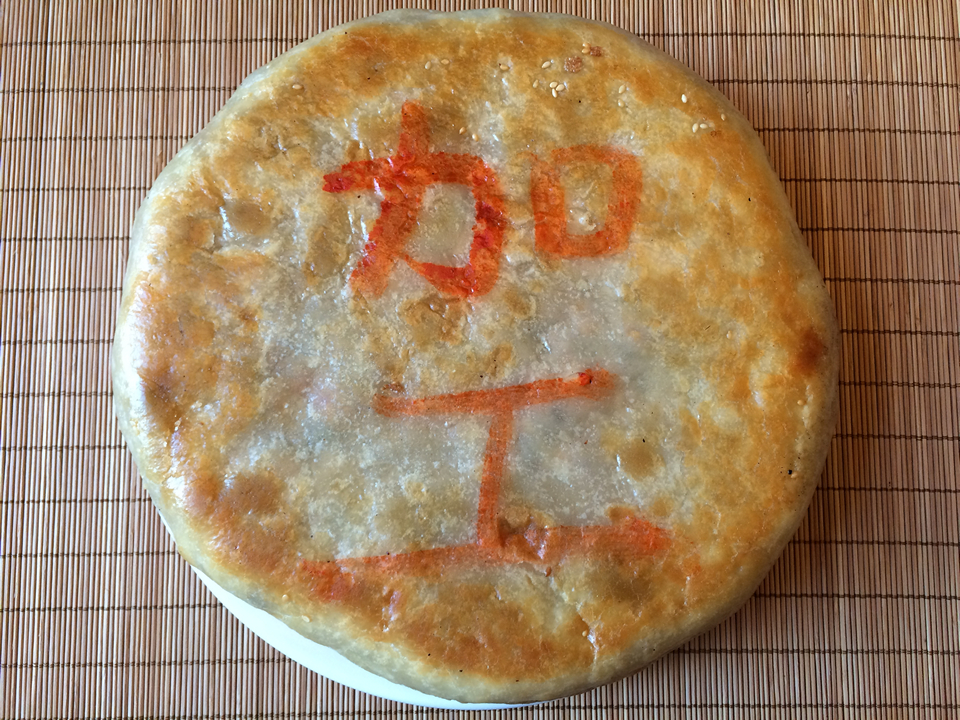
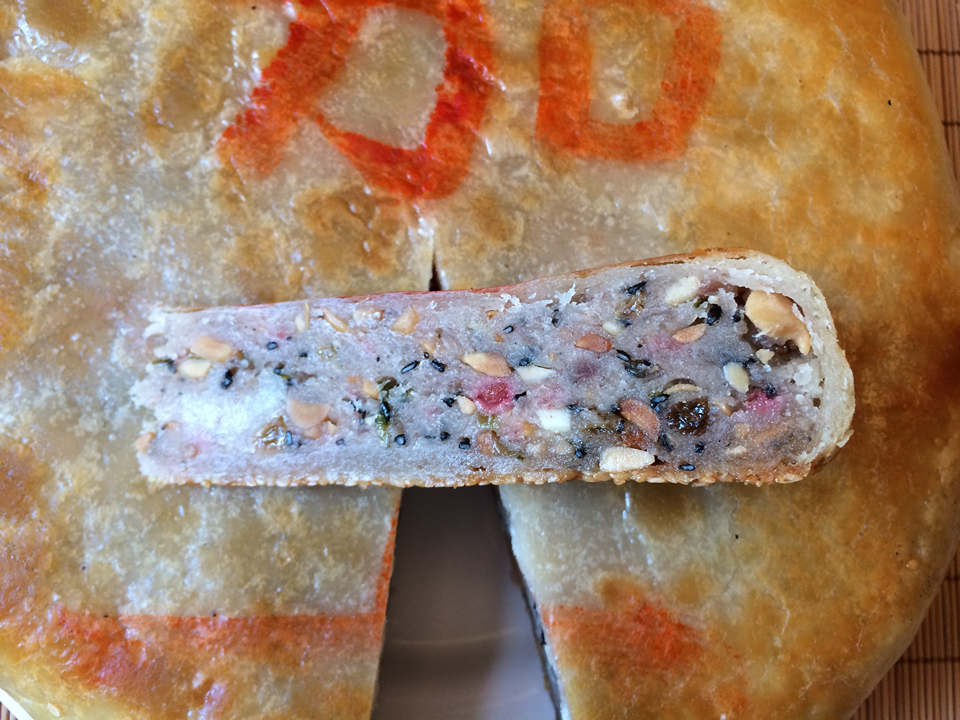
This time the writing on the mystery mooncake was clear, but I’m still unsure about what it said. I see the character for “plus” over the one for “work”; if they were next to each other, it would mean “processing” (in addition to lots of other translations). In any event, it’s by far the best of any of that ilk that I’ve tried because of the ample addition of black sesame seeds and a plentitude of peanuts, so if you encounter it, that’s the one to get.

I’ve cobbled together a mini-glossary to help you decipher a few characters on some of the more popular fillings found in Cantonese mooncakes:

月                 moon
月餅             mooncake
白                 white
蓮蓉             lotus seed paste
紅豆             red bean
旦黃             single yolk
雙黃             double yolk
冰                 ice
冰皮             snowy
伍                 five
仁                 nut, seed, kernel, (benevolence)
金華火腿     Jinhua ham
棗                 jujube (red date)

Armed with these keys, you can combine phrases and discover the secrets hiding within. For example:

雙黃白蓮蓉 = double yolk white lotus seed
冰皮月餅 = snowy mooncake

So head to your nearest Chinese bakery and sample some of these autumn delights! If you can pronounce pinyin, say “zhōngqiū kuàilè” (which sounds like jong chew kwai luh). But in any language, here’s wishing you a Happy Mid-Autumn Festival!

中秋节快乐!
 

Yemen Sweets

Instagram Post 8/19/2019

I was stalking the aisles at Brooklyn’s Balady Foods, the redoubtable Middle Eastern market at 7128 5th Ave, in search of goodies for my Little Levant ethnojunket when I stumbled upon this toothachingly sweet trio of blood sugar tolerance tests from Yemen Sweets that turned out to be a little much even for me.

(Click on any image to view it in high resolution.)

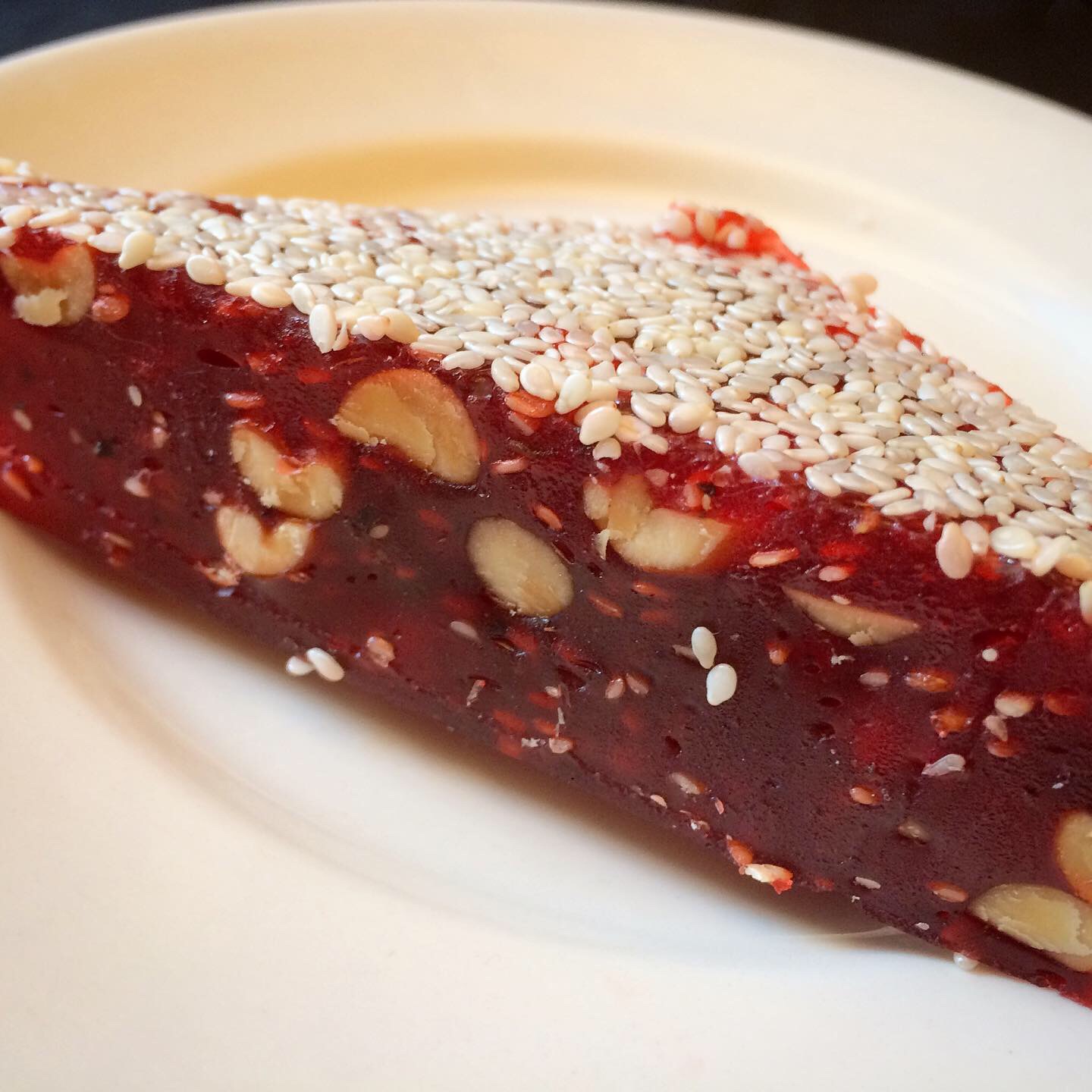
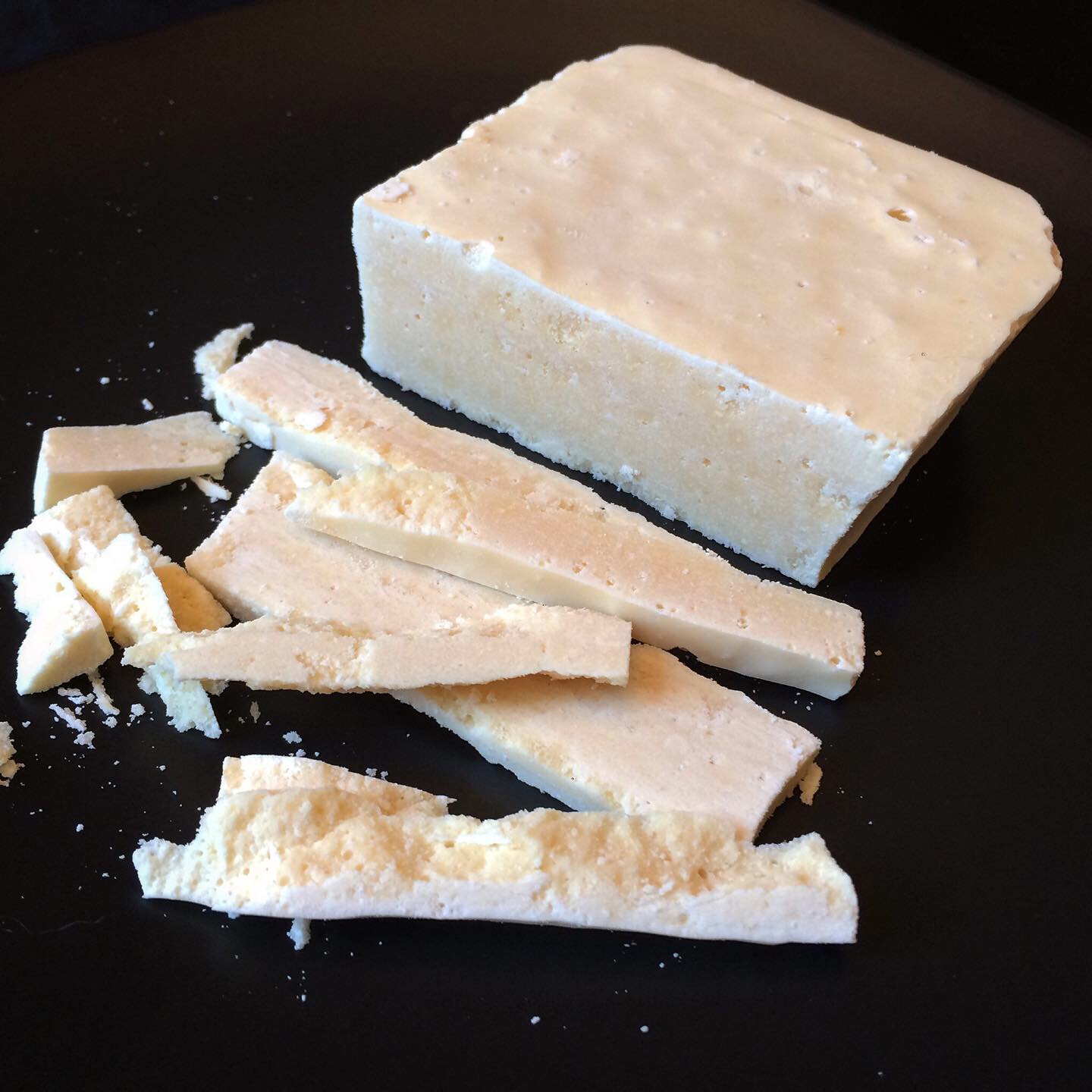
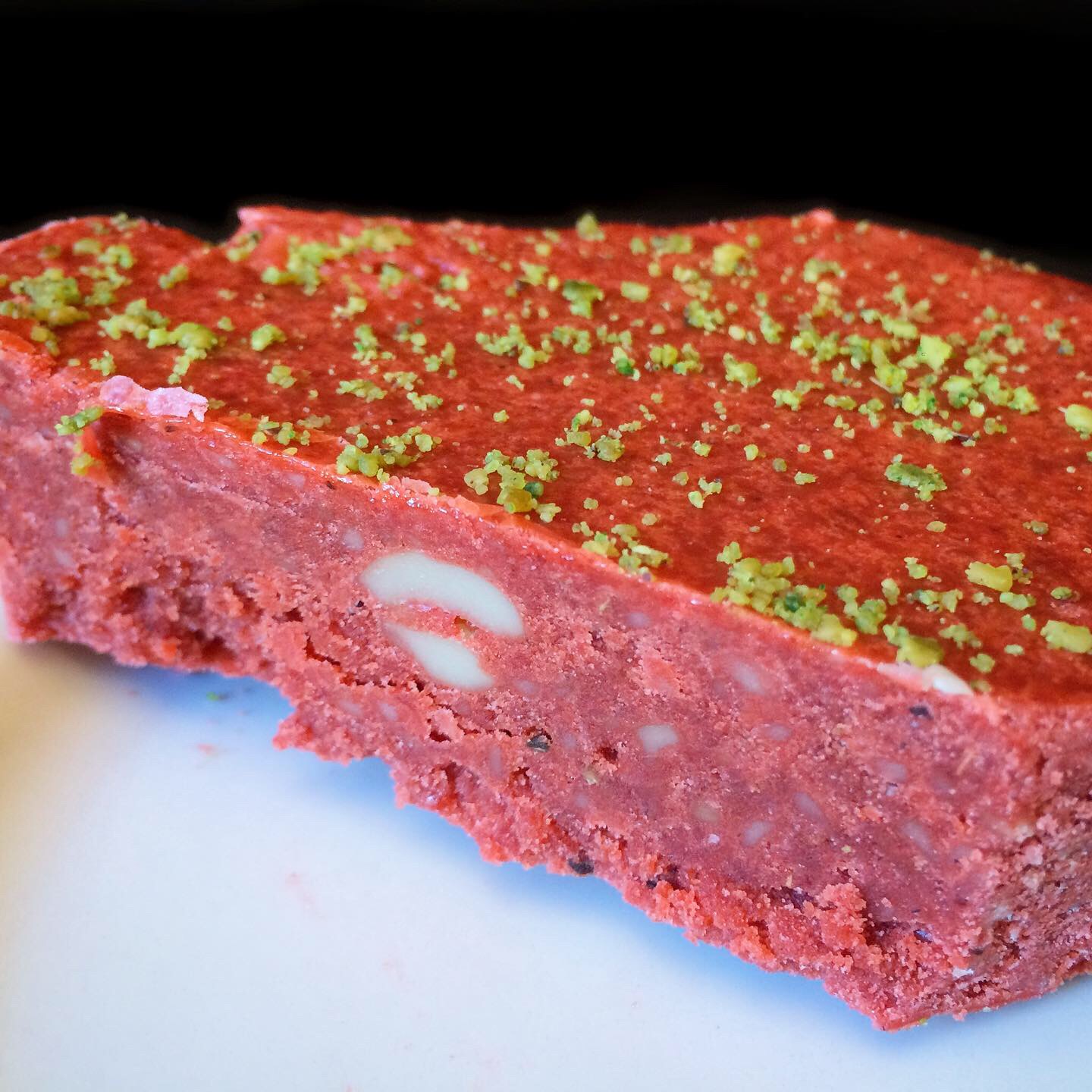
This one is called Harissa, a word I’ve always associated with North African red chili pepper paste and never with candy. A little research and I learned that the Arabic word harissa (هريسه) means to mash or squash which made some sense. Its main ingredients are sugar, soybean oil, peanuts, flour, cornstarch and sesame seeds (no heat) so, predictably, its dry texture is somewhere along the cookie<–>candy continuum, closer to cookie were it not for the oil. You can readily taste the ground peanuts and sesame seeds along with the intense presence of clove and cardamom.


Similarly flavored, Khalta has a texture along the gummy bear<–>Turkish delight continuum. Seems like khalta (خلطة) means mix, but probably in a different context. Mitigated by plenty of peanuts and strewn with sesame seeds, it was unusual as well.


The most immediately accessible of the three (although TBH the others grew on me eventually) is Labaneyh. This one had a crumbly texture and tasted like a perfumy cross between fudge and white chocolate, no surprise since cacao is listed among the ingredients along with milk, the Arabic word for which is laban (لبن) so that’s logical.


I was unable to ferret out much information about these three sweets despite the manufacturer’s address listed on the packaging which doesn’t seem to relate to much in the real world. Anybody out there know more about these? Your comments are greatly appreciated!


Eggcellent Soufflé Pancake

Instagram Post 8/15/2019

(Click on any image to view it in high resolution.)

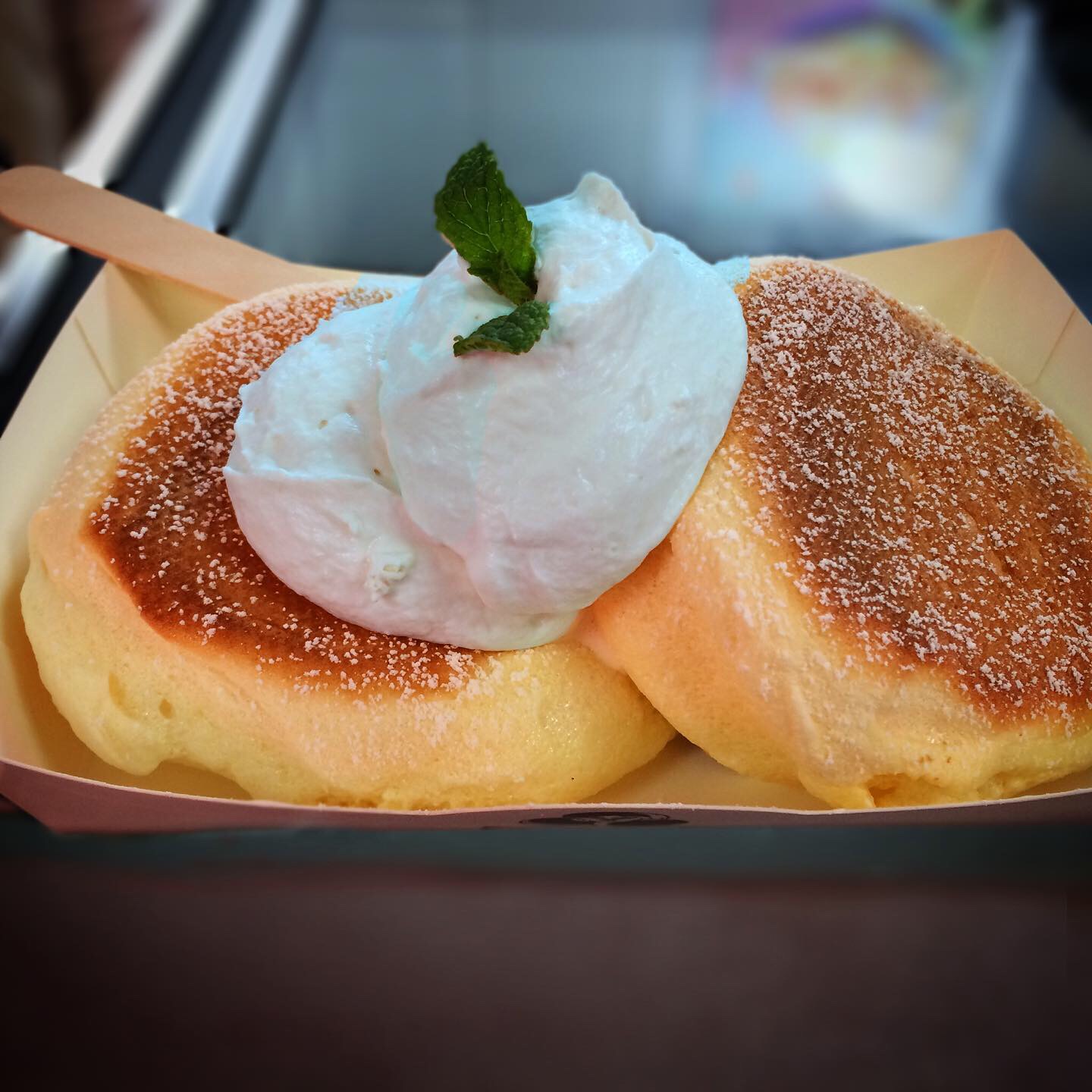
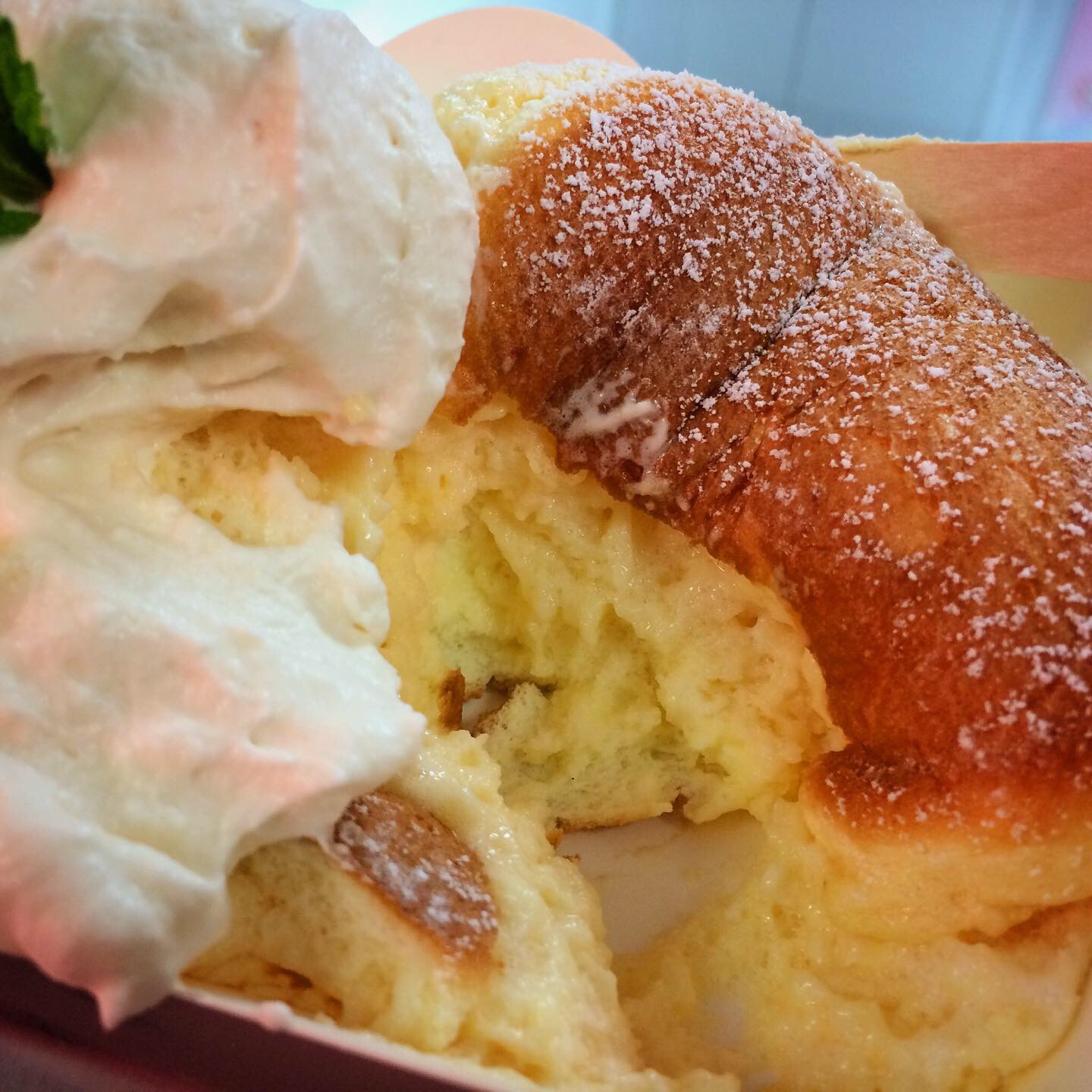
There’s a new addition to the lineup of quality vendors in the mini-mall at 135-15 40th Road in Flushing. Keeping company with the likes of local luminaries Legend Chicken, Yi Fang Taiwan Fruit Tea, and the Flushing Ice Cream Factory, Eggcellent Soufflé Pancake opened on August 4 and their soufflé pancakes are outstanding. Possibly the lightest yet richest dessert in the neighborhood, they’re fluffy, spongy, custardy, foamy, eggy, bouncy, moist, creamy and sweet. (I think that pretty much covers it.) The flavor list compels me to return for multiple visits: Original (with a kiss of maple cream), Crème Brûlée, Strawberry/Blueberry Yogurt Cream, Red Bean/Matcha Cream, Mango Yogurt Cream, and Chocolate/Banana/Caramel (with marshmallows, yet). With roots in Japan and Taiwan, these puppies are prepared from scratch (like apparently everything in that mini-mall if the immeasurably long lines are any indication, grumble, grumble) and you’ll be advised that there will be a significant wait.


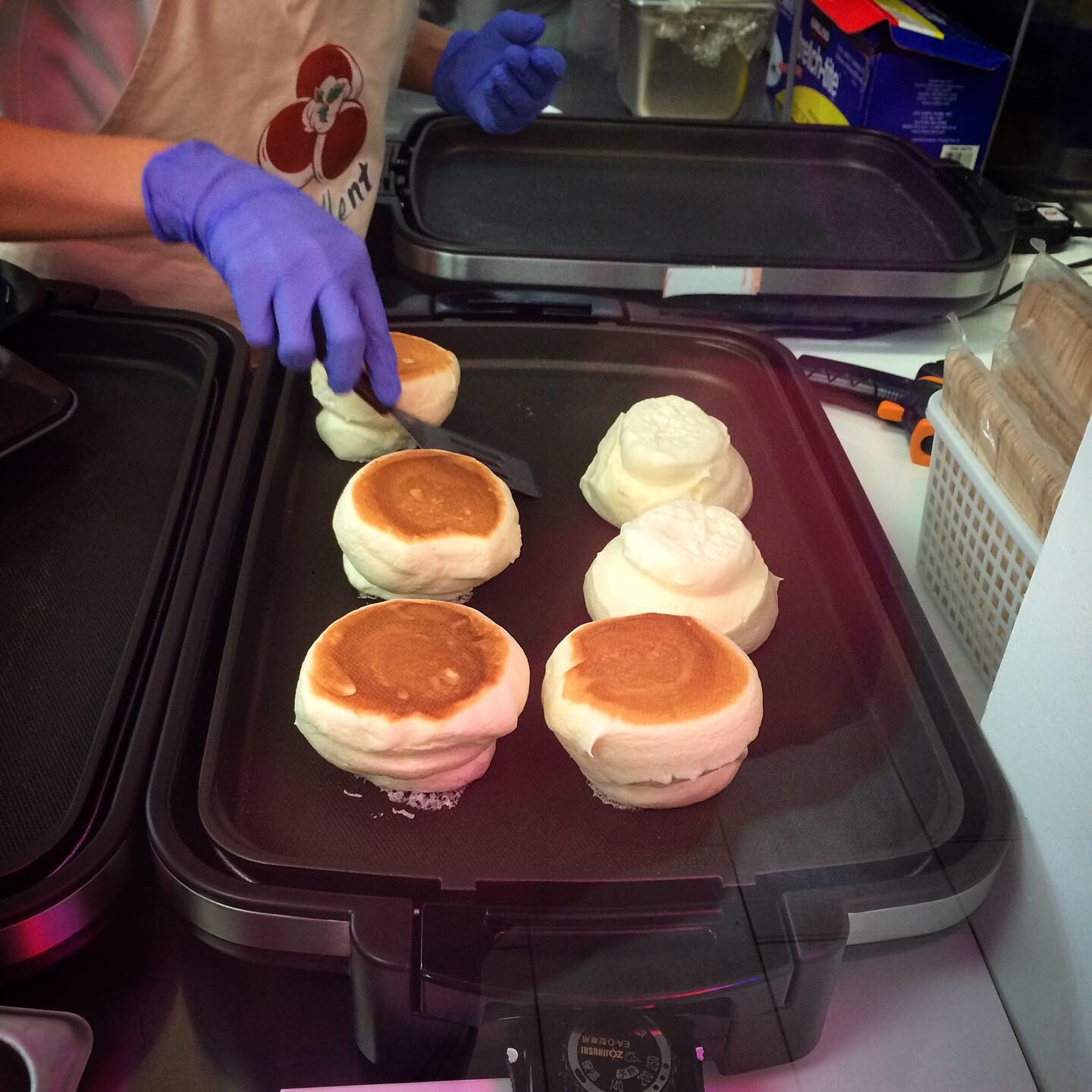
Mine went well beyond “significant” but I was the first customer of the day and those soufflé pans (see photo) must be heated to a precise temperature (she used an LED equipped digital surface thermometer) before the airy batter can be plopped down without deflating, lightly cooked on one side, carefully flipped à point, transferred to a serving dish and dressed.


But it’s absolutely worth the wait. We’re talking about a real soufflé pancake, not some ersatz premade doppelganger, and a delicious one at that. I tried to smoosh it a little for this photo you so you could see what I was getting at with that parade of adjectives earlier. Artwork against the back wall captioned “Soufflé from the Sky” depicts the dessert floating heavenward on a lacy doily. Trust me. It fits.


Happy Wheelie

Instagram Post 8/9/2019

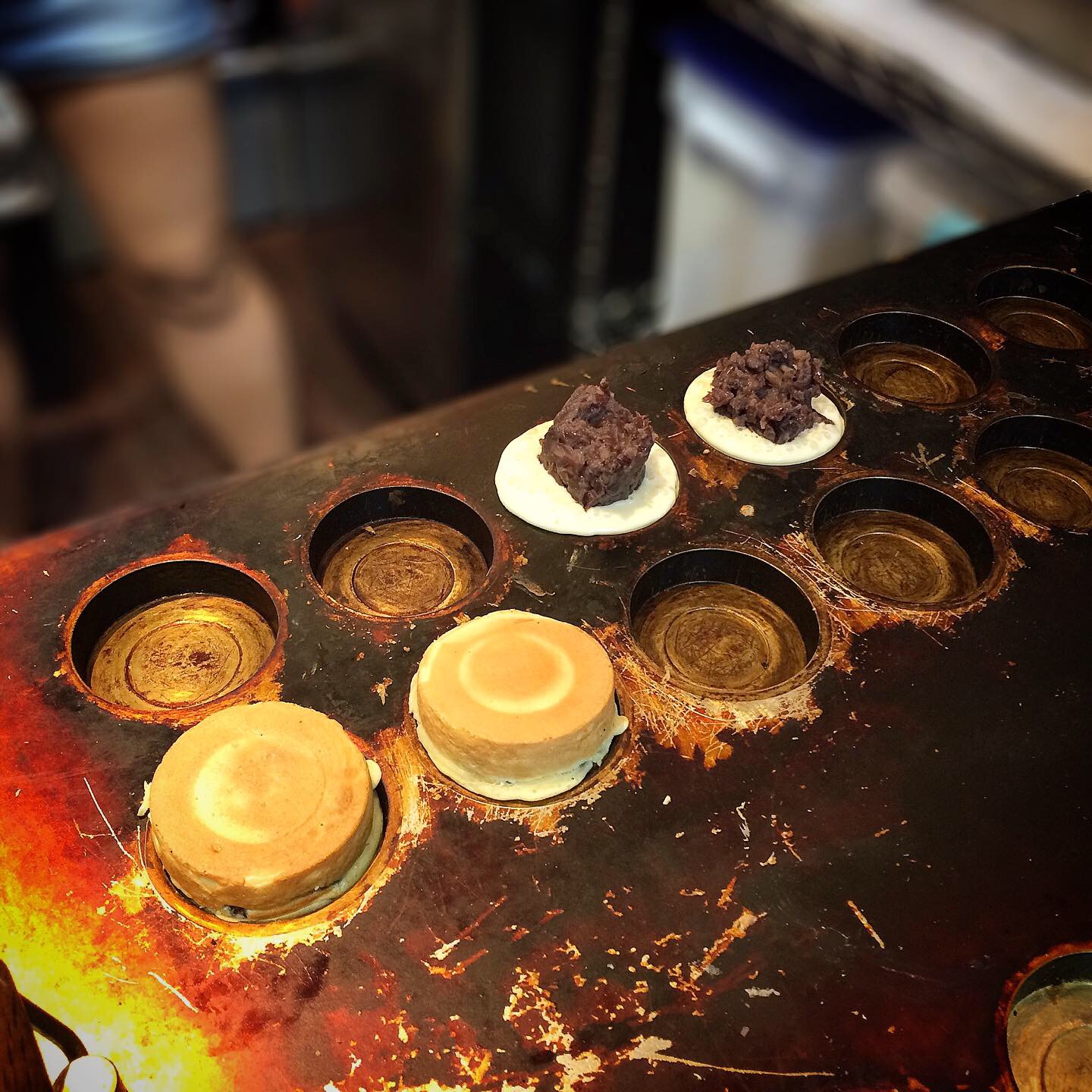
Happy Wheelie, known to some as Taiwanese Wheel Cake because that’s what they sell, can be found in Landmark Quest Mall, 136-21 Roosevelt Ave, Flushing, and the experience is as much about watching the process of making these traditional Taiwanese treats as it is about eating them.

(Click on any image to view it in high resolution.)

Using a modest batter and a variety of fillings, they’re prepared in this custom apparatus whose roots are in Japan’s Imagawayaki (今川焼き) where they’re often filled with adzuki bean paste. Here, they’re stuffed with options that run the gamut from savory to sweet (I haven’t tried anything that would provoke the “it’s too sweet!” contingent yet). These little snacks are best when freshly made, a little crisp outside, soft and warm inside – but they’re still fine as delayed gratification.


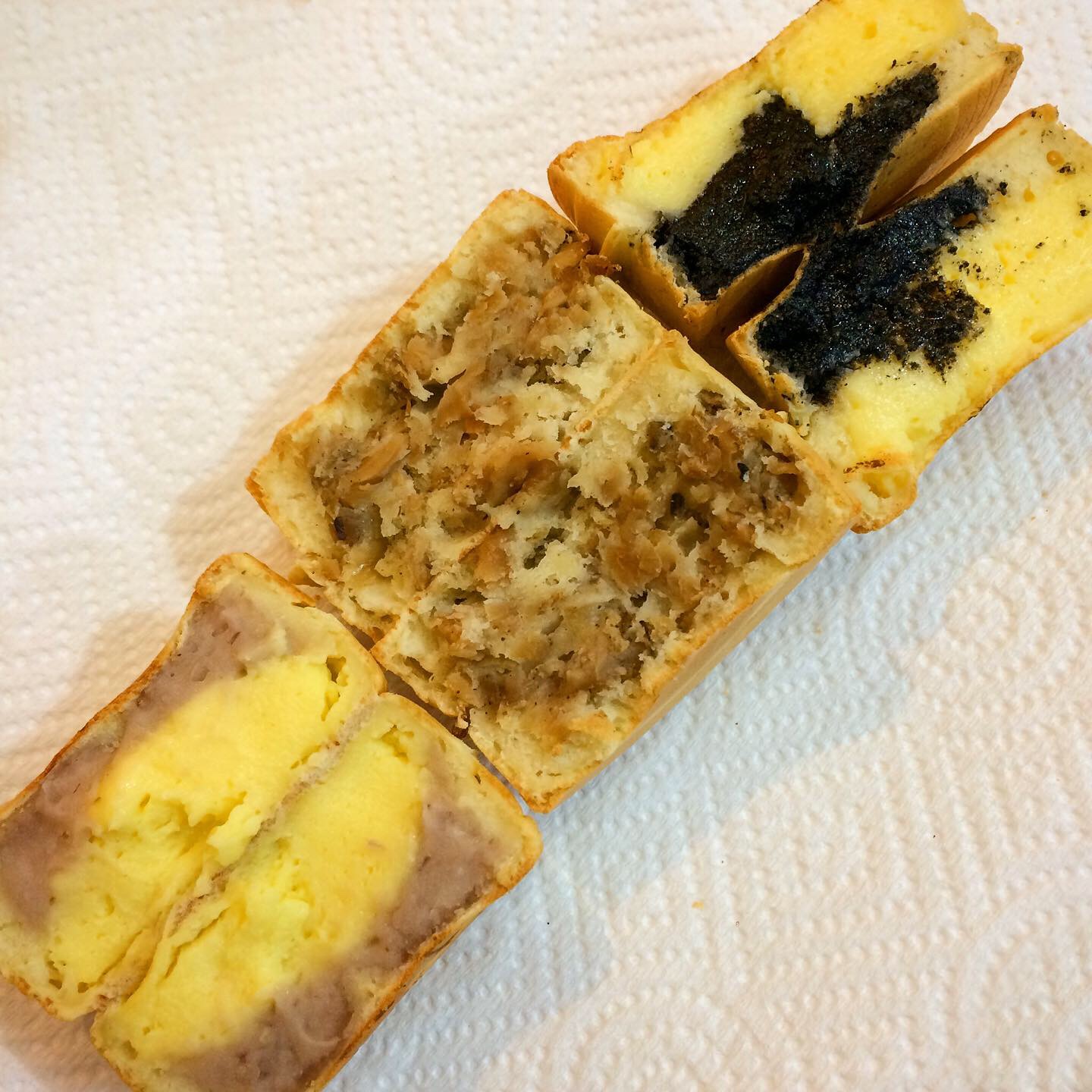
The eight available flavors include custard cream, red bean (with or without cream) taro (with* or without cream), black sesame and cream*, Oreo cookie, and dried radish*. All that I’ve tasted are yummy but I’d recommend starting with the dried radish: savory, a teeny bit spicy; if this appeared on a dim sum cart, you’d be happy. Then work your way up on the sweetness scale; I admit to not having tried the Oreo, but I’d guess that one falls at the outer boundary of the sweeter meter.

Vivian, super friendly and helpful, told me that most of the back section of this narrow mini-mall is populated by Taiwanese vendors with an eclectic selection of goodies from beef noodle soup and dumplings to crystal shaved ice, and that all of their distinctive wares are crafted from natural ingredients. So obviously, more to come….

(* shown here)


Bon Bon – Swedish Ice Cream

Instagram Post 7/26/2019

(Click on any image to view it in high resolution.)

I wrote about Bon Bon, 130 Allen Street in Manhattan, over a year ago, and I’m pleased to report that this Swedish candy shop is still going strong. In addition to sweet treats in a rainbow array of colors, flavors, and textures, they sell world famous Swedish salty licorice as well as the sweetish kind. Recently, they added a new feature to the mix, Swedish soft-serve ice cream, and since it’s National Ice Cream Month, there’s no better time to try it.

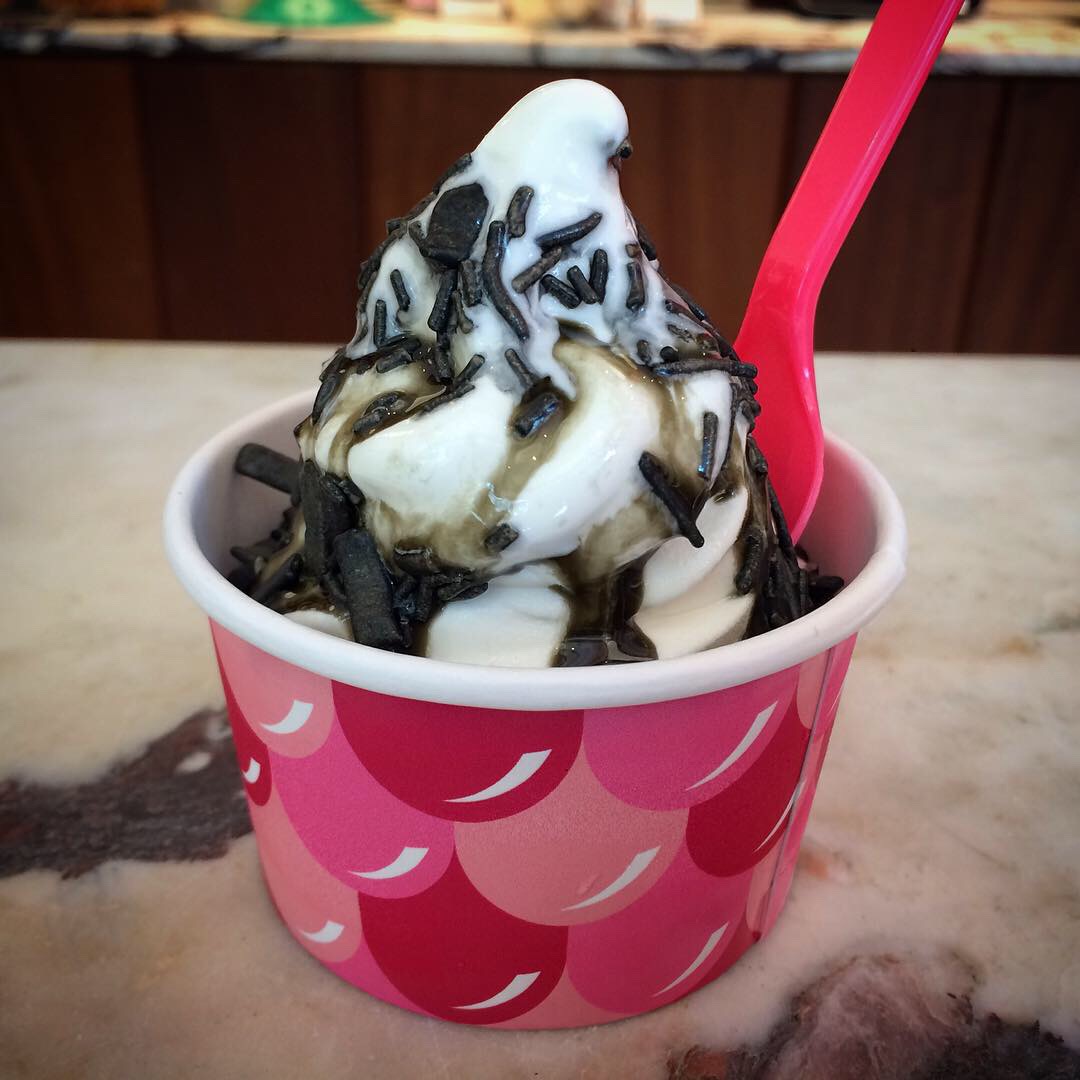
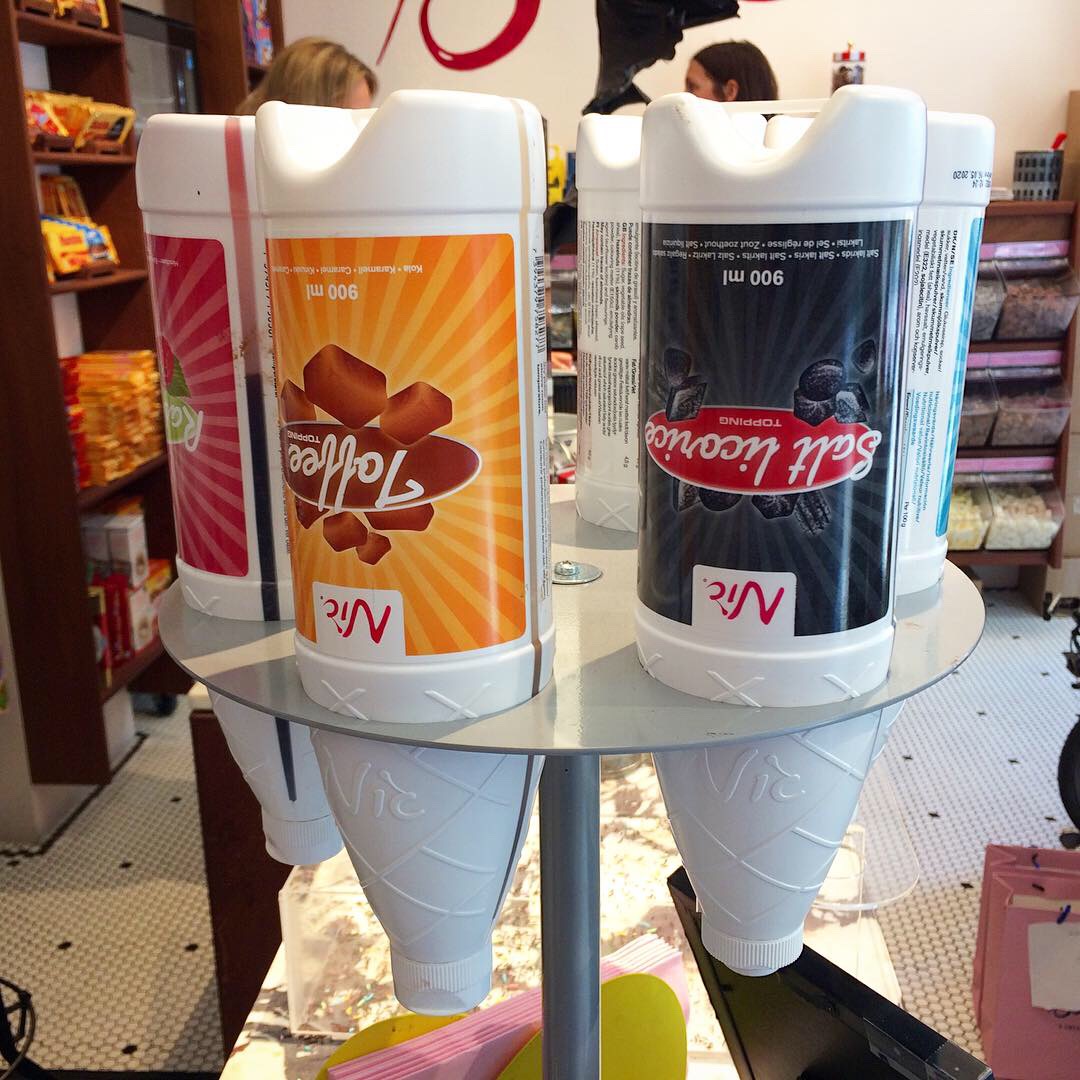
The Swedish soft-serve (mjukglass) recipe is richer than the conventional because of its greater measure of cream, but it’s the unique selection of sprinkles and syrups that provide the vital distinction. Shown here is vanilla (they have chocolate too) with licorice syrup and two kinds of toppings, salty licorice and salty licorice flakes. Amid seven syrups and eleven kinds of sprinkles, this is the combo that I enthusiastically recommend.

Generally, when you think of the customary (in the US) sticky, chewy texture of licorice, you’d question its ability to play well with ice cream, but these adornments are more like crunchy flakes of hard candy – and there couldn’t be a more perfect match. I asked if the idea was something they created themselves, but was delighted to learn that this treatment is exactly what you’d find all over Sweden, right down to the brand of syrup and the unusual dispenser with its inverted bottles. (See second photo.) If you think you don’t like licorice, let alone salty licorice, this may well be your gateway drug.

(Full disclosure: this delicious taste of Sweden was provided gratis by Robert and Ditte of Bon Bon.)


Angela’s Ice Cream

Instagram Post 7/24/2019

(Click on any image to view it in high resolution.)

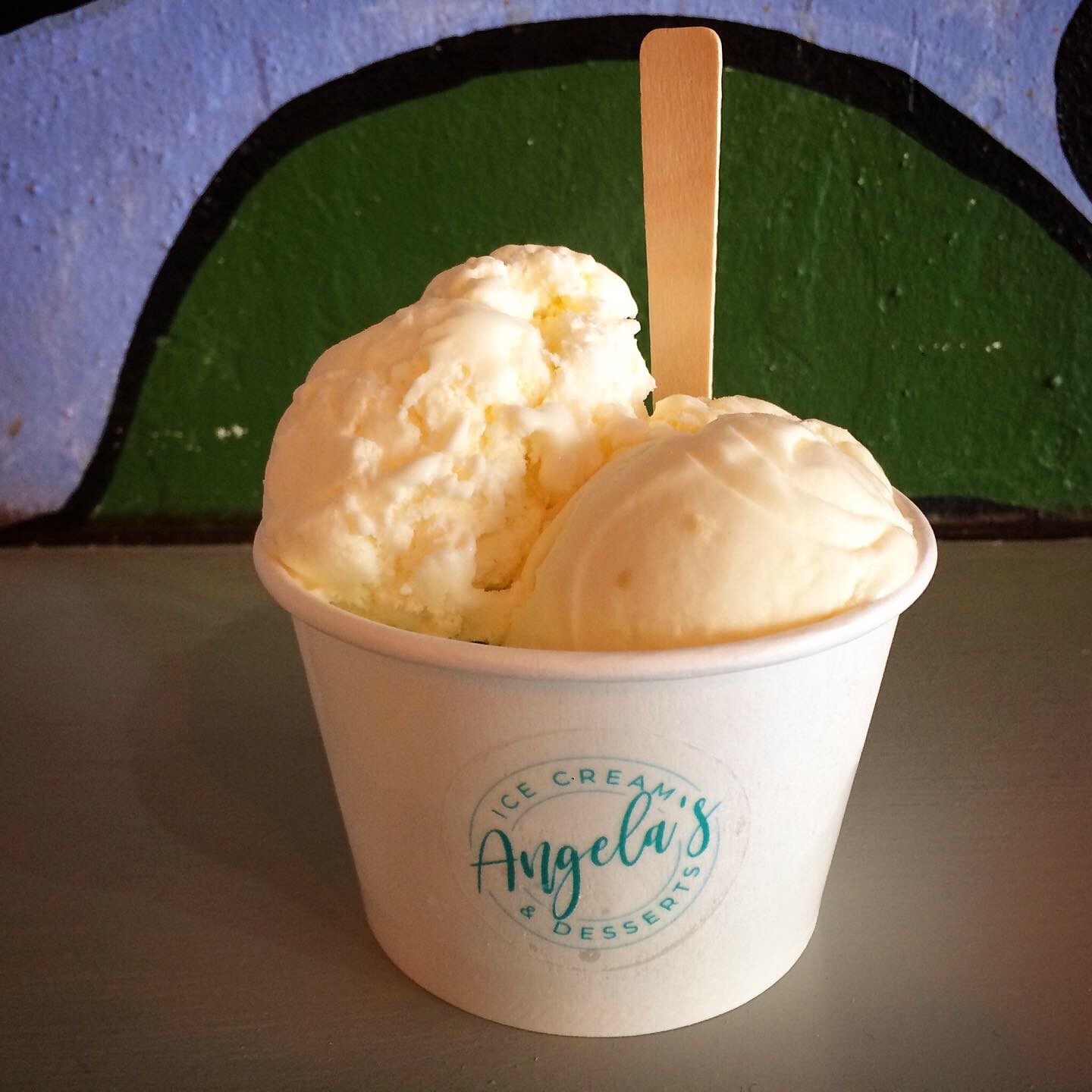
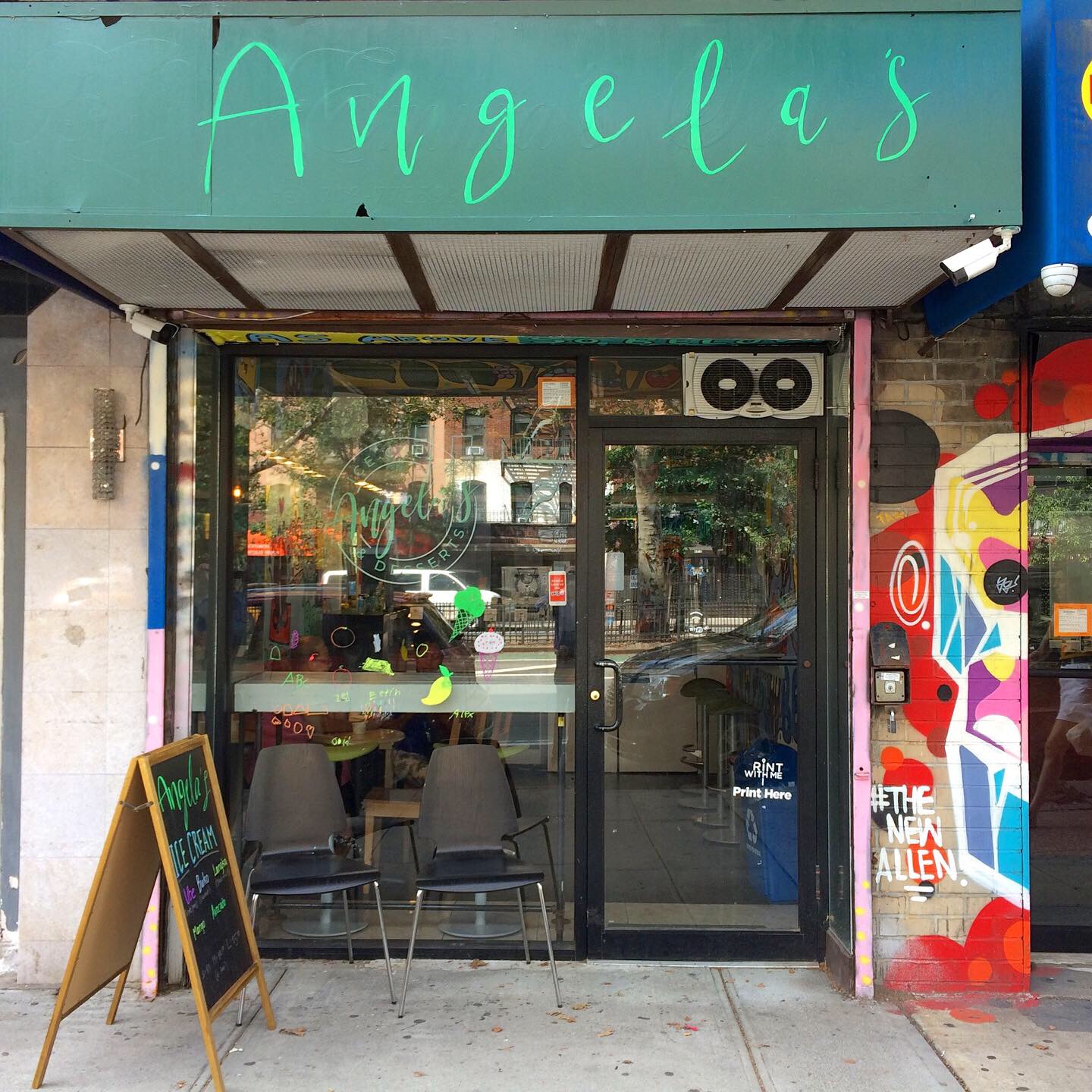
Angela’s Ice Cream at 151 Allen Street on the Lower East Side has brought freshly made, small batch, Filipino ice cream flavors to New York City and each one is delicious. The story behind the story is that Angela had been making these at home for her husband who has a passion for the stuff – so much so that they decided she should share her talents with the rest of us, hence, her first business venture which opened on June 15, 2019. Lucky us!

Dense and creamy, hand crafted with no artificial flavors (in others words, jackfruit is jackfruit, not a concentrate), it’s the first Filipino ice cream actually produced here in NYC. It’s currently available in mango, langka (jackfruit), ube (purple yam), choc-nut, vanilla, avocado (yes, and it’s the real deal), pandan, and buko-macapuno (the short but less than perfectly accurate definition is that it’s a variant of coconut). Slushies to come, calamansi flavor ice cream if we ask her real nice 😉!

Masarap! 😋


Paradise Sweets

Instagram Post 7/23/2019

While doing reconnaissance for potential venues to visit on my Little Levant food tour in Bay Ridge, I checked out one of the newer kids on the block, Paradise Sweets at 6739 5th Ave in Brooklyn. It takes a certain amount of intestinal fortitude to launch a new Middle Eastern bakery along that strip considering the number of existing well-entrenched similar establishments but they seem to have a handle on serving the standards and coming up with some innovations as well.

(Click on any image to view it in high resolution.)

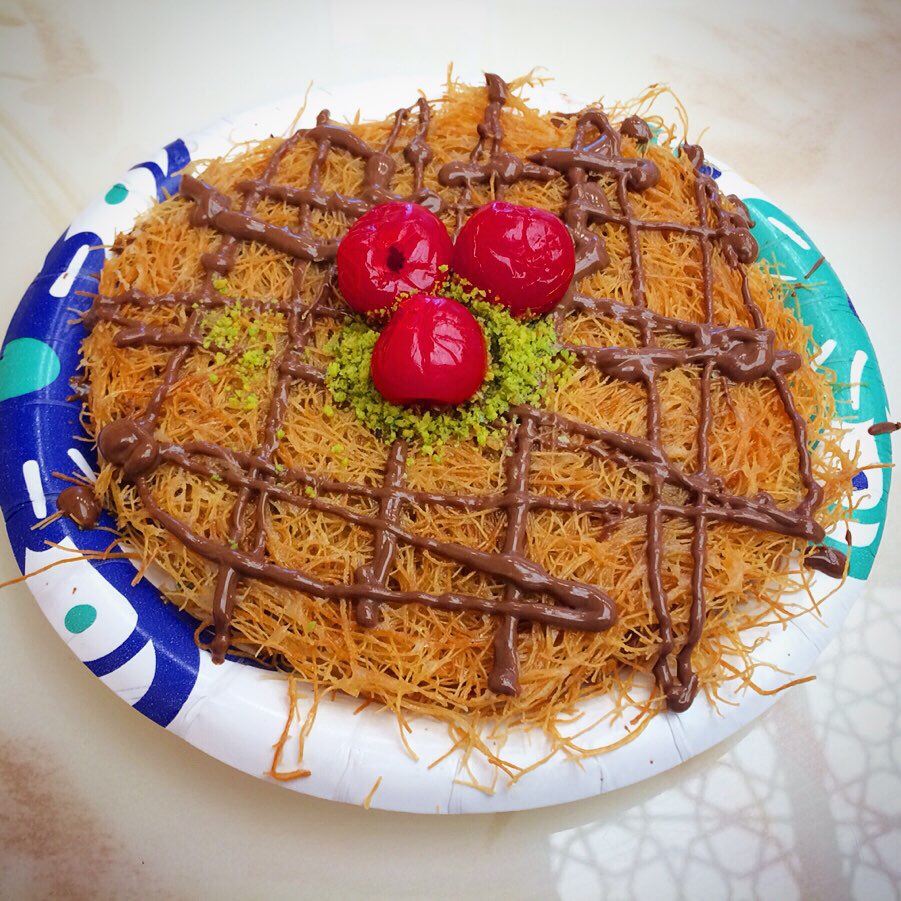
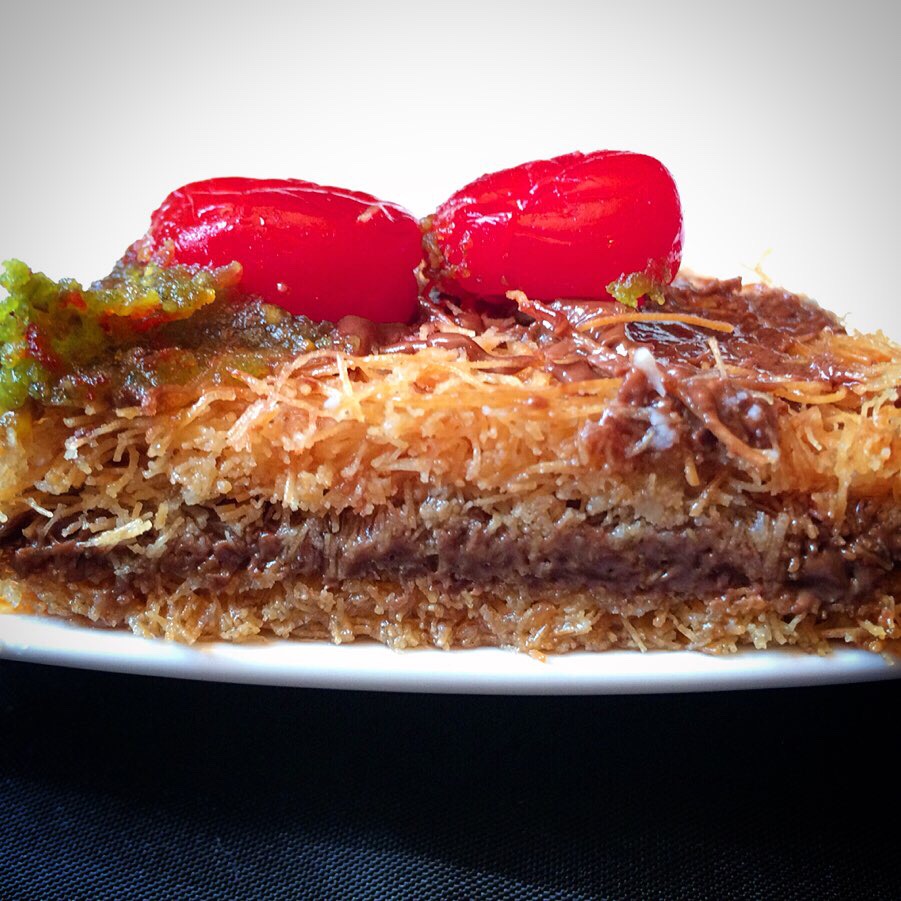
Case in point, this Nutella Kunafa (no, I won’t provide alternate spellings you might see since this was originally an Instagram post and Instagram only affords us 2200 characters per post). It’s a flat foundation of noodle-ish knafeh pastry suffocated by an ocean of Nutella topped with a thicker layer of vermicelloid kanafeh; a final fillip of adroitly squirted Nutella along with a trio of cherries and some ground pistachios grace the top gratuitously.


A cross section of this awe-inspiring architectural wonder so excessive as to give even my prodigious sweet tooth a run for its honey.

Problem is, I liked it.


As for the canonical litany of Middle Eastern sweets, along with an authentically cheesy, Kunafeh Nabulsiah, they do an acceptable rendition of Halawet el Jibn (sweet cheese rolls), cheesy dough stuffed with cheesy cream shown here, as yet unanointed by the accompanying supply of sugar syrup.


Paleteria Los Michoacanos

Instagram Post 7/18/2019

(Click on any image to view it in high resolution.)

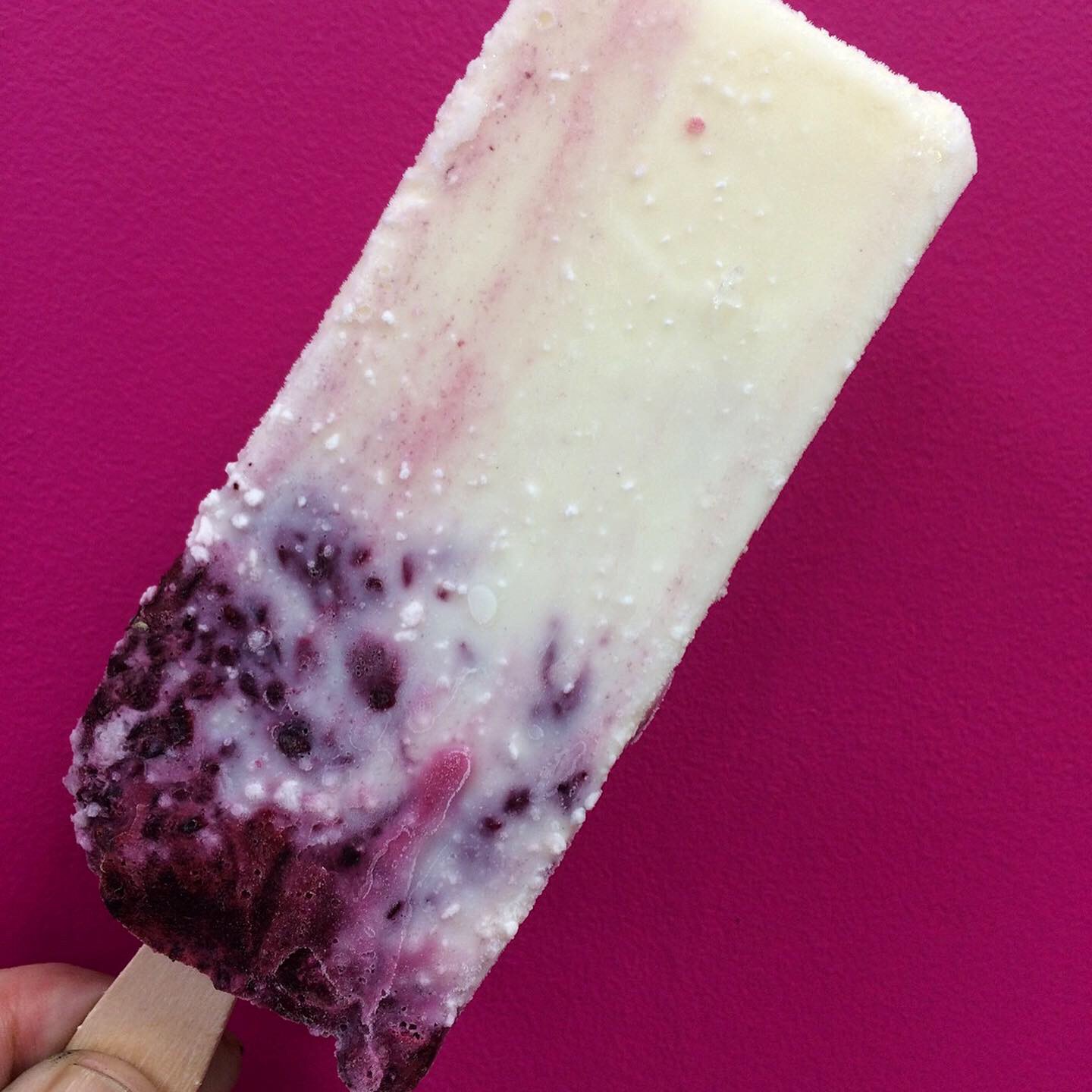
Every now and then, I write about something or someplace that I fervently want you to try because it’s Just That Good. Paleteria Los Michoacanos at 101-06 43rd Ave in Corona, Queens specializes in the most amazing, intensely flavorful paletas (Mexican ice pops on a stick) that I have ever encountered. Ever.

[1] They offer twenty-eight outstanding milk based flavors like arroz (rice pudding), rompope (eggnog), mamey, strawberry cream, pine nut, chocolate, chongos zamoranos (a Mexican dessert made from curdled milk and rennet), and queso con zarzamora (cheese and blackberry, shown here – which I highly recommend). And of course, you’ll find peach, raspberry, vanilla, pistachio and other familiar favorites.

Or choose from among twenty-two water ices like chamoy (tamarind with chili), guanabana (soursop), cactus pear, and grosella (currant) along with the customary orange, lemon, watermelon, raspberry, mango and the usual suspects.

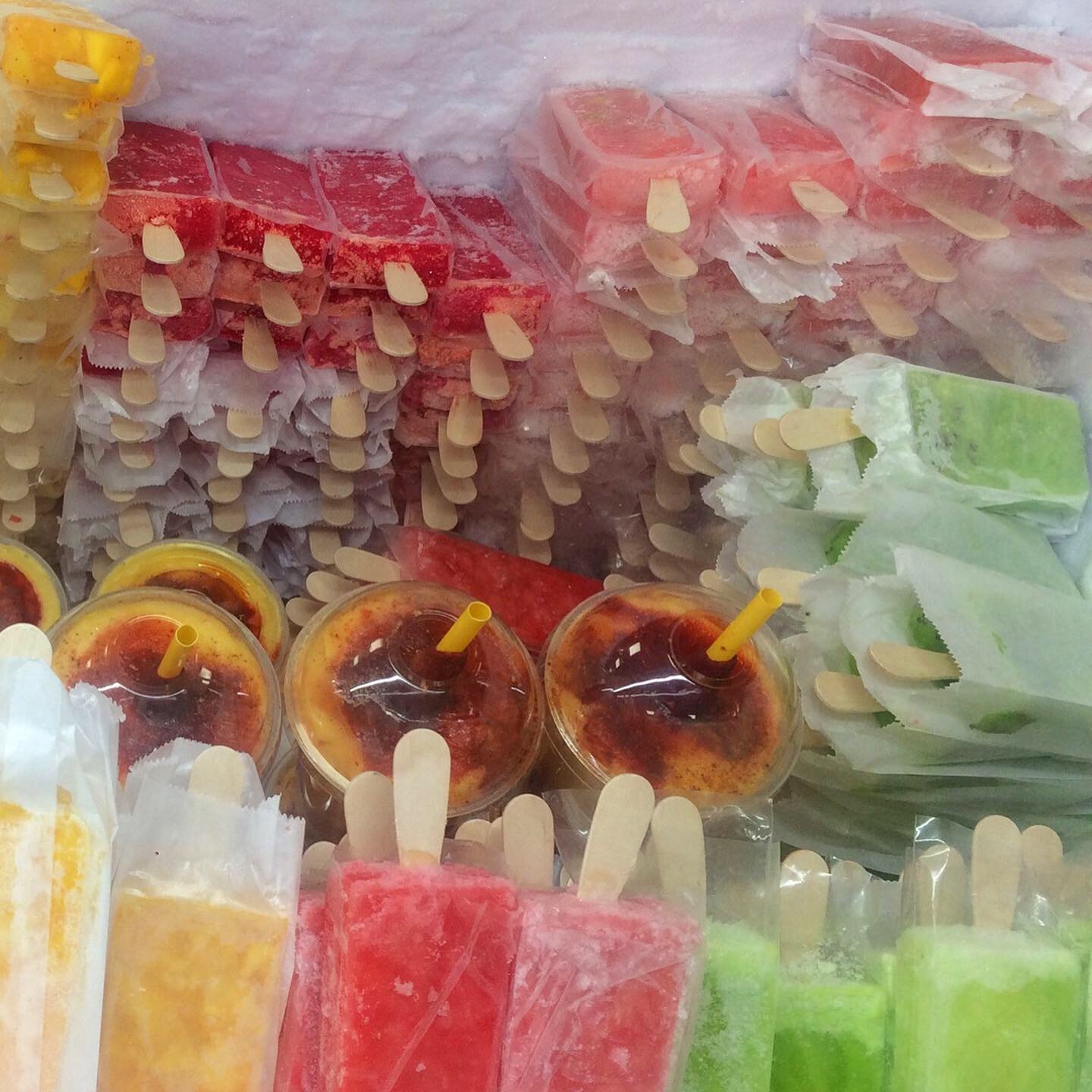
[2] A peek inside just one of the freezer cases. (BTW, they have ice cream, batidos and more.)

There’s actually some confusion about locations with similar names and branding. There’s a Paleteria La Michoacana in Yonkers (my introduction to these stores) with a comparable product line. I learned from Wikipedia that “La Michoacana” is an informal group (not franchises) of family-run ice cream parlors, comprising thousands of venues in Mexico and the US. Three Mexican brands claim ownership of the name, “Paleterias La Michoacana”, “La Nueva Michoacana”, and “Helados La Michoacana”. But ¡No importa! The only one you need to drop everything and rush off to immediately is this one in Corona. Prepare to be blown away.

🍨 🍦 🍨 🍦 🍨 🍦 🍨 🍦 🍨 🍦
July is National Ice Cream Month, and every year I update my epic post about ethnic pops (with a little storytelling thrown in for good measure). It’s everything you always wanted to know about international ice cream all in one place. Please check it out here!
🍨 🍦 🍨 🍦 🍨 🍦 🍨 🍦 🍨 🍦


Omonia Café

Instagram Post 7/15/2019

(Click on any image to view it in high resolution.)

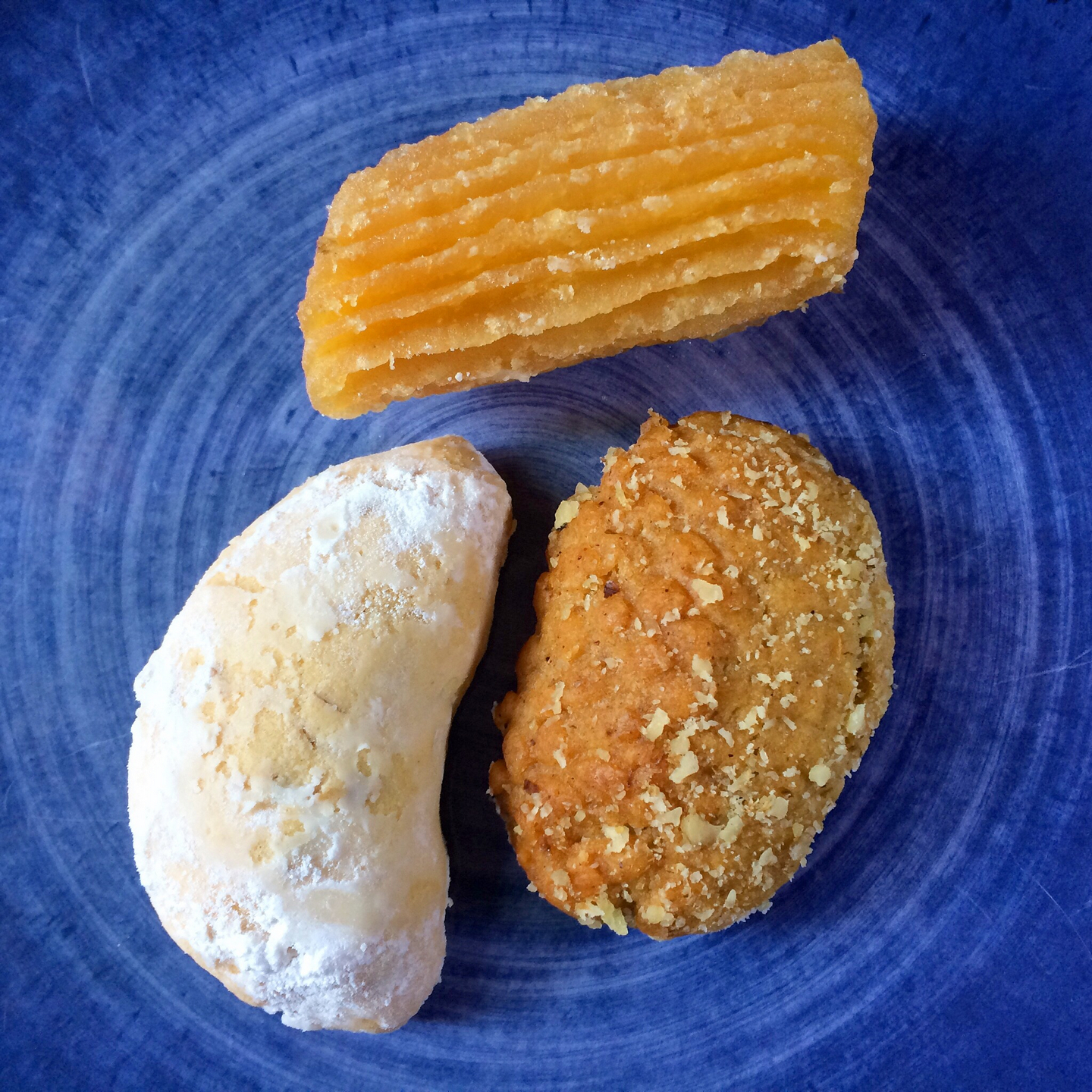
The venerable (established in 1977) Omonia Café, longtime fixture for Greek and Italian cookies and pastries, is still going strong offering a more wide-reaching menu than its original mission – but for me, it’s still the OG (original Greek) bakery in the neighborhood. Three classic cookies followed me home from 76-12 3rd Ave, Bay Ridge, Brooklyn; clockwise from the top:

Tulumba, deep fried until golden then drenched in sweet syrup, these are spongy in texture despite an appearance that promises a touch of crackle.

Melomakarona are made from flour, sugar, walnuts, honey and the usual suspects lurking in a Greek Christmas cookie; they’re distinguished by the addition of olive oil to the dough. This cookie must surely be healthy because olive oil is good for you, right?

Kourambiedes (you might see kourabiedes) are Greece’s entry in the international wedding cookie competition vying with Mexican, Italian, Danish, and Russian contenders. All are fragile shortbread cookies and rather similar to each other (shhhh!). Off topic: Why is it that all the wedding cookies I’ve encountered crumble and fall apart? Just sayin’.


Khanom Thai – Sweets

Instagram Post 7/11/2019

When I approach Khanom Thai’s stall (number 10) with ethnojunket guests in tow and they ask, “What’s good here?” I can honestly answer, “Everything.” With a focus on sweets but not to the exclusion of savories (that’s another post), Khanom Thai obviates the need to seek out another venue for dessert after eating our way though Elmhurst’s HK Food Court (82-02 45th Ave in Queens).

(Click on any image to view it in high resolution.)

These are Bean Cakes with Salted Egg. Soft, flaky, swirly layers of creamy, tissuey dough swathe a confection of mung bean paste surrounding a heart of salted egg yolk. But don’t deconstruct it: just take a bite and taste why it’s remarkable. When you look closely and stop to think about it, these are really a sweet metaphor for the egg reimagined, its white shell protecting its two-tone sunny contents.


Coconut Pancakes, griddled fresh, right before your hungry eyes, warm and chewy. The color difference isn’t chocolate vs something else; it’s merely two different types of ground rice batter.


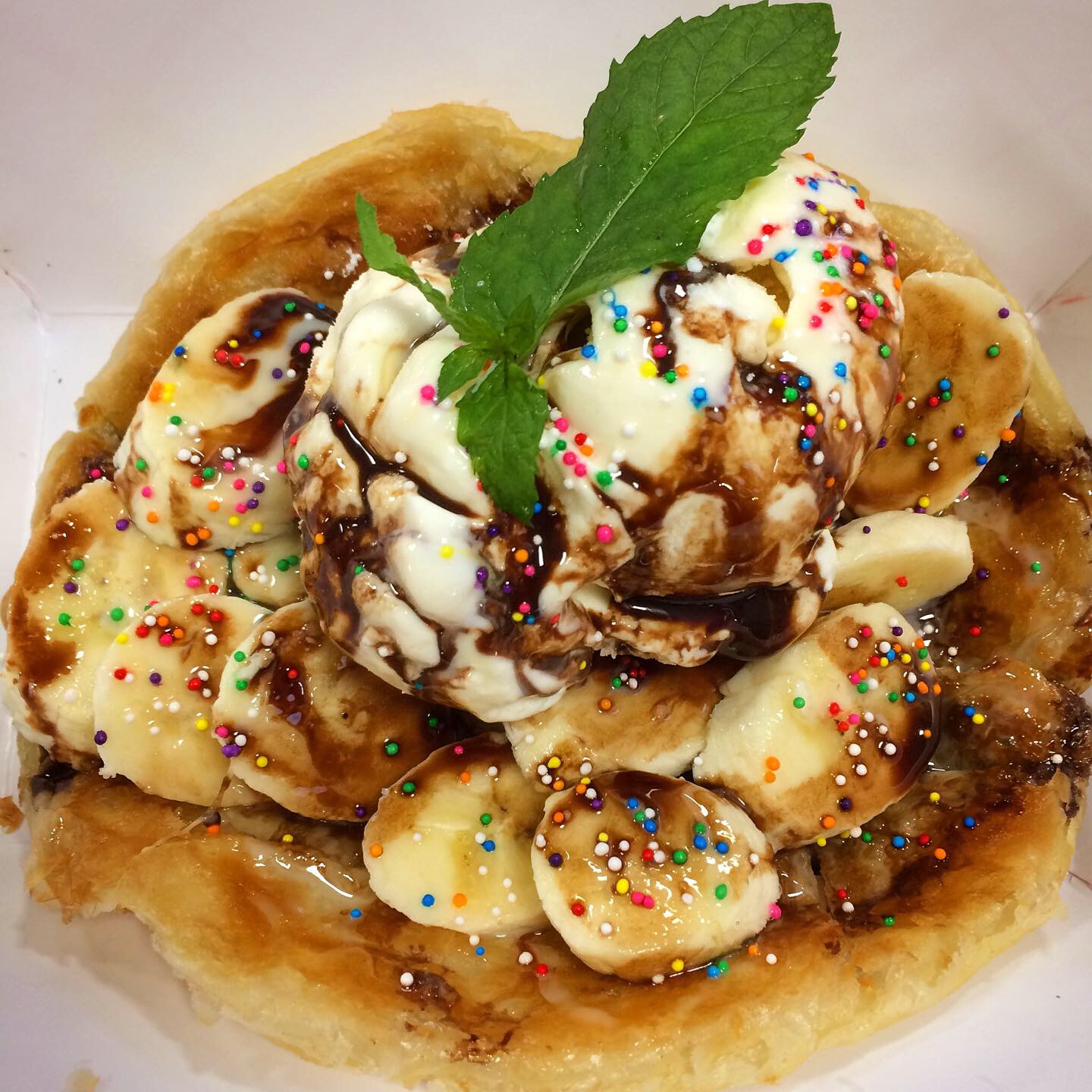
Obscenely decadent dessert: rich vanilla ice cream, sliced bananas and chocolate sauce oozing onto a warm roti, rainbow nonpareils for a bit of crunch. ’Nuff said.