New Asian Cuisine – Halal Beef Onion Buns

Instagram Post 7/11/2018

(Click on any image to view it in high resolution.)

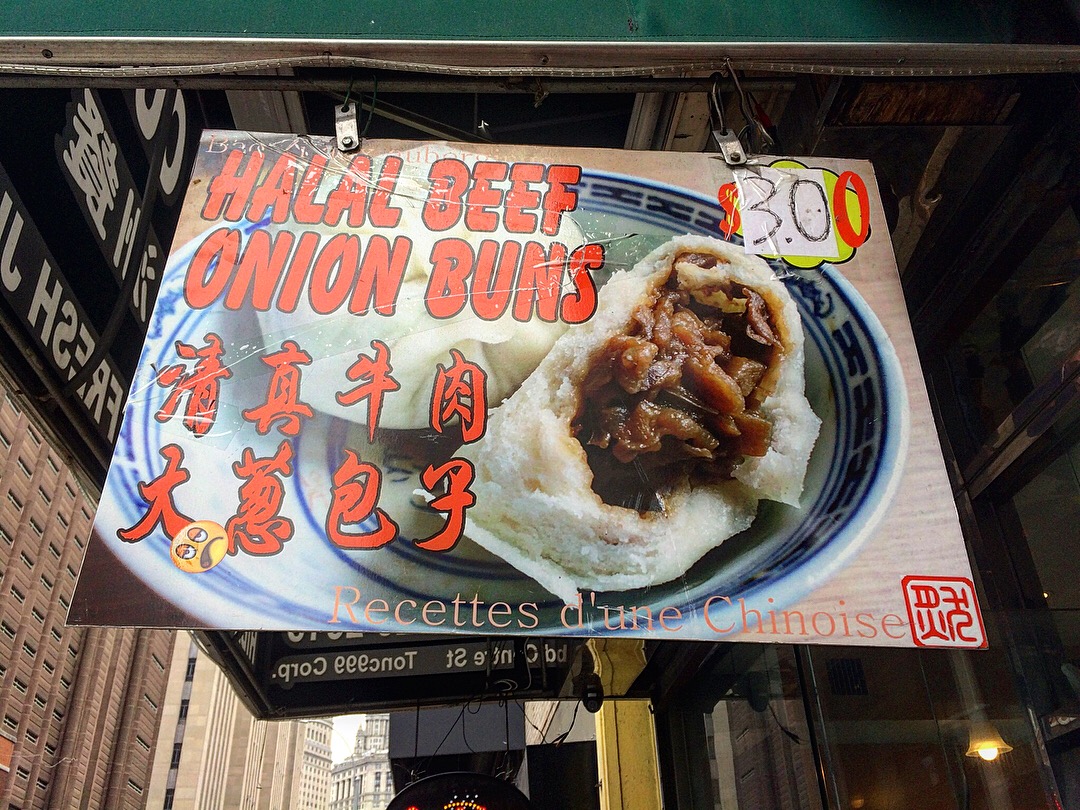
The sign hanging just below the awning of New Asian Cuisine at 153D Centre Street, Manhattan, was what caught my eye: Halal Beef Onion Buns. I believe the Chinese text was literally “Halal Beef – Big Scallion (hence onion) Bun”. The text in French at the bottom (which I can read far better than I’ll ever be able to read Chinese) was “Recettes d’une Chinoise”, Recipes from a Chinese Woman. That was enough to persuade me to venture into what looked like an old school downtown NYC coffee shop that had seen better days.

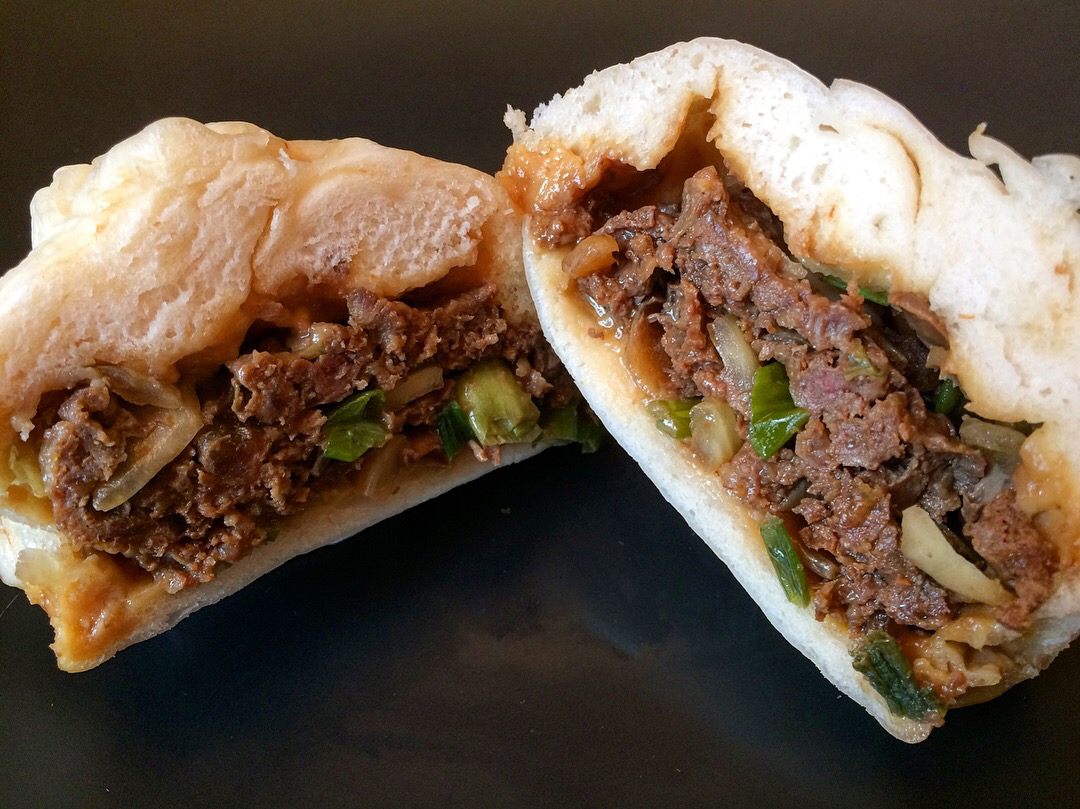
(The second photo shows the inside scoop.)

I don’t know if this inexpensive but tasty snack was really Chinese. I don’t know why the subtitle was in French. And I know even less about that emoji-like face stuck to the sign. But I do know that this steamed bao hit the spot right before I descended into the subway station next door!


Tulcingo Bakery

Instagram Post 7/10/2018

(Click on any image to view it in high resolution.)

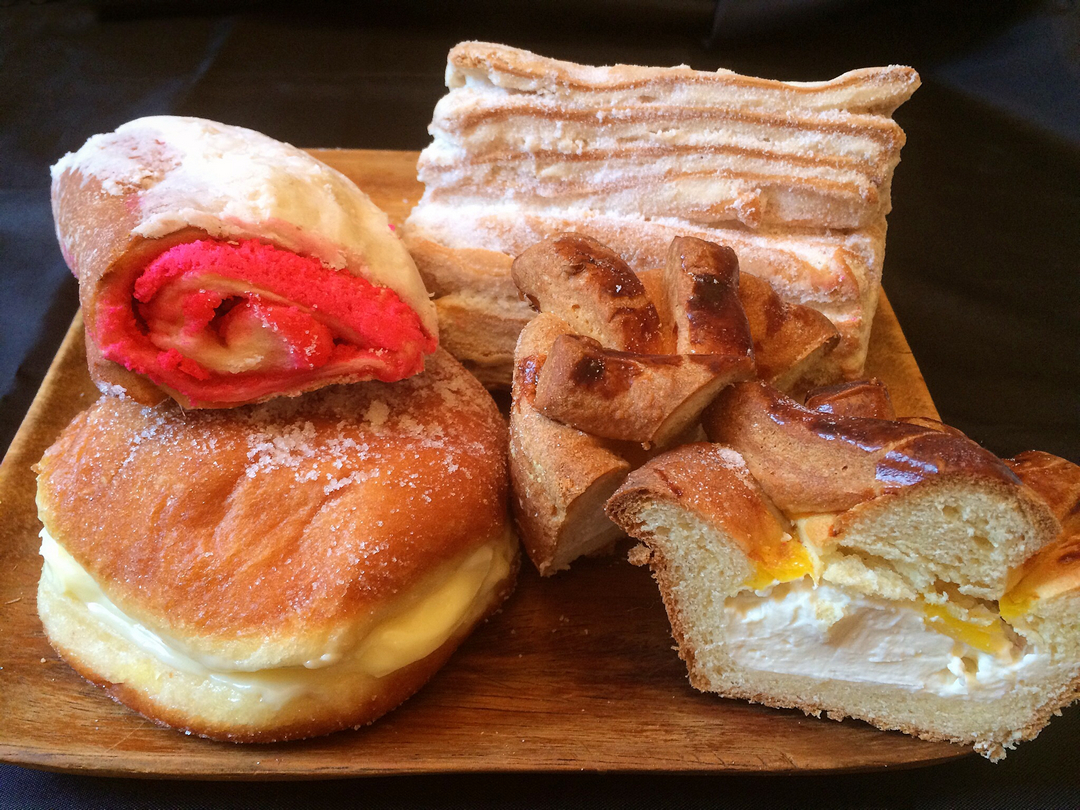
One of my favorite destinations when I’m craving Mexican carbs is Tulcingo Bakery at 103-02 Roosevelt Ave in Corona, Queens. Named for the municipality in Puebla, Mexico 🇲🇽, it’s a triple threat: a market featuring the freshest ingredients for your cocina Mexicana, the go-to place for amazing carnitas, barbacoa (goat), tamales, and atoles on the weekends, and of course, an extensive panadería, the focus of today’s post.

Literally dozens of kinds of Mexican cookies, sweet breads, layer cakes and loaf cakes, and holiday and traditional breads, not to mention fruit tarts, gelatin desserts, puddings, and more are on display; just grab a tray and a pair of tongs, and let your corazón be your guide. According to Wikipedia, it’s estimated that there are between 500 and 2,000 types of breads and baked goods currently produced in Mexico. Each is distinct: the treats shown here are soft or flaky, sugary or fruity, crispy or filled with custard or cheese and the list goes on from there as you’ll see when you visit this cornucopia of confections for yourself. The perfect leisurely breakfast is one of these beauties and a cup of Café de Olla. Or better still, Mexican hot chocolate!


Republic of Booza

Instagram Post 7/9/2018

(Click on any image to view it in high resolution.)

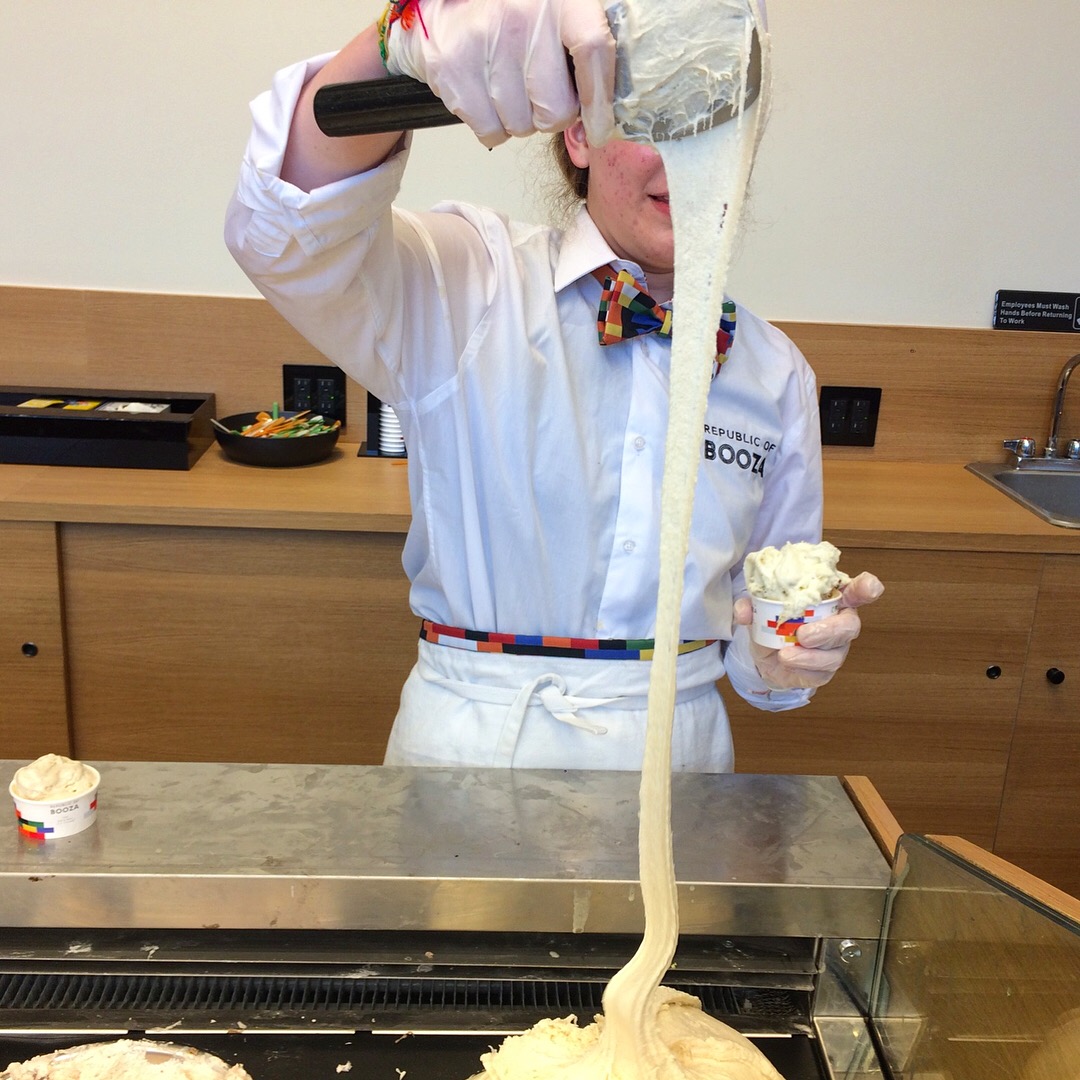
Booza (بوظة), an ice cream that hails from the Levant and Egypt, is known for two qualities, its stretchy consistency and its ability to resist melting. The elasticity comes from mastic, the resin that makes Turkish Delight delightfully chewy, and its prowess in fending off the consequences of Middle Eastern heat stems from sahlab (aka salep), a thickener that’s also used in beverages and puddings.

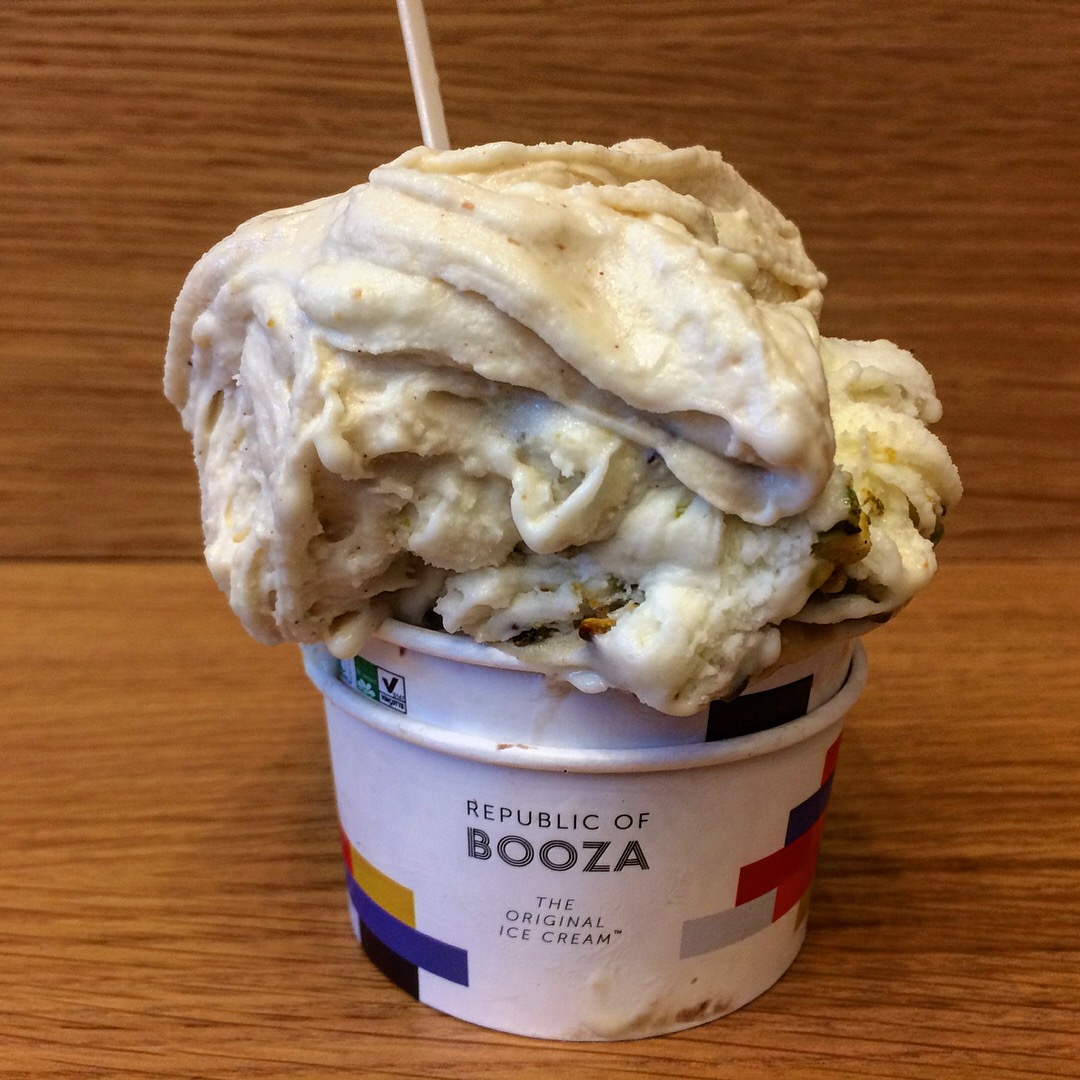
The stylish Republic of Booza offers seventeen flavors in three categories: classic (like vanilla, chocolate and strawberry), global (like horchata, red miso and mango-tajín) and “experimental” (like salted Oreo, Sichuan white chocolate and saffron peppercorn). Always eager to explore the roots of an ethnic dish before venturing into a more fanciful rendition, I chose Original Qashta, subtitled “candied cream”. (And I coyly chose “roots” here because sahlab is made from ground orchid tubers.) I was familiar with the word qashta from my Bay Ridge, Brooklyn ethnojunkets where it appears as ashta (colloquially) or kashta (more formally) and refers to the Middle Eastern clotted cream spiked with rose water or orange blossom water that suffuses many desserts of the region. My second selection was pistachio, simply because it seemed like an appropriate option given the territory. Because there’s no overrun (air that’s a component of most commercial ice creams), booza is remarkably creamy. Both flavors were delicious and the texture was a cool experience.

Since July is National Ice Cream Month, I’ll be writing a featured post about ethnic ice cream here on ethnojunkie.com in which I’ll attempt to run the global gamut of frozen, creamy treats. For now, I highly recommend your making the journey to Republic of Booza at 76 North 4th St in Williamsburg, Brooklyn (no passport required), especially in this heat. Suffice it to say that this may be the most unusual ice cream you’ve ever tasted…and that isn’t a stretch!


Brooklyn Kolache Co.

Instagram Post 7/8/2018

(Click on any image to view it in high resolution.)

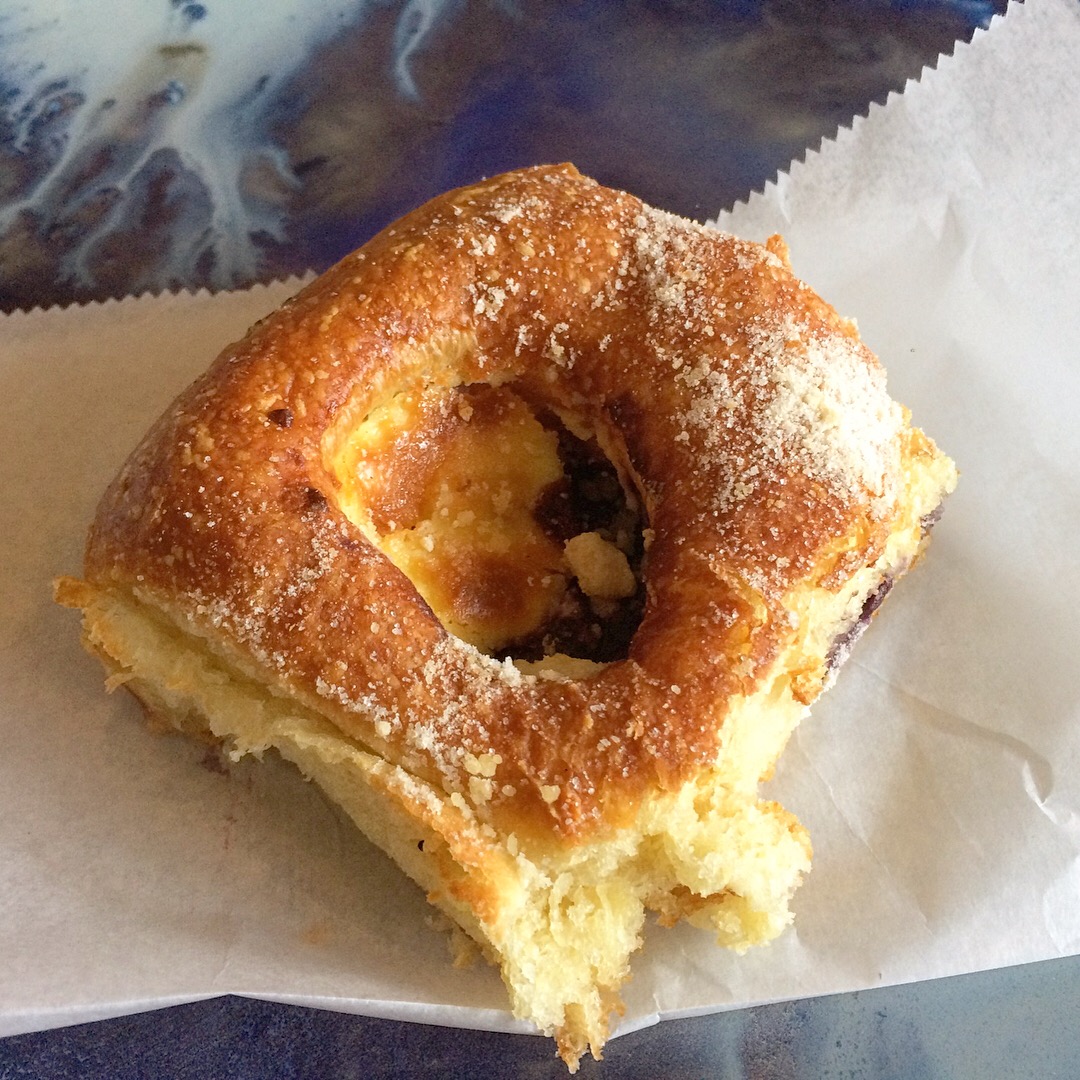
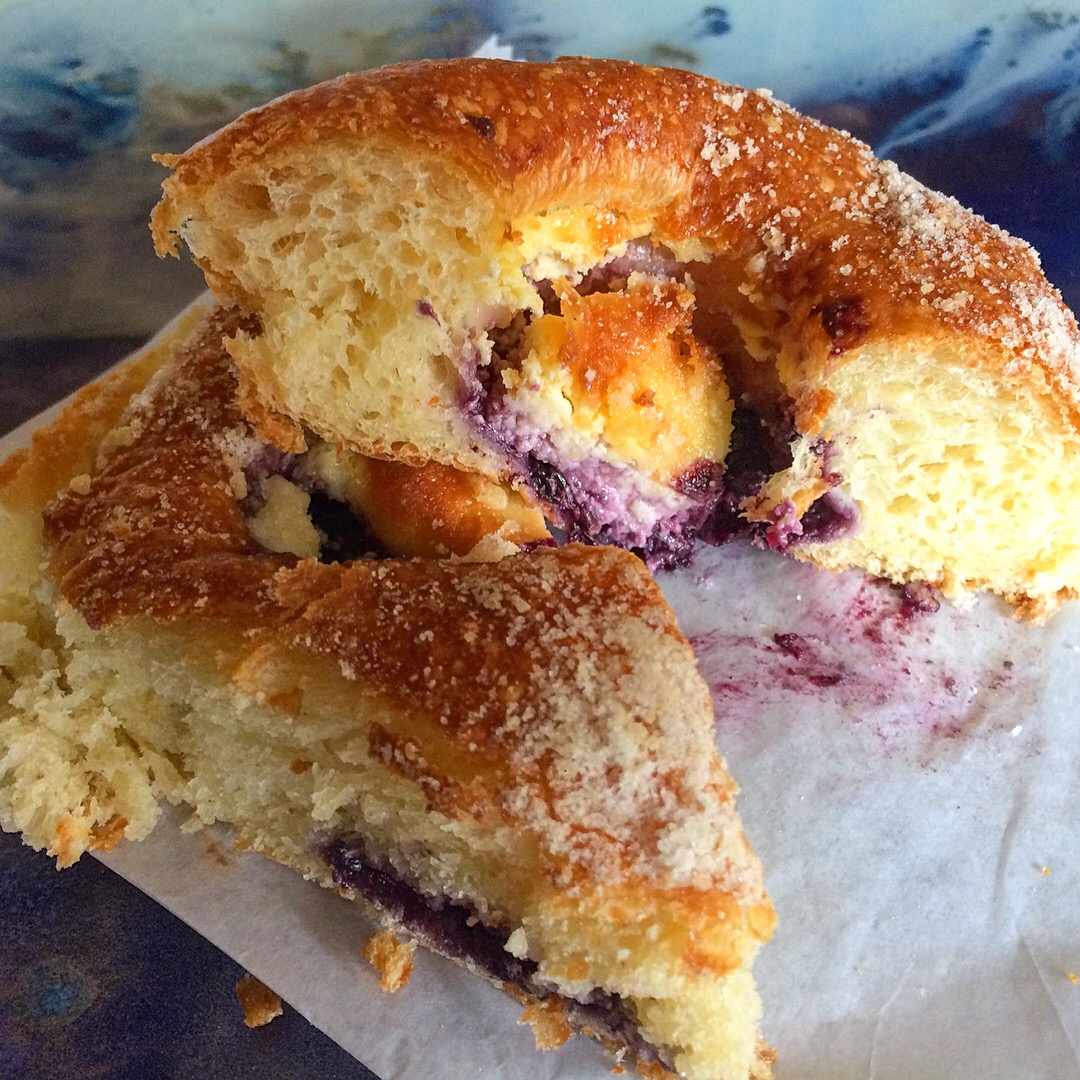
You can track down the sweet and savory Czech pastries known as kolaches as well as select coffee and tea in the namesake bakery, Brooklyn Kolache Co. at 520 DeKalb Ave. These folks have ported small-batch Texas style kolaches to Bedford-Stuyvesant, “Deep in the Heart of Brooklyn”. Texas style? Yes, it’s a thing – and they’ve taken care to keep everything as sustainable, locally sourced, and organic as possible. This puffy blueberry cheese kolache made a righteous quick breakfast.

Second photo shows a peek inside.


Claro

Instagram Post 7/7/2018

(Click on any image to view it in high resolution.)

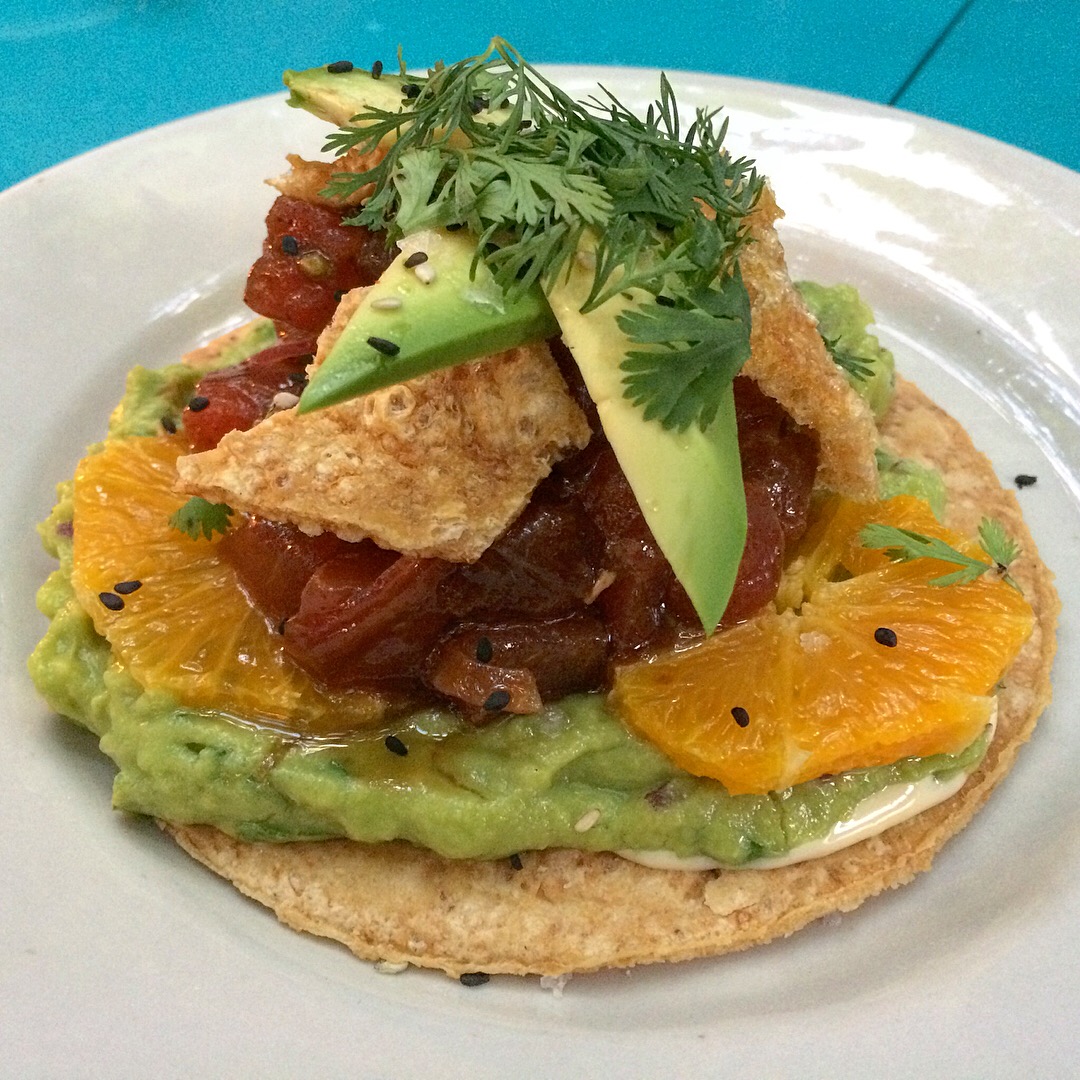
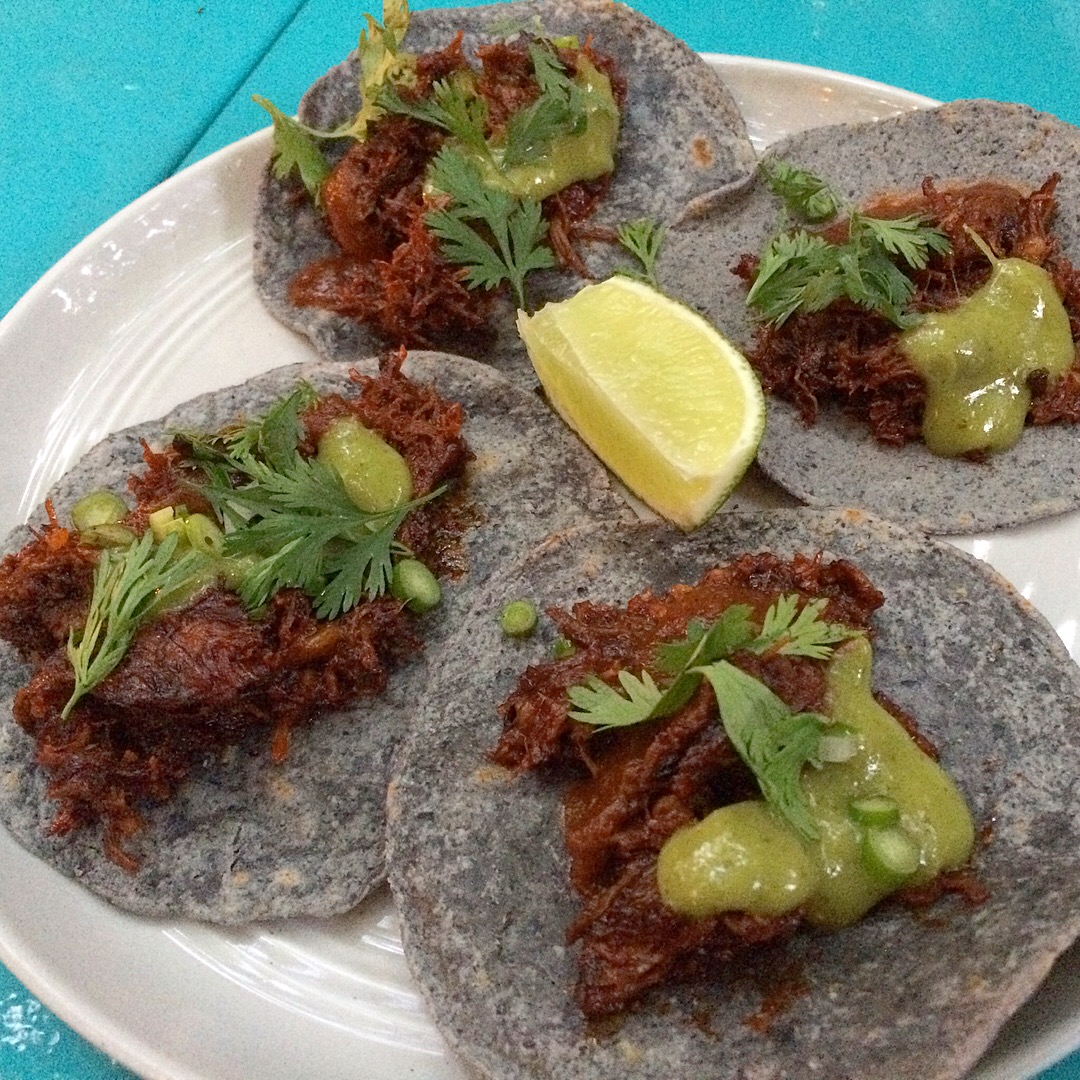
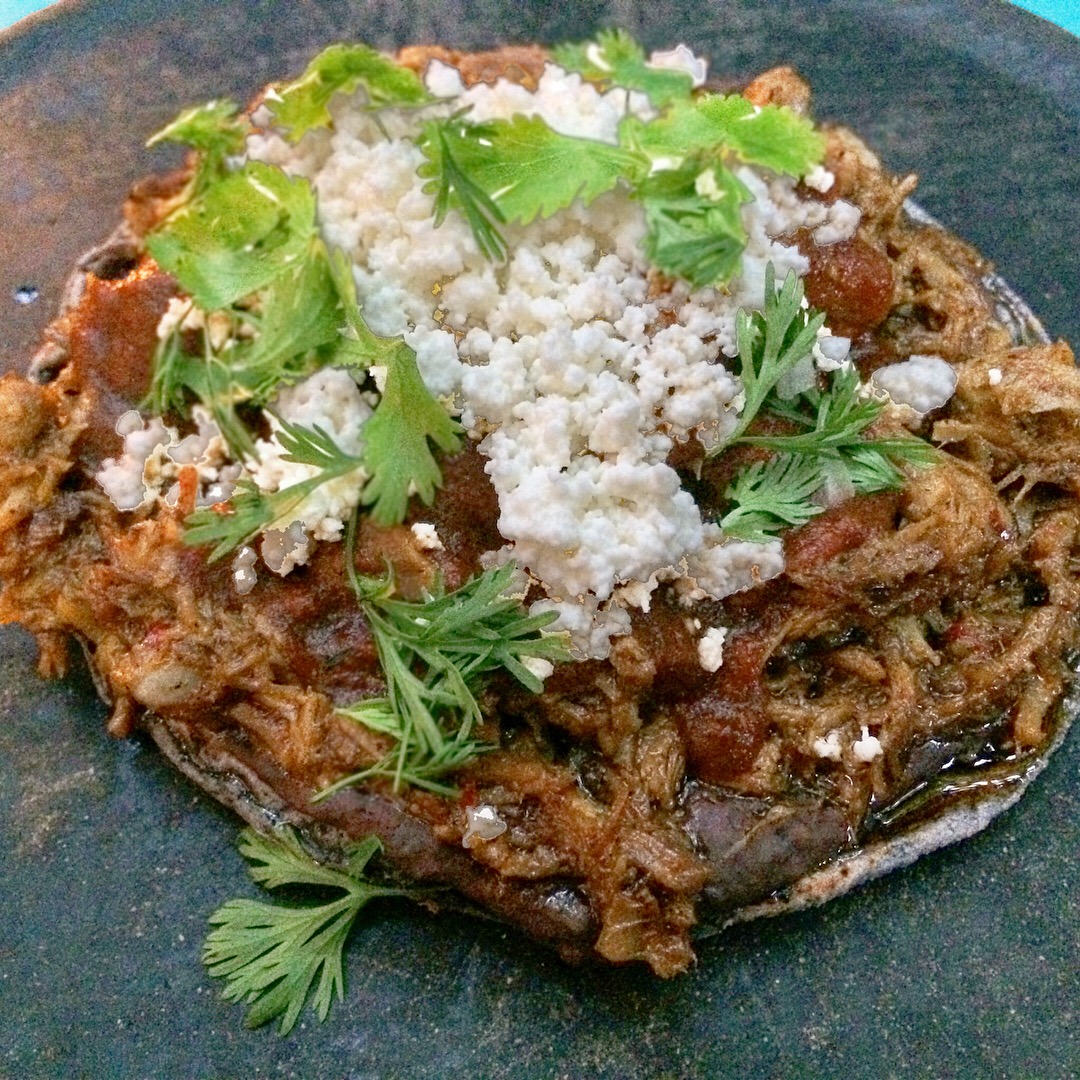
The Spanish word claro carries many meanings from “clear” to “sure!” and among those definitions is “distinct”. Perhaps that one best describes Claro, 284 Third Ave in Gowanus, in that it’s not your typical Brooklyn Mexican restaurant. Attention to its Oaxacan roots is evident not only in their distinctive spin on the cuisine but also from the clay dinnerware to the décor. Claro’s reputation is as much about its aura as it is about the food, and although we weren’t blown away by any flavor bombs, the freshness and quality of the ingredients were evident as we enjoyed the boon of ideal weather in the charming backyard.

[1] Yellowfin Tostada – tuna marinated in a pasilla oaxaqueña sauce with avocado, orange, and chicharrónes

[2] Barbacoa Tacos – beef cheeks and garlic scapes

[3] Pork Memela – made with heritage pork ribs in a sauce of chile de arbol, topped with fresh crumbled farmer cheese

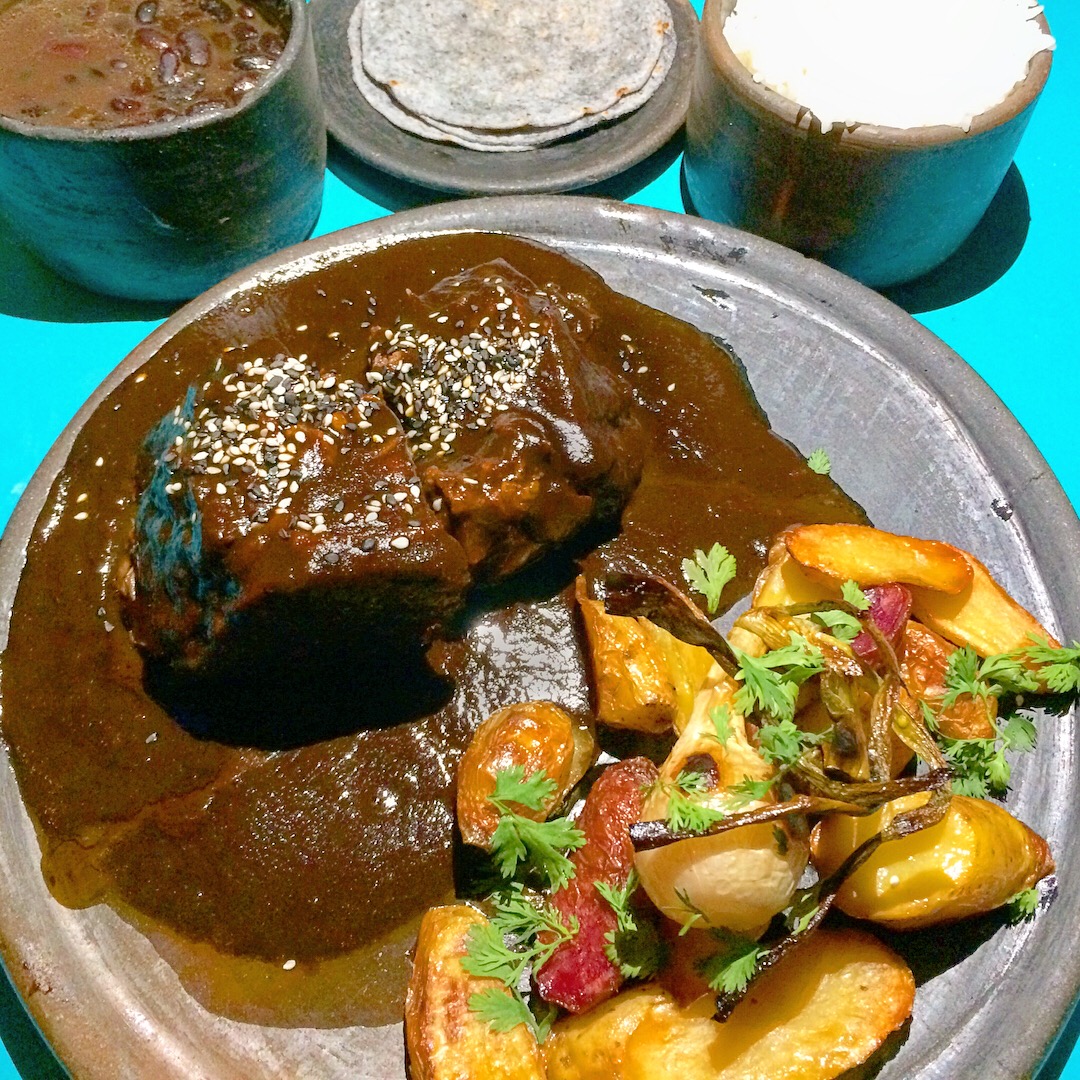
[4] Mole Negro – meltingly tender short ribs with grilled Mexican green onions and potatoes

Portions are a little on the short side; upscale to be sure, what you see here is exactly what we ordered plus a single drink for each of us – total for our party of four including tax and tip was about $190.


Fan Fried Rice Bar

Instagram Post 7/6/2018

(Click on any image to view it in high resolution.)

A relative newcomer (about three months) to Brooklyn’s Bedford-Stuyvesant neighborhood and certainly a welcome one is Fan Fried Rice Bar at 525 DeKalb Ave. A cozy, sunny spot with only a few tables, they offer a number of Taiwanese delicacies like Popcorn Chicken, Fried Bone-In Pork Chop, Taiwanese Sausage, and Mushroom Mapo Tofu, but the real focus is on their novel fried rice variations.

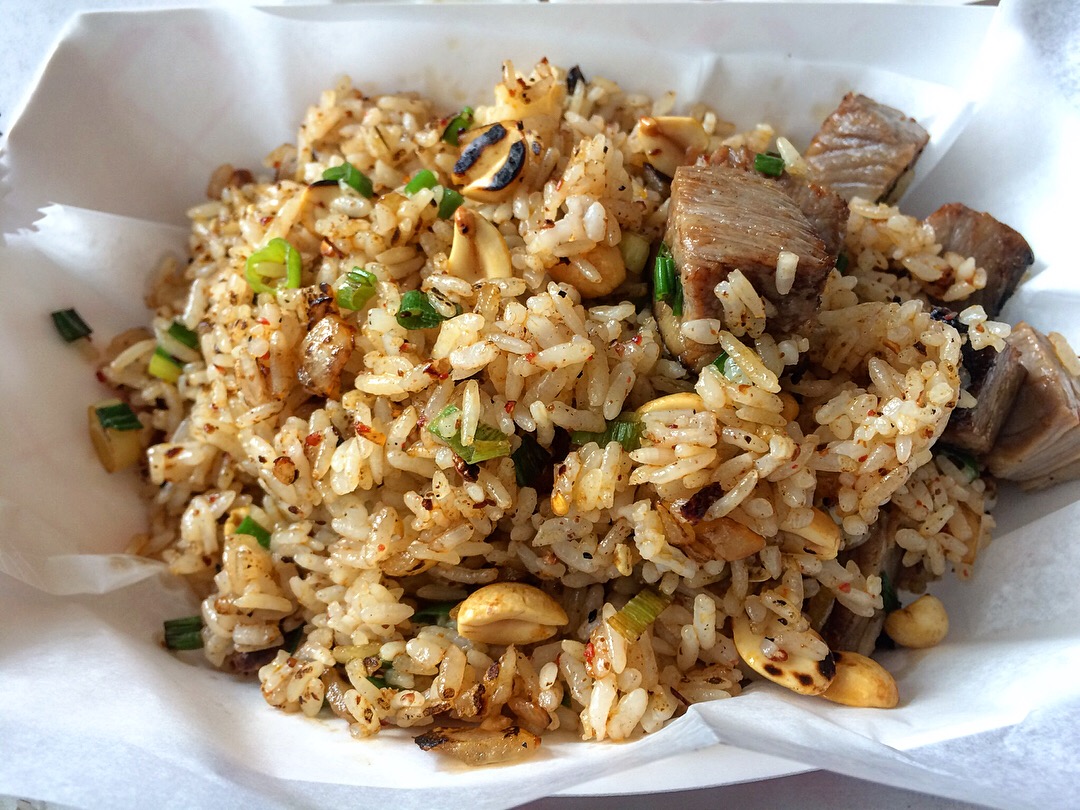
[1] Numb Numb Pastrami Fried Rice with chili paste, scallions, pastrami, onions and peanuts. I get a pronounced Szechuan málà peppercorn hit delivered with a lot of char (as opposed to wok hei); the pastrami itself is salty, moist, and a little smoky, but unlike the deli style pastrami you might expect from the name. Definitely good eats.

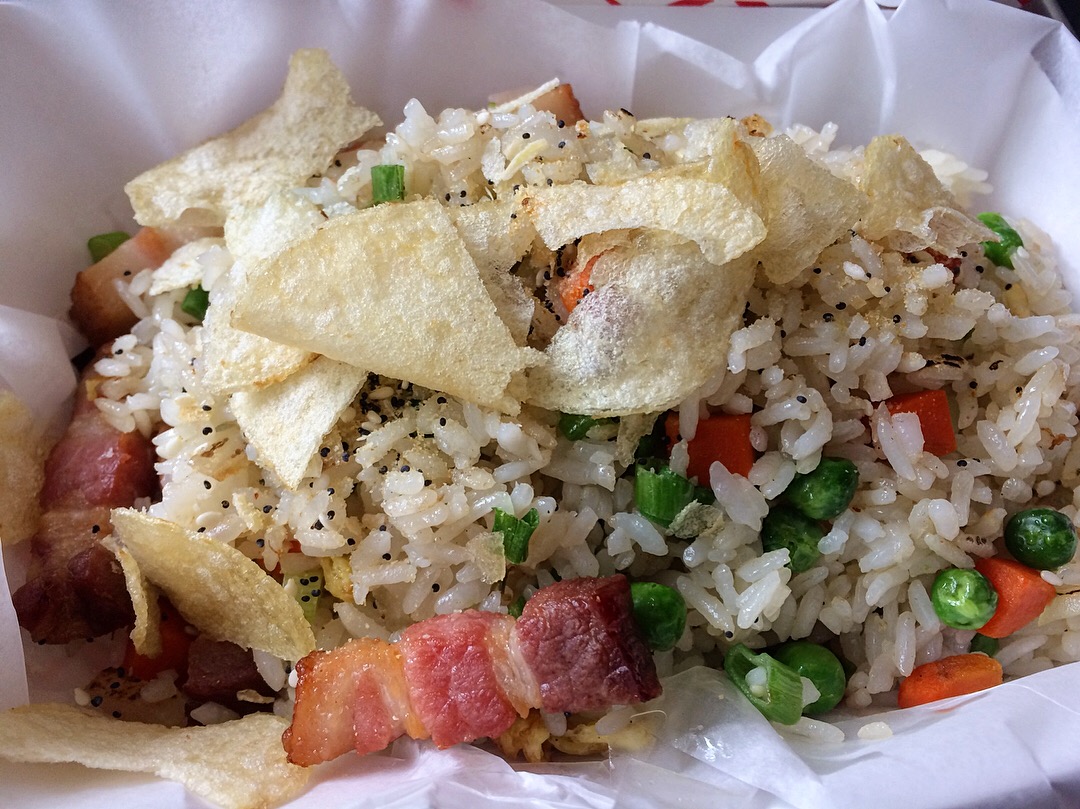
[2] Breakfast Fried Rice is good any time of day with tasty thick cut bacon, eggs, peas and carrots, and everything-bagel seasoning. No numbing peppercorns in this one, but plenty of salt, intensified by the toss of potato chips atop.

And yes, I’m a fan of the Fan. 😉


Pata Market – Part 1

Instagram Post 7/5/2018

(Click on any image to view it in high resolution.)

The departure of Sugar Club, the beloved Thai snack bar and prepared food market in Elmhurst, Queens, left a void that is currently being half filled (because the space was subdivided) by Pata Market at 81-16 Broadway. I was pleased to find a considerable assortment of grab-n-go snacks, both sweet and savory, but since I didn’t have time to buy a fridge full of food that day, I picked up only two items from the sweets department.

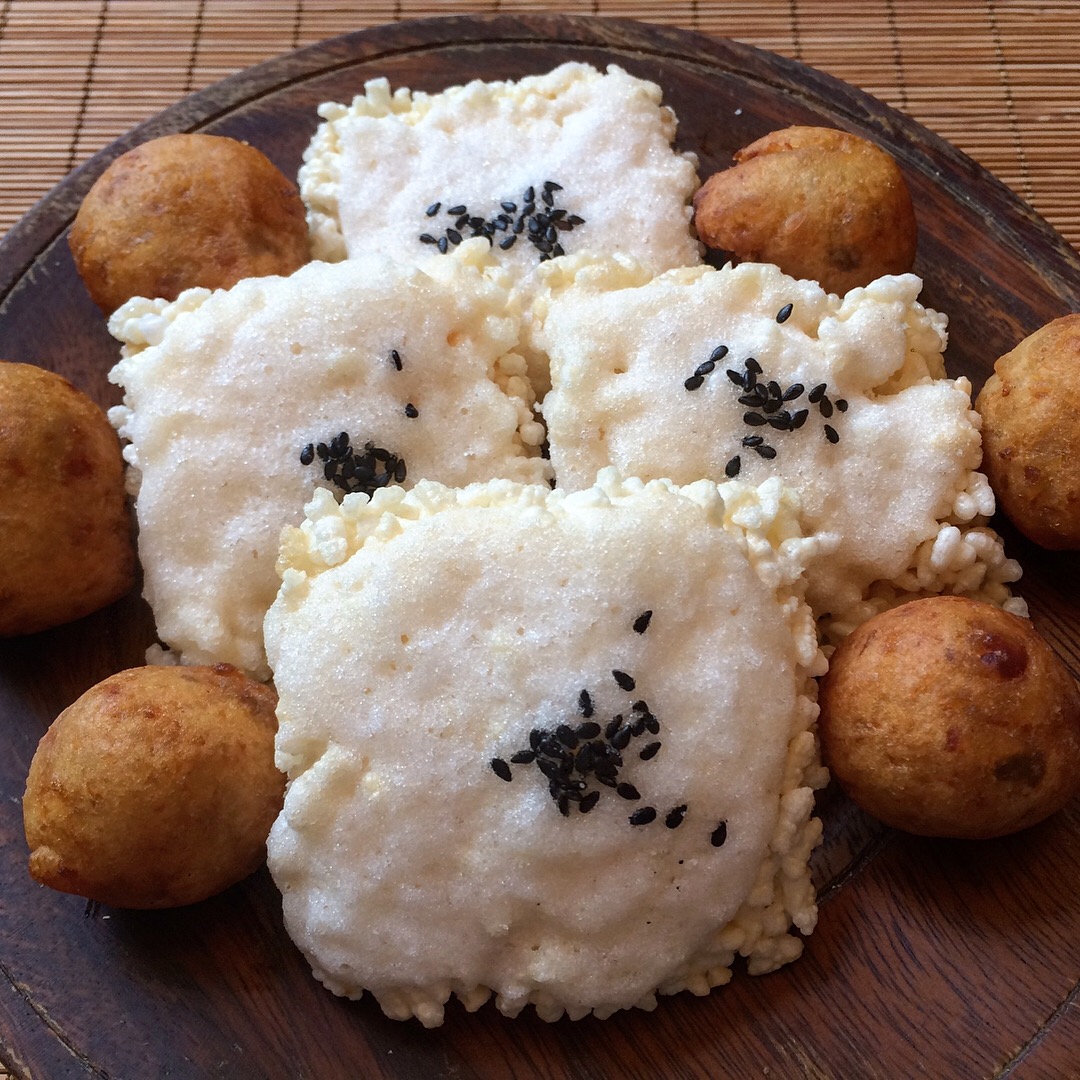
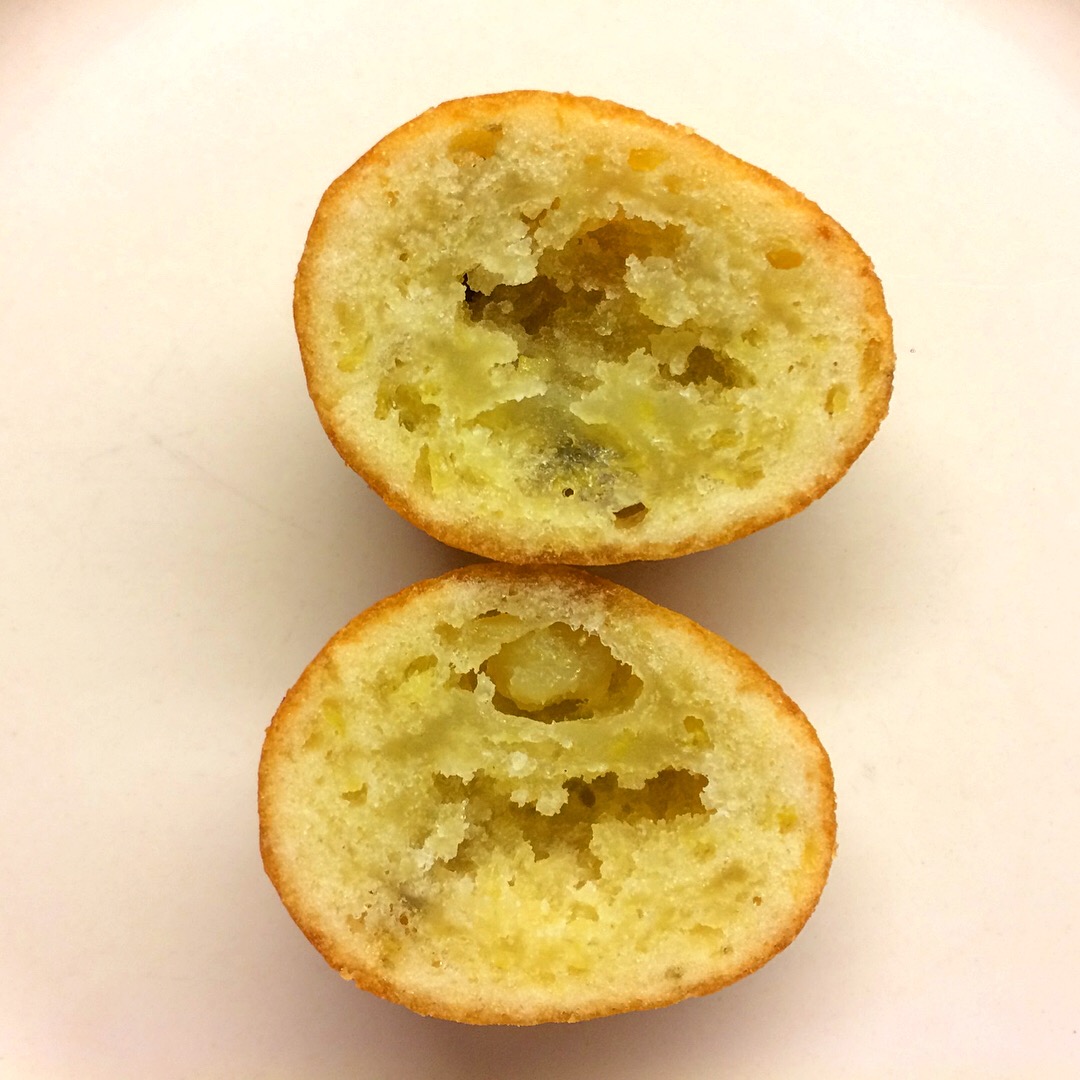
I didn’t catch the name of the white squares, but I thought they were quite good – crispy puffed rice with a sugary “icing”, at once sweet and salty, and believe it or not, a little buttery; those black sesame seeds provide a significant flavor component as well as decoration. They’re keeping company on this plate with Quail Egg Candy (Khanom Kai Nok Krata) also known in Thailand as Turtle Eggs. You could tell from the modest price that no quail (or turtle) eggs were harmed in the making of this snack (I wouldn’t call it “candy”) – the name stems simply from the shape. The dough is made from sweet potato; they’re a bit sweet and somewhat chewier and more resilient than a doughnut. I have a feeling that they’d be a lot better fresh out of the deep fryer.

The second photo shows a view of bisected Quail Egg Candy to give you the inside scoop.

I’ll report back on how the savories stack up after a future visit.


Sing Kee – Fresh Squid with Pepper and Spiced Salt

Instagram Post 7/3/2018

(Click on any image to view it in high resolution.)

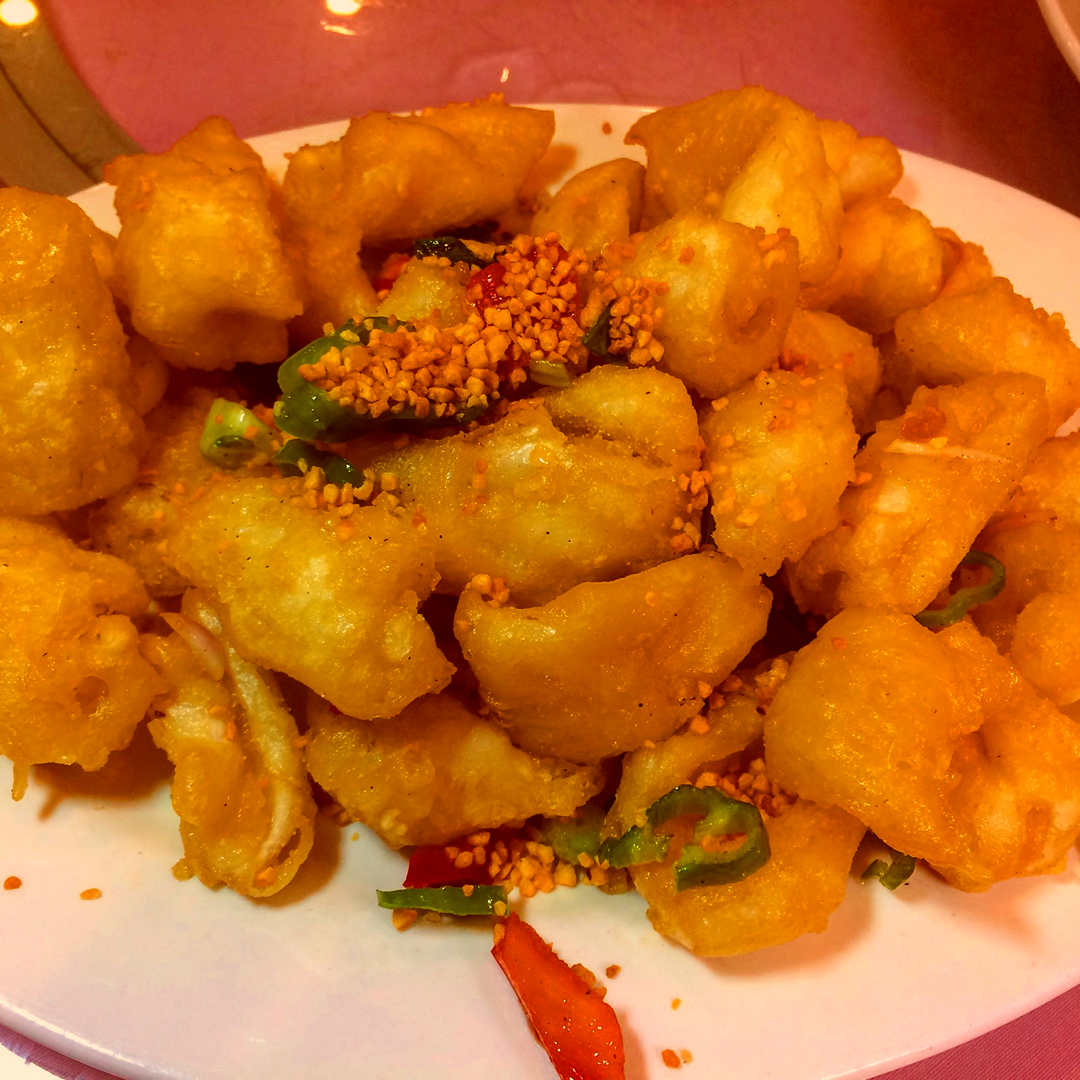
Perfectly tender, perfectly seasoned, perfectly fried Fresh Squid with Pepper and Spiced Salt was one of the best dishes we had at Sing Kee Seafood Restaurant, 42 Bowery – OG Cantonese in Manhattan’s Chinatown. Sometimes, less is more.

(Like the text of this post! 😉)

More dishes from Sing Kee to follow….


Chao Thai – Soft Shell Crab Chu Chee

Instagram Post 7/1/2018

(Click on any image to view it in high resolution.)

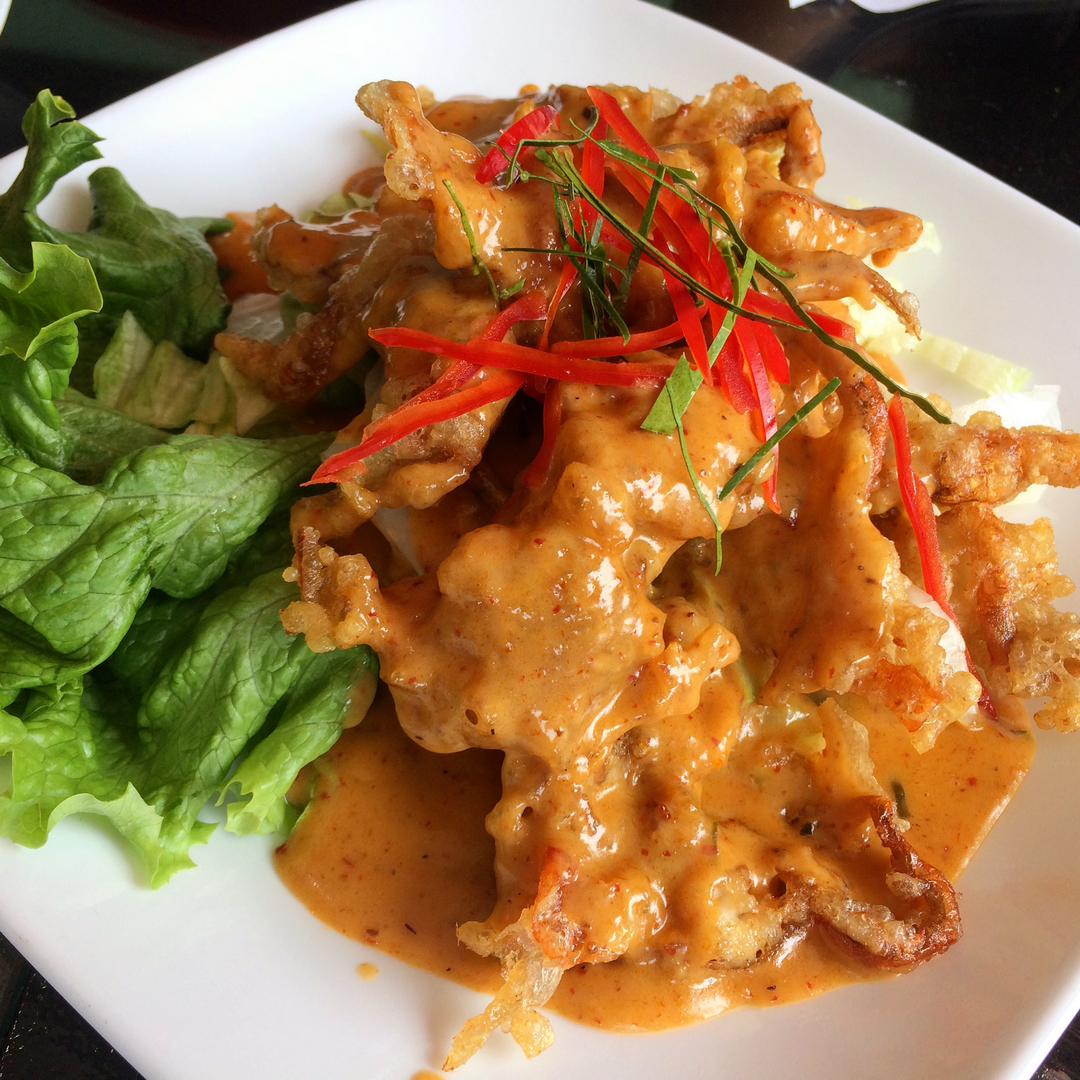
It’s soft shell crab season, so we sidled over to Chao Thai at 85-03 Whitney Ave, Elmhurst, Queens for their Soft Shell Crab Chu Chee bathed in a mildly spicy sauce of Thai red curry with coconut milk and topped with red pepper and kaffir lime leaf. Missing from this photo, but not from our table, is an order of sticky rice to soak up the savory goodness.


Durian’s Best Kept Secret

Back in the seventies (ahem), Saturday Night Live did a sketch about Scotch Boutique, a store that sold nothing but Scotch Tape. They carried a variety of widths and lengths to be sure, but that was it. Just Scotch Tape.

MK Durian Group at 5806 6th Ave in Sunset Park, Brooklyn sells nothing but durian. They carry a variety of cultivars and variations to be sure, but that’s it. Just durian.

And the durian they carry is wonderful.

You’ve probably heard the oft-quoted aphorism about it, “Tastes like heaven, smells like hell” (some would have the order of the phrases swapped but you get the idea), so much so that the fruit is banned from hotels, airlines and mass transit in some parts of the world. (And yes, I’ve been known to smuggle some well-wrapped samples home on the subway.) If you’ve never tasted durian, you might discover that you actually like it; a number of folks I’ve introduced it to on ethnojunkets have experienced that epiphany. There are gateway durian goodies too, like sweet durian pizza (yes, really), durian ice cream, candies, and freeze dried snacks and they’re all acceptable entry points as far as I’m concerned.

It’s difficult to pinpoint what durian smells like. The scent appears to defy description; I’ve encountered dozens of conflicting sardonic similes, but suffice it to say that most people find it downright unpleasant. Although I have a pretty keen sniffer, somehow its powerful essence doesn’t offend me although I am acutely aware of it – just lucky I guess, or perhaps I’m inured to it – because this greatly maligned, sweet, tropical, custardy fruit is truly delicious. So I was thrilled to learn about MK Durian Group (aka MK International Group) from Dave Cook (Eating In Translation) whom I accompanied on a visit there.

Often called the King of Fruits (perhaps because you’d want to think twice about staging an uprising against its thorny mass and pungent aroma), it comes by its reputation honestly but with a footnote. The divine-to-demonic ratio varies depending upon the cultivar and, if I understand correctly, a window of opportunity when certain cultivars are sweet and nearly odorless simultaneously. This, I believe, is durian’s best kept secret. But more about that in a moment. (Click on any photo to view it in high resolution.)
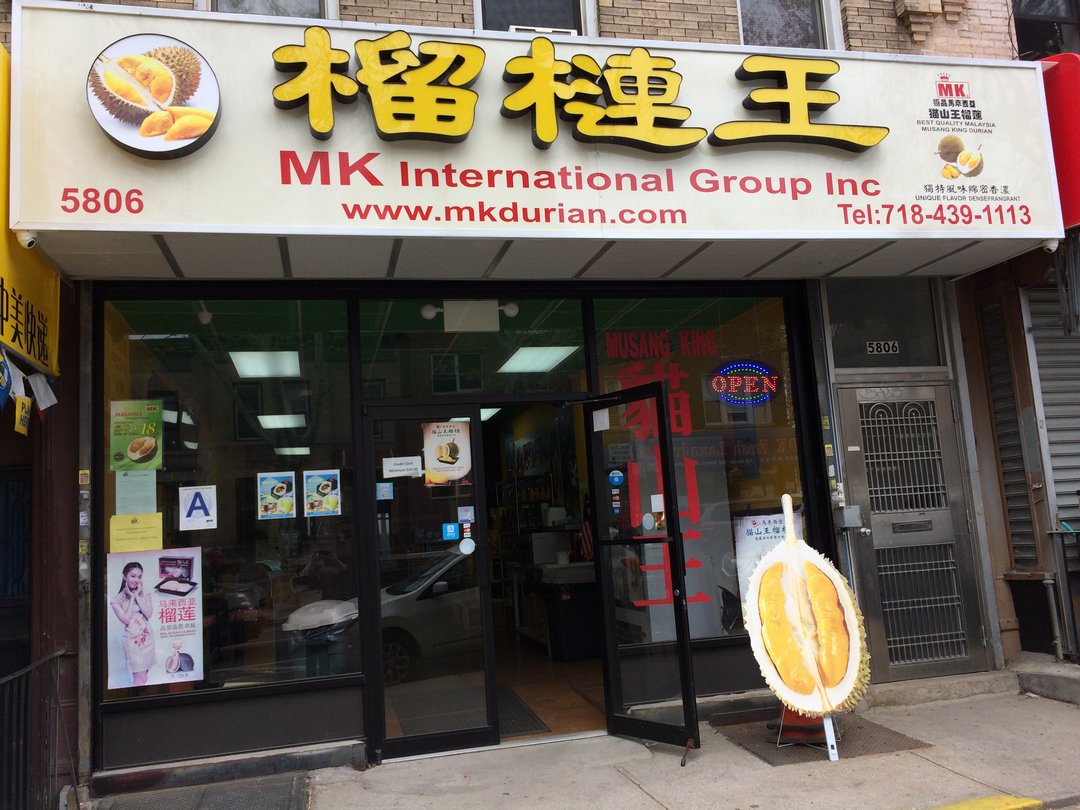
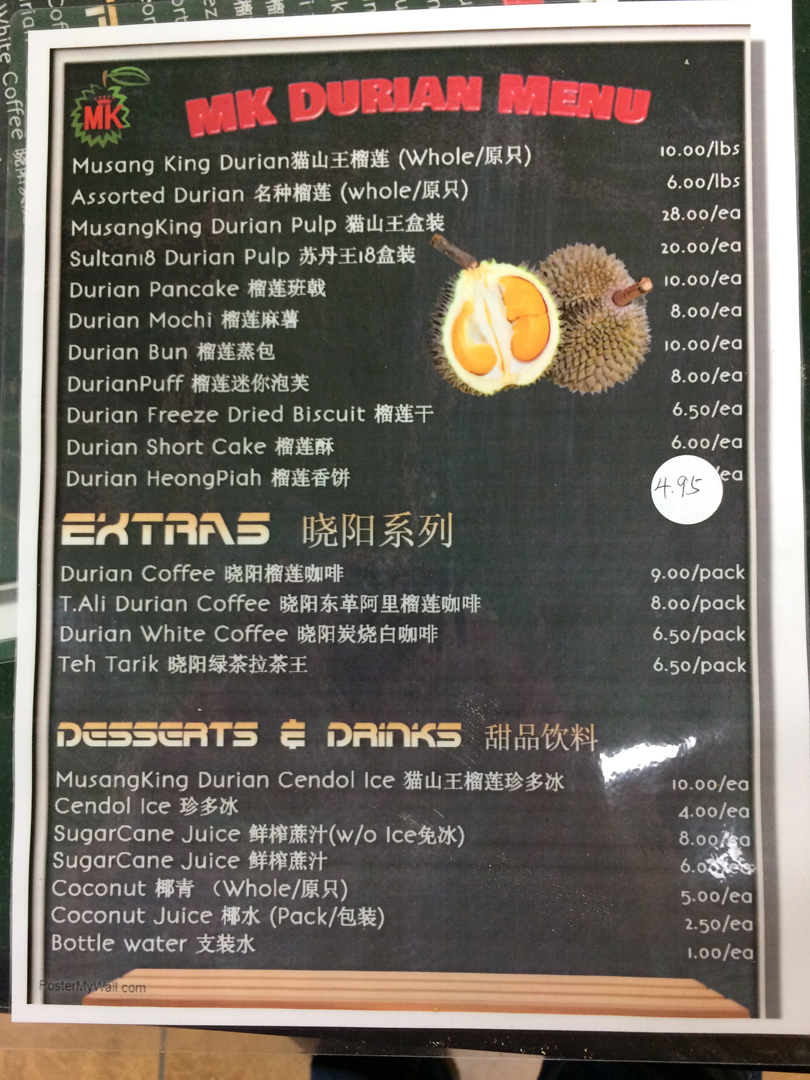
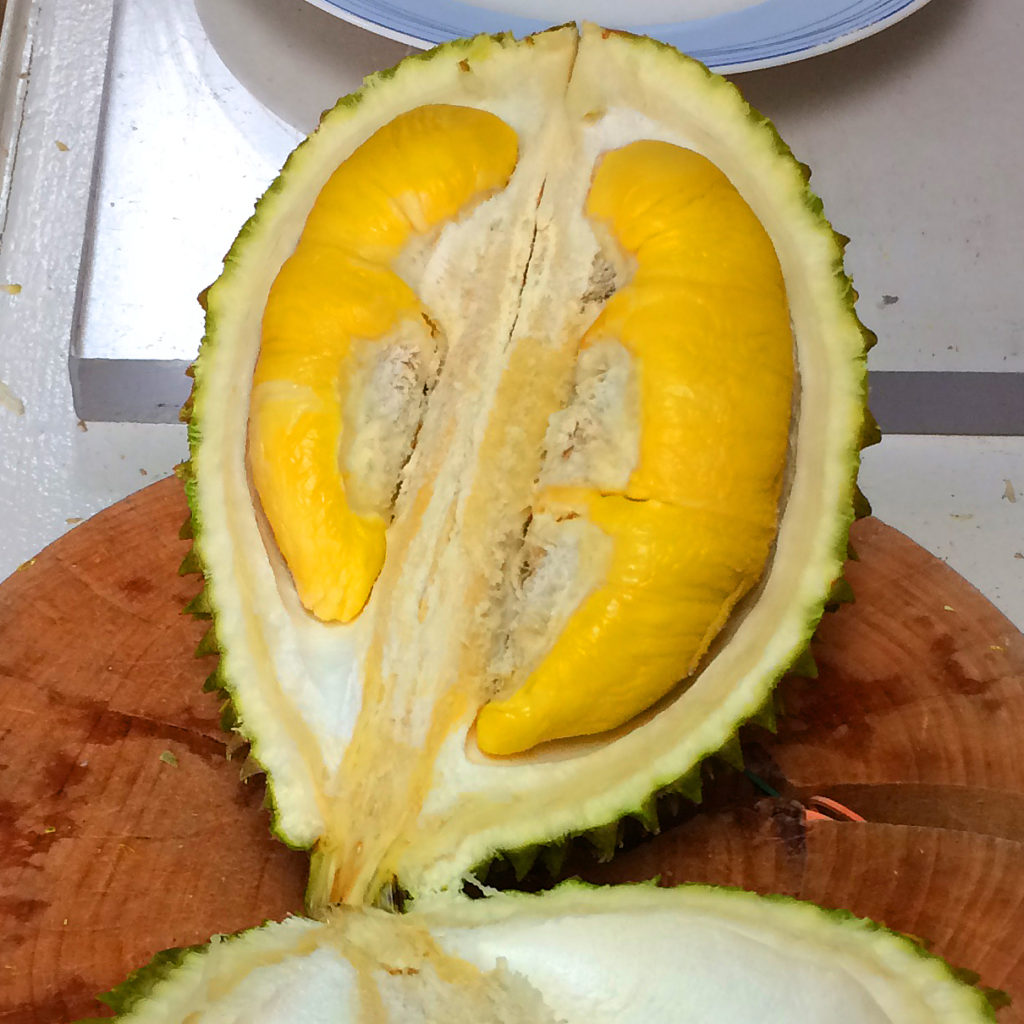
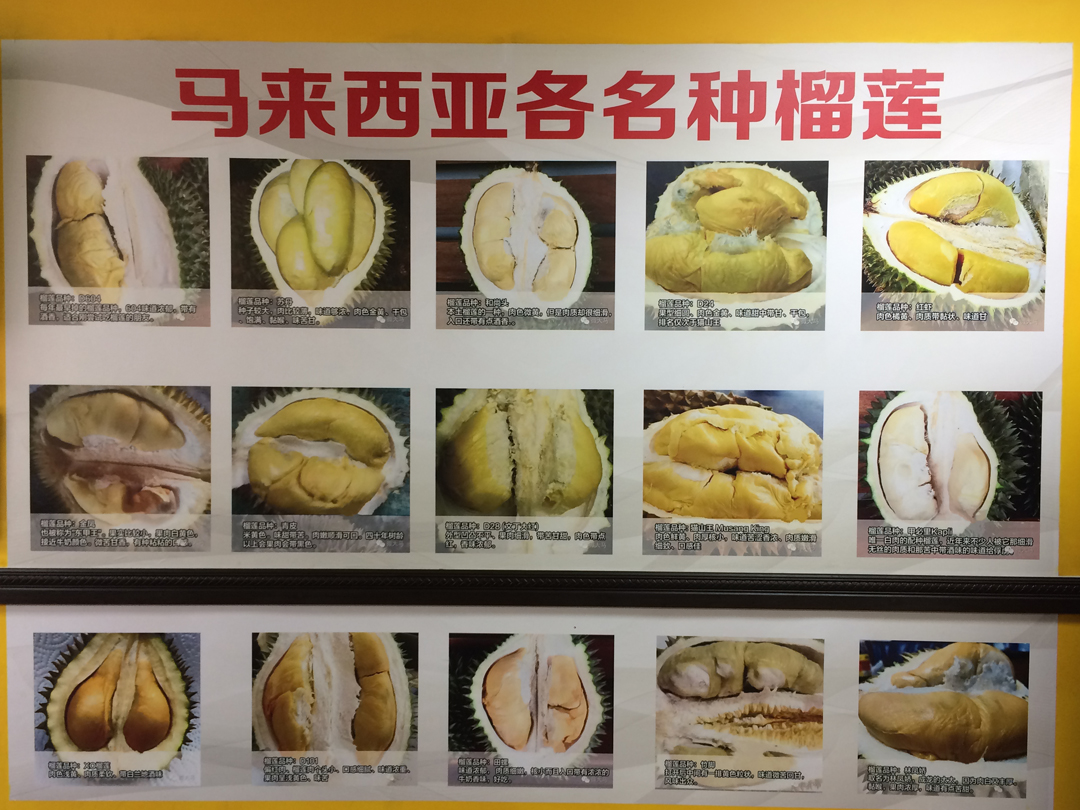
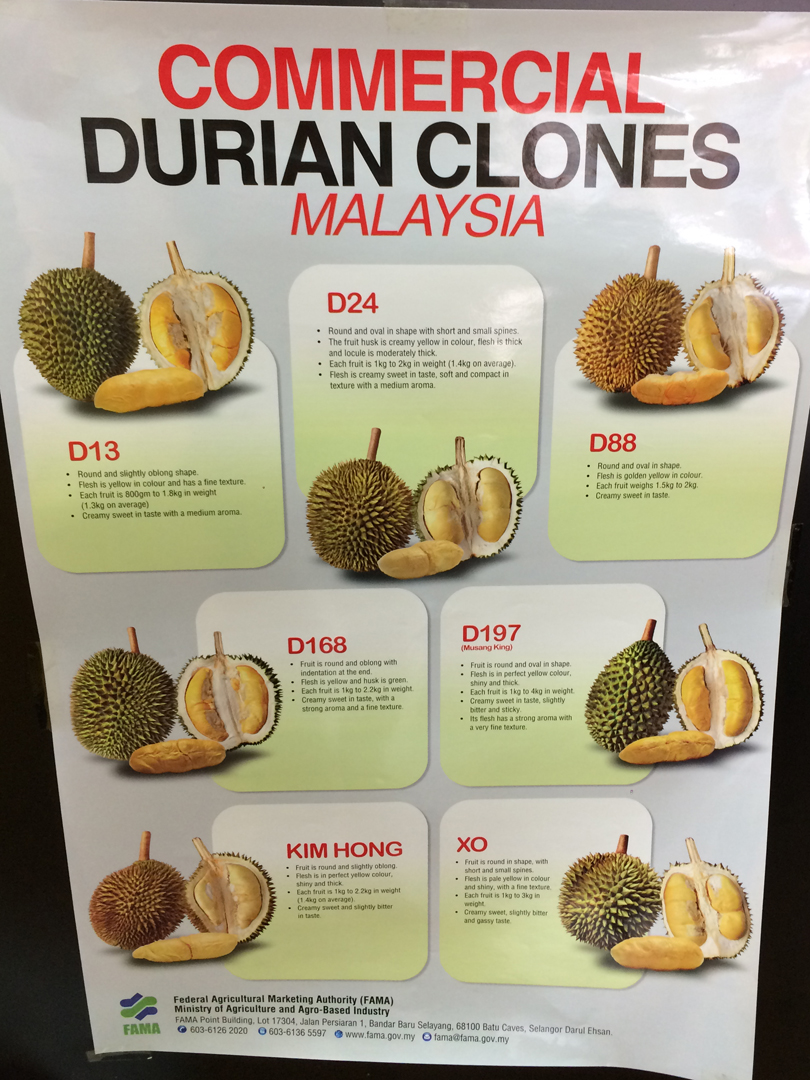
MK Durian Group works directly with plantations in Malaysia and is a wholesaler and distributor to restaurants and retailers in addition to catering to walk-in customers. We entered the commodious space with its many tables, all unoccupied at the time. Chinese-captioned signs showing photos of fifteen cultivars and another seven in English decked the walls along with a menu that, in addition to a price list for the fruit itself, included durian pancakes, mochi, and a variety of cakes, buns, and biscuits, a concession to the timid, perhaps. Durian cultivars are typically known by a common name and a code number starting with the letter “D”, so you might see Sultan (D24) or Musang King (D197), but sometimes you’ll find just the code numbers or sometimes just names like XO or Kim Hong. Scientists continue to work on hybrids to maximize flavor and minimize unpleasant smell.
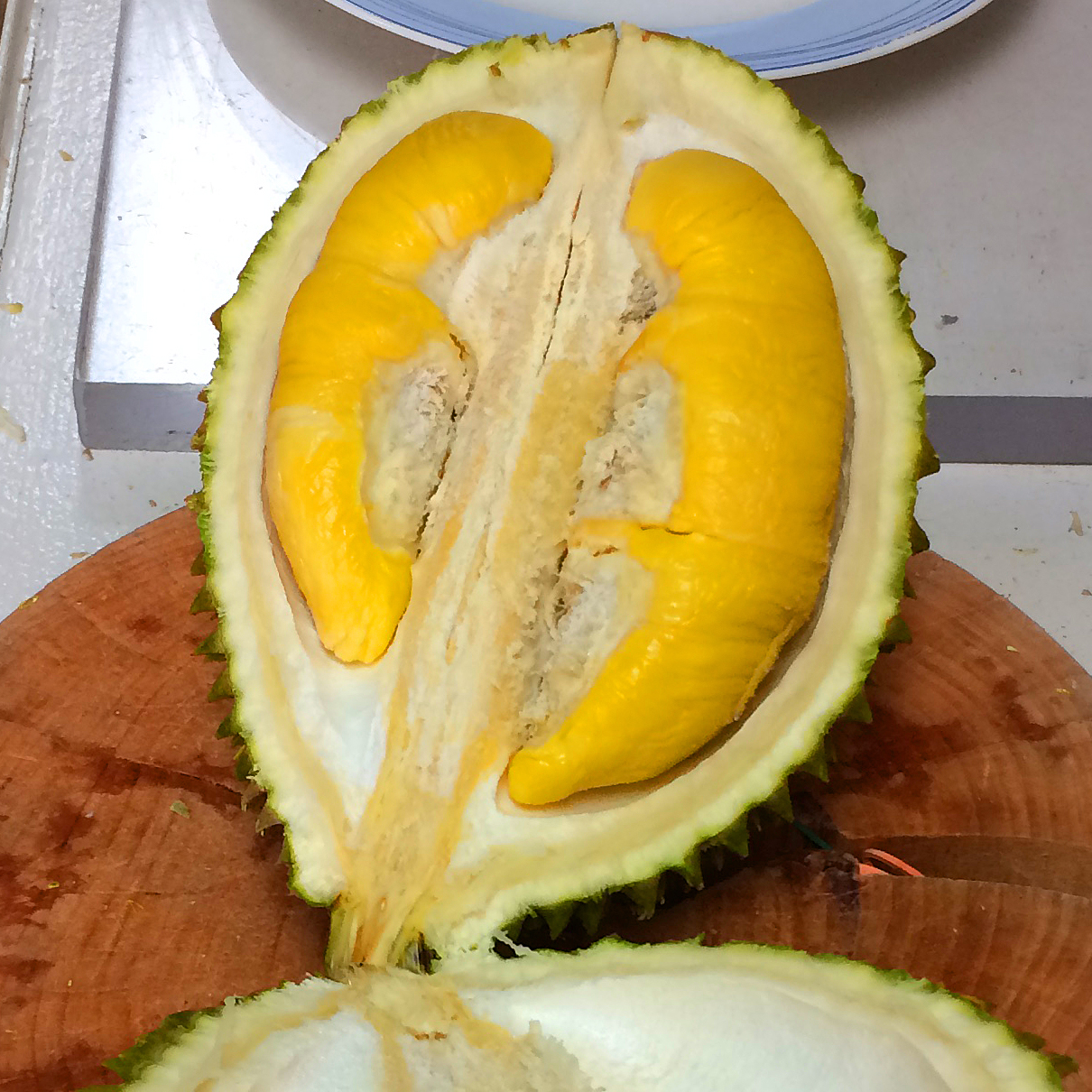
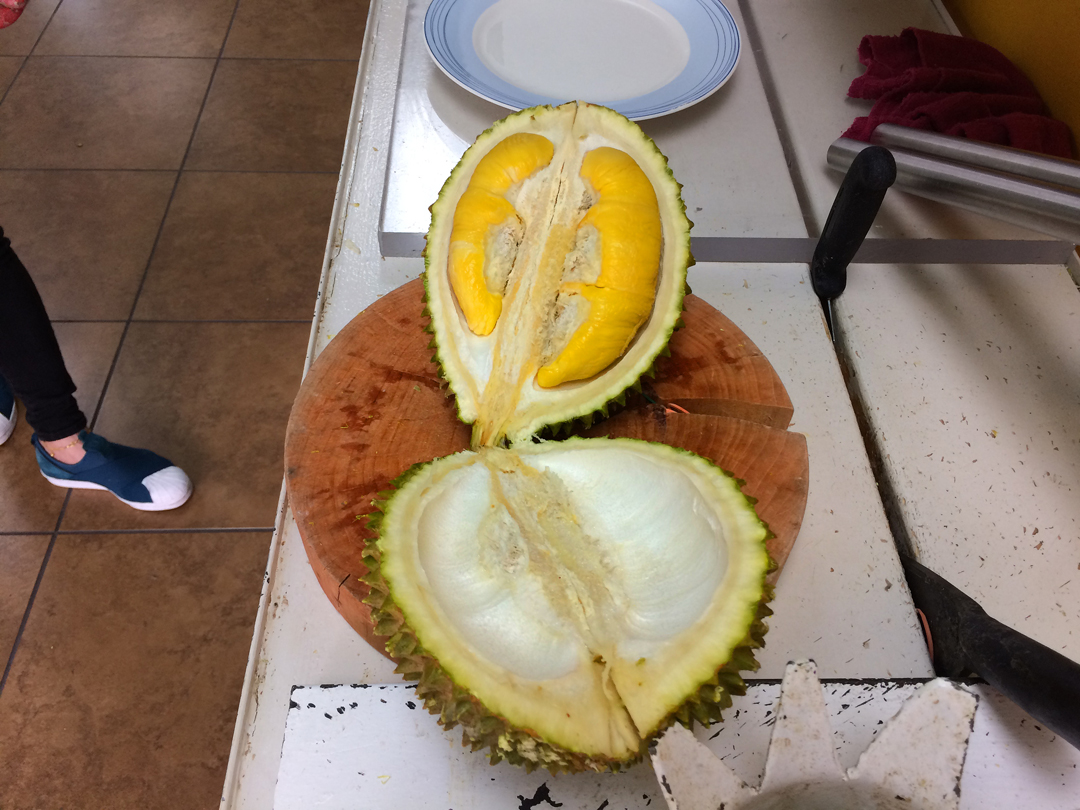
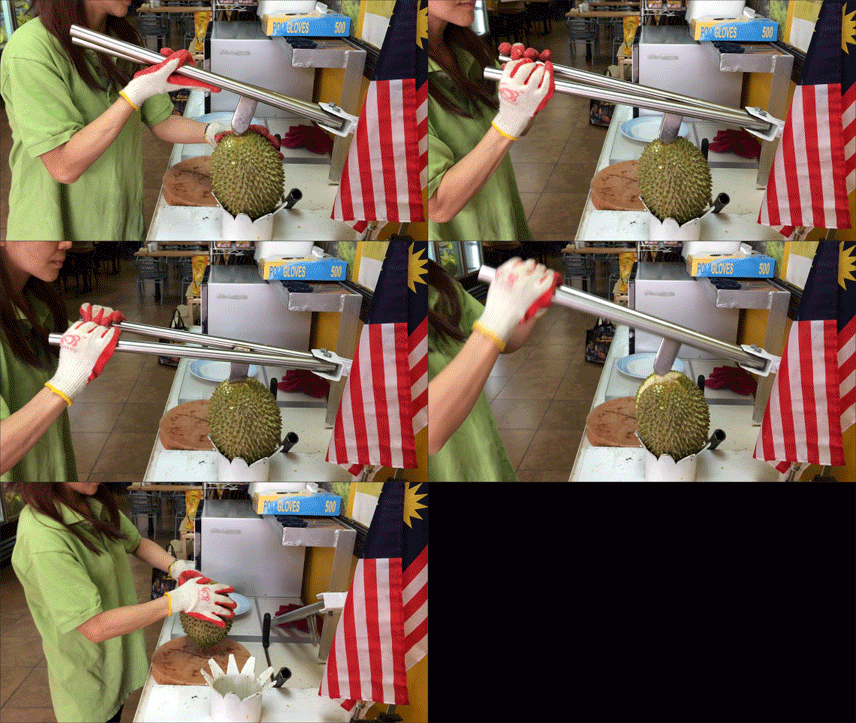
Fion, without whom I would have been at a complete loss, urged us to get the Musang King, often regarded as the king of the King of Fruits. She selected one from the freezer case and microwaved it for a few minutes to thaw it but not warm it up. Our four pounder, stripped of seeds and rind, ultimately produced about one pound of (expensive but) delicious fruit.Using an apparatus that looked a little like some sort of medieval torture device to crack the husk, she then adeptly removed the yellow pods; each pod contains a single seed that can be used in cooking like those of jackfruit. The fact that the receptacle used for holding the durian looked like a crown was not lost on me – truly befitting the King of Fruits. We took our treasure to one of the tables where boxes of plastic poly gloves were as ubiquitous as bottles of ketchup would be on tables at a diner.
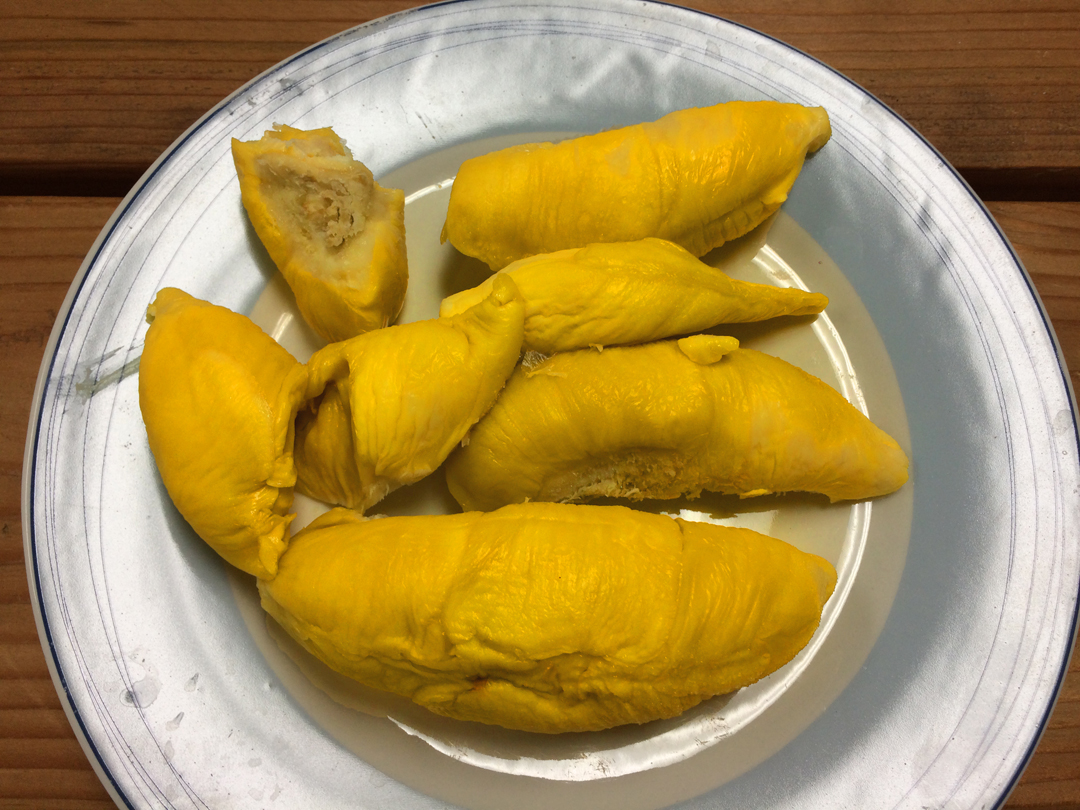
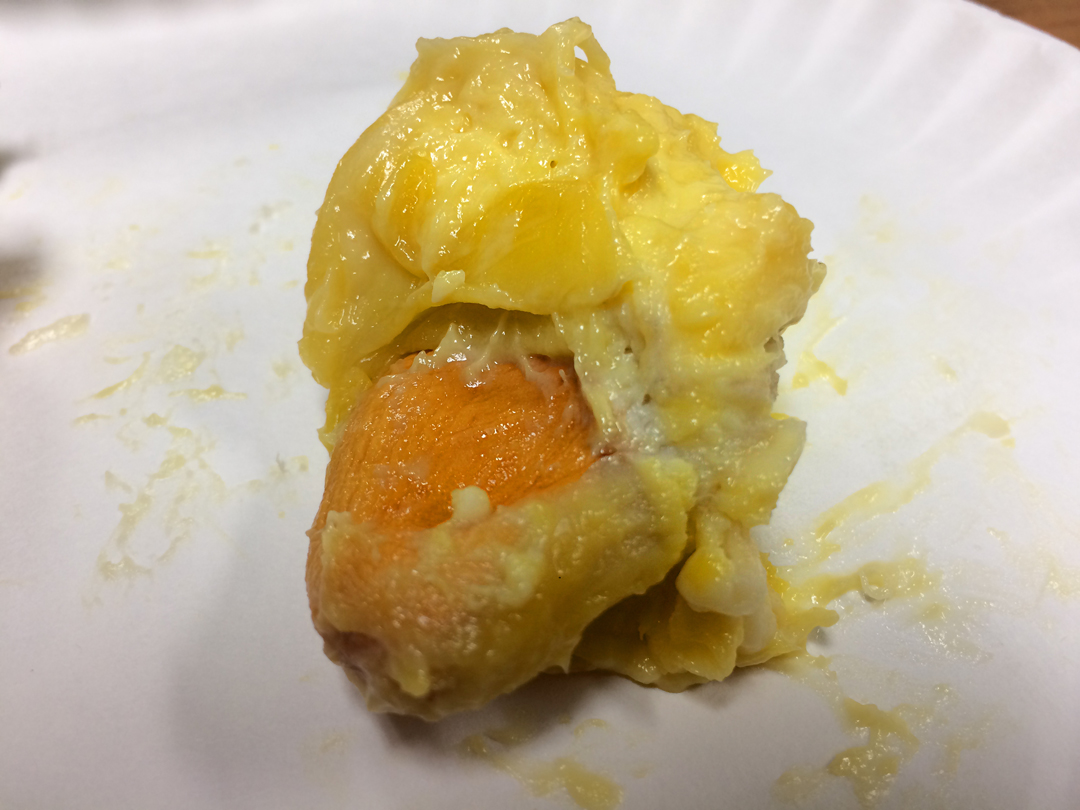
That Musang King was perhaps the best durian I had ever tasted, so much so that my new personal aphorism is “Durian: The fruit that makes its own custard.”

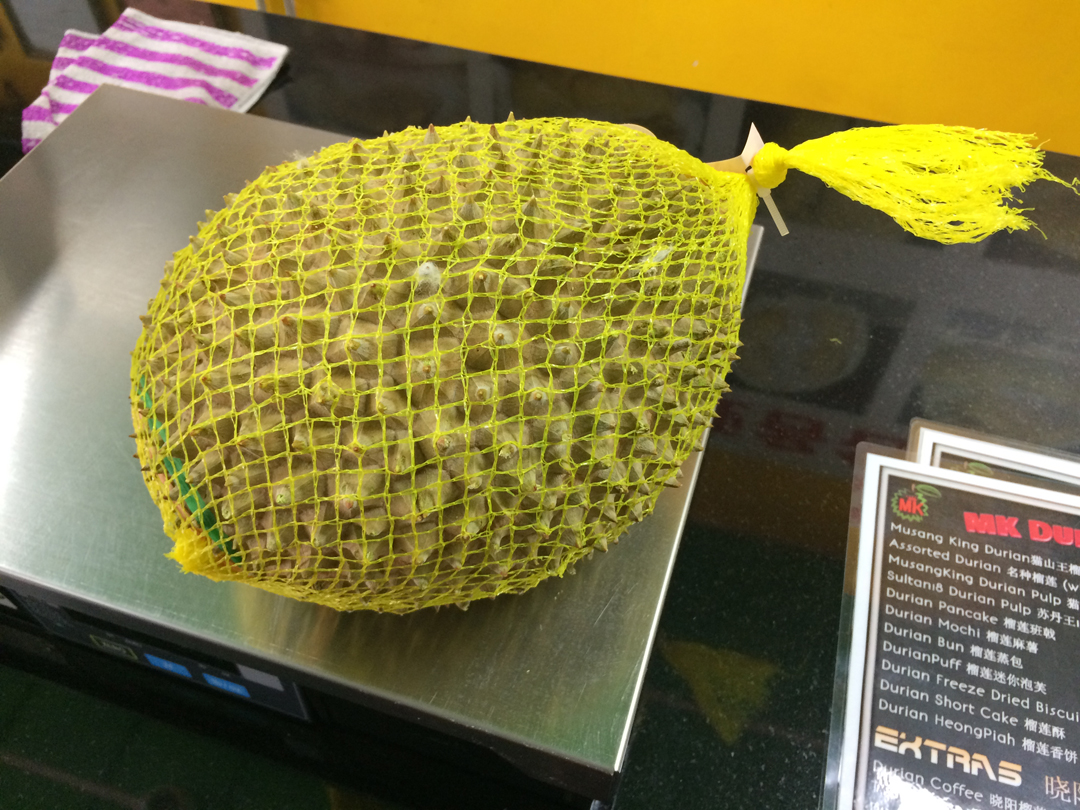
You may have seen durian in Chinatown in yellow plastic mesh bags where the fruit is often sold by the container and you don’t have to buy a whole one; you might conceivably experiment with whatever is available. But these were a cut above. As we left, I realized that something about the experience had been unusual: I asked Dave if he had noticed any of the customary malodourous bouquet. He replied no, but he thought perhaps he was a little congested that morning. I knew I wasn’t congested that morning. There had been no unpleasant smell to contend with. Had we stumbled upon that elusive golden window of odorless but sweet opportunity? Was that particular Musang King odor free? Or perhaps all of them in that lot? Did it have something to do with the fact that it had been frozen and thawed? We were beyond the point of going back and asking Fion, but I think it’s worth a return visit to get some answers!