Ramadan 2020

Instagram Post 5/20-22/2020

 
Three posts from last year’s celebration of Ramadan which concludes this year on May 23.

(Click on any image to view it in high resolution.)
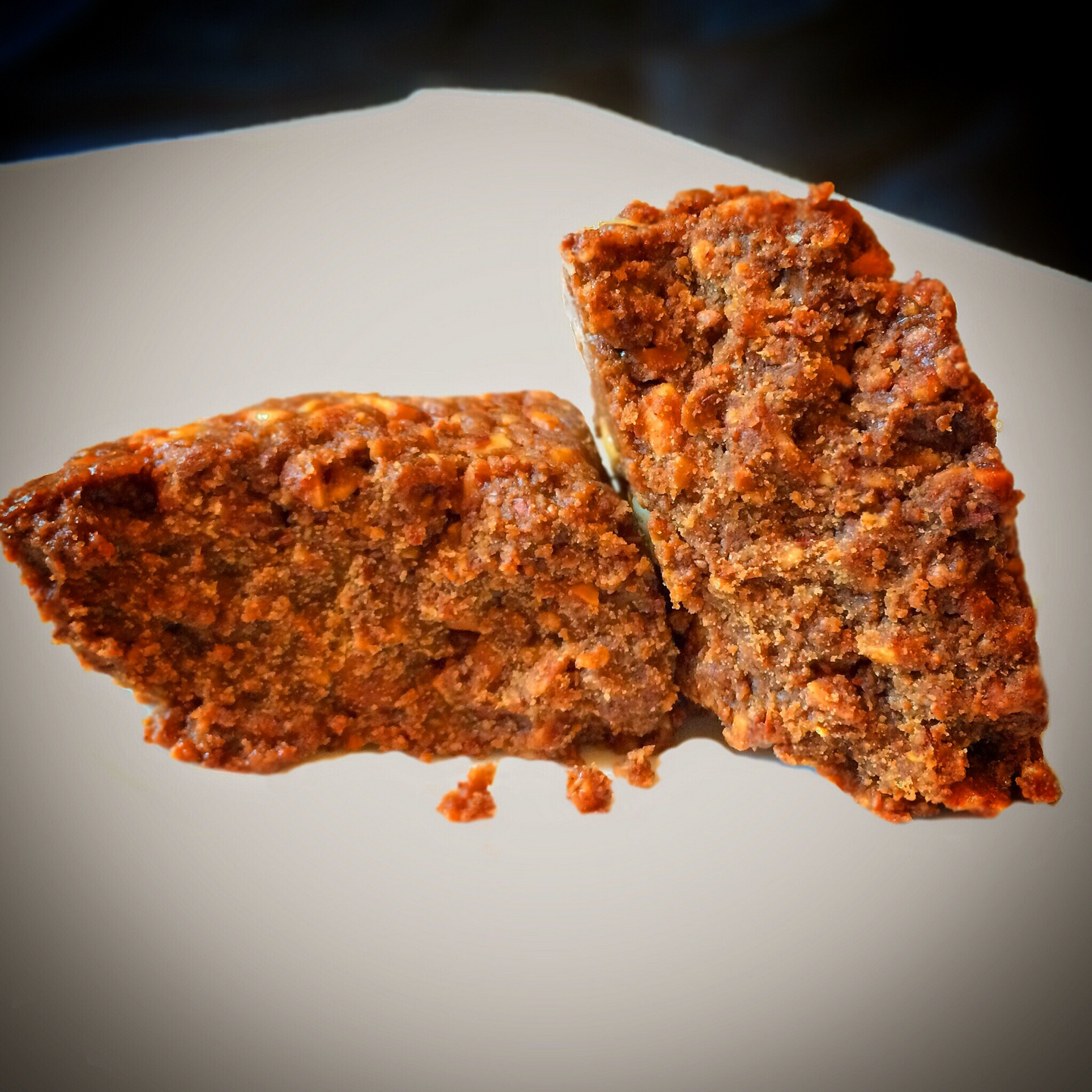
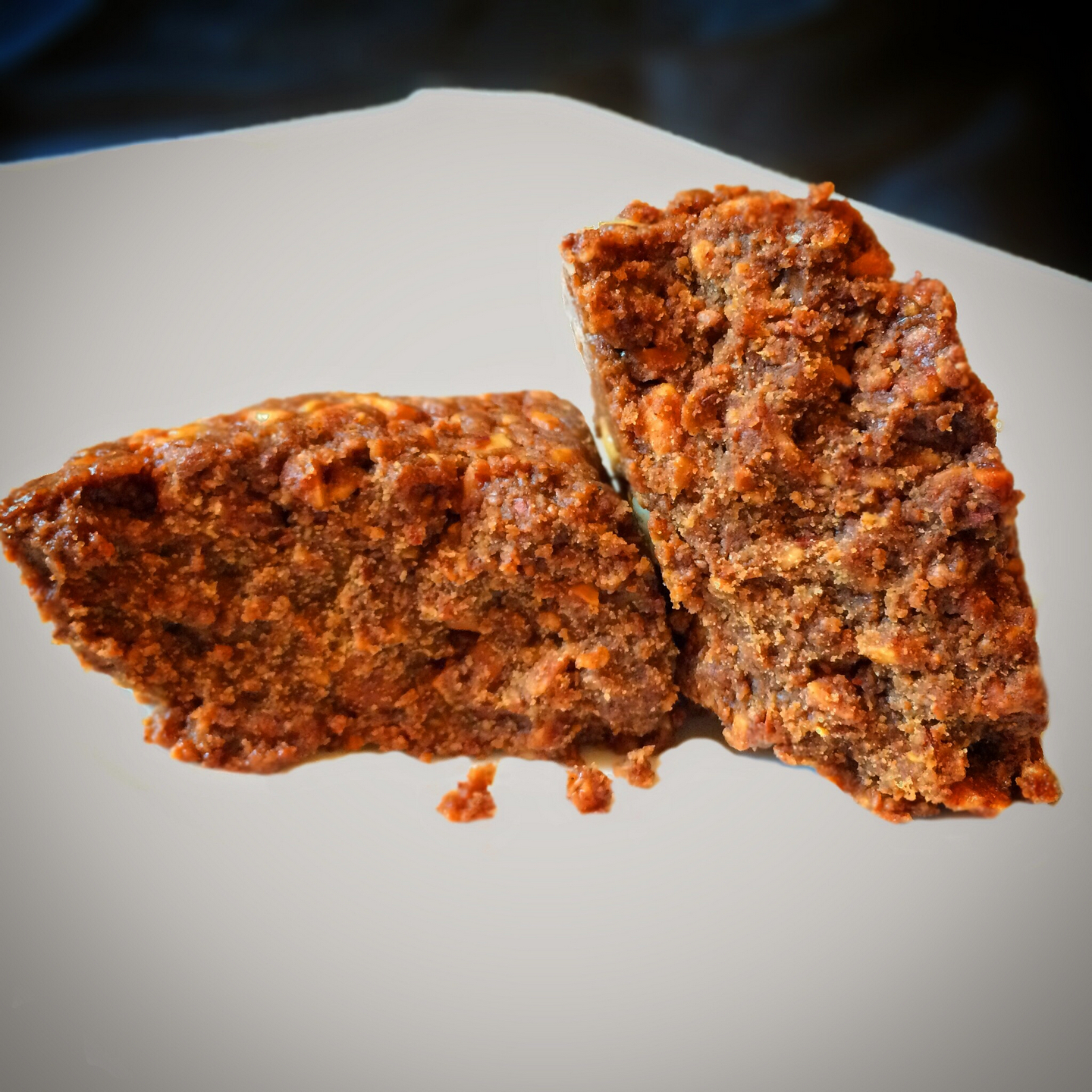
This is sellou (سلّو, aka sfouf or zmita), a unique unbaked Moroccan sweet made from toasted flour and ground almonds, sesame seeds, sugar or honey, cinnamon, and anise; as you’d expect, recipes vary from family to family. At Nablus Sweets, 6812 5th Ave, Brooklyn, I spotted a huge brown mountain of it and purchased a small knoll, broken here into two little hillocks. It’s soft in texture, somewhere along the cookie<–>brownie continuum but drier, crumbly but crunchy from nuts. Simply break off a chunk and enjoy, perhaps with a cup of tea.

If your knowledge of Middle Eastern/Mediterranean sweets is informed primarily by honey drenched baklava and kanafeh, give this one a try (available particularly around Ramadan); I highly recommend it.
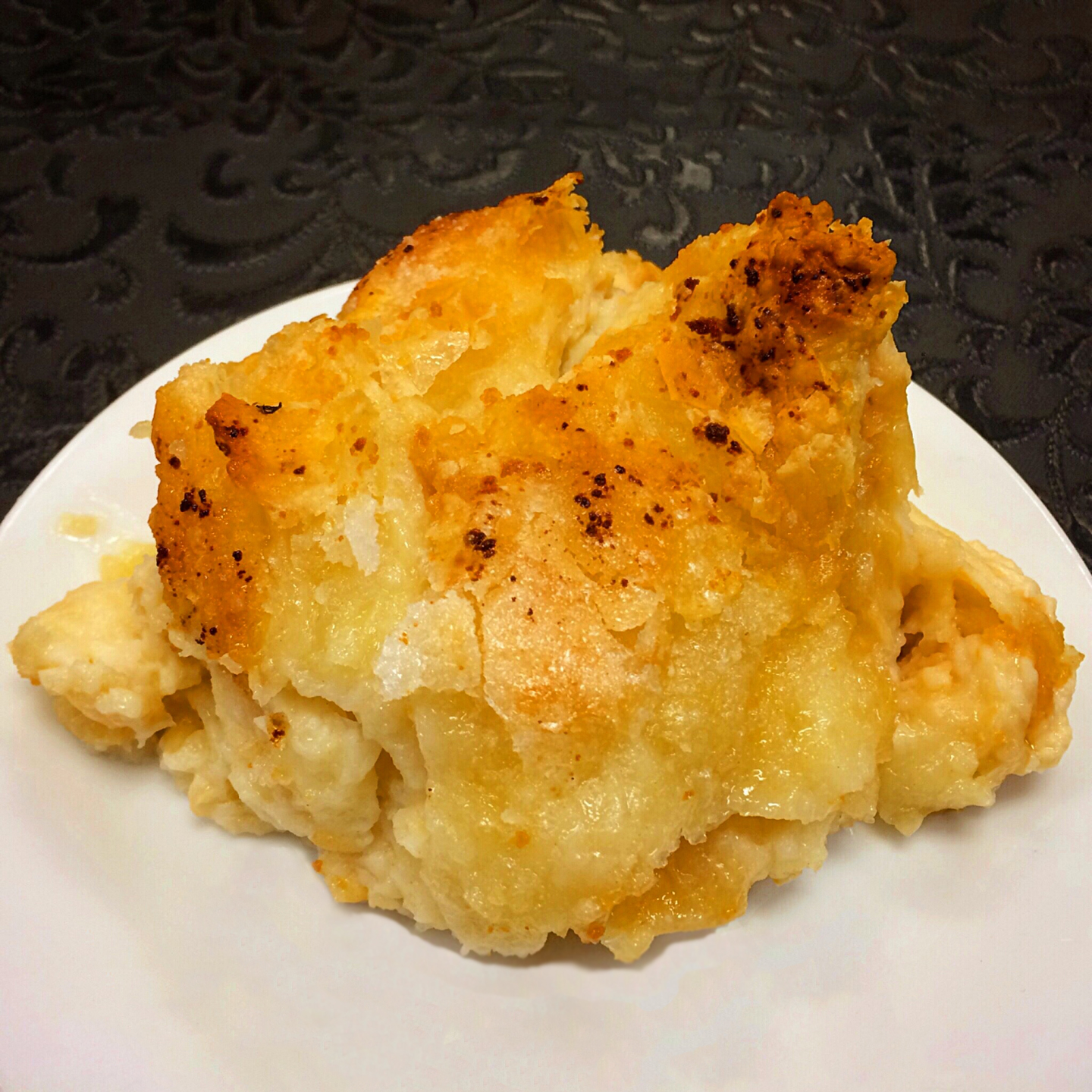

Little Egypt Restaurant, 66-28 Fresh Pond Road, Ridgewood, featured a special dessert coinciding with Mother’s Day last year: Om Ali (you might see umm ali), أم على. The phrase translates as “Ali’s mother” and of course, fables abound as to its name. Essentially Egypt’s answer to bread pudding (only better if you ask me), it’s made with phyllo dough, milk (and occasionally, richer dairy considerations) and sugar, sometimes elevated with raisins, nuts, and cinnamon. There are legions of recipes for this traditional Ramadan treat; that day, our delightful version came with sour cream and ground nuts on the side for garnish, ad libitum.
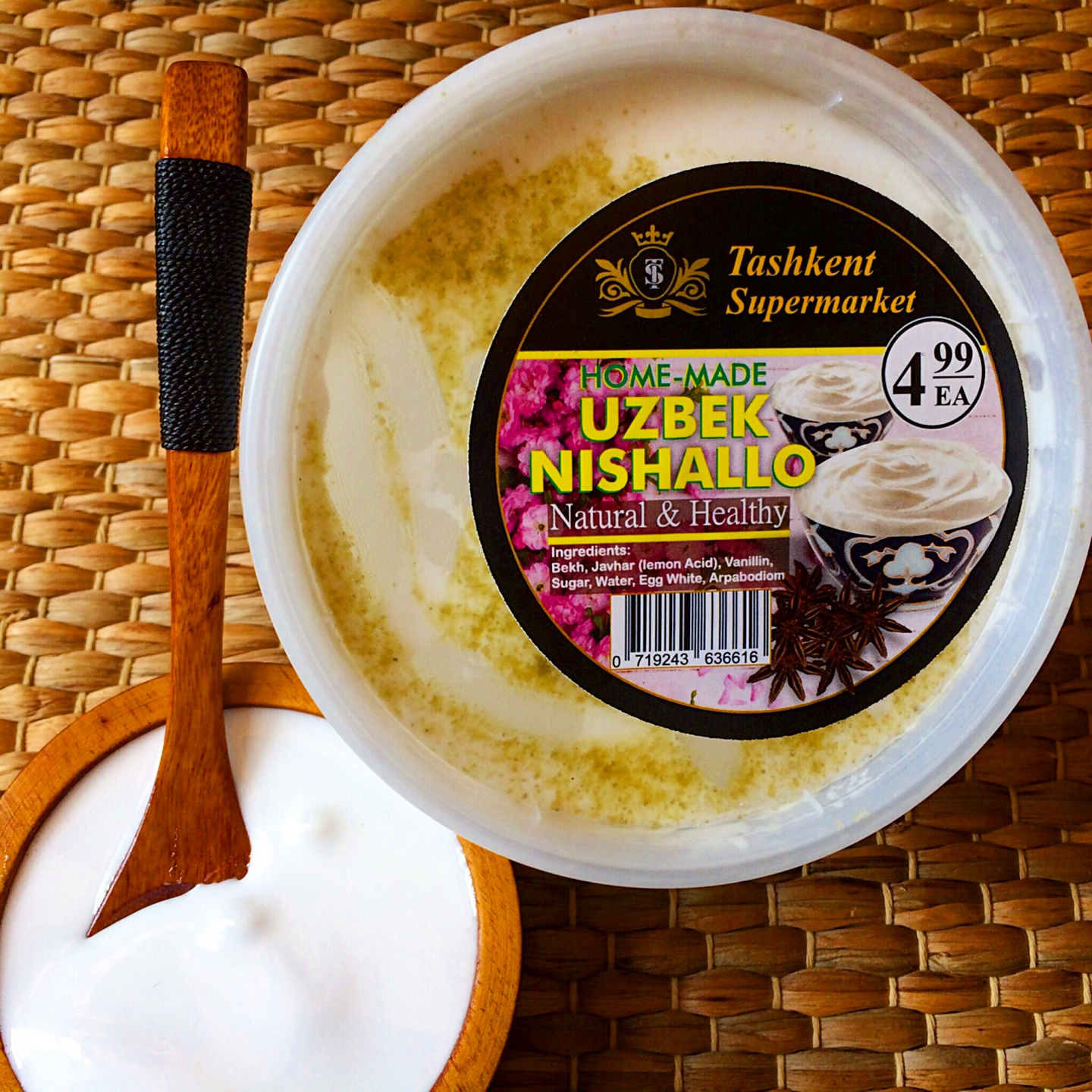

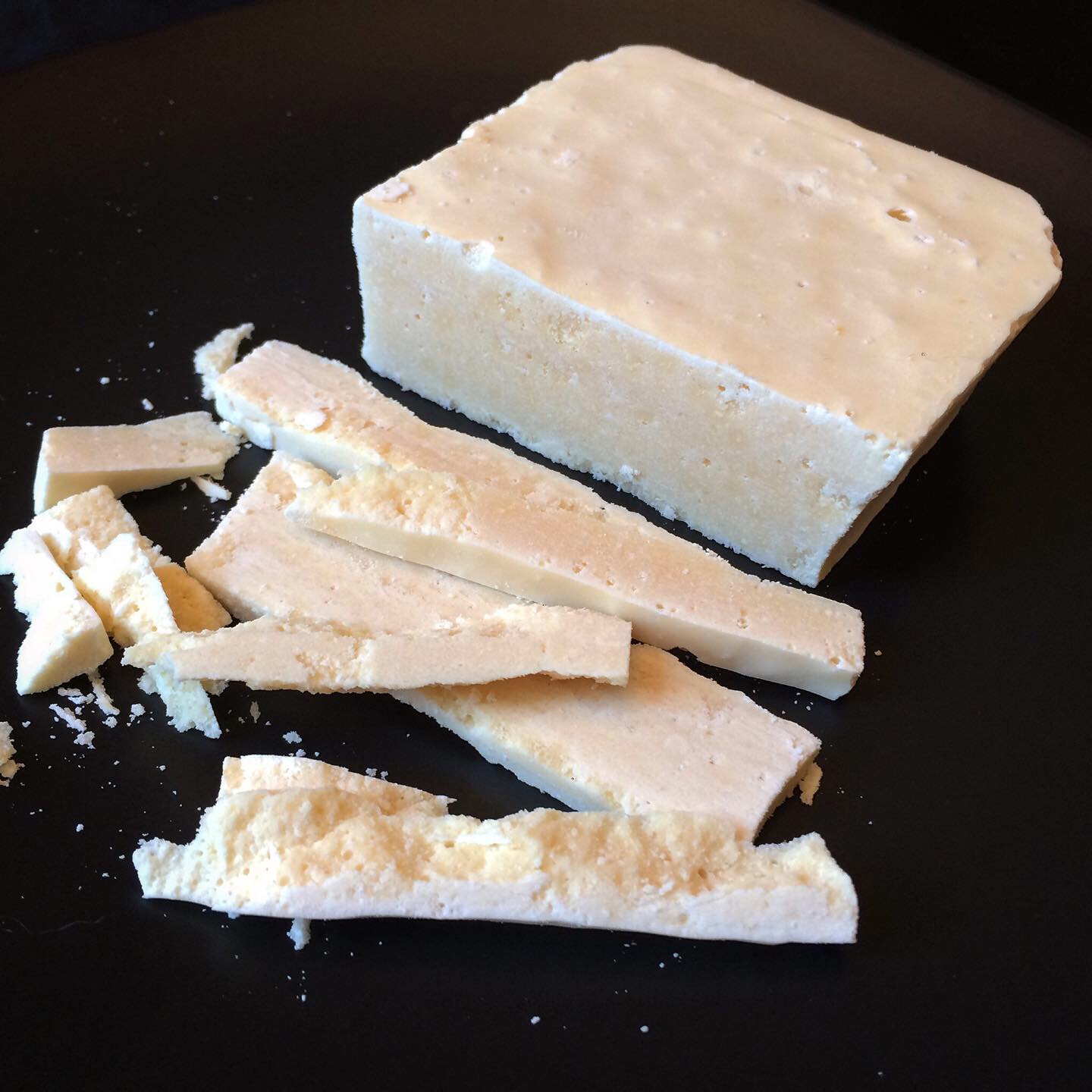
On a visit last year to Tashkent Market at 713 Brighton Beach Ave in Brooklyn, I picked up some nishallo (aka nisholda), an exceedingly sweet dessert that’s native to Uzbekistan and Tajikistan and prepared exclusively during the Muslim holy month of Ramadan. Made primarily from sugar, whipped egg whites, and water, it’s a dead-on ringer for Marshmallow Fluff (as you’d expect from the ingredients) if perhaps a bit classier because of a touch of star anise and/or licorice root. It makes its appearance as part of iftar, the evening meal that breaks the daily fast. Frequently used as a dip for the flatbread naan, it’s particularly appropriate after 17 hours of abstention from eating because its high sugar content jumpstarts the metabolism.

Ramadan Mubarak!


Rustic Table Shuk

Instagram Post 3/8/2020

Your choices for food vendors in the new Essex Market, 88 Essex St on Manhattan’s Lower East Side, are certainly plentiful, and since the opening of The Market Line downstairs, they’re positively daunting. But since I believe that the best method for conquering the overwhelming is to partialize the task, here’s the first, with more anon.

My understanding is that Israeli inflected Rustic Table has a location on Very West 42nd Street, but this is about their Market Line venue, Rustic Table Shuk, aptly named since shuk (שׁוּק) is the Hebrew word for market, a cognate to souk in Arabic.

(Click on any image to view it in high resolution.)
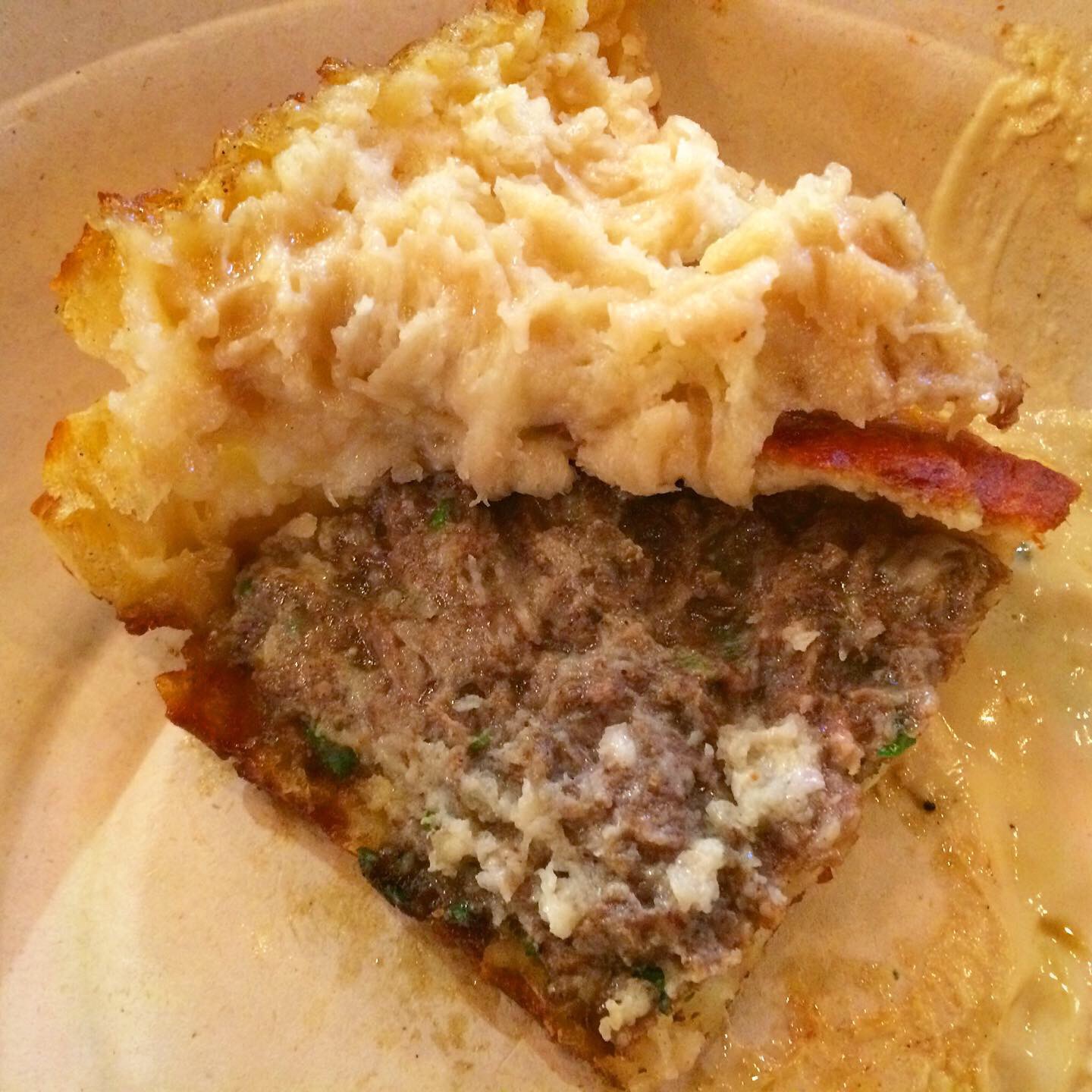
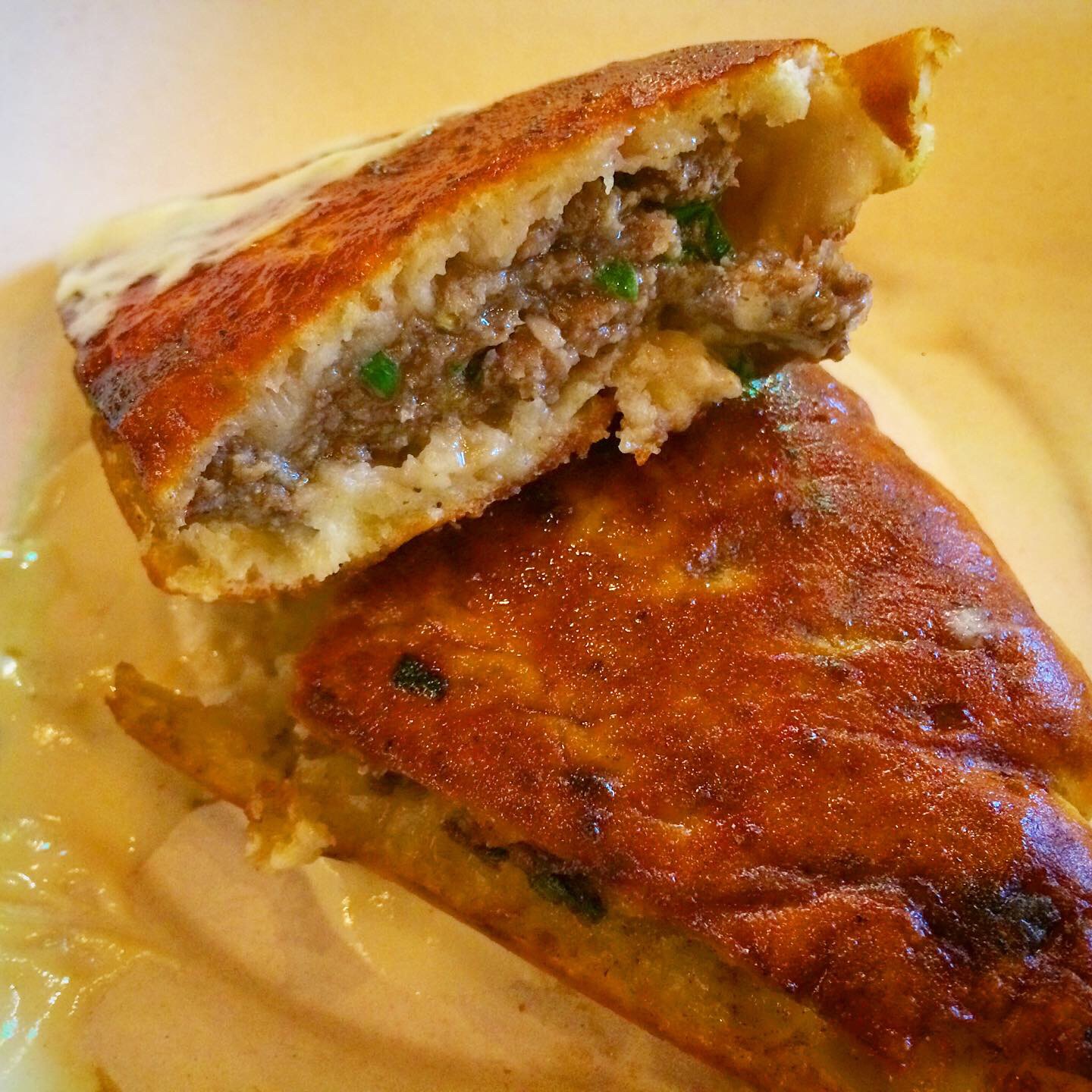
This is their take on trendy Arayes, pita bread stuffed with deftly seasoned ground grass-fed beef (it’s often lamb or a blend in the Levant from which it hails), grilled (Lebanon’s answer to panini, perhaps), anointed with pumpkinseed oil, and served in a puddle of tahini. The distinguishing characteristic of good arayes is that the outside of the pita is crisp…

…while the meat juices saturate its underside. As you can see, this one succeeded.


Ameer Bakery

Instagram Post 3/6/2020

(Click on any image to view it in high resolution.)

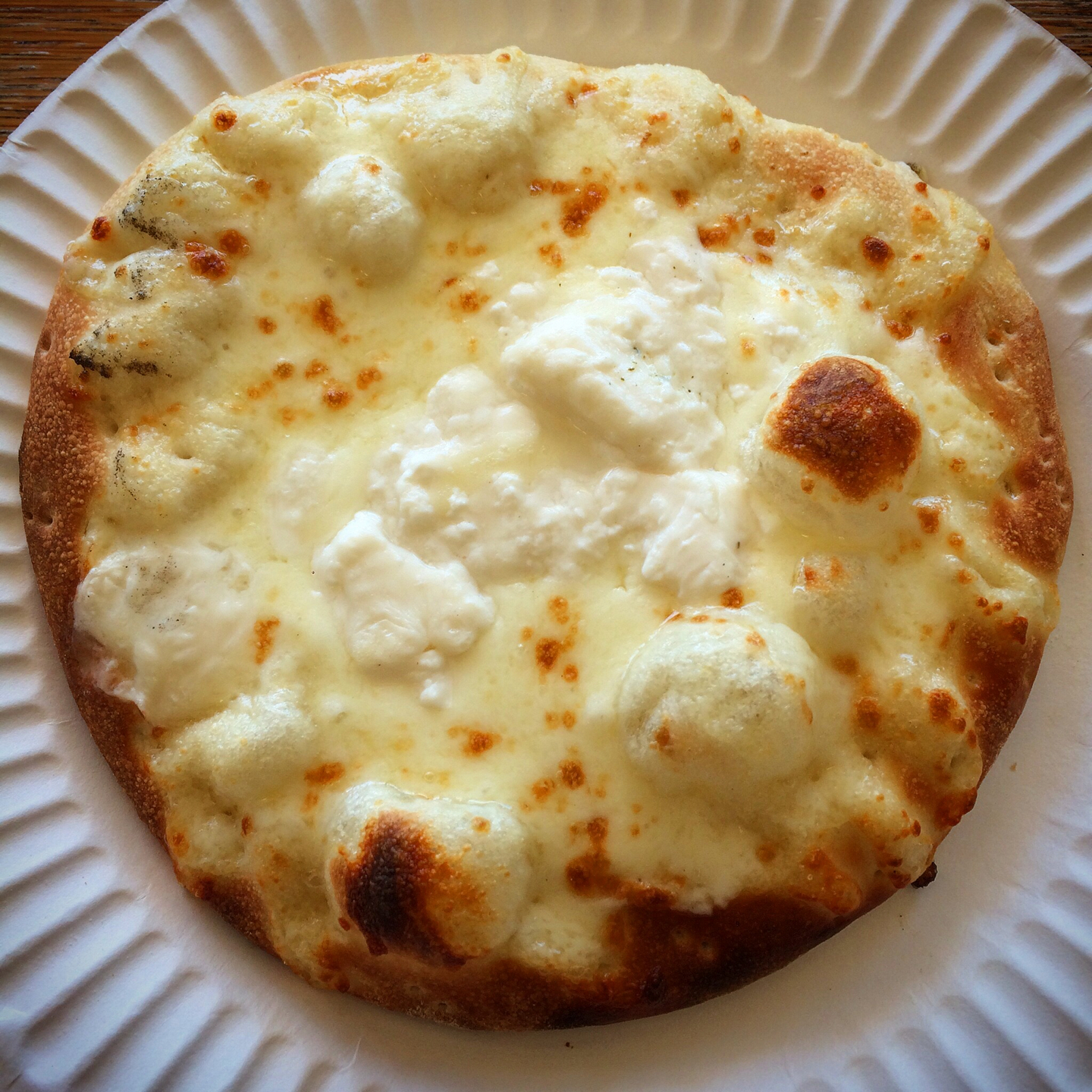
My dining buddy and I were on our way between hither and yon in Paterson, NJ when we passed Ameer Bakery at 243 Buffalo Ave. We ventured in at a particularly fortuitous moment as trays of these Middle Eastern pies (manakish, مناقيش) were just emerging hot from the oven. Two types of cheese were meltingly evident; when I inquired, I was told “mozzarella” and “Arabic cheese”. The vicissitudes of helpful linguistic interpretation being what they are, I’m going to speculate that the bottom layer was akkawi (a bit like mozzarella) and the random plops atop, puffy and a bit salty, were nabulsi – but I’m guessing. No guesswork was involved, however, concerning how delicious these Palestinian pies were. My gratitude to the management for comping us these savory treats.


Nablus Pastry & Sweets – Paterson

Instagram Post 2/17/2020

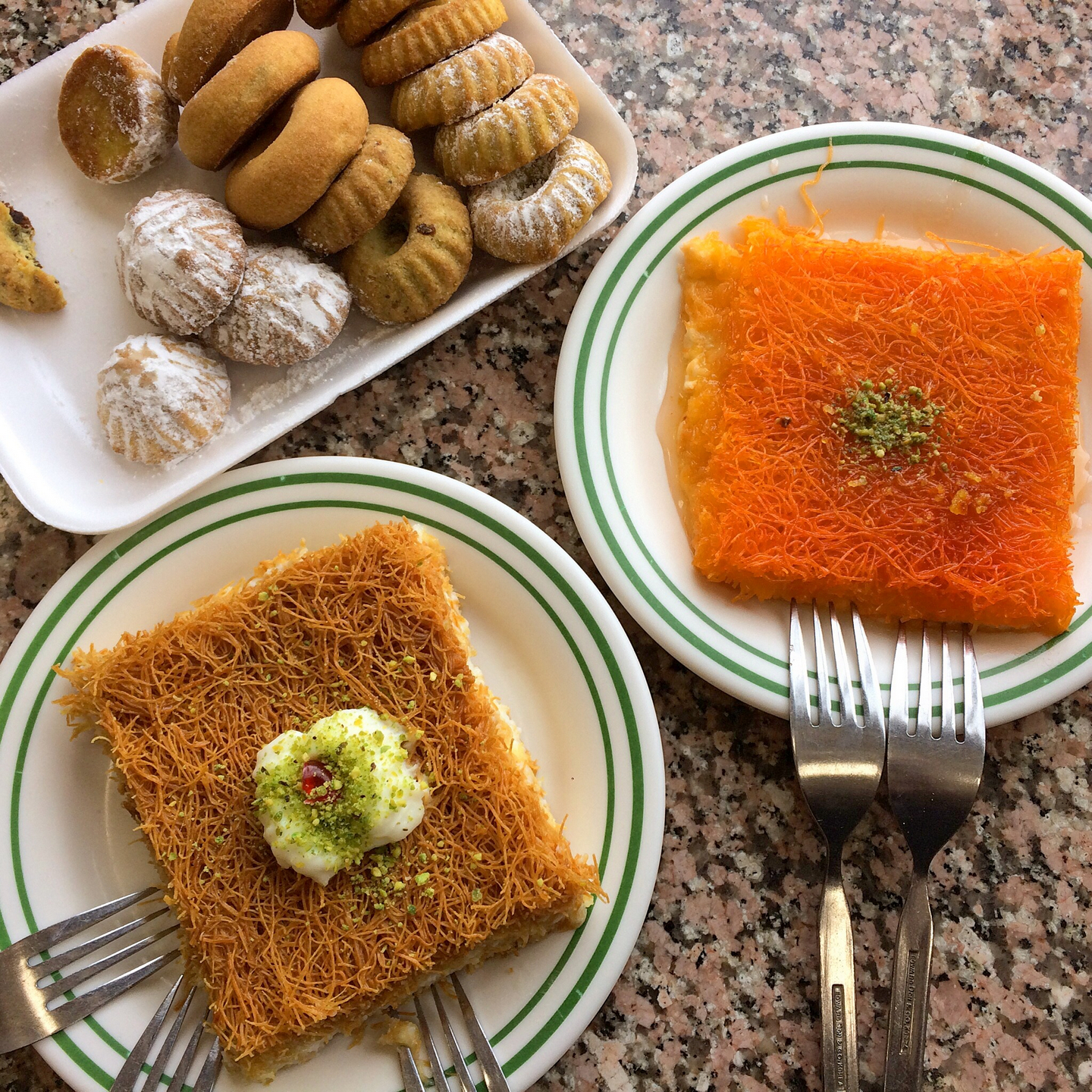
I’ve written about Nablus Pastry & Sweets in Bay Ridge here and here, but having hit the trail to New Jersey this past weekend, a nod to their Paterson outpost is due. A mecca for Middle Eastern delights and more expansive than their Brooklyn location, we stopped in for only two of their numerous varieties of kanafeh and some ma’amoul cookies.

(Click on any image to view it in high resolution.)

Ma’amoul are melt-in-your-mouth cookies filled with dried fruit or nuts; dates, figs, walnuts and pistachios factor in frequently. Kanafeh, also spelled knafeh, kunafa, (there are many more), but always reliably كُنافة, is hypersweet and made with sugar syrup-drenched crisp shredded dough that conceals rich delights like clotted cream or cheese and is sometimes topped with chopped nuts – as if the lily needed gilding.

Highly recommended. Nablus Pastry & Sweets is located at 1050 Main St in Paterson NJ.


Yemen Sweets

Instagram Post 8/19/2019

I was stalking the aisles at Brooklyn’s Balady Foods, the redoubtable Middle Eastern market at 7128 5th Ave, in search of goodies for my Little Levant ethnojunket when I stumbled upon this toothachingly sweet trio of blood sugar tolerance tests from Yemen Sweets that turned out to be a little much even for me.

(Click on any image to view it in high resolution.)

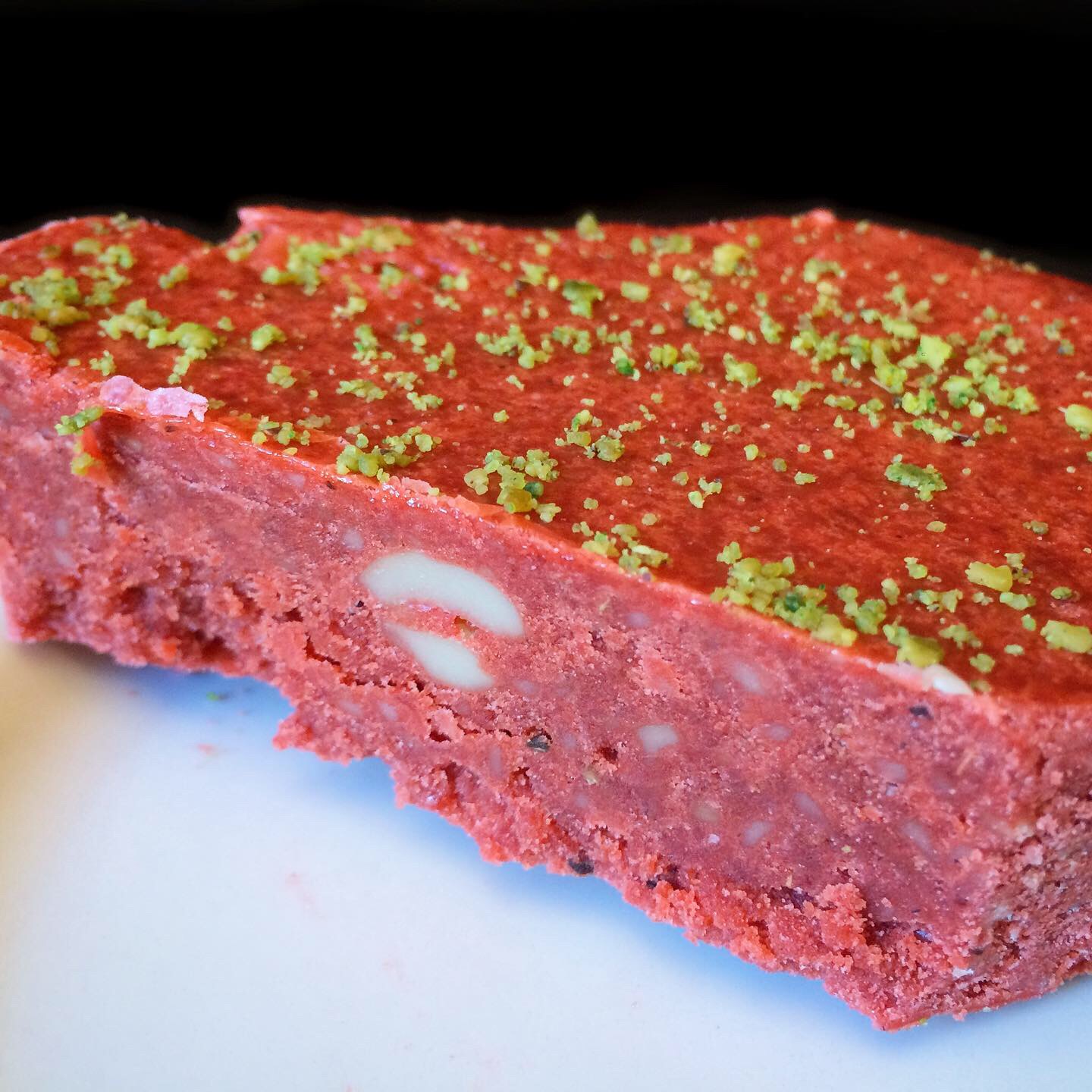
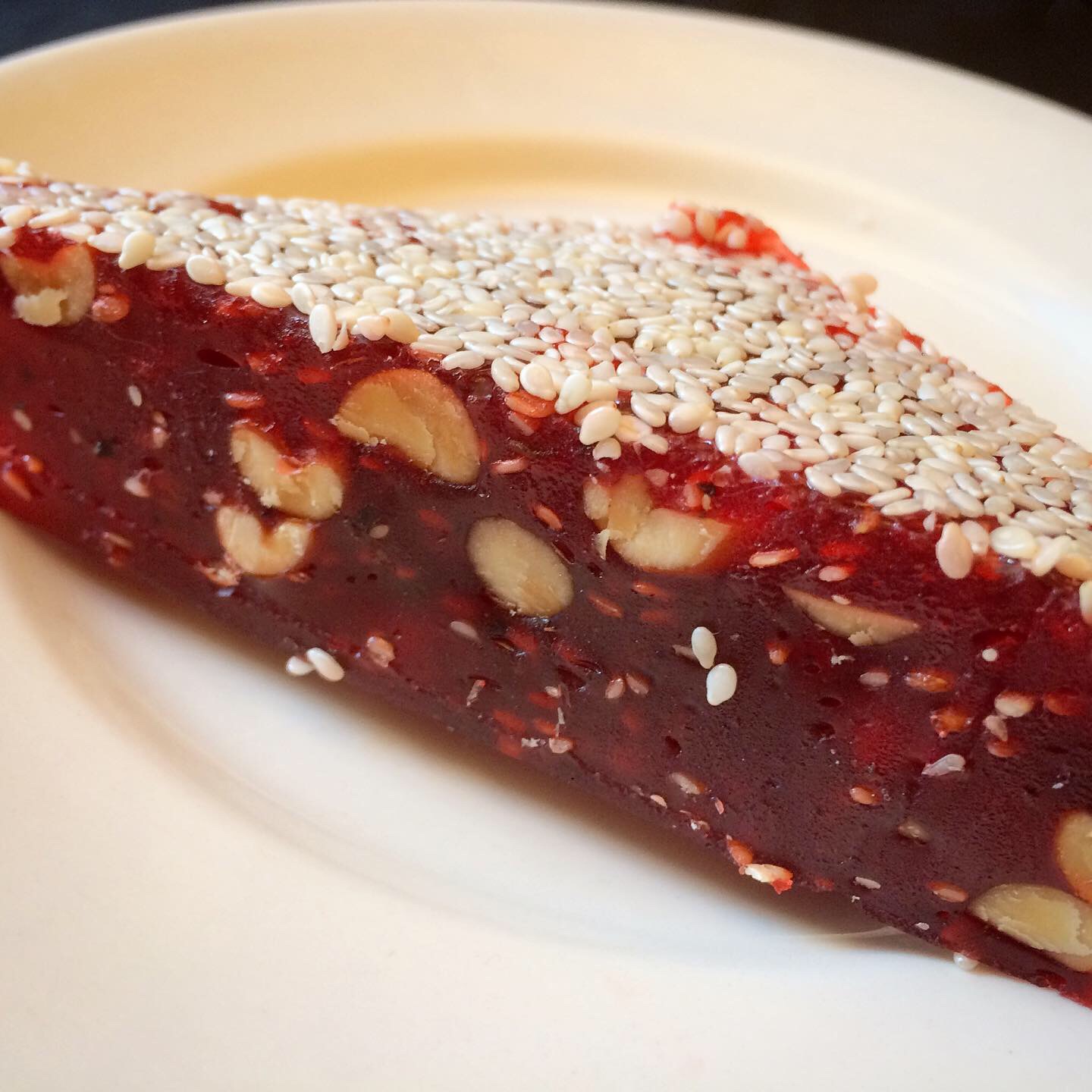
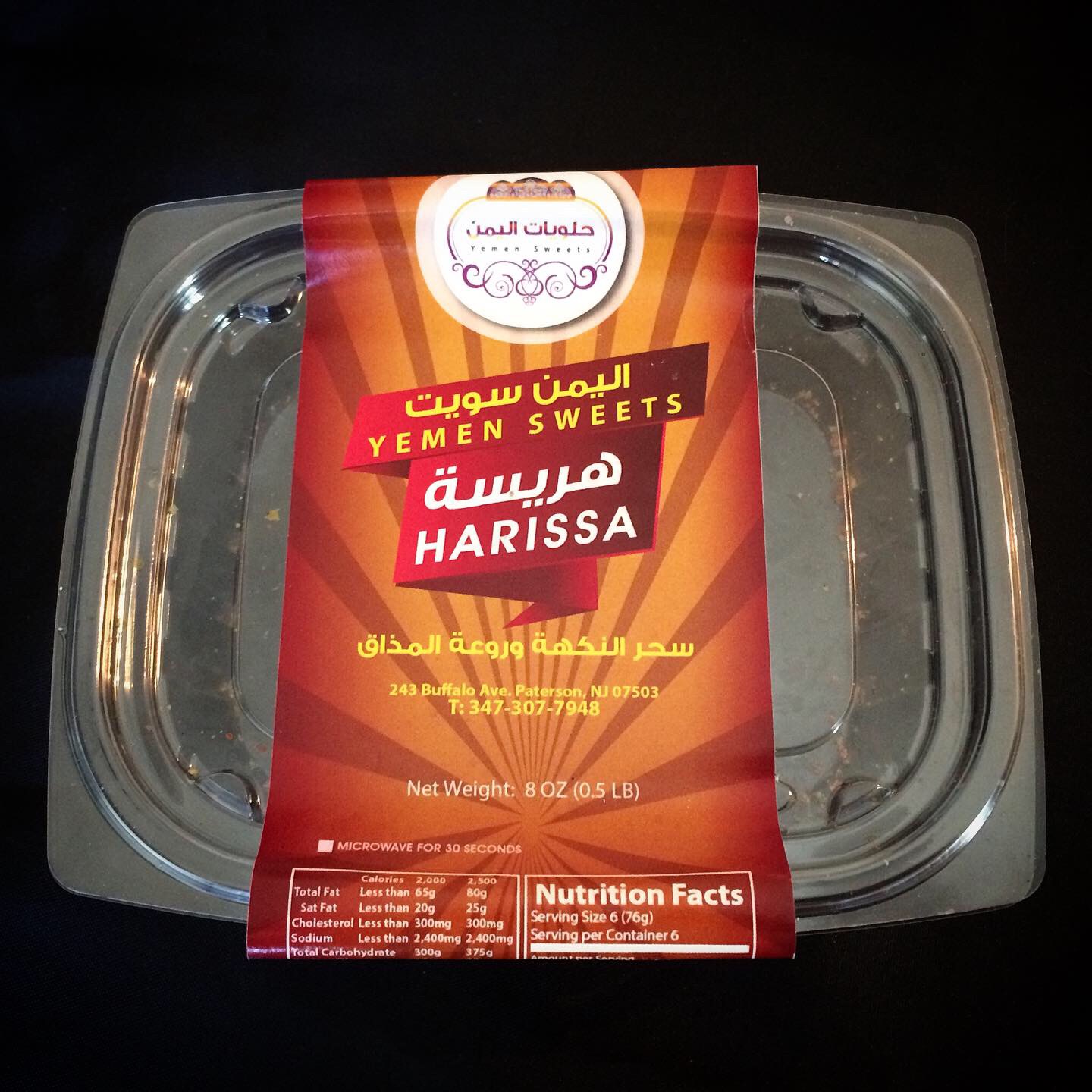
This one is called Harissa, a word I’ve always associated with North African red chili pepper paste and never with candy. A little research and I learned that the Arabic word harissa (هريسه) means to mash or squash which made some sense. Its main ingredients are sugar, soybean oil, peanuts, flour, cornstarch and sesame seeds (no heat) so, predictably, its dry texture is somewhere along the cookie<–>candy continuum, closer to cookie were it not for the oil. You can readily taste the ground peanuts and sesame seeds along with the intense presence of clove and cardamom.


Similarly flavored, Khalta has a texture along the gummy bear<–>Turkish delight continuum. Seems like khalta (خلطة) means mix, but probably in a different context. Mitigated by plenty of peanuts and strewn with sesame seeds, it was unusual as well.


The most immediately accessible of the three (although TBH the others grew on me eventually) is Labaneyh. This one had a crumbly texture and tasted like a perfumy cross between fudge and white chocolate, no surprise since cacao is listed among the ingredients along with milk, the Arabic word for which is laban (لبن) so that’s logical.


I was unable to ferret out much information about these three sweets despite the manufacturer’s address listed on the packaging which doesn’t seem to relate to much in the real world. Anybody out there know more about these? Your comments are greatly appreciated!


Al Aqsa Bakery & Restaurant

Instagram Post 8/12/2019

It was an interminable wait (but that’s not unusual for this neighborhood at lunchtime) in sweltering heat (but that’s not unusual for this city in summertime), and I was keen to explore this new-to-me ethnic restaurant (but that’s not unusual for this gourmand at any time).

(Click on any image to view it in high resolution.)

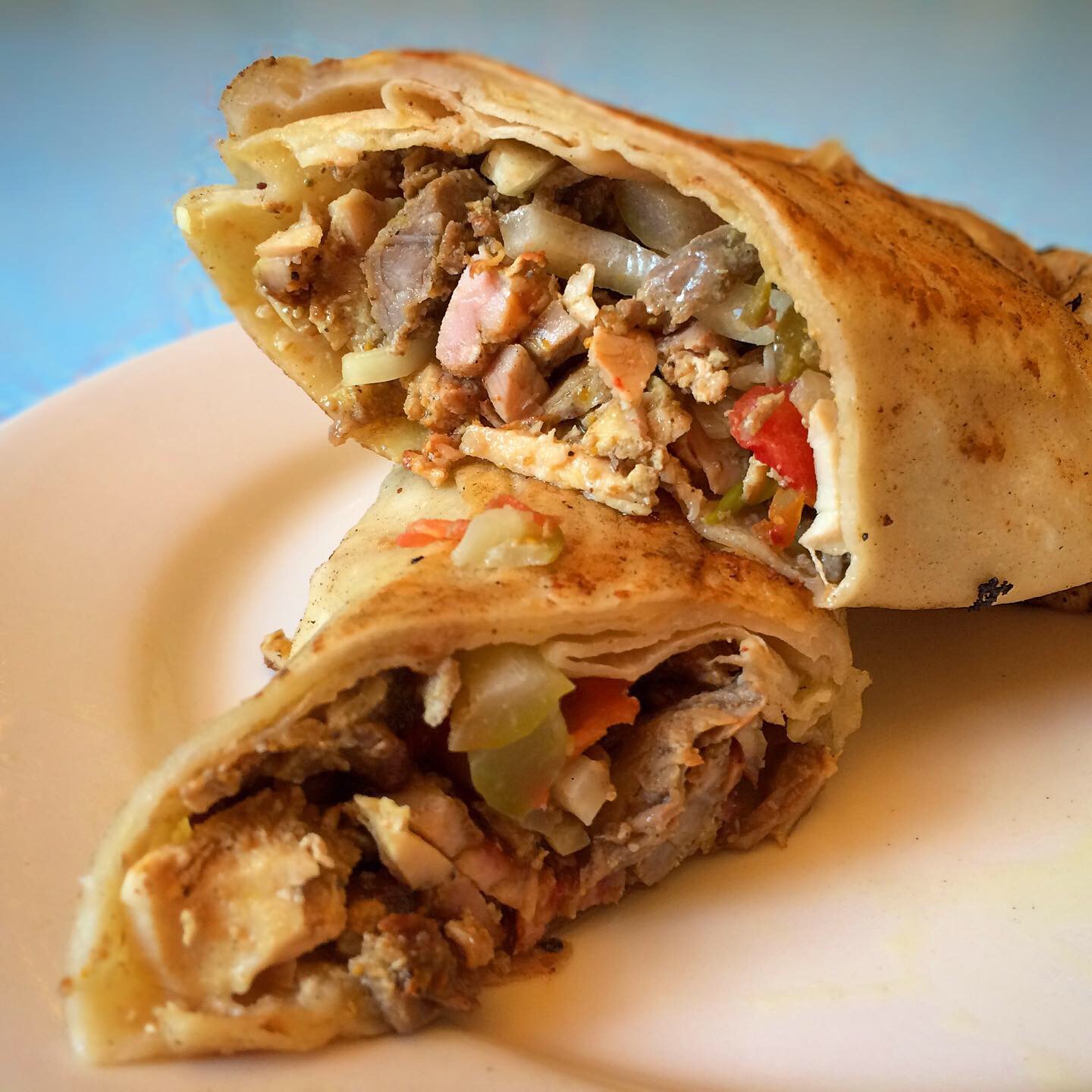
Al Aqsa Bakery & Restaurant, 6917 5th Ave in Bay Ridge, Brooklyn, proudly (see second photo) serves Middle Eastern cuisine with a Palestinian flair. I was eager to try the “Mix Shawerma” which combines chicken and lamb, perfect for me because it obviates the need to make a decision. Packed with the two meats and veggies, it was worth the wait.

Since I was unfamiliar with it, I was curious about a dish on the menu called “ejjah”; Wikipedia describes eggah (from research, I don’t think the spelling is an issue) as similar to a frittata with rather elaborate seasonings and fillings. I ordered it but was disappointed to receive basically a plain omelet fried in oil with an inconsequential amount (a pinch or two) of onion and parsley. I dunno. I should return though to check out their assortment of breads and cookies that are baked on the premises; those certainly looked appetizing.


Paradise Sweets

Instagram Post 7/23/2019

While doing reconnaissance for potential venues to visit on my Little Levant food tour in Bay Ridge, I checked out one of the newer kids on the block, Paradise Sweets at 6739 5th Ave in Brooklyn. It takes a certain amount of intestinal fortitude to launch a new Middle Eastern bakery along that strip considering the number of existing well-entrenched similar establishments but they seem to have a handle on serving the standards and coming up with some innovations as well.

(Click on any image to view it in high resolution.)

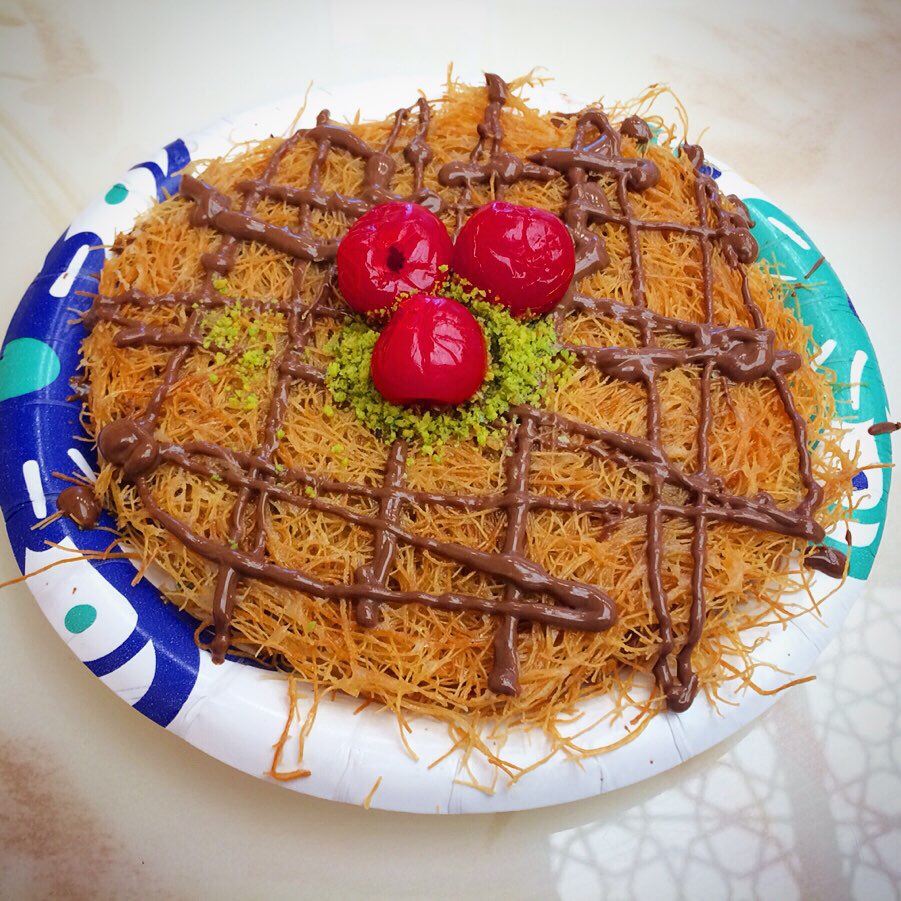
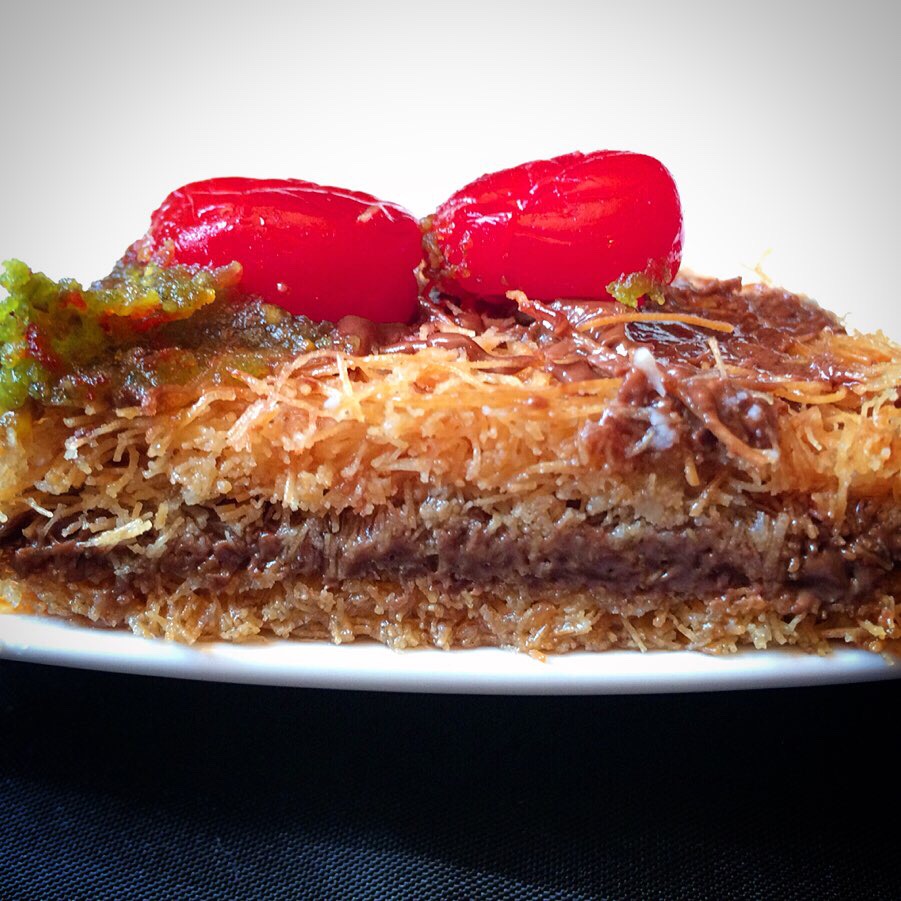
Case in point, this Nutella Kunafa (no, I won’t provide alternate spellings you might see since this was originally an Instagram post and Instagram only affords us 2200 characters per post). It’s a flat foundation of noodle-ish knafeh pastry suffocated by an ocean of Nutella topped with a thicker layer of vermicelloid kanafeh; a final fillip of adroitly squirted Nutella along with a trio of cherries and some ground pistachios grace the top gratuitously.


A cross section of this awe-inspiring architectural wonder so excessive as to give even my prodigious sweet tooth a run for its honey.

Problem is, I liked it.


As for the canonical litany of Middle Eastern sweets, along with an authentically cheesy, Kunafeh Nabulsiah, they do an acceptable rendition of Halawet el Jibn (sweet cheese rolls), cheesy dough stuffed with cheesy cream shown here, as yet unanointed by the accompanying supply of sugar syrup.


Al-Sham Restaurant

Instagram Post 7/3/2019

(Click on any image to view it in high resolution.)

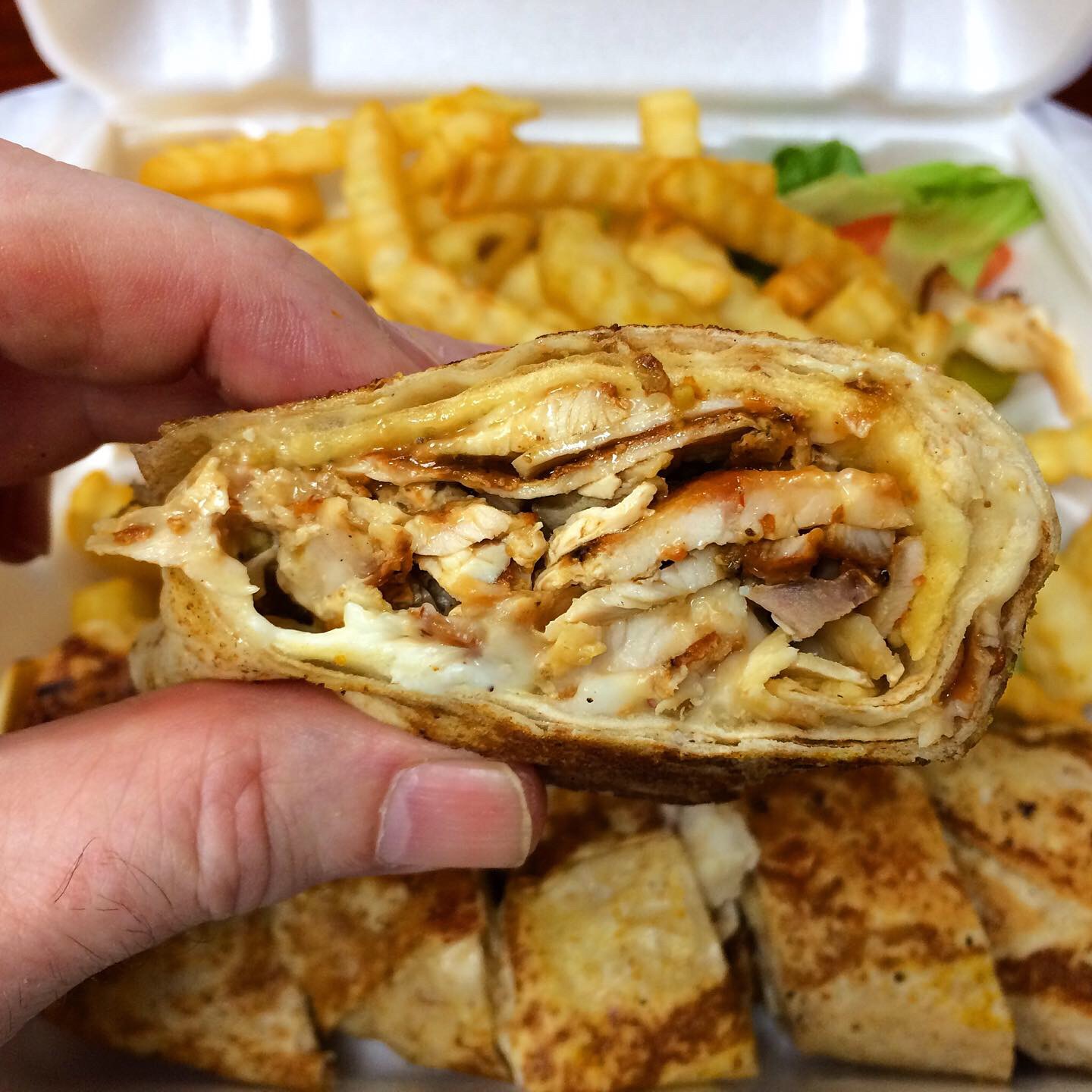
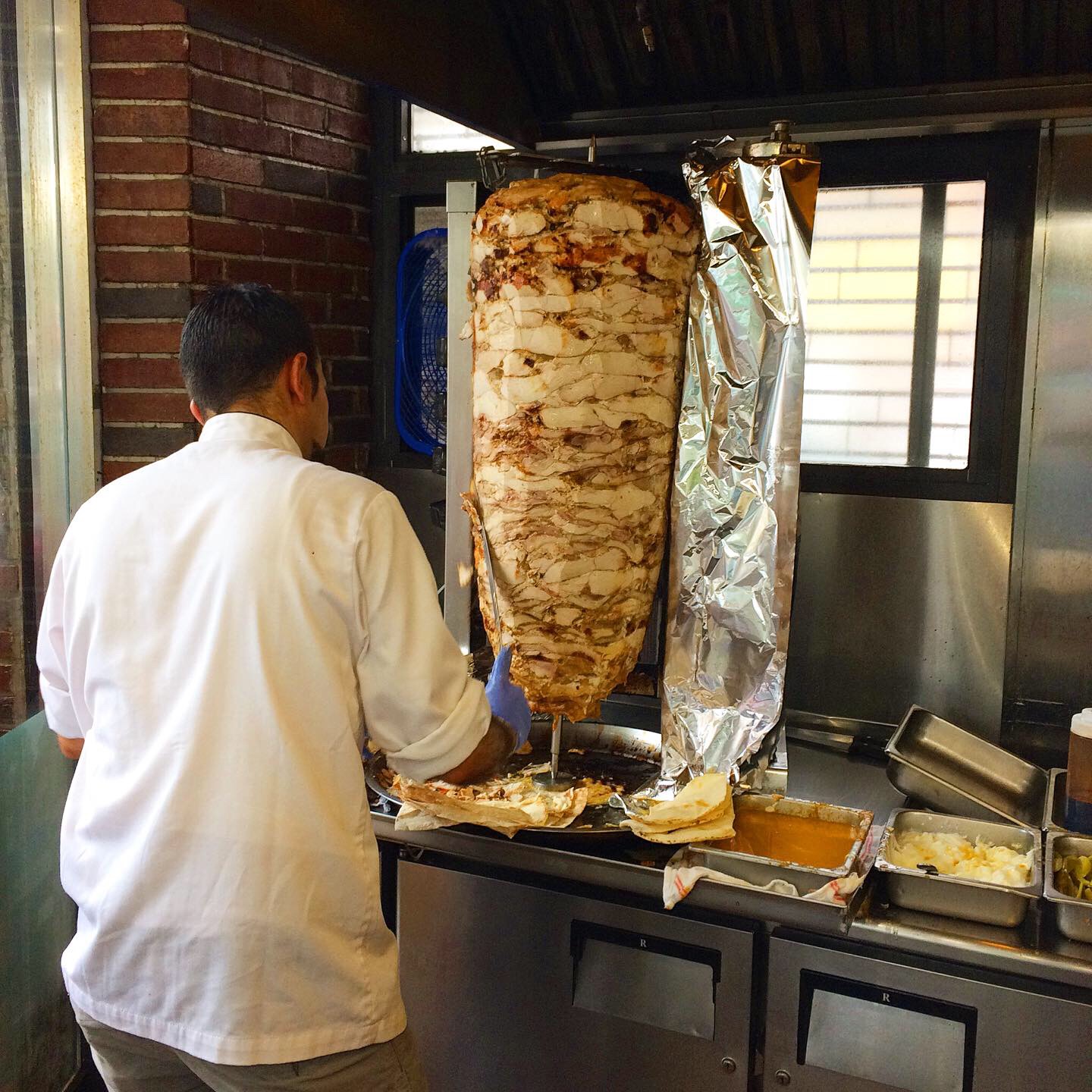
One of the newer establishments in Brooklyn’s Middle Eastern neighborhood (which I still think should be called “Little Levant”) is Al-Sham Restaurant at 7701 5th Ave in Bay Ridge. On its compact menu, you’ll find the usual suspects like hummus, baba ganoush, and falafel, but their emphasis seems to be the chicken shawarma, available on a platter with fries or as a “sandwich” (their word) since it’s really shaved into a piece of laffa (flatbread), rolled up with pickles and toum, and grilled. Toum is a sauce made primarily of olive oil and garlic that’s whipped into a fluffy, snow white blizzard of a condiment; you’ll receive a hefty dollop of it on the side if you order fries. Think of it as the Levantine answer to Mediterranean aioli.


Strategically positioned by the window, the chicken shawarma is gargantuan compared to others along the strip. Foodies fond of photographing favorite finds frequently position a quarter or a spoon beside the food for the purpose of demonstrating relative size. Here, we’ve situated a human to serve the same purpose. Kidding. But seriously, that’s one big honkin’ shawarma. As he rotated the shawarma, shaving it down, he repeatedly slathered it with a substance I couldn’t quite make out, but I’m guessing it was toum, glorious toum.

There was something undefinably fresh about this chicken shawarma (the only kind they offer, BTW); I don’t know if it was because it was a new batch or because of the continual application of toum, but here’s hoping they maintain that same quality as they whittle it down. And yes, it’s a stop along my Middle Eastern Bay Ridge food tour; to learn more, check out my Ethnojunkets page. Hope to see you!


Antepli Baklava

Instagram Post 6/27/2019

(Click on any image to view it in high resolution.)

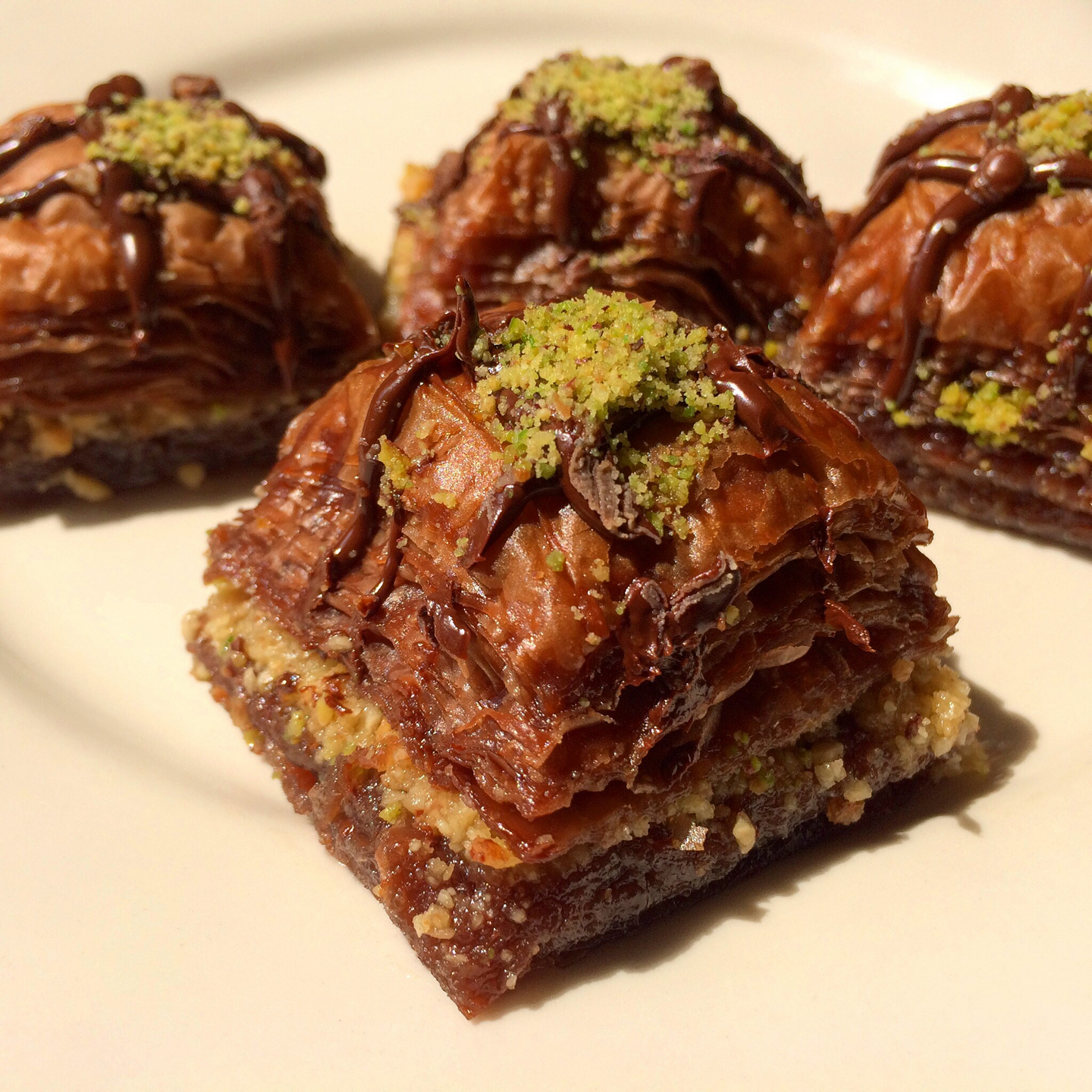
A favorite stop along my Middle Eastern Bay Ridge food tour is Antepli Baklava at 7216 5th Ave, Brooklyn. They offer an assortment of savory Turkish dishes as well as desserts including baklava, künefe, and dondurma, the dense, chewy ice cream crafted from cream, salep, mastic, and sugar; you may have seen my past post about booza, a similar treat that hails from Syria. But lately, I just can’t get past the chocolate baklava.

Now, despite my sweet tooth, I’ve never been a fan of standard issue, regulation, honey drenched baklava, but this chocolate version is a cut above. Sweet but not cloying, chocolate forward, the upper flaky layers provide the crunch while the compressed substratum is the repository for restrained syrupy goodness, the two interspaced by a thin barrier of finely chopped nuts. Droolworthy.

When I was told it’s imported from Turkey, then baked on the premises, I remembered a post (and a sample too 😋) from my Instagram friend @gustasian not long ago about the same item with the same appearance and the same taste and the same story that she found in Sunnyside. I’m willing to bet they came from the same distributor too.


Sellou

Instagram Post 6/21/2019

(Click on any image to view it in high resolution.)

Since food tour season is in full flower and there are some new businesses in the neighborhood, I decided to revamp my Middle Eastern Bay Ridge ethnojunket. Did you know that Bay Ridge and Beirut are cognates? Just kidding.

One of the treats along the route is sellou (سلّو, aka sfouf or zmita), a unique unbaked Moroccan sweet made from toasted flour and ground almonds, sesame seeds, sugar or honey, cinnamon, and anise; as you’d expect, recipes vary from family to family. At Nablus Sweets, 6812 5th Ave, Brooklyn, I spotted a huge brown mountain of it and purchased a small knoll, broken here into two little hillocks. It’s soft in texture, somewhere along the cookie<–>brownie continuum but drier, crumbly but crunchy from nuts – just break off a chunk and enjoy, perhaps with a cup of tea. If your knowledge of Middle Eastern/Mediterranean sweets is informed primarily by honey drenched baklava and kanafeh, give this one a try (available particularly around Ramadan); I highly recommend it.